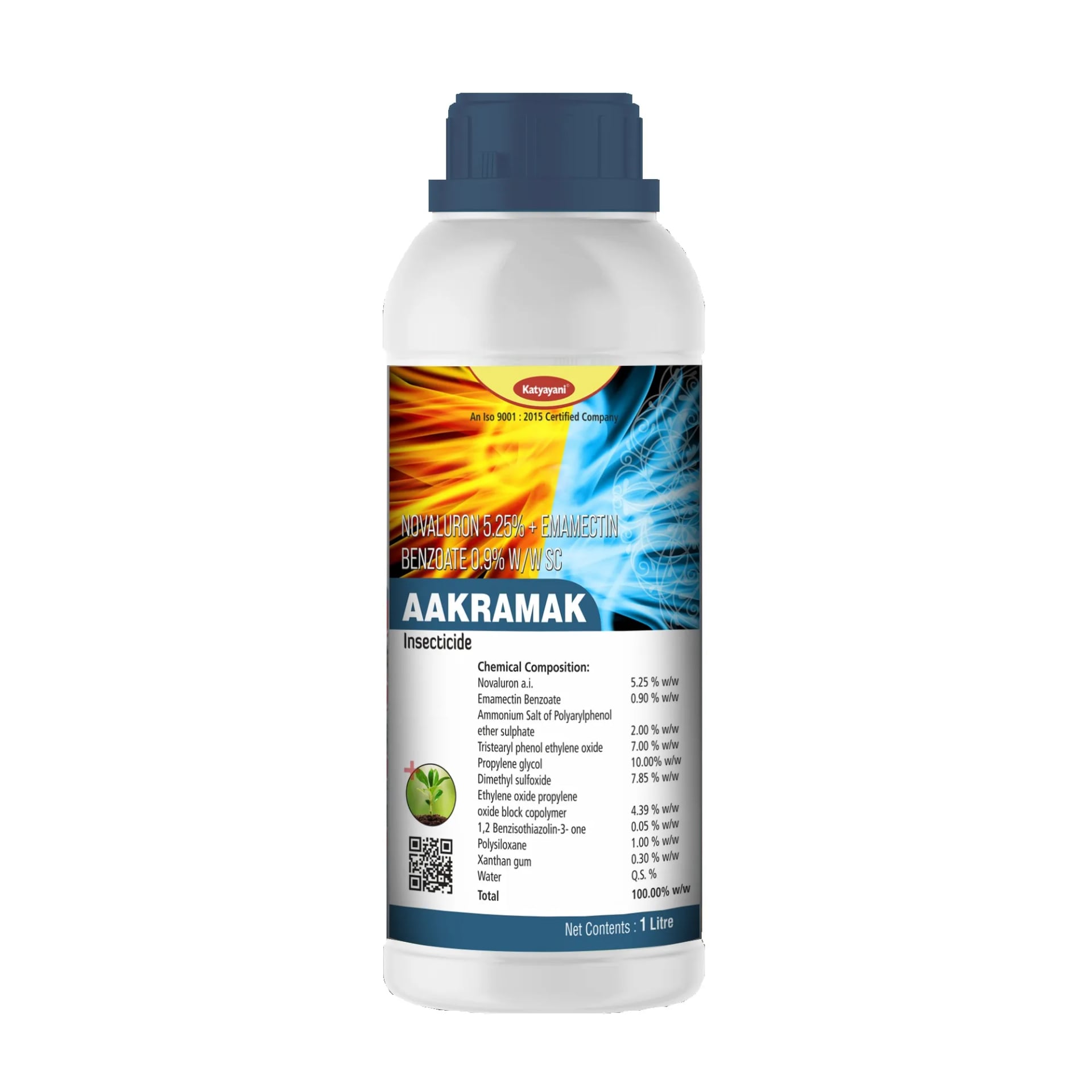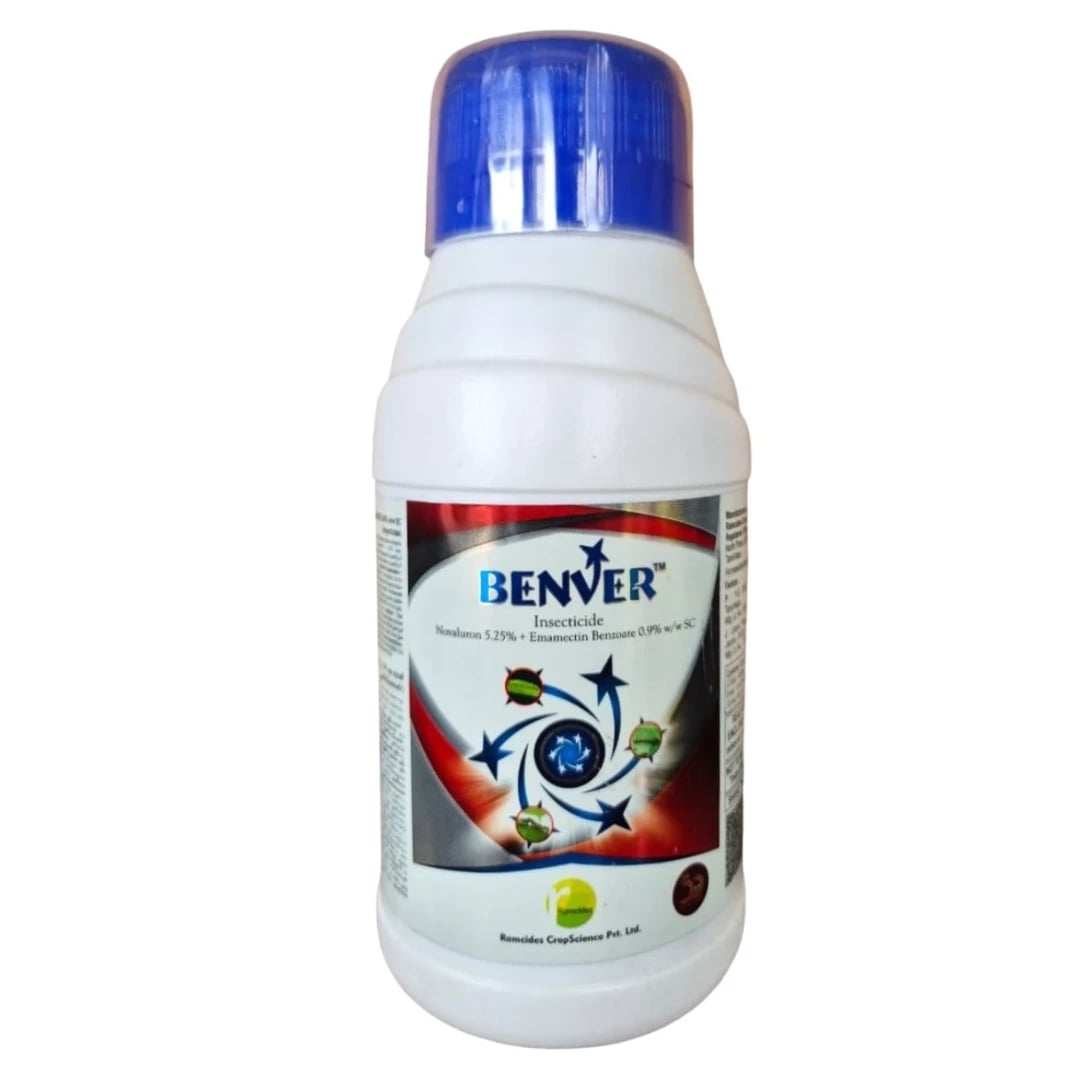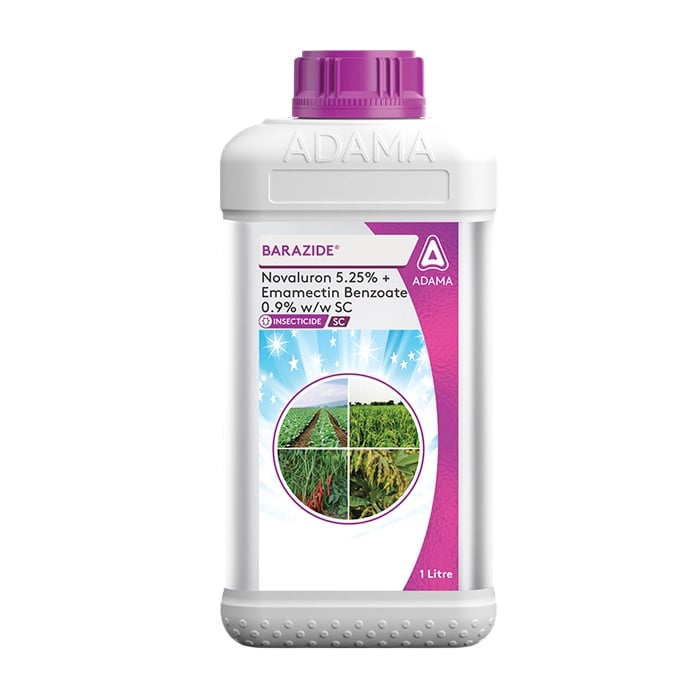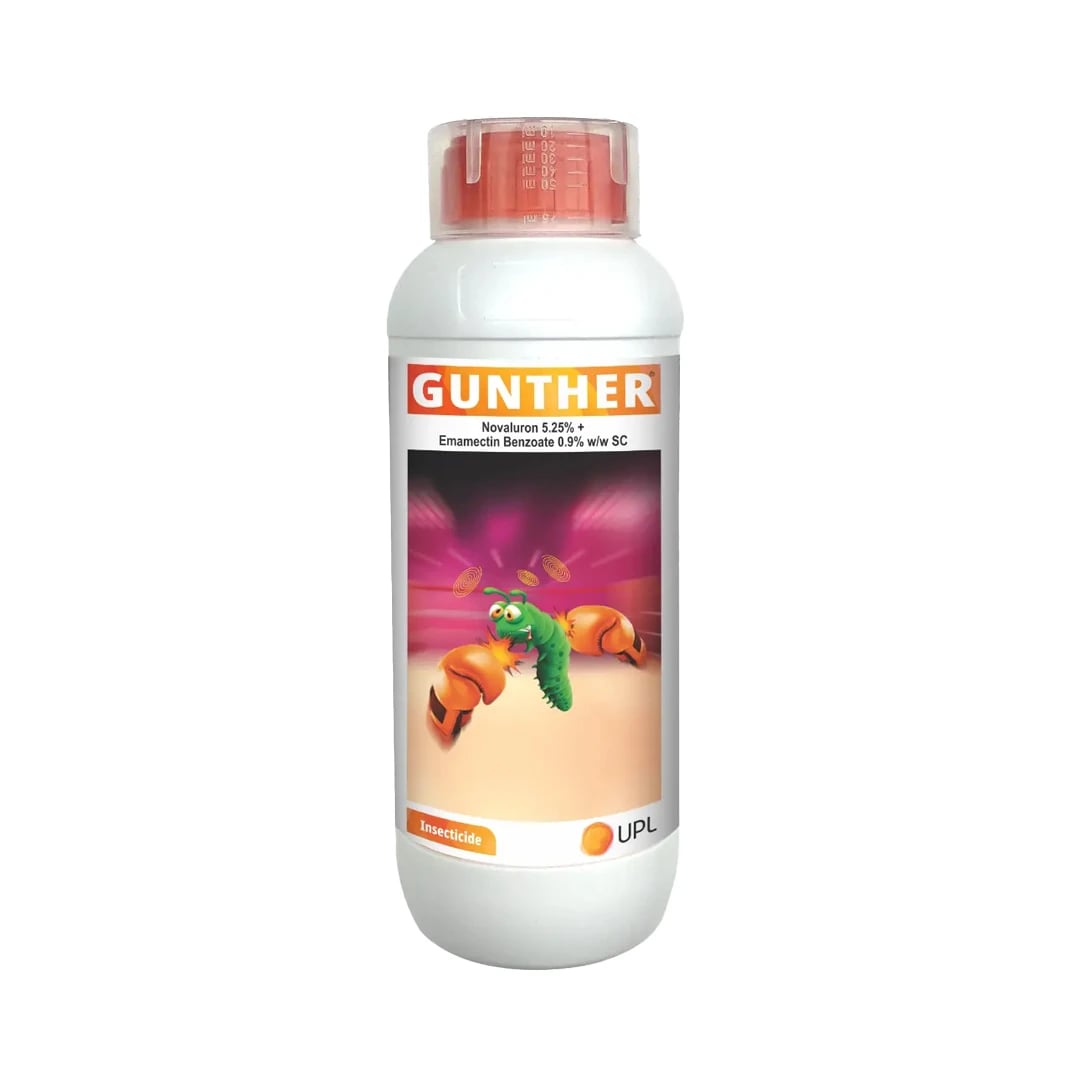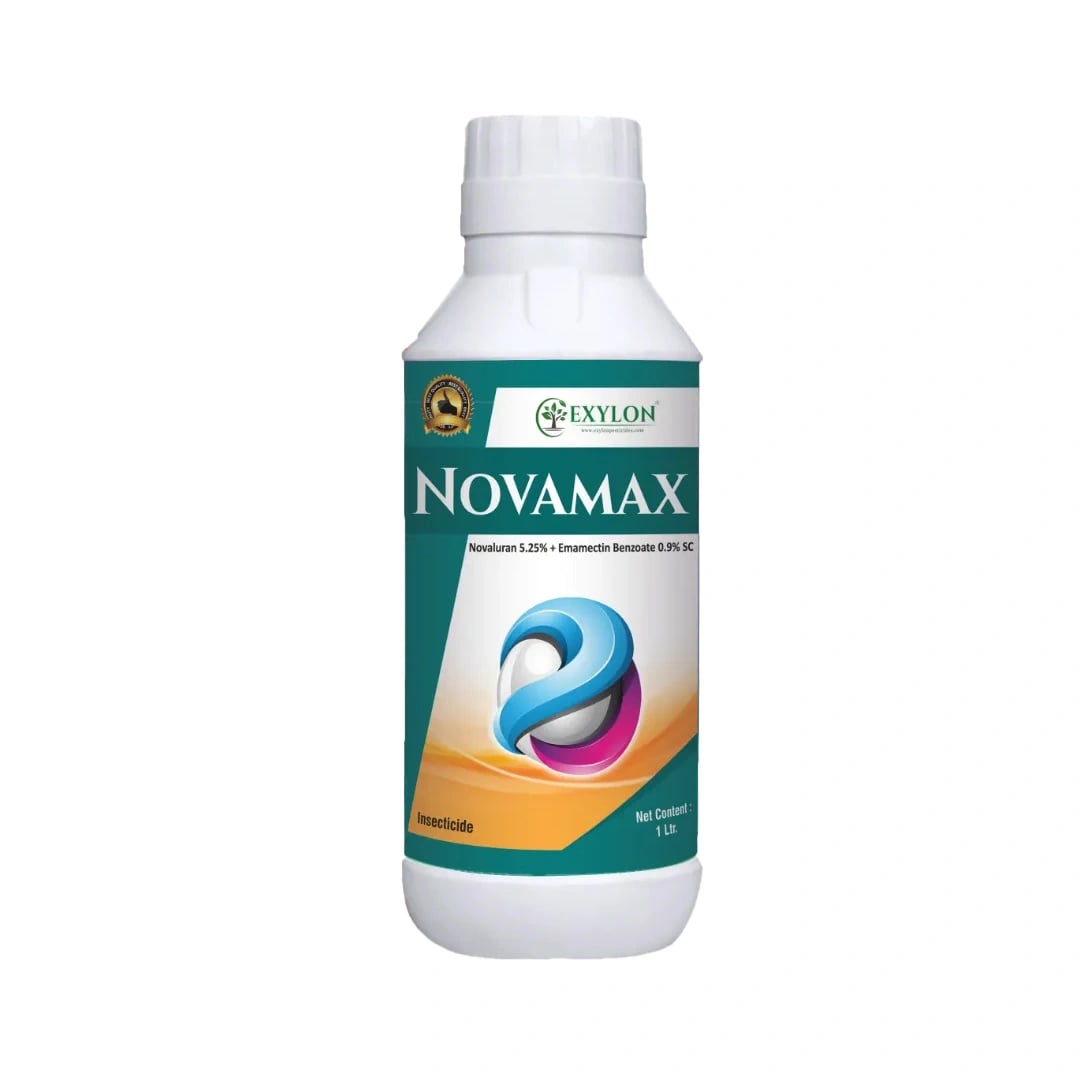
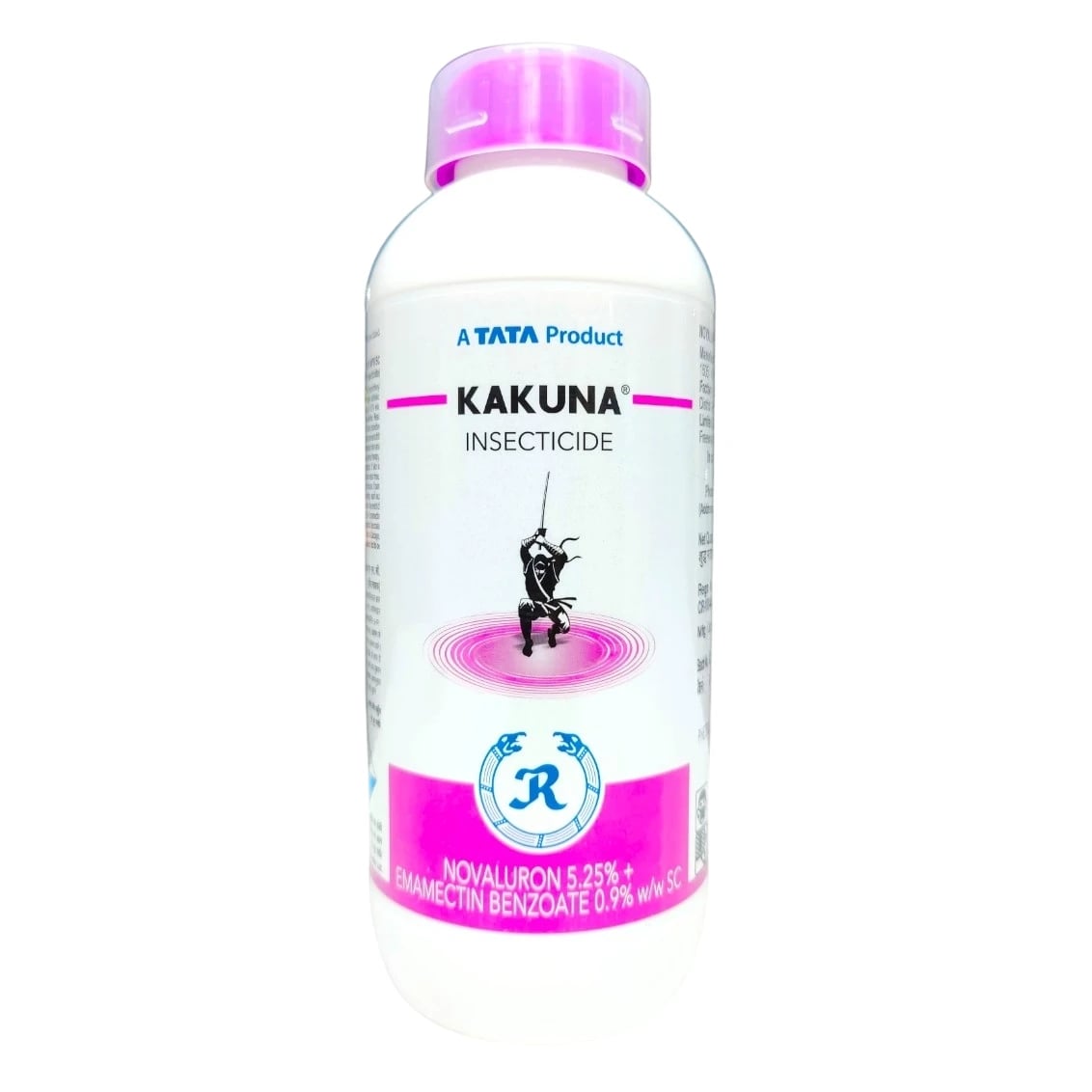
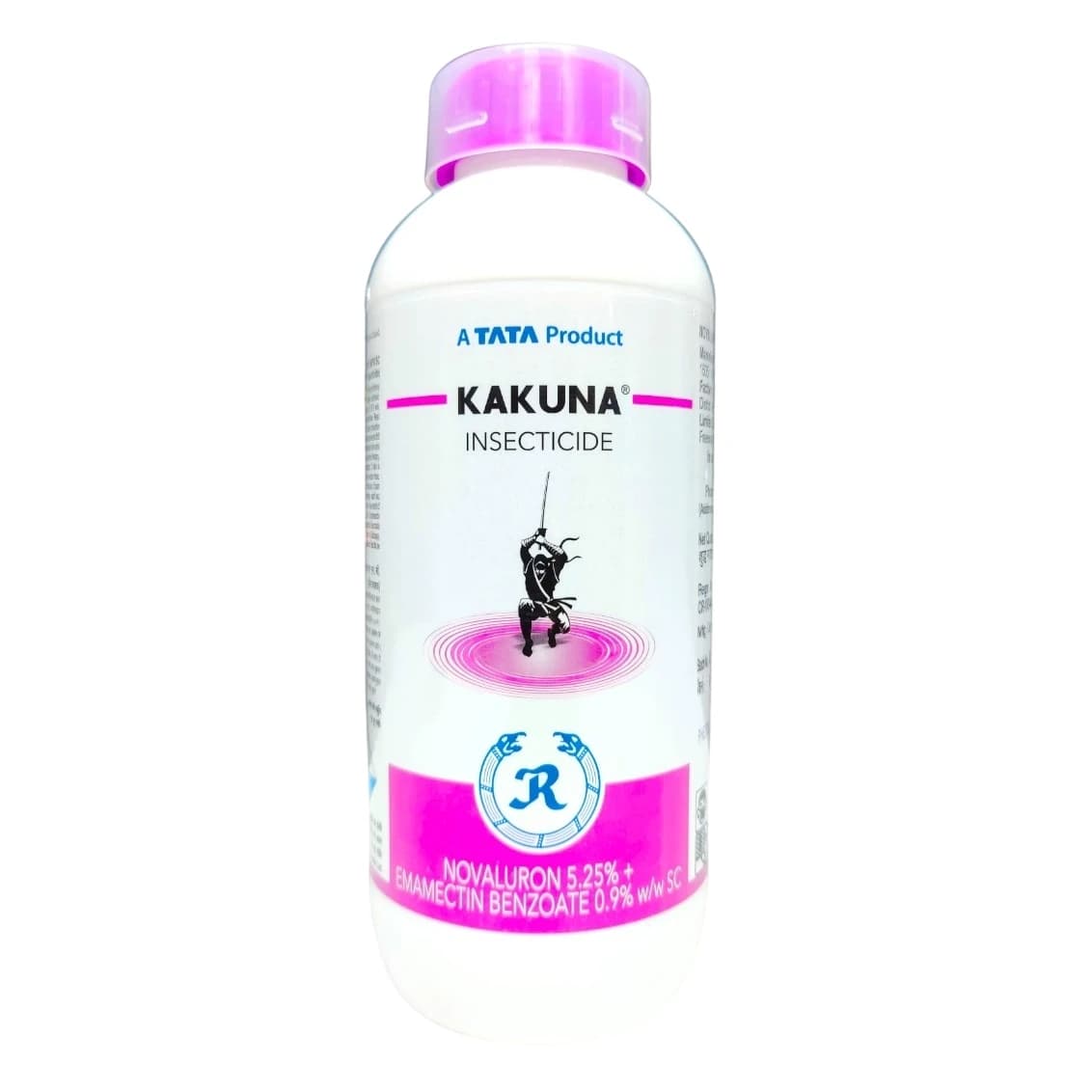
Exylon Novamax Insecticide (Novaluron 5.25% + Emamectin Benzoate 0.9% SC) Broad Spectrum, Dual Action Insecticide, Controls Caterpillars & Borers In Cabbage, Chilli & Red Gram
₹689₹910
Save ₹22125% Off
🎉 You Save ₹334 (36% OFF)
Buying In Bulk?
Get Special Pricing for large orders, contact us now!
| Brand: | TATA RALLIS |
| Product Code: | 11896 |
| Country of Origin: | India |
| Category: | Crop Protection |
| Sub Category: | Insecticides |




Tata Kakuna insecticide is a dual-action caterpillar control product built around two molecules that attack the pest from completely different directions. This insecticide gives both an immediate halt to crop damage and a long stretch of protection against the next brood. It offers translaminar movement as well, letting the spray reach larvae hiding on the underside of leaves. Kakuna insecticide is registered for cabbage, chilli, red gram and rice, and its short waiting period makes it workable on vegetables close to picking.
Dual Action: Tata Kakuna insecticide pairs a nerve-acting molecule with a growth regulator, so pests face two unrelated attacks at once.
Quick Action: After a Tata Kakuna insecticide spray, caterpillars quit eating within a few hours of contact or ingestion, for quick pest relief
Life Cycle Control: Tata Kakuna insecticide acts on eggs and young larvae, so the following generation never builds up.
Complete Coverage: Translaminar movement carries Tata Kakuna insecticide into leaf tissue and throughout the crop.
Resistance Management: Two IRAC groups working together make Tata Kakuna insecticide a strong rotation choice for prolonged effectiveness.
Tata Kakuna insecticide is registered against:
Diamondback Moth: The main larval pest of cabbage and other cole crops.
Tobacco Caterpillar: Heavy feeder on cabbage, chilli and several vegetables.
Fruit and Pod Borer: Gram pod borer in chilli and red gram, where damage goes straight to marketable produce.
Stem Borer: Yellow stem borer in rice, the cause of dead hearts and white ears.
General Lepidopteran Pressure: Kakuna insecticide also helps hold back other caterpillars that appear alongside the main pest.
The standard Tata Kakuna insecticide dose per litre of water is 1.5 ml, which comes to roughly 22 ml in a 15-litre pump. Kakuna insecticide needs enough spray volume to wet the whole canopy, since larvae shelter low down and under leaves.
Crop | Target Pest | Dose per Acre | Dose per Litre | Spray Volume |
|---|---|---|---|---|
Cabbage | Diamondback moth, tobacco caterpillar | 350 ml | 1.5 ml | 200 litres |
Chilli | Fruit borer, tobacco caterpillar | 350 ml | 1.5 ml | 200–250 litres |
Red Gram | Gram pod borer | 350 ml | 1.5 ml | 200–250 litres |
Rice | Yellow stem borer | 600 ml | 1.5 ml | 200 litres |
Shake the bottle well before opening, as a suspension settles during storage.
Measure the dose for the tank size from the table above.
Stir the measured Kakuna insecticide into a mug of clean water to make a smooth pre-mix.
Pour the pre-mix into a part-filled spray tank, then top up with the balance water.
Keep the tank agitated so the strength stays even from the first nozzle to the last.
Use a hollow cone nozzle and cover the crop uniformly, including leaf undersides.
In rice, direct the spray into the canopy where stem borer larvae enter the tiller.
Rinse the sprayer well with clean water once the round is finished.
Spray at the first sight of egg masses or small larvae, or when counts touch the economic threshold — not after the borers have already tunnelled inside. Early morning or late evening works best, as wind is low and the spray does not dry too fast on the leaf. Tata Kakuna insecticide works on early stages, so an early round always beats a late one.
Frequency: Keep 10 to 15 days between rounds, and do not go beyond two sprays of Tata Kakuna insecticide in one crop cycle.
Re-Entry: Keep workers and livestock out of the treated block until the spray has fully dried, and preferably for 24 hours.
Tank-Mix: Tata Kakuna insecticide is compatible with most routine sprays, though strongly alkaline partners should be avoided. Jar-test any new combination before filling the tank.
Rotation: Follow with a product from a different IRAC group so caterpillars do not adapt to this chemistry.
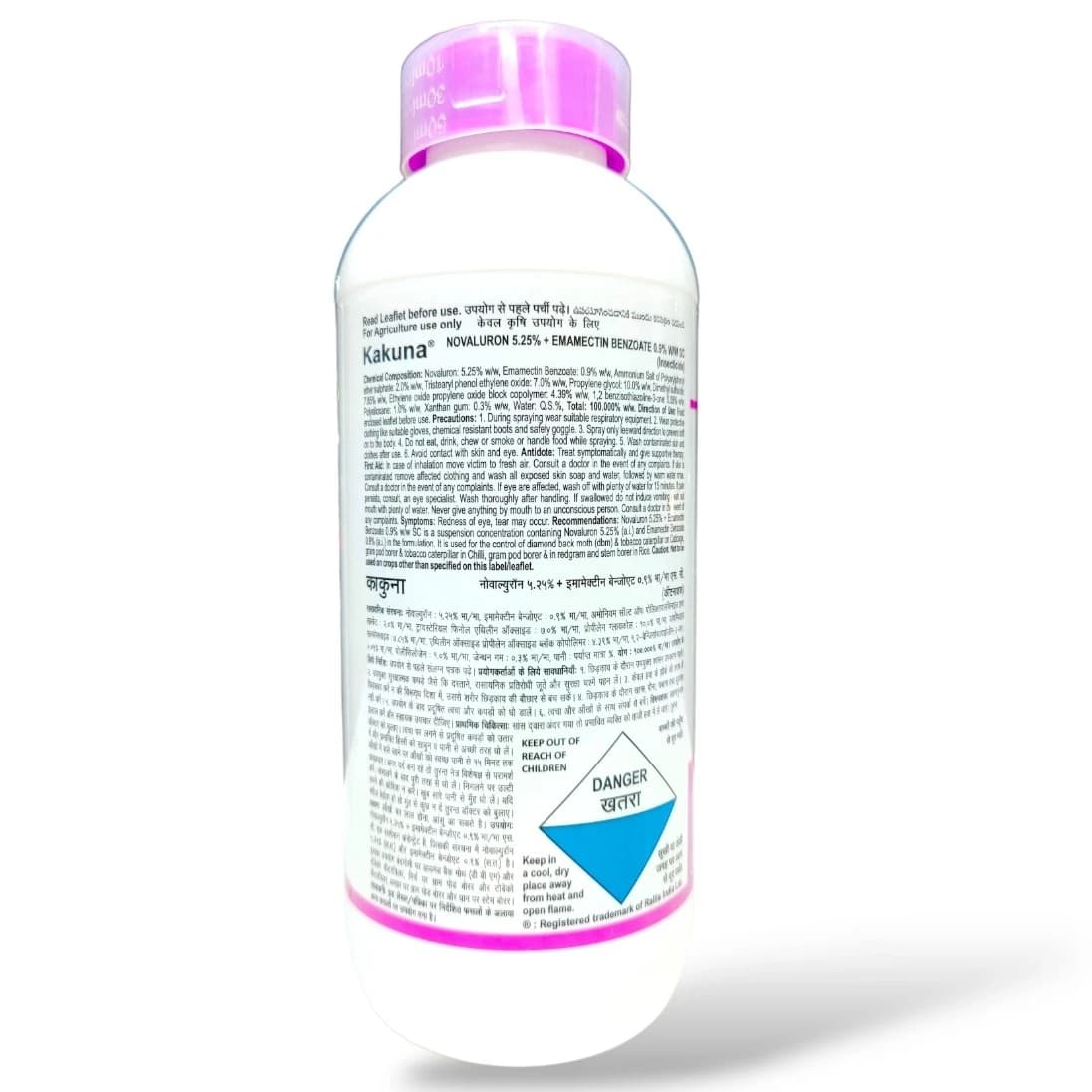
Go through the label and leaflet properly before the container is opened.
Wear gloves, goggles, a mask and full-sleeved clothing while mixing and spraying.
Nothing goes in the mouth during the spray job — no food, no water, no tobacco.
Wash exposed skin with soap and change into clean clothes once the work is over.
Toxic to fish and honeybees, so keep Kakuna insecticide away from water bodies and avoid spraying on flowers in full bloom.
Triple-rinse empty containers, puncture them, and discard as per local waste rules.
Keep the Tata Kakuna insecticide bottle sealed and upright in a cool, dry, shaded place.
Store away from sunlight, heat, food grain, seed, feed, and drinking water.
Keep it locked away from children, pets, and cattle at all times.
Never shift the contents into a food or drink container.
Specifications | Details |
|---|---|
Product Name | Tata Kakuna insecticide |
Brand Name | Tata Rallis |
Kakuna insecticide Technical Name | |
Formulation Type | Suspension Concentrate (SC) |
Chemical Group | Benzoylurea combined with avermectin |
Mode of Action | Contact and stomach action with translaminar movement; nerve disruption plus chitin synthesis inhibition |
IRAC Group | Group 15 and Group 6 |
Recommended For | Cabbage, chilli, red gram and rice |
Pack Sizes Available | 250 ml |
Country of Origin | India |
Shelf Life | As printed on the pack |
Pre-Harvest Interval | Short — about 3 days in chilli; follow the crop-wise label |
Application Method | Foliar spray |
Recommended Dose | 1.5 ml per litre; 350 ml per acre in cabbage, chilli and red gram, 600 ml per acre in rice |
Target Pests | Diamondback moth, tobacco caterpillar, fruit borer, gram pod borer and stem borer |
Product Category | Dual-action lepidopteran insecticide |
Marketed By | Rallis India Limited (Tata Group) |