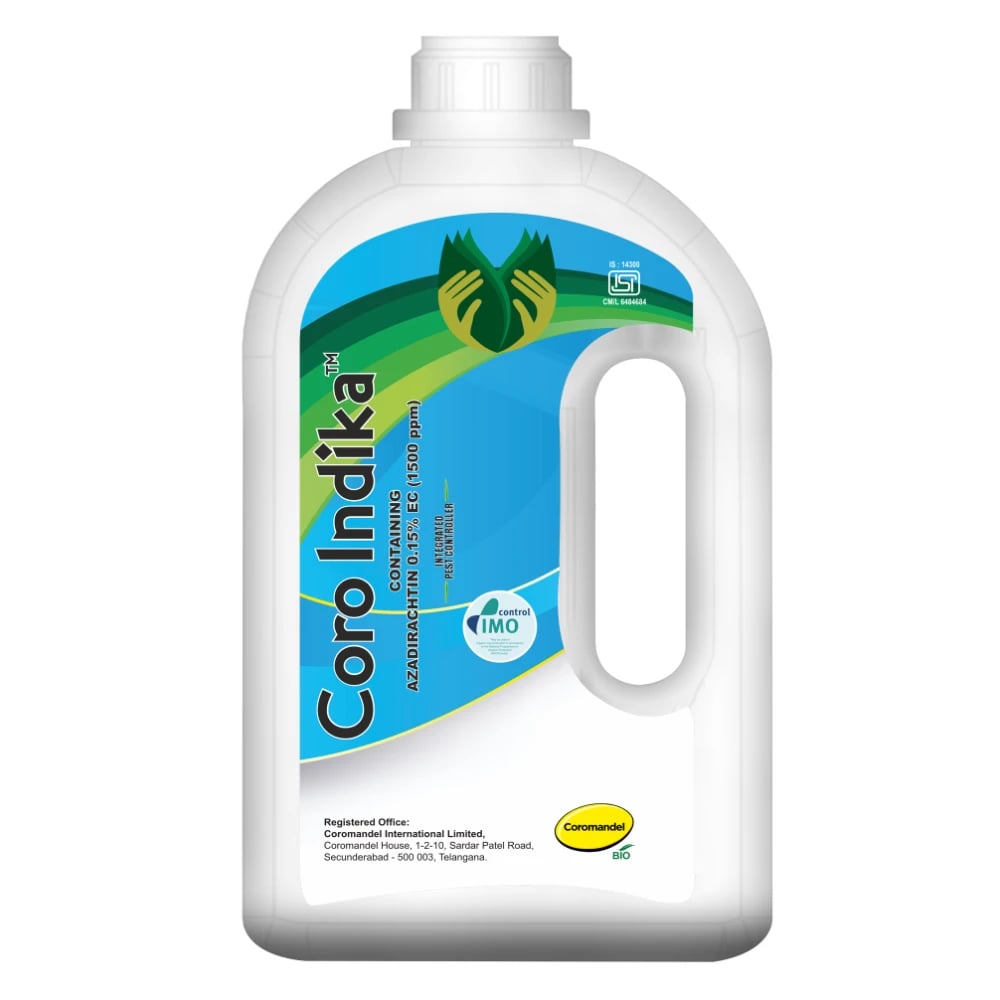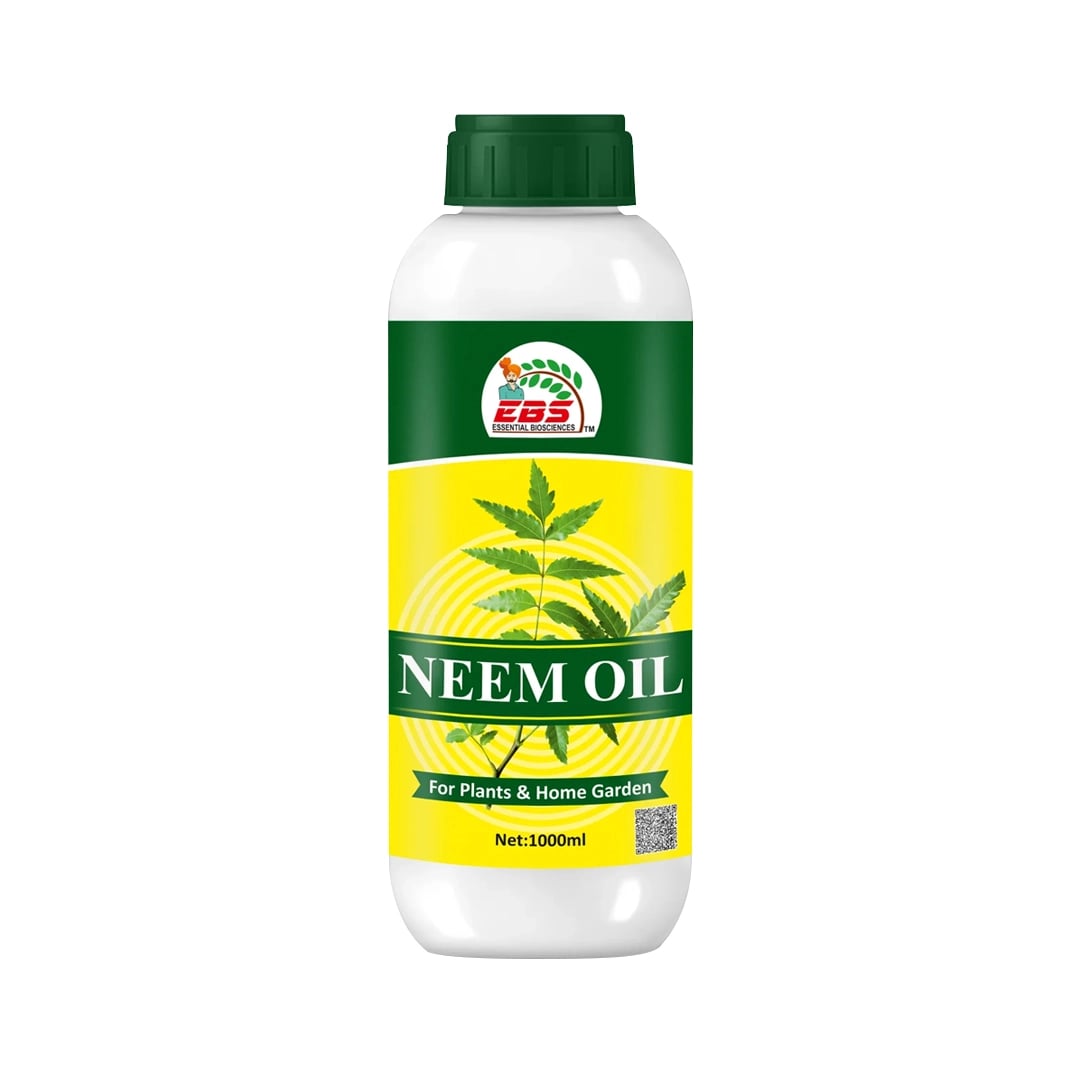
EBS Neem Oil
₹842₹2150
Save ₹130861% Off

🎉 You Save ₹368 (36% OFF)
Buying In Bulk?
Get Special Pricing for large orders, contact us now!


| Brand: | Aquarius Chemicals Limited |
| Product Code: | 4197 |
| Country of Origin: | India |
| Category: | Organic Farming |
| Sub Category: | Neem Oil |




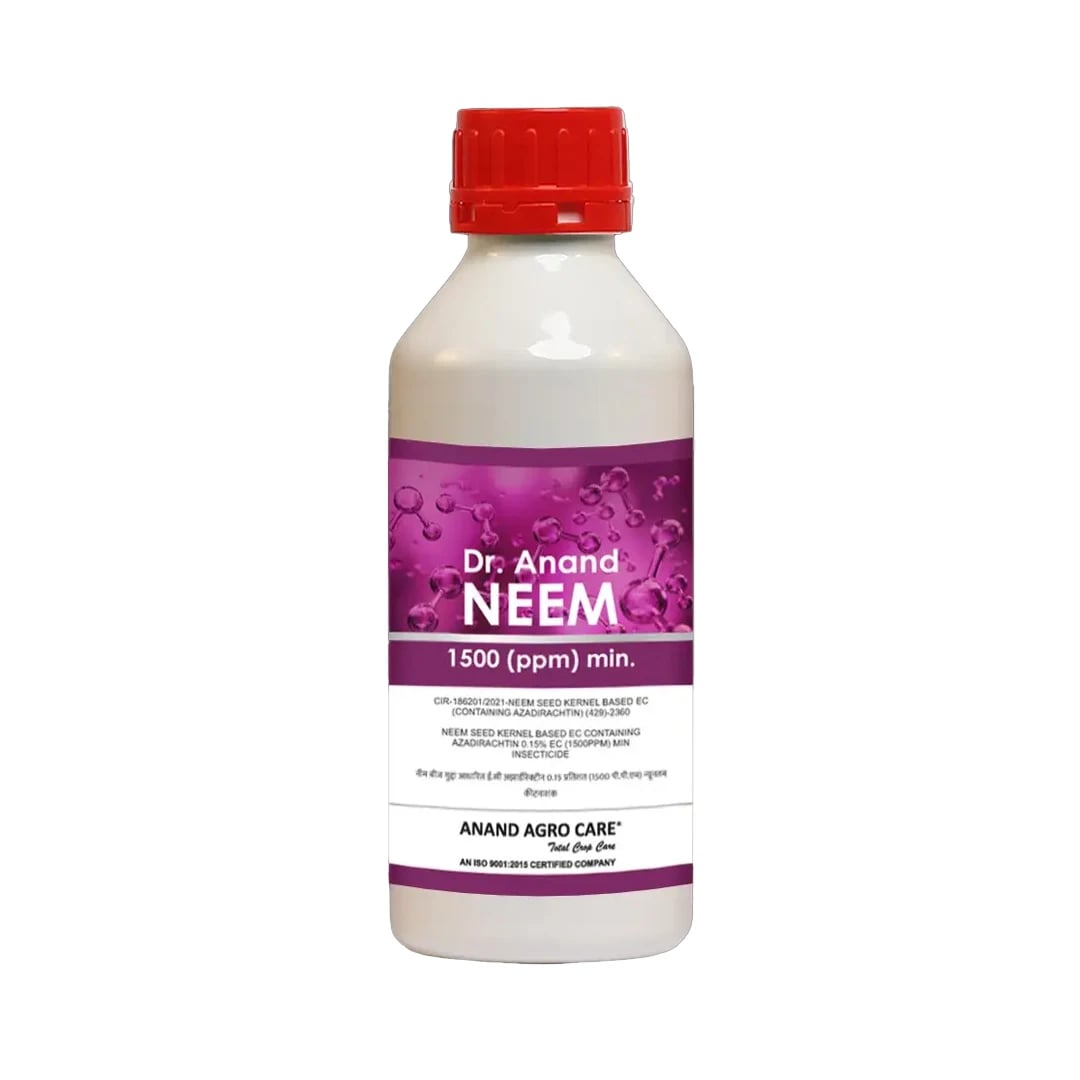
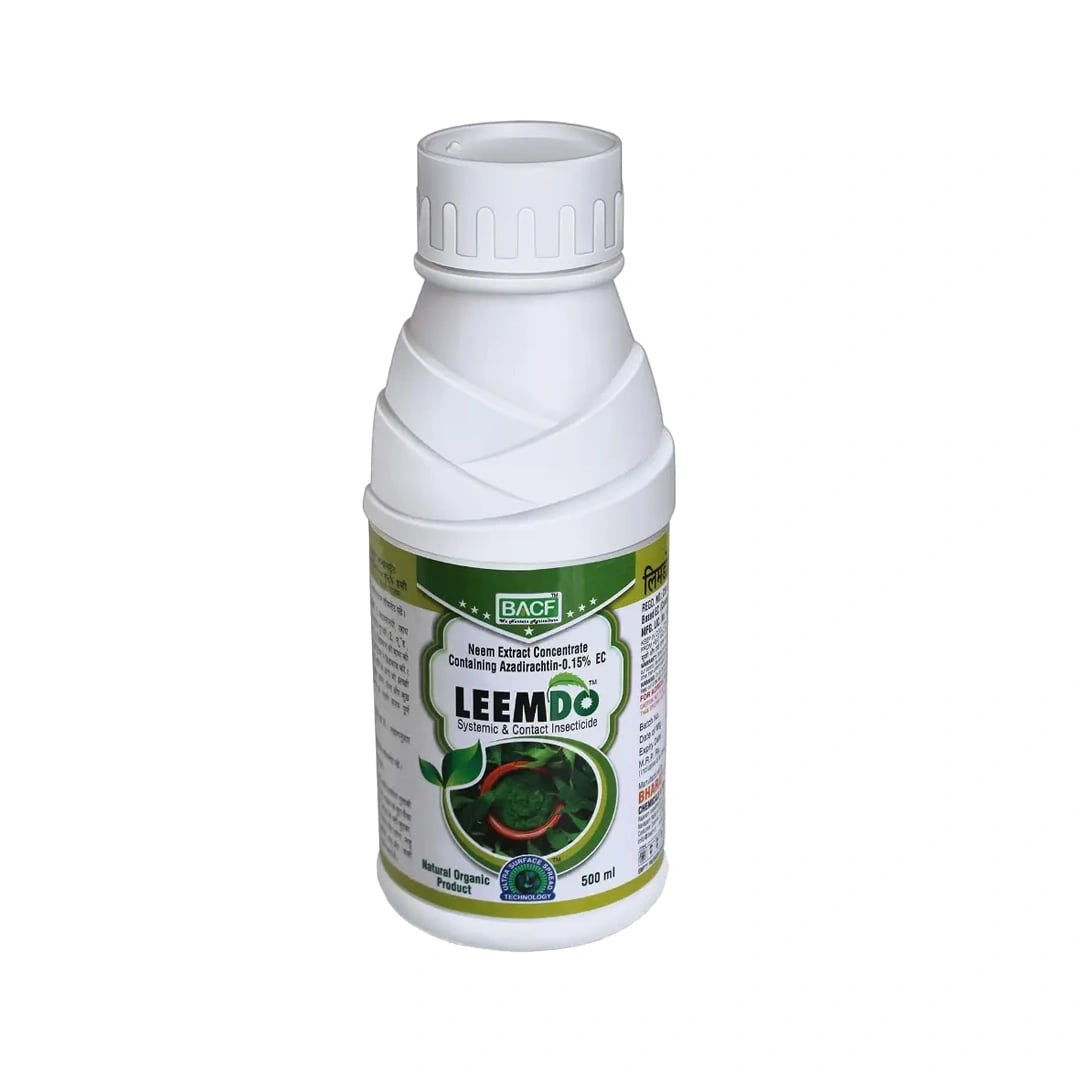
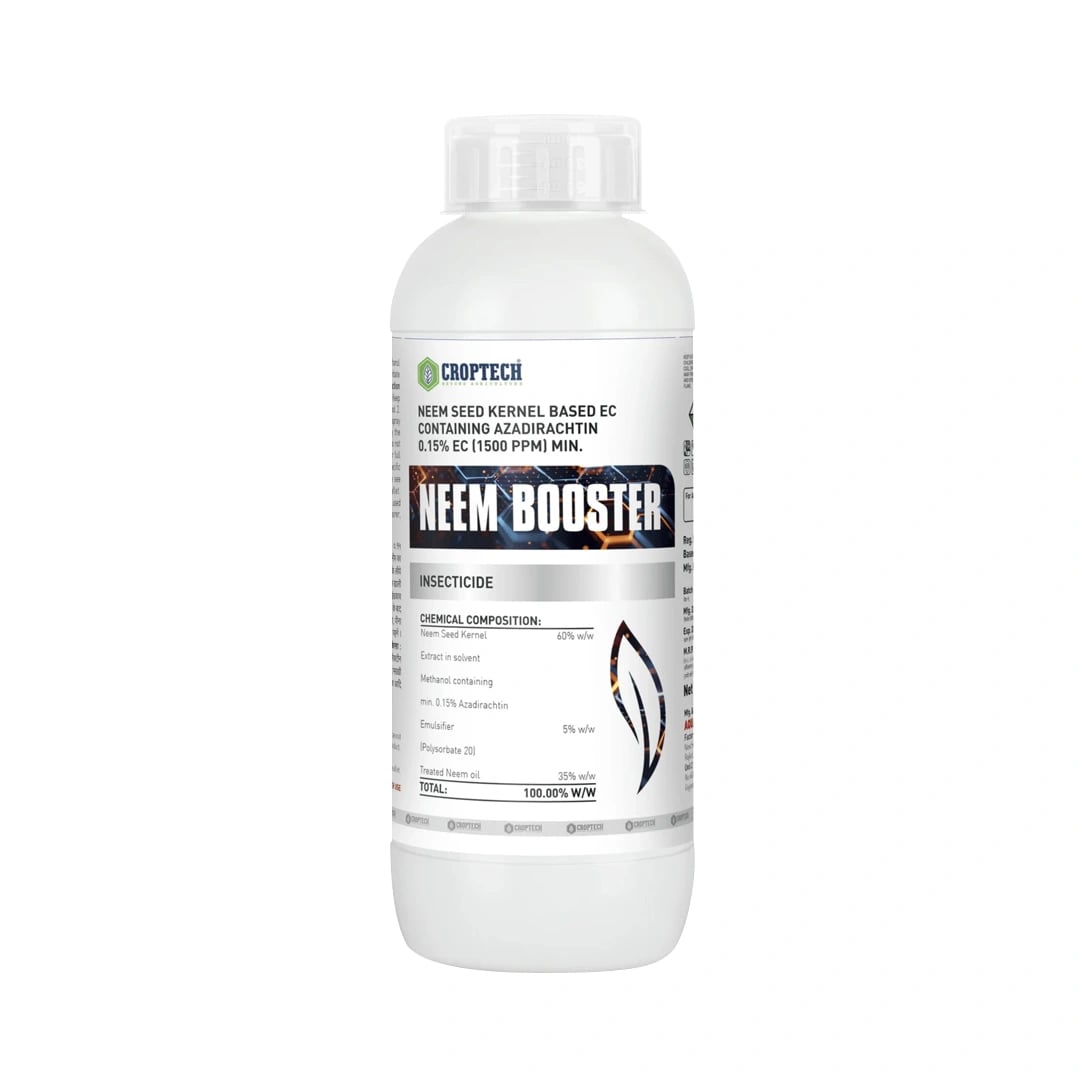
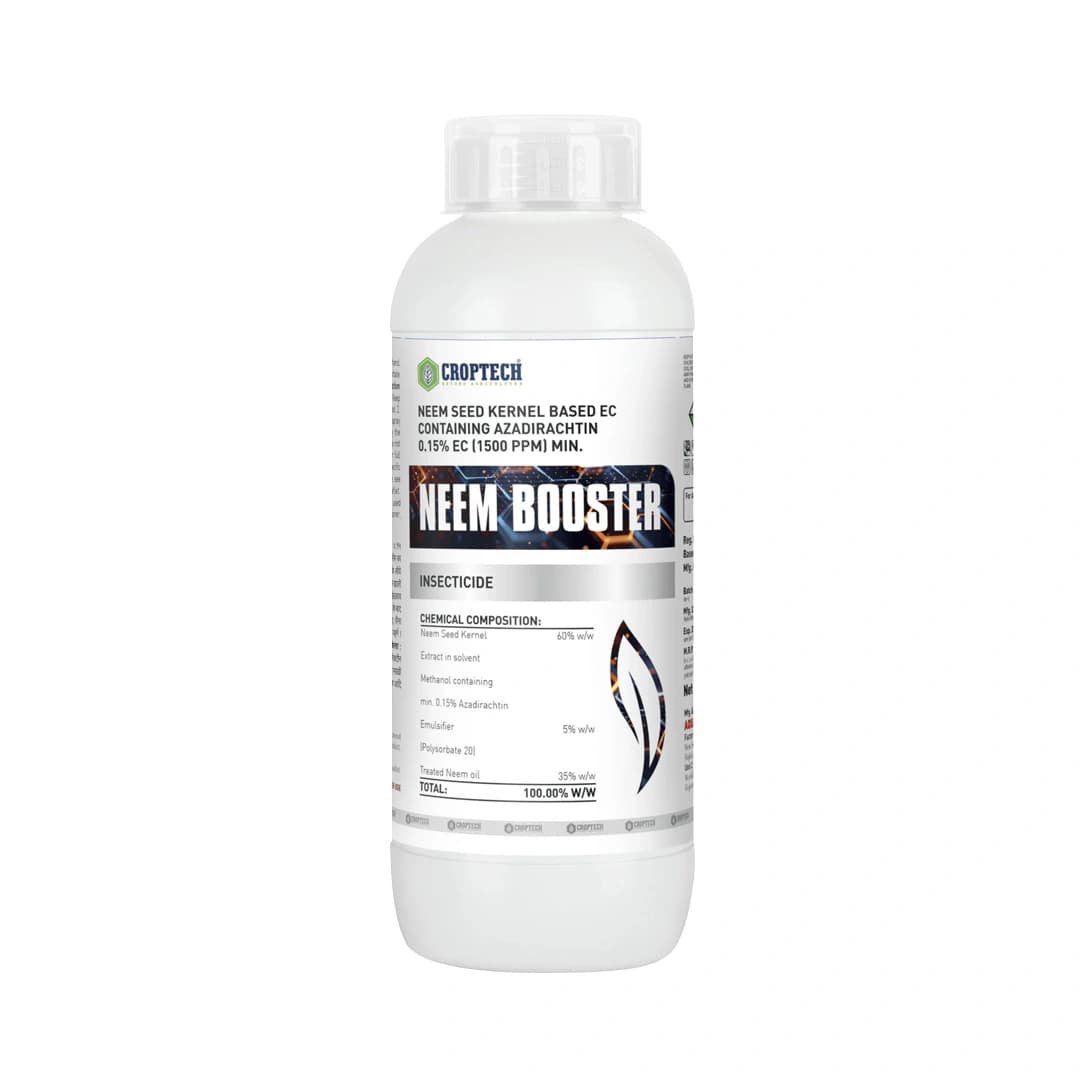
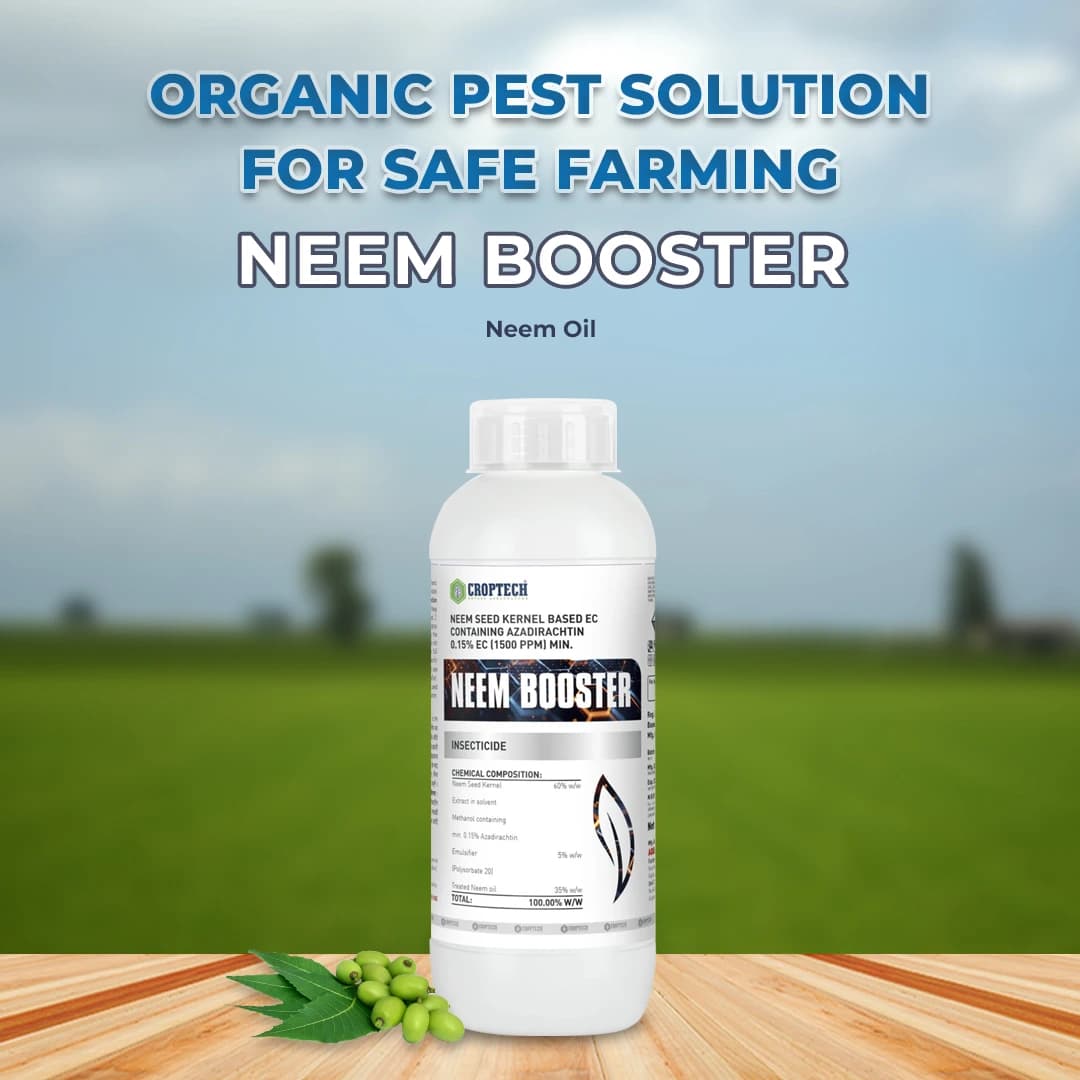
Neem Booster is a broad-spectrum botanical biopesticide containing Neem Oil 1500 PPM (Azadirachtin 0.15% EC). Being formulated as an Emulsifiable Concentrate, it mixes easily with water and ensures uniform coverage. Neem Oil 1500 PPM works through multiple modes of action simultaneously — it stops pests from feeding, disrupts their growth and molting cycle, and deters egg-laying. Azadirachtin 0.15% EC is residue-free, non-toxic to honeybees and beneficial insects, making it suitable for organic farming and IPM programs across India.
Preventive and Curative: Azadirachtin 0.15% EC works best as a preventive spray before infestation builds up and also as an early curative treatment at the first sign of pest attack.
Controls All Life Stages: Neem oil 1500 PPM targets pest eggs, larvae, nymphs, and adult insects in a single spray, reducing pest populations at every stage of development.
Zero Residue: Neem Oil 1500 PPM breaks down naturally within days of application, leaving no harmful residues on crops, making it ideal for organic and export farming.
Safe for Beneficials: Azadirachtin 0.15% EC is non-toxic to honeybees, natural predators, and other beneficial insects, making it suitable for use in IPM programs.
Highly Sustainable: Azadirachtin 1500 PPM reduces the frequency of harsh chemical insecticide applications, supporting long-term sustainable crop management.
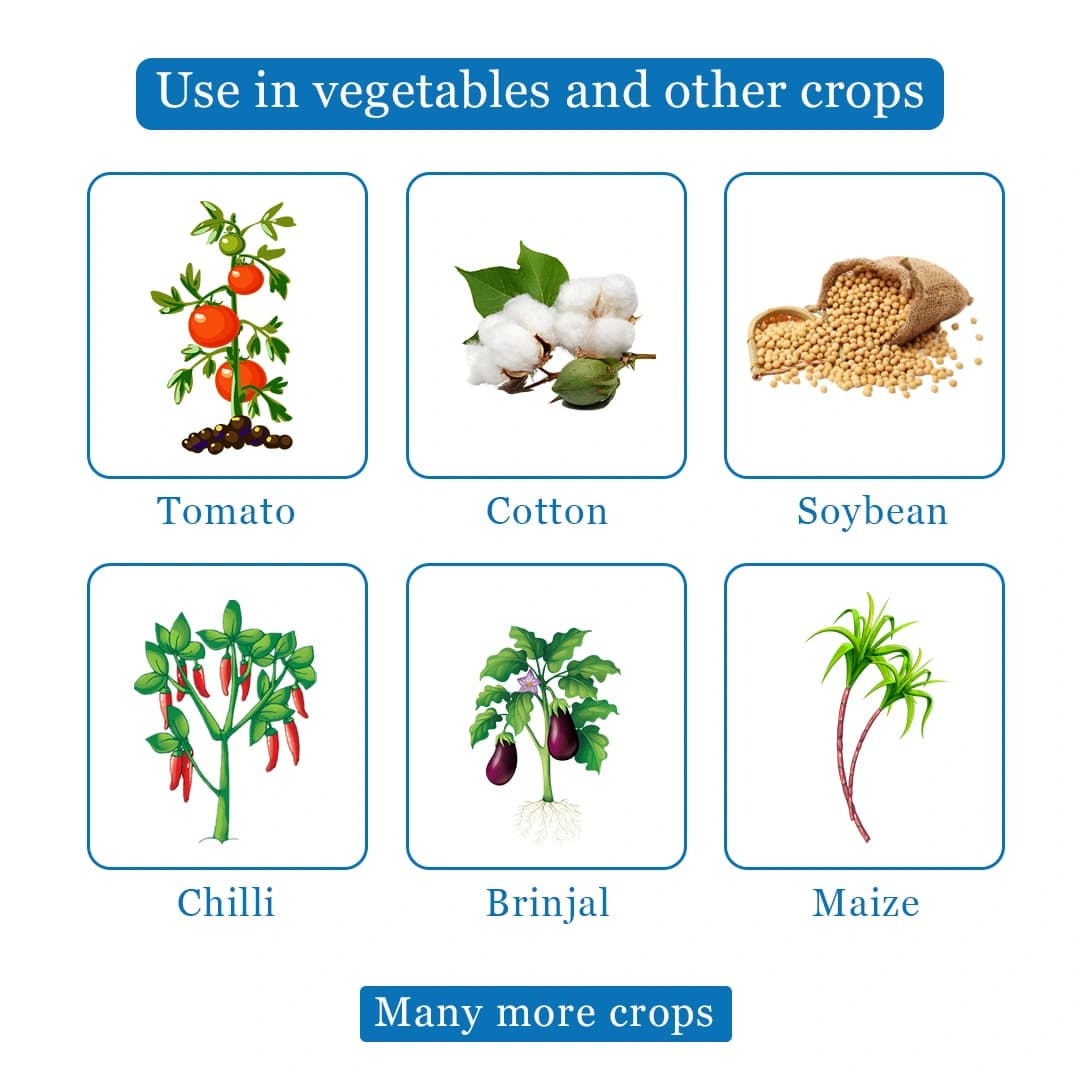
Wide Crop Coverage: Azadirachtin 1500 PPM is suitable for all types of fruits, vegetables, oilseeds, cereals, pulses, spices, cash crops, and horticultural crops.
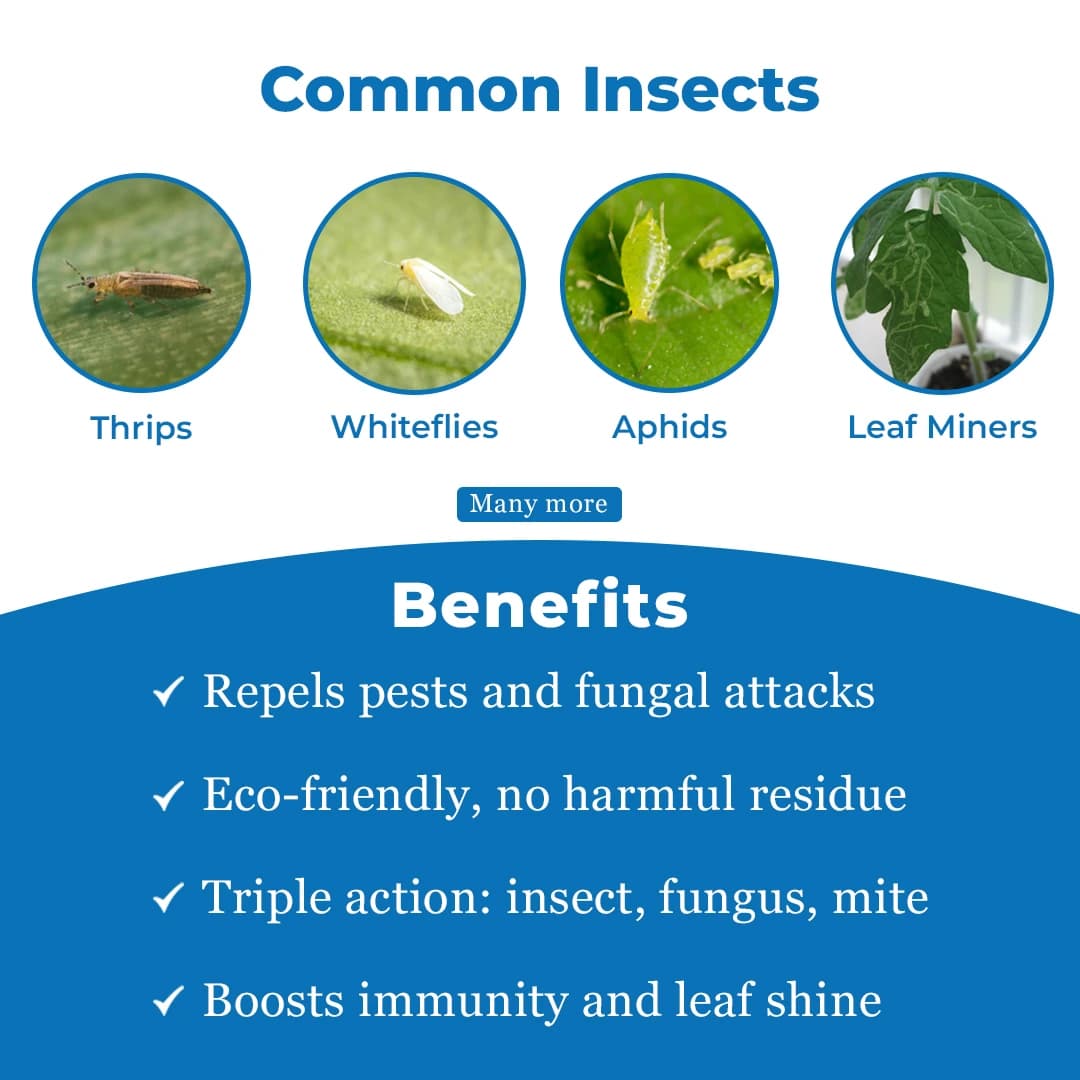
Sucking Insects: Thrips, Aphids, Whiteflies, Jassids, Leafhoppers, Mealybugs, Scale Insects
Larval Pests: Bollworms, Pod Borers, Fruit Borers, Caterpillars, Stem Borers
Mites: Red Spider Mites, Two-Spotted Mites
Other Pests: Leaf Miners, Leaf Rollers, Bugs
Mix Azadirachtin 1500 PPM in clean water before spraying. Apply Neem Oil 1500 PPM at the first sign of pest infestation or as a preventive spray for best results.
Crop | Application Method | Dose / Acre | Per litre of water | When to Apply |
|---|---|---|---|---|
Cotton | Foliar Spray | 1000 ml | 4 to 5 ml | At the first sign of pest attack, repeat every 10 to 15 days |
Tomato | Foliar Spray | 1000 ml | 4 to 5 ml | At the first sign of pest attack or as a preventive spray |
Chilli | Foliar Spray | 1000 ml | 4 to 5 ml | At the first sign of Thrips or Whitefly attack |
Brinjal | Foliar Spray | 1000 ml | 4 to 5 ml | At the first sign of pest attack |
Okra | Foliar Spray | 1000 ml | 4 to 5 ml | At the first sign of pest attack |
Groundnut | Foliar Spray | 1000 ml | 4 to 5 ml | At the first sign of pest attack |
Paddy / Rice | Foliar Spray | 1000 ml | 4 to 5 ml | At the first sign of pest attack |
Fruits and Orchards | Foliar Spray | 1000 ml | 4 to 5 ml | At the flowering and fruit development stage |
Vegetables (All) | Foliar Spray | 1000 ml | 4 to 5 ml | At the first sign of pest attack, repeat every 7 to 10 days |
All Crops | Soil Drench | 500–750 ml | — | At transplanting or the early vegetative stage |
Note: Never exceed the recommended dose.
Measure the required quantity of Azadirachtin 1500 PPM carefully using a clean measuring cup.
Being oil-based, pre-mix the dose in a separate small container with a little water first and stir well until evenly dispersed.
Pour the pre-mixed solution into the sprayer tank and fill to the required volume with the remaining clean water.
Stir continuously while filling to maintain a uniform colloidal suspension throughout the tank.
Spray Azadirachtin 1500 PPM evenly across all plant surfaces — upper and lower leaf surfaces, stems, and growing tips where pests concentrate.
For soil drench, dilute in the required volume of water and apply uniformly around the root zone of each plant.
Rinse the sprayer thoroughly after every use, as oil-based formulations can leave residue inside the tank if not cleaned properly.
Apply Azadirachtin 0.15% EC in the early morning or late evening when temperatures are cool — avoid spraying during midday heat as high temperatures reduce the stability and effectiveness of Azadirachtin on leaf surfaces.
Frequency of Application: Apply Azadirachtin 0.15% EC at the first sign of pest infestation. Repeat every 7 to 14 days during active pest pressure. Being a botanical product, it can be applied more frequently than chemical insecticides without risk of crop damage or resistance.
Re-Entry Period: Azadirachtin 1500 PPM is safe to re-enter treated areas as soon as the spray has dried completely on plant surfaces.
Compatibility: Neem oil 1500 PPM is compatible with most chemical insecticides and fungicides. Do not mix with Sulphur, copper-based fungicides, or Bordeaux mixture. Always do a jar test before combining with any other product.
Wear gloves and goggles before handling or measuring this product.
Never eat, drink, or smoke while mixing or applying.
Wash all exposed skin with soap and water after finishing.
Keep children, pets, and farm animals away from treated areas until the spray has dried.
Store Azadirachtin 0.15% EC away from food, animal feed, and all drinking water sources.
Dispose of empty containers as per local waste disposal guidelines.
Store Azadirachtin 0.15% EC in the original sealed container in a cool, dry, shaded area away from direct sunlight and heat.
Never store near food, animal feed, seeds, or drinking water.
Keep completely out of reach of children and farm animals.
Storage Temperature: Below 35°C
Shelf Life: 2 years from the date of manufacture.
Specifications | Details |
|---|---|
Product Name | Neem Oil 1500 PPM |
Technical Name | Neem Oil 1500 PPM (Azadirachtin 0.15% EC) |
Formulation Type | Emulsifiable Concentrate (EC) |
Key Active Compound | Azadirachtin 0.15%, Neem Oil, Nimbin, Nimbidin, Limonoids |
Mode of Action | Contact + Antifeedant + IGR + Repellent |
Brand | Aquarius |
Method of Application | Foliar Spray and Soil Drench |
Recommended For | All field crops, vegetables, fruits, and horticultural crops |
Pack Sizes Available | 1 litre |
Country of Origin | India |
Shelf Life | 2 years from the date of manufacture |
Suitable For | Organic Farming, IPM Programs |
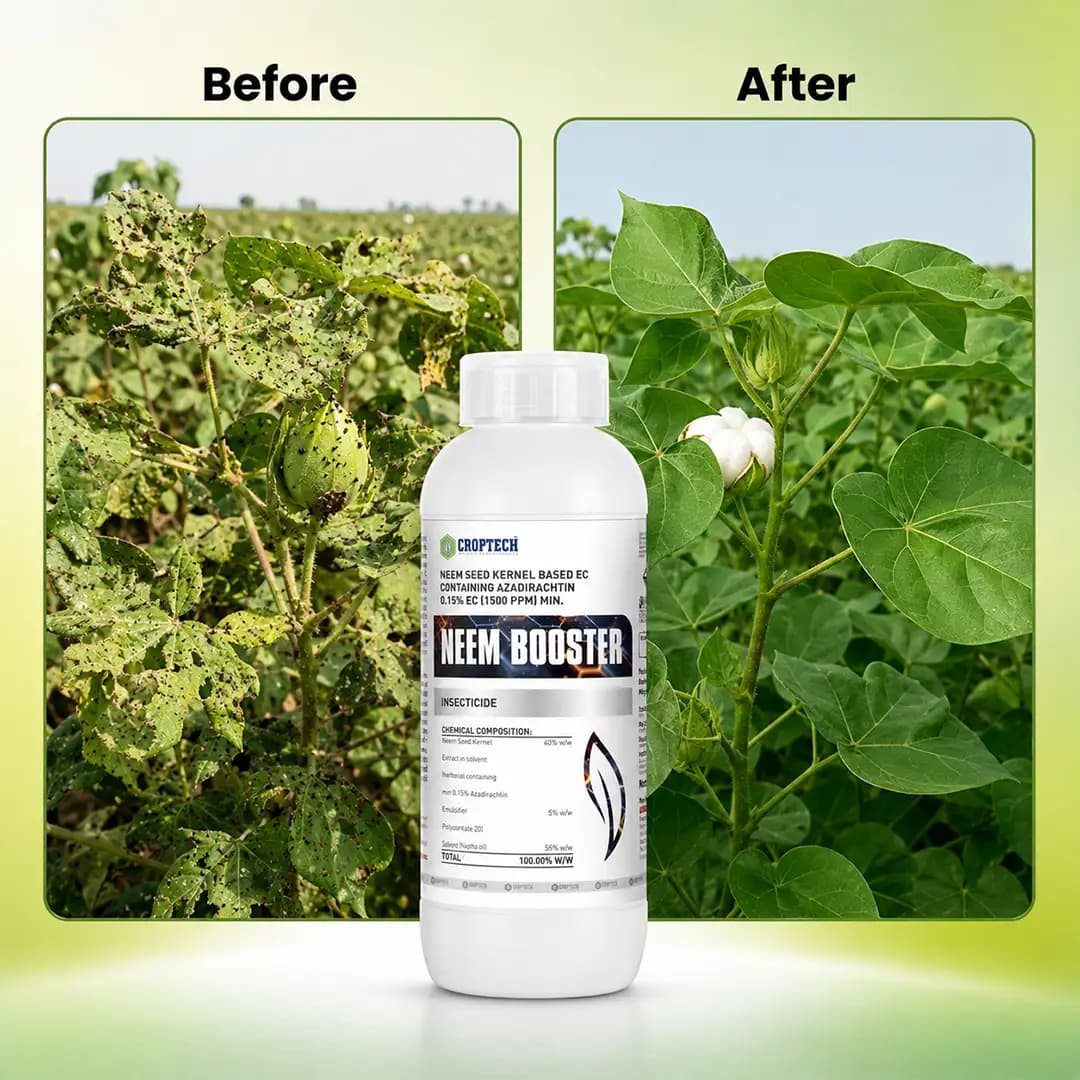
Controls Thrips, Aphids, Whiteflies, Jassids, Bollworms, Pod Borers, Caterpillars, and Mites across Cotton, Tomato, Chilli, Brinjal, Okra, Groundnut, Paddy, and all major fruits, vegetables, and horticultural crops.
Apply Azadirachtin 0.15% EC as a preventive spray before pest populations build up or at the very first sign of pest attack in the early larval or nymph stage — Neem oil 1500 PPM is most effective against young pest populations and newly hatched larvae rather than fully grown adults.
Azadirachtin 1500 PPM is recommended for general preventive pest management and routine IPM sprays throughout the season. Higher concentrations like 10000 PPM and 50000 PPM are used when pest pressure is heavier and faster control is needed. Both are fully organic and residue-free.
No —Azadirachtin 1500 PPM attacks pests through multiple biological pathways simultaneously, making it nearly impossible for pest populations to develop resistance over time, unlike single-mode synthetic insecticides.
Yes — Neem Oil 1500 PPM is non-toxic to honeybees, natural predators, and other beneficial insects when used at recommended doses and applied during non-foraging hours in the early morning or late evening.