
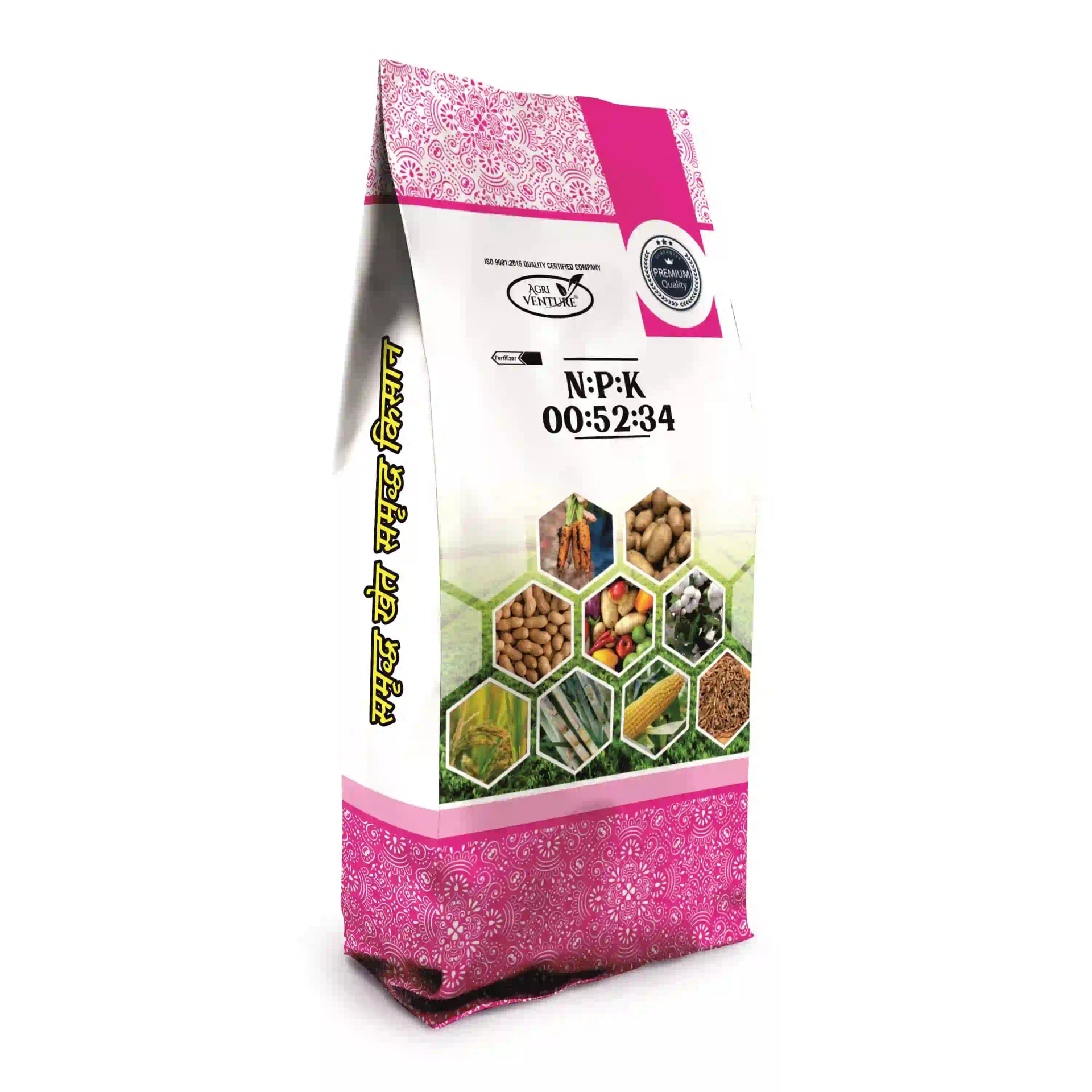

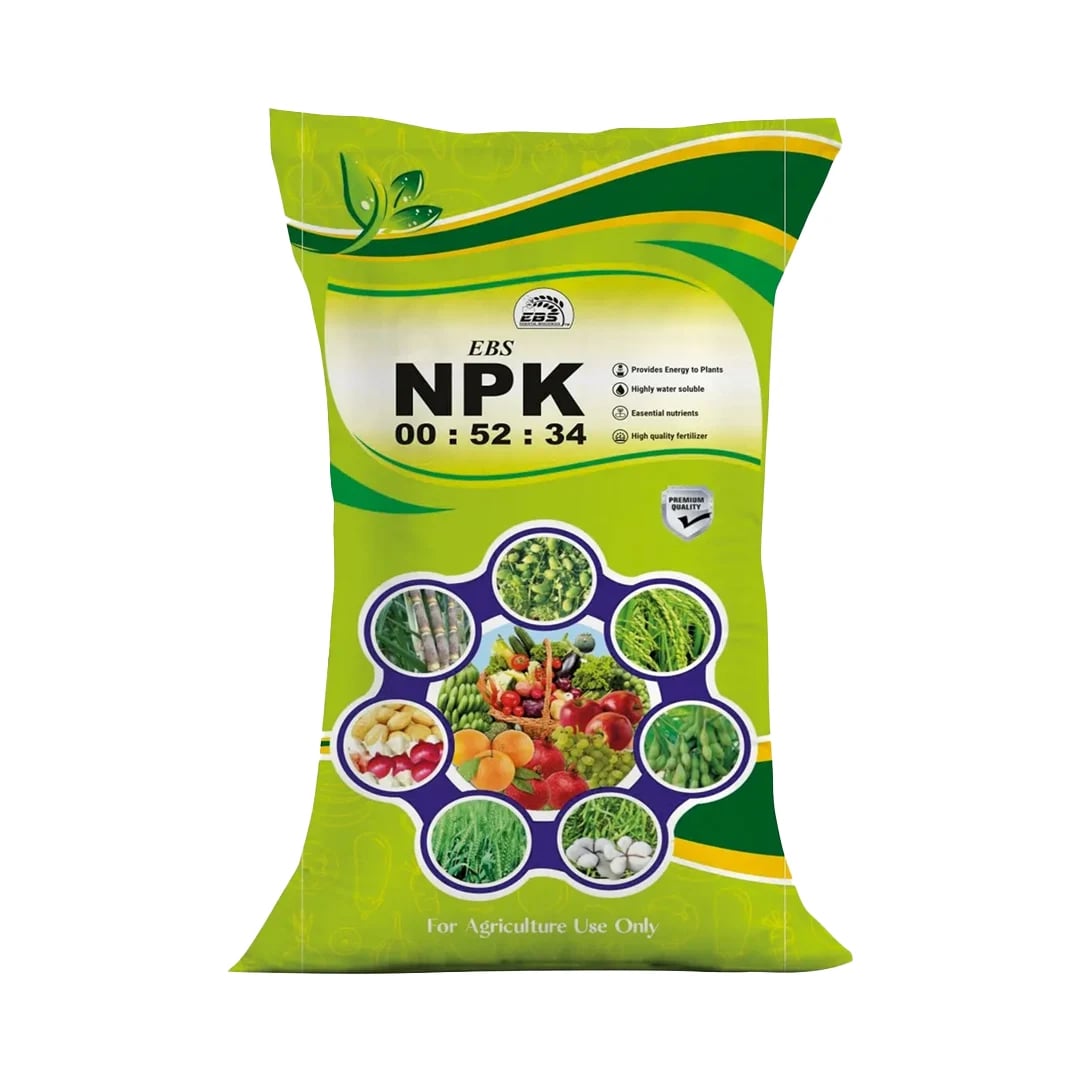
Agriventure Npk 00:52:34 Imported 100% Water Soluble Fertilizer, Phosphates 52% And Potash 34%, For Drip and Foliar Spray
₹8054₹9999
Save ₹194520% Off
🎉 You Save ₹2151 (24% OFF)
Buying In Bulk?
Get Special Pricing for large orders, contact us now!

| Brand: | Essential Biosciences |
| Product Code: | 11320 |
| Country of Origin: | India |
| Category: | Fertilizers |
| Sub Category: | Bulk Fertilizer |




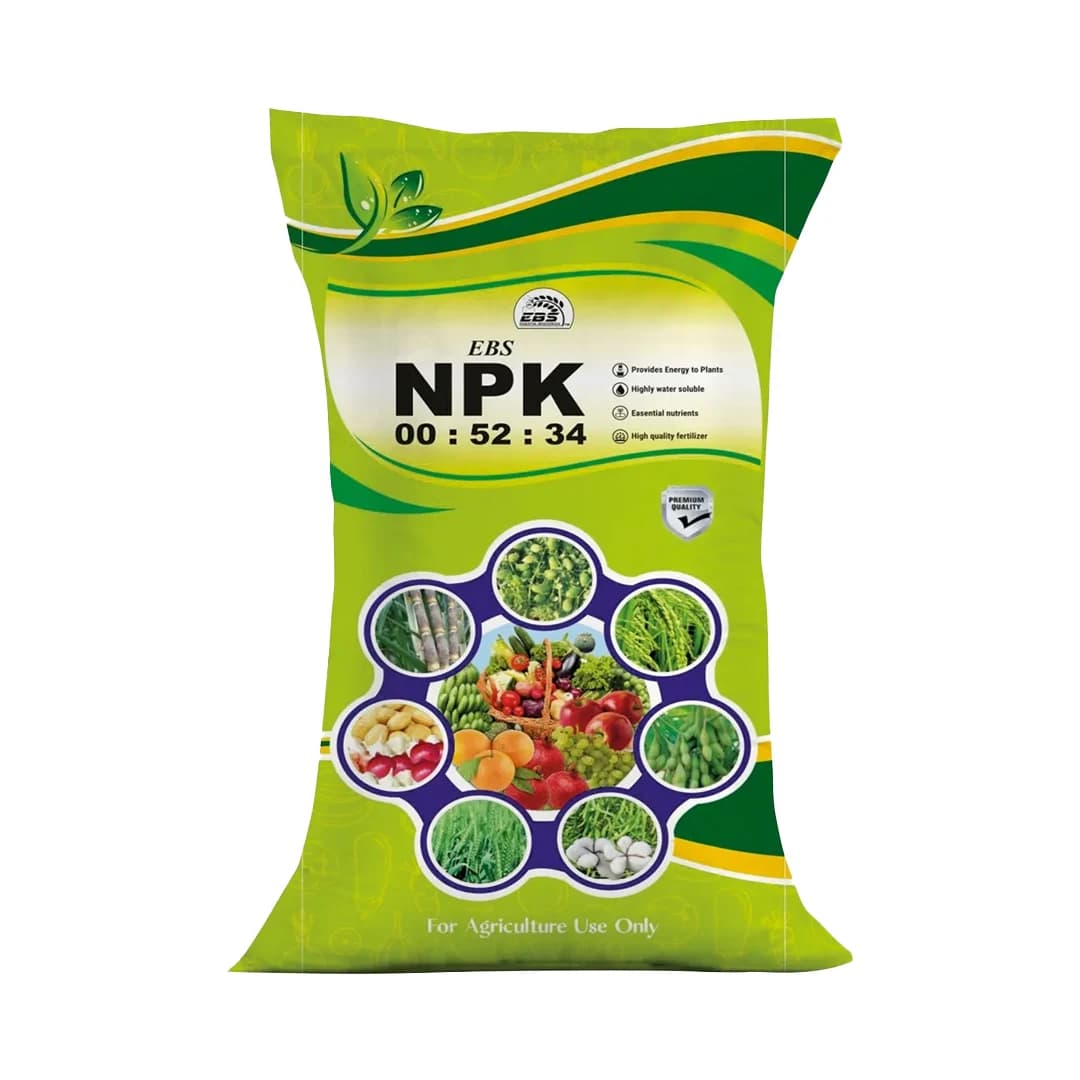
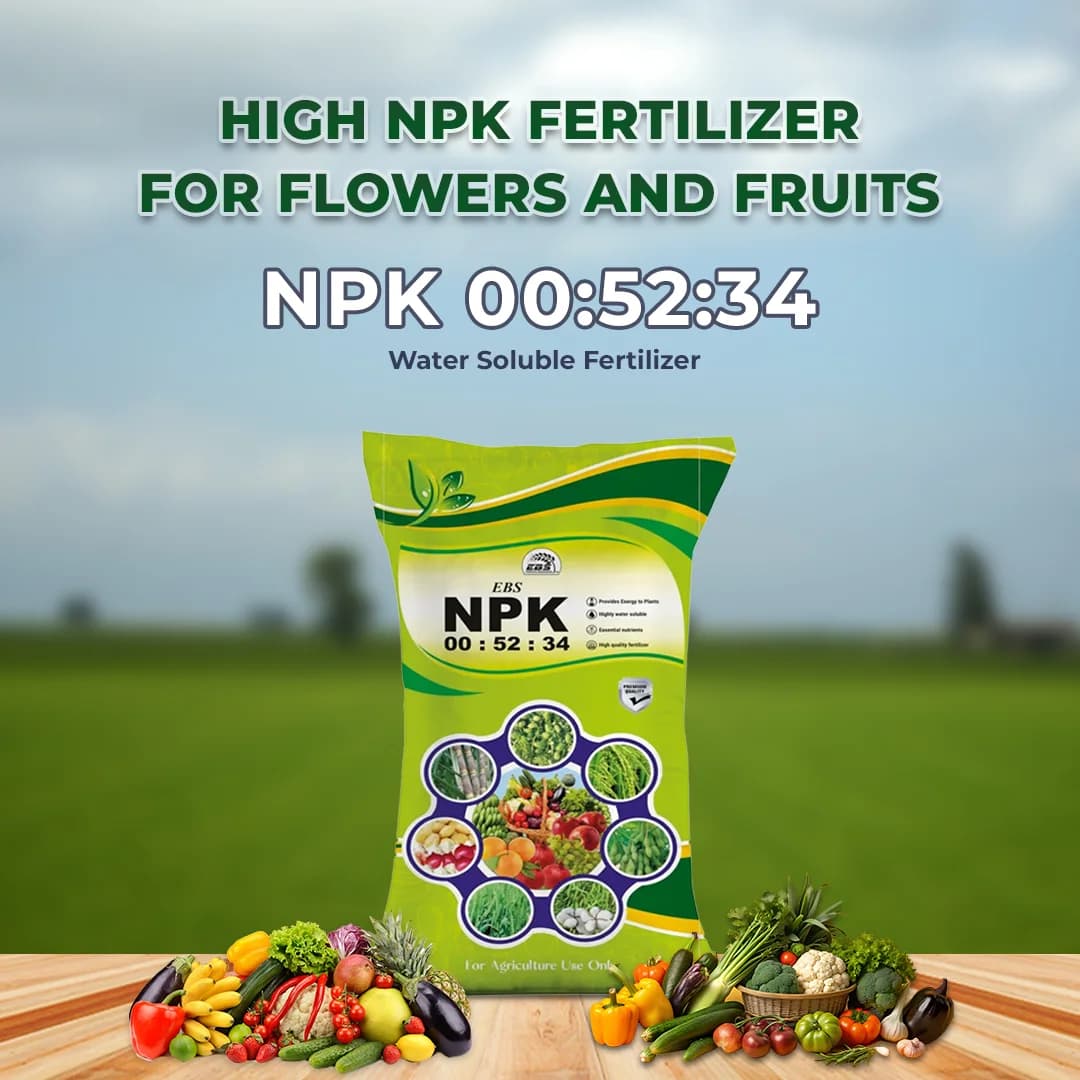
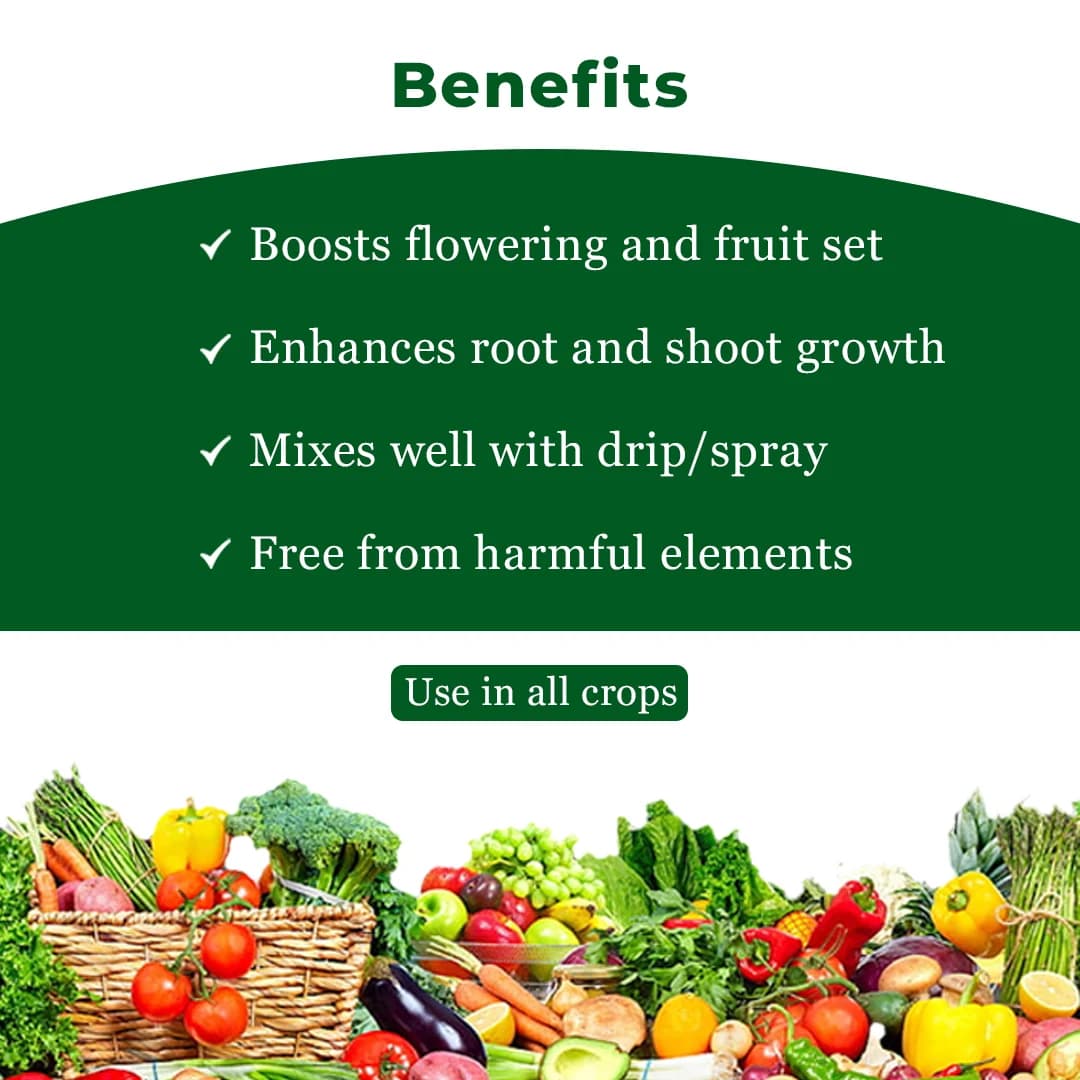
EBS NPK is a high-quality water-soluble fertilizer made for the flowering and fruiting stages of the crop. The product is NPK 00:52:34 fertilizer, also known as Mono Potassium Phosphate, carrying 52% phosphorus and 34% potassium with zero nitrogen. NPK 00:52:34 fertilizer dissolves instantly in water, leaving no residue, which makes it perfect for drip irrigation, fertigation, and foliar spray. EBS NPK promotes strong root development, profuse flowering, better fruit setting, and improved fruit size and colour. As it carries no nitrogen, the product avoids unwanted leafy growth during the reproductive stage. It is chloride-free, low in salt, and suitable for all fruits, vegetables, flowers, and field crops.
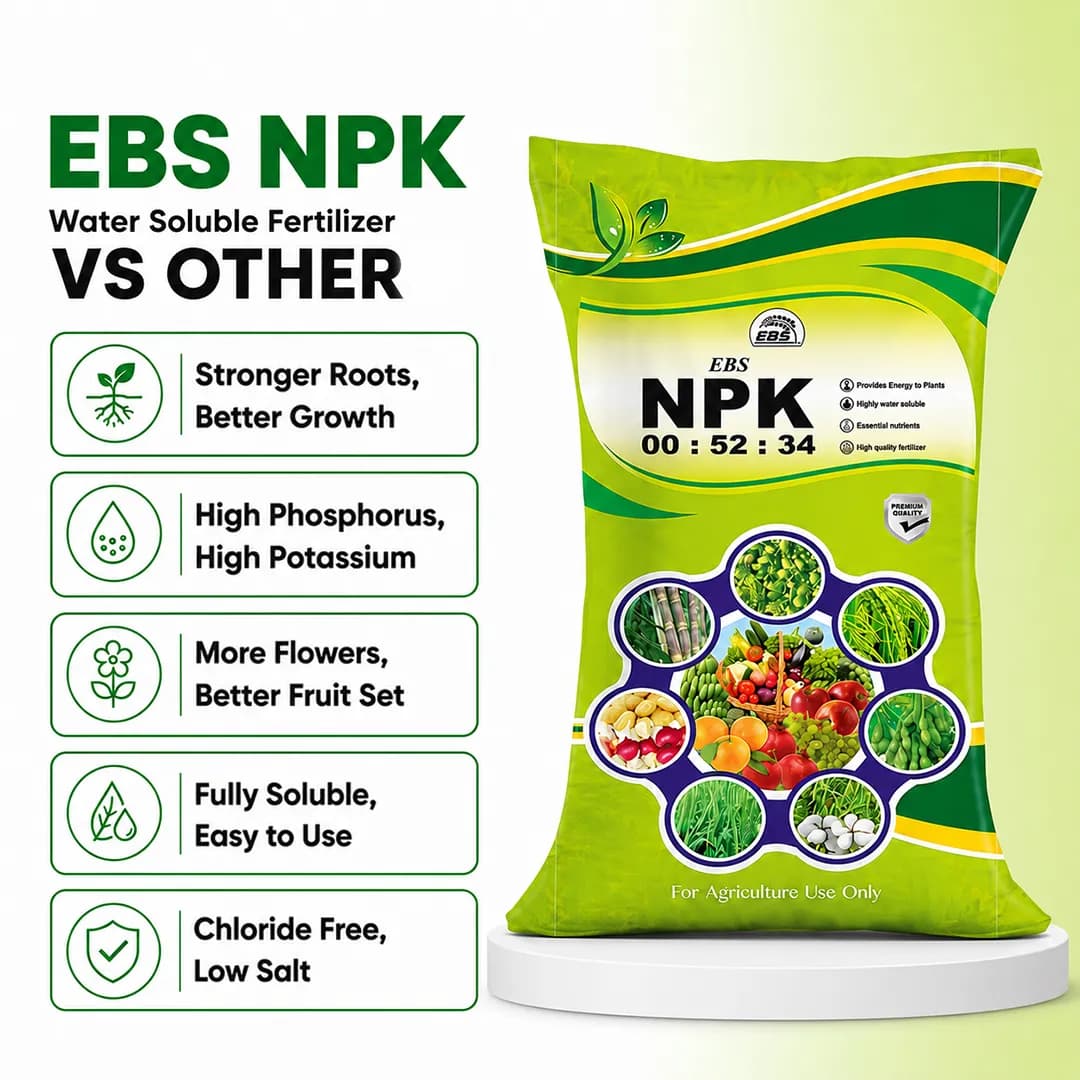
High Phosphorus and Potassium: NPK 00:52:34 fertilizer supplies 52% phosphorus and 34% potassium in one product, perfect for the flowering and fruiting stage.
Zero Nitrogen: EBS NPK contains no nitrogen, so it boosts flowers and fruits without promoting unwanted leafy growth.
Stronger Roots: NPK 00:52:34 fertilizer promotes early root growth and strong plant establishment, especially in young crops.
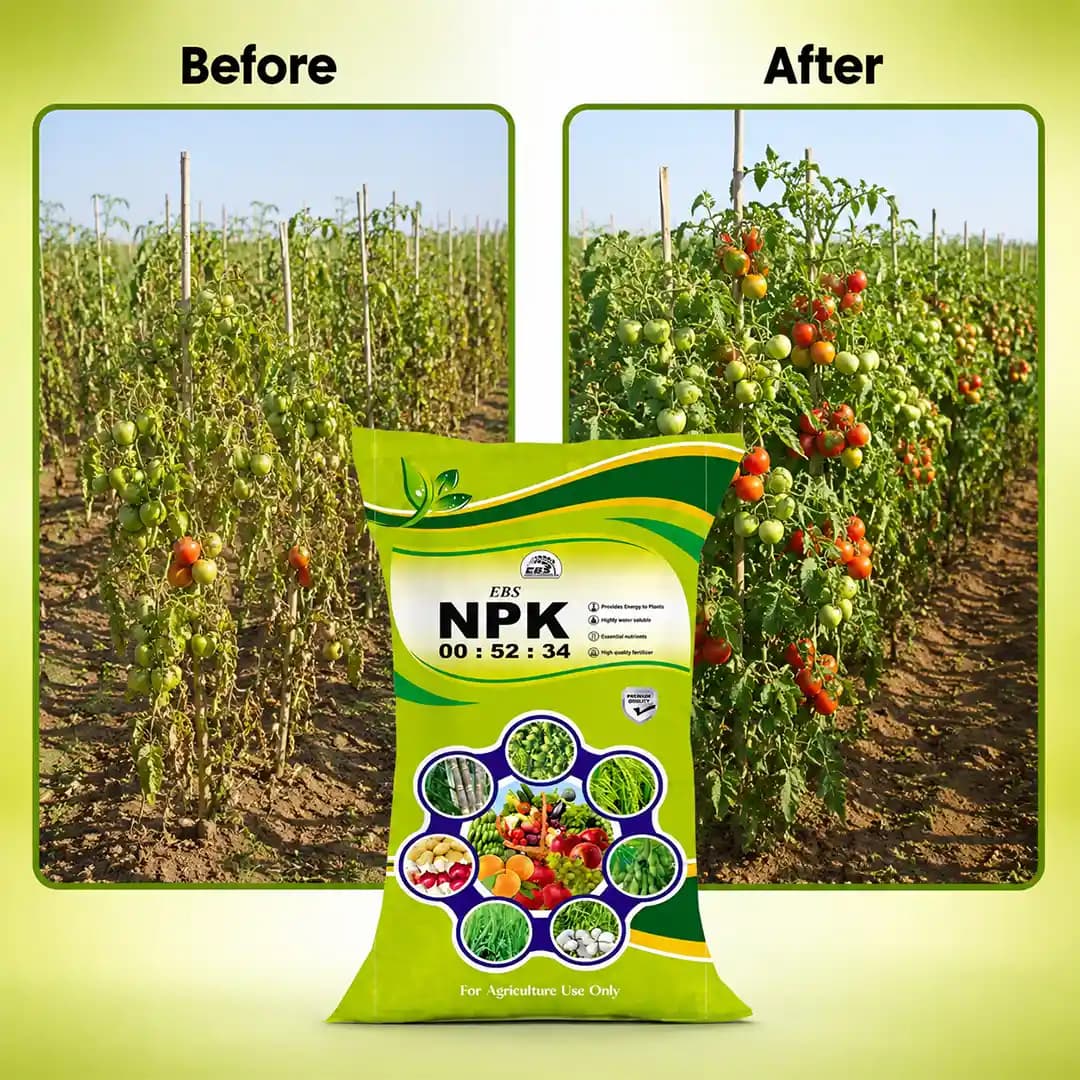
Better Flowering and Fruit Set: EBS NPK reduces flower drop, improves fruit setting, and increases fruit size, sweetness, and colour.
Fully Water Soluble: NPK 00:52:34 fertilizer dissolves instantly and leaves no residue, so it does not clog drip lines or sprayers.
Chloride-Free and Low Salt: EBS NPK is safe for sensitive crops, and its low salt content prevents drip system clogging.
Easy to Mix: NPK 00:52:34 fertilizer works through drip irrigation, fertigation, and foliar spray with no extra effort.
EBS NPK is recommended for the following crop groups:
Fruits (Banana, Mango, Grapes, Pomegranate, Citrus): Improves flowering, fruit setting, fruit size, sugar content, and colour.
Vegetables (Tomato, Chilli, Brinjal, Okra, Onion): Boosts root growth, flowering, and uniform fruit development.
Cereals (Paddy, Wheat, Maize): Strengthens roots, supports grain filling, and improves overall plant health.
Pulses and Oilseeds (Chickpea, Groundnut, Soybean, Mustard): Improves pod setting, seed weight, and oil content.
Cash Crops (Sugarcane, Cotton, Tea, Coffee): Improves root strength, boll and cane quality, and stress tolerance.
Flowers and Ornamentals (Rose, Marigold, Jasmine, Carnation): Increases bloom count, flower size, and stem strength.
Mix EBS NPK in clean water and apply by the suitable method. Always stir well so the powder dissolves completely:
Application Method | Dose | When to Apply |
|---|---|---|
Foliar Spray | 3 to 5 g per litre of water | Flowering and fruit-setting stages |
Drip Irrigation / Fertigation | 1 to 3 kg per acre | Every 10 to 15 days during the reproductive stage |
Soil Application | 5 to 10 kg per acre | At the fruit-setting stage of fruit crops |
Note: Use only the recommended dose, as overuse can cause leaf burn.
Take the right quantity of EBS NPK based on the application method and crop stage.
Pre-dissolve the powder in a small bucket of clean water and stir until fully dissolved.
For foliar spray, add this solution to the spray tank and top up with clean water.
Use a knapsack sprayer with a fine nozzle and spray on both the upper and lower sides of leaves.
For fertigation, pour the dissolved solution into the drip tank and run during regular irrigation.
For soil application, broadcast the powder near the root zone before light irrigation.
Flush the drip line with clean water after fertigation to avoid salt buildup.
Reseal the pack tightly after use and rinse the sprayer with clean water.
Apply NPK 00:52:34 fertilizer during the flowering and fruit-setting stages, when the crop needs more phosphorus and potassium. Spray in the cool hours of early morning or late evening, and avoid applying during extreme heat to prevent leaf burn.
Frequency of Application: Apply EBS NPK every 10 to 15 days during the flowering and fruiting stages. About 3 to 4 applications per crop season give the best results.
Re-Entry Period: There is no waiting period. Field work can resume once the spray dries or the fertigation cycle ends.
Compatibility: NPK 00:52:34 fertilizer mixes well with most pesticides and fungicides. Do not mix with calcium-based or magnesium-based fertilizers, as the reaction can cause clumping or precipitate.
Do not exceed the recommended dose of EBS NPK, as excess soluble salts can scorch leaves and young fruits.
Always dissolve the powder in a small amount of water first; never pour dry powder into a pressurised drip line.
Do not mix NPK 00:52:34 fertilizer with calcium nitrate or magnesium fertilizers, as the reaction forms a precipitate that clogs nozzles.
Clean the drip filter and emitters every 7 to 10 days during fertigation to prevent salt clogging.
Handle the pack with dry hands and use a clean scoop, as the powder picks up moisture quickly.
Avoid spraying during the hot afternoon hours, as the salt content can burn leaves in extreme heat.
Wear gloves and a dust mask while measuring and pouring, and wash your hands well after use.
Store EBS NPK in its original sealed pack in a clean, dry, moisture-proof place away from sunlight.
Keep the product separate from food, animal feed, seeds, drinking water, and other agrochemicals.
Always keep NPK 00:52:34 fertilizer out of reach of children, pets, and farm animals.
Storage Temperature: Between 10°C and 30°C in dry conditions.
Shelf Life: 2 years from the date of manufacture when stored sealed and dry.
Specifications | Details |
|---|---|
Product Name | EBS NPK |
Technical Name | NPK 00:52:34 fertilizer (Mono Potassium Phosphate) |
Formulation Type | Crystalline Powder (100% Water Soluble) |
Biological Group | Complex PK Fertilizer |
Mode of Action | Supplies phosphorus and potassium for root growth, flowering, and fruiting |
Nutrient Composition | Phosphorus (PâOâ ) 52%, Potassium (KâO) 34%, Nitrogen 0% |
Recommended For | Fruits, Vegetables, Cereals, Pulses, Oilseeds, Cash Crops, Flowers |
Pack Sizes Available | 1 kg, 5 kg, 25 kg |
Country of Origin | India |
Shelf Life | 2 years from the date of manufacture |
Pre-Harvest Interval | Not Applicable (Safe up to harvest) |