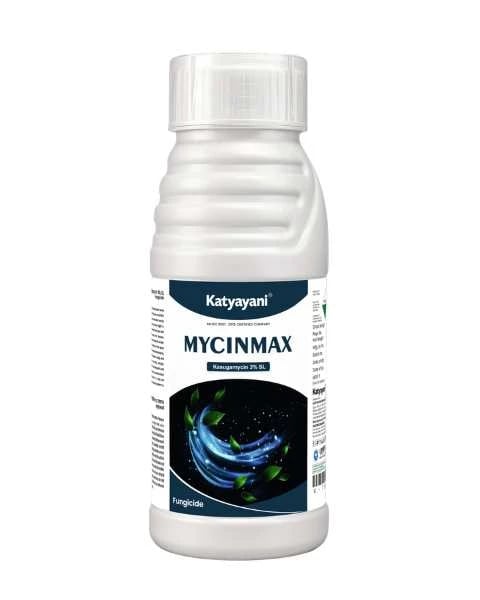
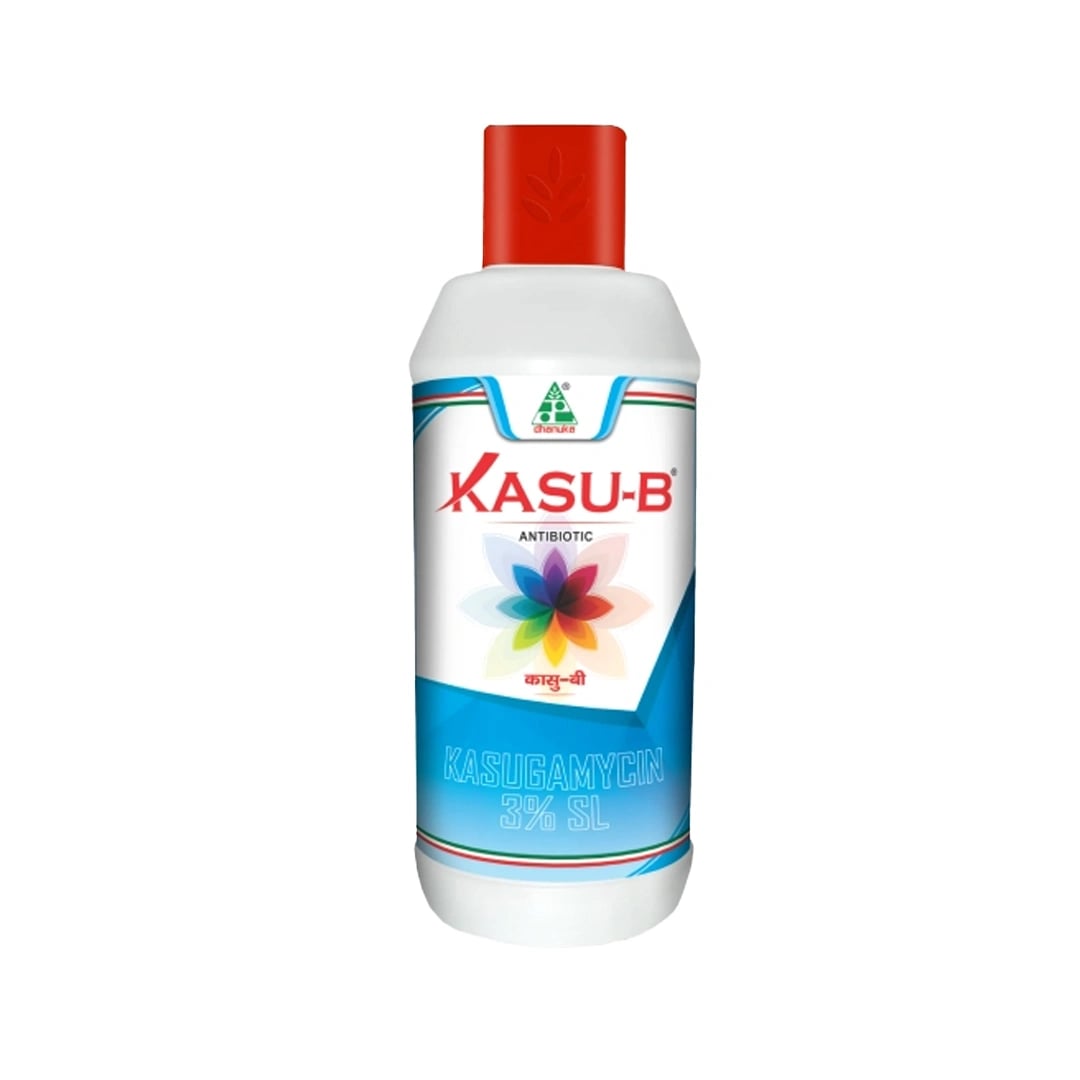
Katyayani Mycinmax Kasugamycin 3% SL Fungicide
₹752₹950
Save ₹19821% Off

🎉 You Save ₹38 (6% OFF)
Buying In Bulk?
Get Special Pricing for large orders, contact us now!



| Brand: | Dhanuka Agritech Limited |
| Product Code: | 6753 |
| Country of Origin: | India |
| Category: | Crop Protection |
| Sub Category: | Fungicides |




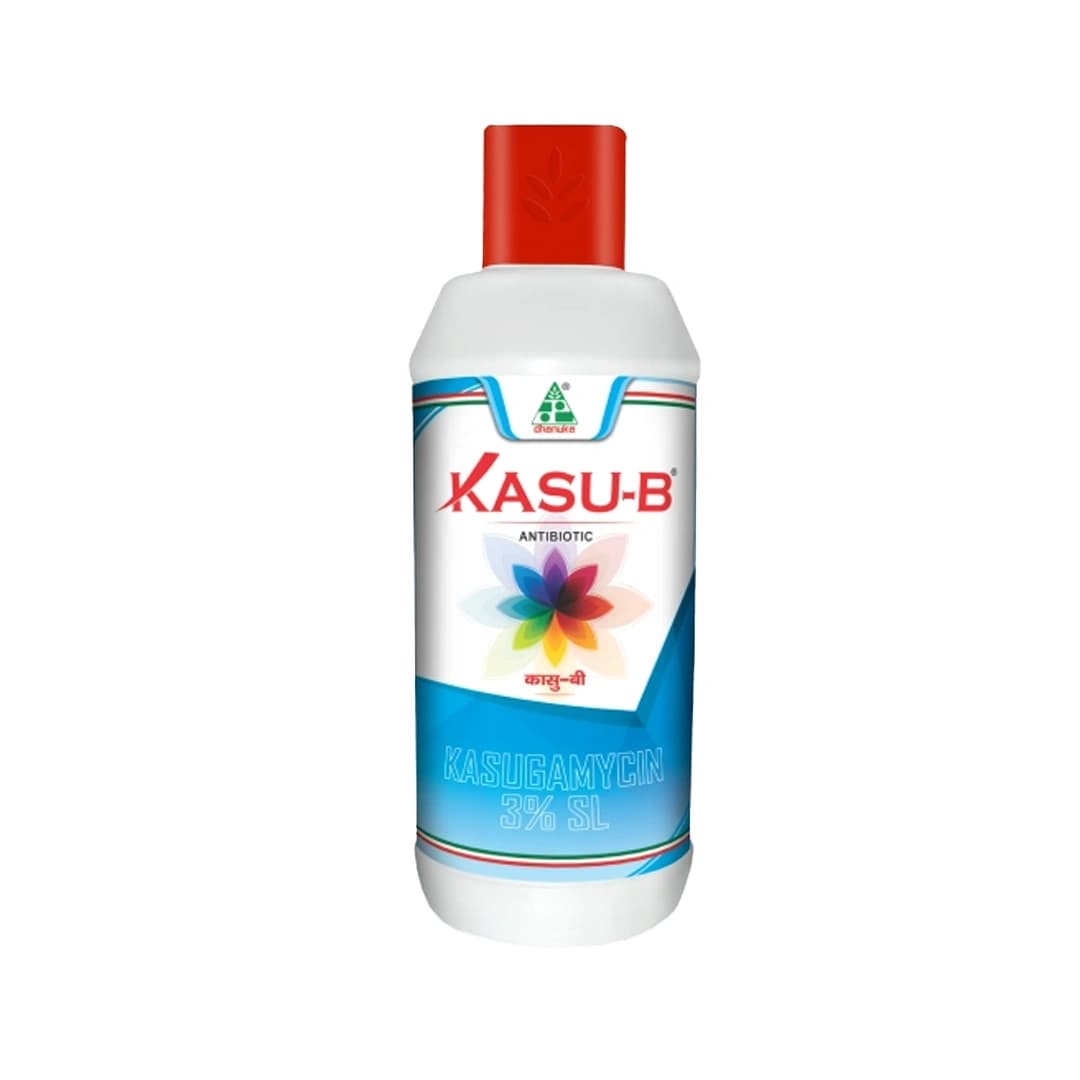
Dhanuka Kasu-B is a broad-spectrum systemic fungicide and bactericide that contains Kasugamycin 3% SL. It works by stopping pathogens from creating vital proteins, leading to cell death. The Dhanuka Kasu-B fungicide is great for resistance management and has high compatibility with other crop remedies for improved results, providing effective results at lower chemical impact.
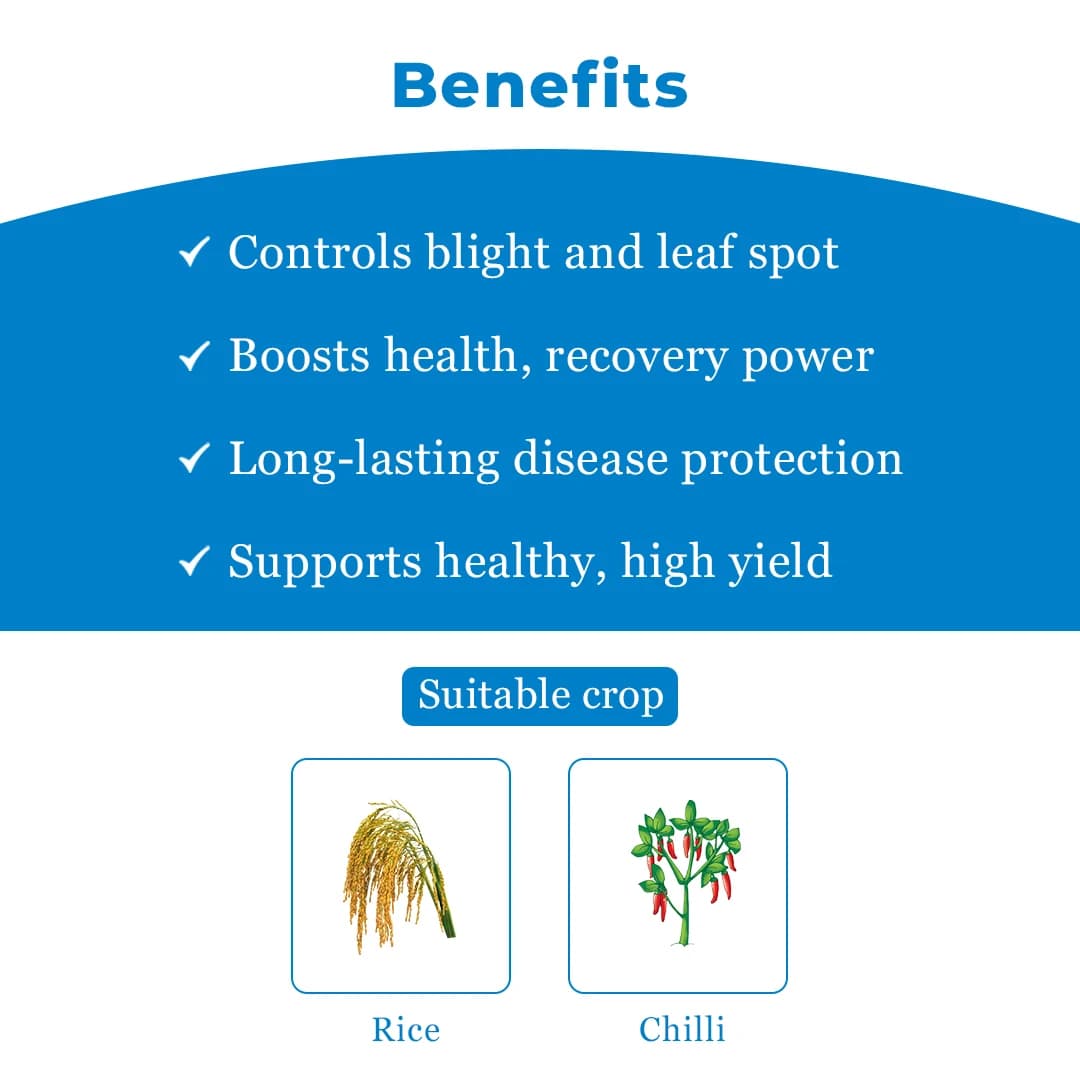
Dual Application: This Kasugamycin 3% SL can be used to tackle fungal and bacterial diseases, making it a 2-in-1 crop remedy.
Complete Crop Coverage: When applied, the Kasu-B fungicide offers systemic action with translaminar activity, covering the entire crop.
Flexible Application: The Kasugamycin 3% SL formula can be used for preventive and curative actions, making it very flexible.
Low Phytotoxicity: Kasugamycin 3% SL has low toxicity levels as it is derived from natural microbial fermentation.
Resistance Management: The Kasu-B fungicide offers a unique formula that is effective against pathogens that have developed resistance.
High Compatibility: This fungicide is compatible with most fungicides and insecticides, increasing efficacy when mixed.
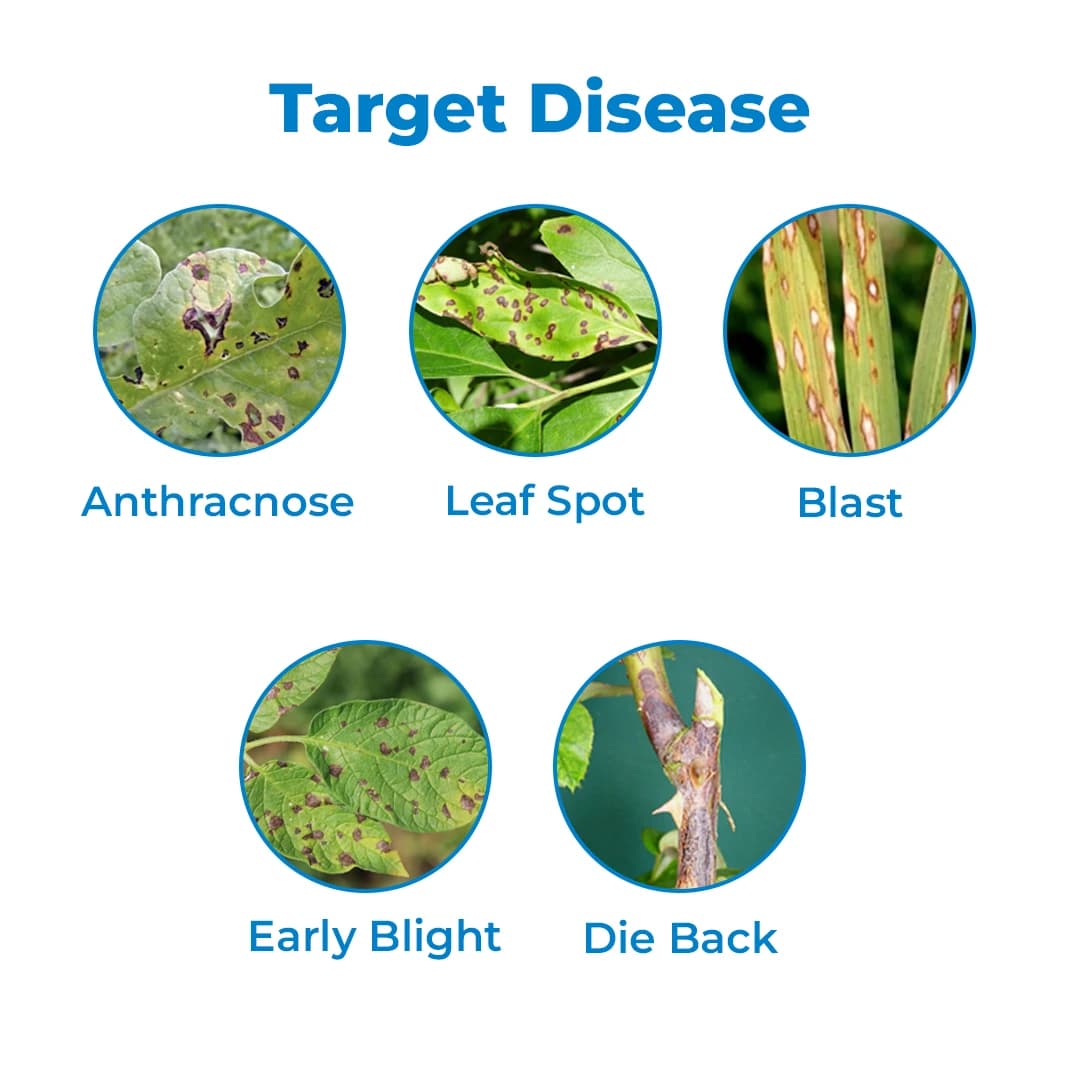
Broad-Spectrum: The Kasugamycin 3% SL controls various diseases like Blast, Early Blight, Angular Leaf Spot, and many others.
Kasu-B Fungicide Uses cover both fungal and bacterial diseases across all registered crops:
Blast Diseases: Rice Blast (Pyricularia oryzae) — Leaf Blast, Neck Blast, Panicle Blast
Blight Diseases: Early Blight (Alternaria solani) — Tomato and Chilli
Leaf Spot Diseases: Angular Leaf Spot (Cucumber), Alternaria Leaf Spot (Chilli, Tomato)
Bacterial Diseases: Bacterial Leaf Blight (Rice), Bacterial Spot (Cucumber, Tomato)
Registered Crops: Rice / Paddy, Tomato, Chilli, Cucumber
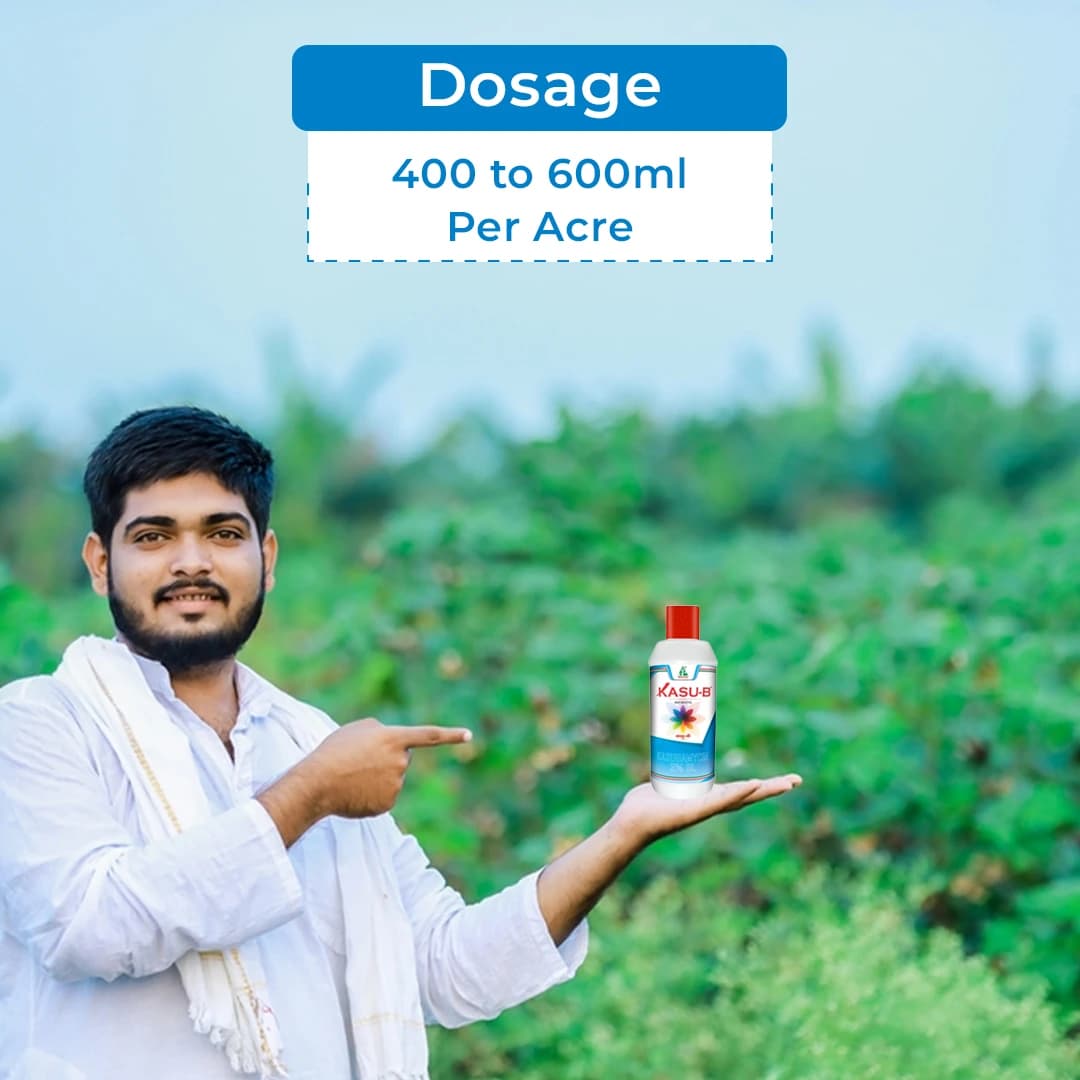
Mix Kasu-B fungicide in 200 litres of clean water per acre for foliar spray. Apply preventively or at the very first sign of disease for best results.
Crop | Target Disease | Dose Per Acre | Per 15L Pump | PHI |
|---|---|---|---|---|
Rice / Paddy | Blast — Leaf, Neck, Panicle | 400–600 ml | 30–45 ml | 14 days |
Tomato | Early Blight, Alternaria Leaf Spot | 400–600 ml | 30–45 ml | 3 days |
Chilli | Alternaria Leaf Spot, Early Blight | 400–600 ml | 30–45 ml | 3 days |
Cucumber | Angular Leaf Spot, Bacterial Spot | 400–600 ml | 30–45 ml | 3 days |
Measure the required dose of Dhanuka Kasu-B as per the crop-wise dose table above.
Add the measured quantity to a sprayer tank half-filled with clean water and mix well before topping up.
Fill with the remaining clean water and agitate well to form a uniform solution.
Spray evenly on both upper and lower leaf surfaces, stems, and panicles — thorough coverage is critical for both contact and systemic activity.
For Rice Blast, apply at the first sign of lesions on leaf tips or at the panicle initiation stage for neck blast prevention.
For Tomato Early Blight, apply from the vegetative stage onward and repeat every 10–14 days during humid and wet weather.
Apply during early morning or late evening — avoid spraying in extreme heat or when rain is expected within 3–4 hours.
Rinse the sprayer thoroughly with clean water after every use.
Apply Kasugamycin 3% SL in the early morning or late evening. For Rice Blast, begin preventive sprays at the tillering stage during warm, humid weather when blast risk is highest. For Tomato and Chilli, apply at the first visible lesions and repeat every 10–14 days through the fruiting period.
Frequency of Application: Apply every 10–14 days during active disease pressure. Do not exceed 3–4 applications per season — always rotate Kasugamycin 3% SL with fungicides from different FRAC groups to prevent resistance development in target pathogen populations.
Re-Entry Period: Do not enter treated fields for at least 12 hours after spraying without proper protective gear.
Tank-Mix Compatibility: Dhanuka Kasu-B is compatible with most fungicides and insecticides. Avoid mixing with strongly alkaline products. Always perform a jar test before mixing with unfamiliar inputs.
Wear gloves, goggles, and a face mask before handling or spraying Kasu-B fungicide.
Do not eat, drink, or smoke during mixing or application.
Avoid direct contact with skin and eyes — rinse immediately with clean water.
Keep children, pets, and livestock away from treated fields for at least 12 hours.
Wash all exposed skin thoroughly with soap and water after every spray session.
Triple rinse empty containers, puncture, and dispose of per local waste guidelines.
Store Dhanuka Kasu-B in its original sealed container in a cool, dry place away from direct sunlight.
Keep away from food, animal feed, and seeds.
Store out of reach of children and farm animals.
Storage Temperature: Below 35°C.
Shelf Life: 2 years from the date of manufacture.
Specification | Details |
|---|---|
Product Name | Kasu-B Fungicide — Kasugamycin 3% SL |
Brand | Dhanuka Agritech Limited |
Kasu-B Fungicide Technical Name | Kasugamycin 3% SL (Soluble Liquid) |
Chemical Class | Aminoglycoside Antibiotic — derived from Streptomyces kasugaensis |
FRAC Group | 24 — Protein synthesis inhibitor (30S ribosomal subunit binding) |
Mode of Action | Systemic + Contact — inhibits protein biosynthesis and fatty acid production in fungal and bacterial pathogens → stops reproduction and growth |
Application | Preventive and Curative |
Formulation Type | SL — Soluble Liquid |
Application Method | Foliar Spray |
Dose | 400–600 ml per acre (2–3 ml per litre of water) |
Pack Sizes Available | 500 ml |
Country of Origin | India |
Shelf Life | 2 years from date of manufacture |
Pre-Harvest Interval (PHI) | 3 days (Tomato, Chilli, Cucumber) / 14 days (Rice) |