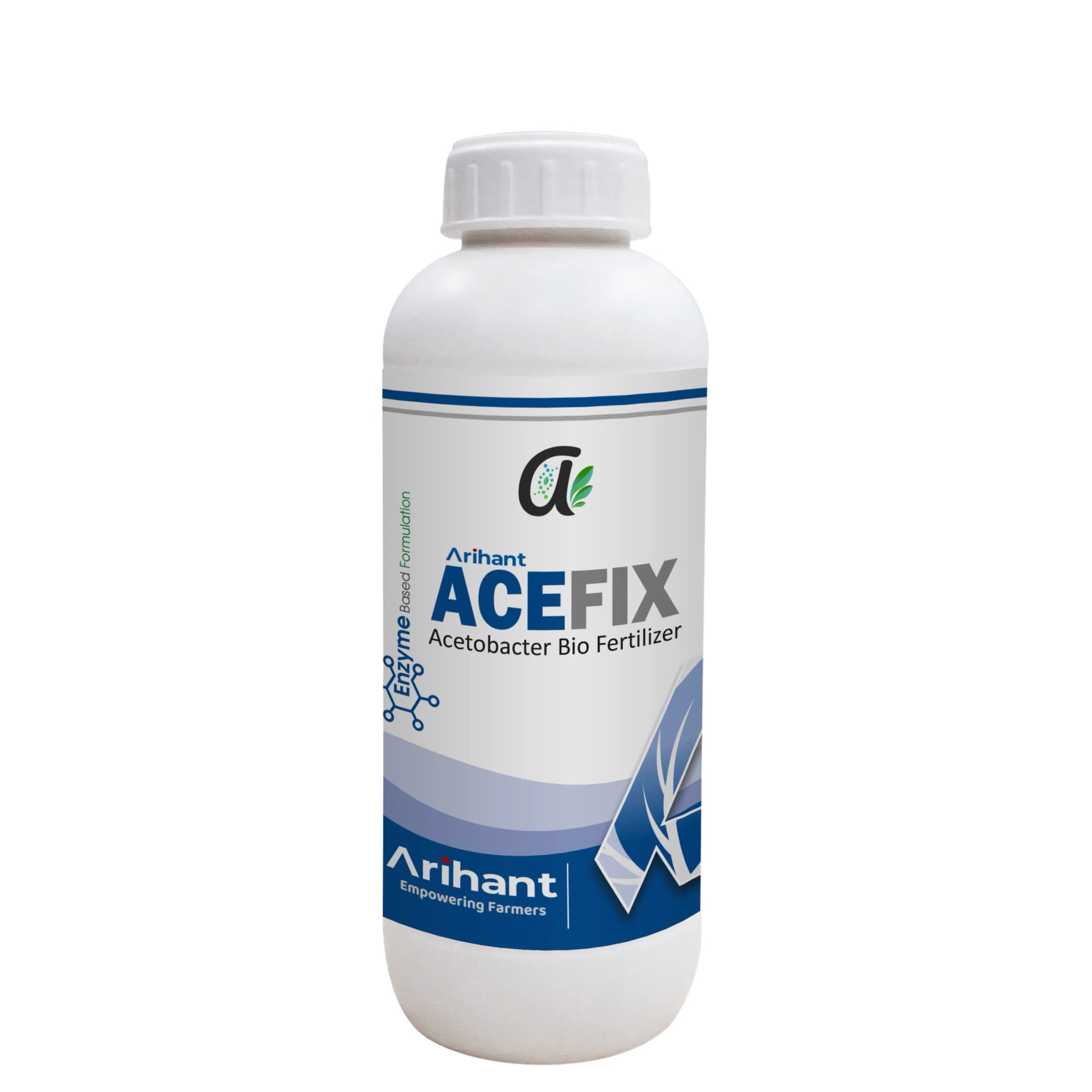
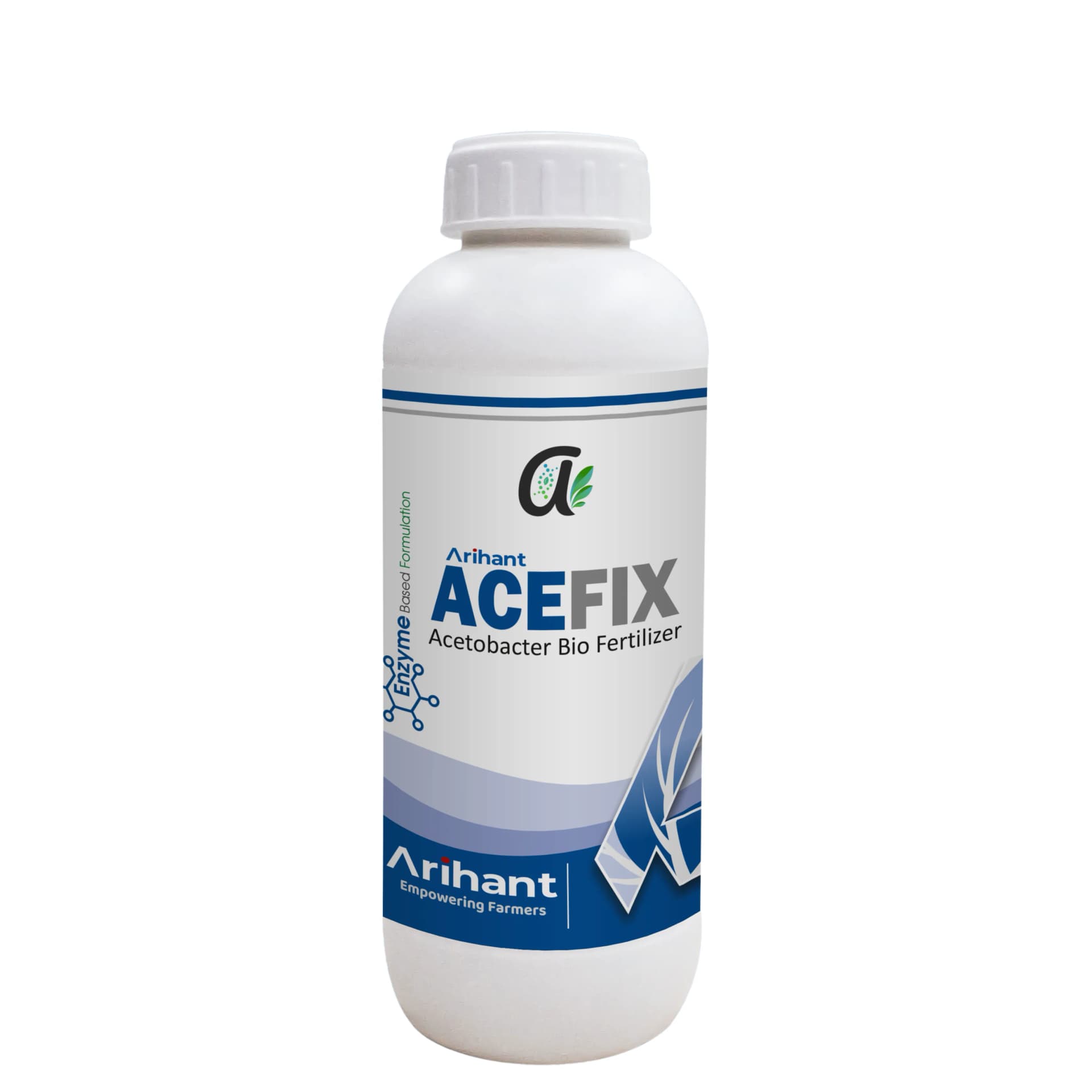
Arihant Acefix is a liquid acetobacter biofertilizer containing nitrogen-fixing Acetobacter with a minimum viable count of 1 x 10^8 CFU/ml. This acetobacter biofertilizer helps fix atmospheric nitrogen and supports better nitrogen availability to crops. It also supports stronger roots, improved nutrient and water uptake, and healthy plant growth. Acetobacter fertilizer is useful in crops such as sugarcane and coffee, making it a versatile product.
Key Features and Benefits of Arihant Acefix:
Nitrogen Fixation: Acetobacter biofertilizer helps convert atmospheric nitrogen into available form for plants.
Root Growth: Acetobacter biofertilizer supports stronger roots and better root branching.
Crop Vigor: Acetobacter biofertilizer supports healthy vegetative growth and helps crops produce more flowers.
Soil Biology: Acetobacter biofertilizer supports beneficial microbial activity around the root zone.
Arihant Acefix Uses:
Field Crops: Sugarcane, Paddy, Wheat, Maize, Cotton, Groundnut, Soybean
Pulses: Different pulse crops
Oilseed Crops: Groundnut, Soybean and other oilseeds
Vegetable Crops: Tomato, Chilli, Brinjal, Onion, Potato
Fruit Crops: Banana, Mango, Papaya, Guava, Citrus, Grapes, Pomegranate
Plantation Crops: Coconut, Tea, Coffee
Other Crops: Vegetables, Fruits, Floriculture Crops
Arihant Acefix Dose:
Use acetobacter biofertilizer according to the crop and application method.
Crop | Per kg Seed | Per Acre Soil | Per Acre Drip | Per Litre Root Dip | Application Method |
|---|
Paddy | 5 to 10 ml | 1 to 2 L | 1 to 2 L | 5 ml | Seed / Soil / Drip / Root Dip |
Wheat | 5 to 10 ml | 1 to 2 L | 1 to 2 L | 5 ml | Seed / Soil / Drip / Root Dip |
Maize | 5 to 10 ml | 1 to 2 L | 1 to 2 L | 5 ml | Seed / Soil / Drip / Root Dip |
Cotton | 5 to 10 ml | 1 to 2 L | 1 to 2 L | 5 ml | Seed / Soil / Drip / Root Dip |
Groundnut | 5 to 10 ml | 1 to 2 L | 1 to 2 L | 5 ml | Seed / Soil / Drip / Root Dip |
Soybean | 5 to 10 ml | 1 to 2 L | 1 to 2 L | 5 ml | Seed / Soil / Drip / Root Dip |
Note: Mix the soil dose with FYM or compost. For other listed crops, use the same application-method dose only where suitable on the product label.
How to Use Arihant Acefix:
Shake the container well before use.
Use 5 to 10 ml of acetobacter biofertilizer per kg of seed for seed treatment.
Mix 1 to 2 litres per acre with FYM or compost for soil application.
Apply 1 to 2 litres per acre through drip irrigation.
Use 5 ml per litre of water for root dipping.
Maintain suitable soil moisture after application.
Best Time to Apply:
Apply acetobacter biofertilizer at sowing, transplanting, early crop establishment, or active growth. Application near the root zone helps the beneficial bacteria establish where nutrient uptake is active.
Frequency of Application and Compatibility:
Frequency of Application: Use acetobacter biofertilizer according to crop needs and label directions.
Compatibility: Avoid direct mixing with strong bactericides unless compatibility is confirmed.
Application: Acetobacter biofertilizer can be used through seed treatment, soil application, drip irrigation, or root dipping.
Safety Precautions and Handling:
Wear gloves while handling acetobacter biofertilizer.
Avoid direct contact with eyes and skin.
Wash hands properly after application.
Keep away from food, children, and animals.
Storage Instructions:
Store acetobacter biofertilizer in a cool, dry, shaded place.
Protect from direct sunlight and excessive heat.
Keep the container tightly closed.
Product Specification:
Specification | Details |
|---|
Product Name | Arihant Acefix |
Manufacturer | Arihant Bioscience India Pvt. Ltd. |
Technical Content | Acetobacter Biofertilizer, Nitrogen-Fixing Bacteria |
Viable Count | Minimum 1 x 10^8 CFU/ml |
Formulation | Liquid |
Category | Biofertilizer |
Recommanded Crops | Paddy, Wheat, Maize, Cotton, Groundnut, Soybean |
Dose | 5 to 10 ml/kg seed; 1 to 2 litres/acre soil; 1 to 2 litres/acre drip |
Main Function | Nitrogen fixation and nutrient uptake |
Application | Seed, Soil, Drip, Root Dip |
Country of Origin | India |
Pack Sizes Available | 250 ml, 500 ml, 1 litre |