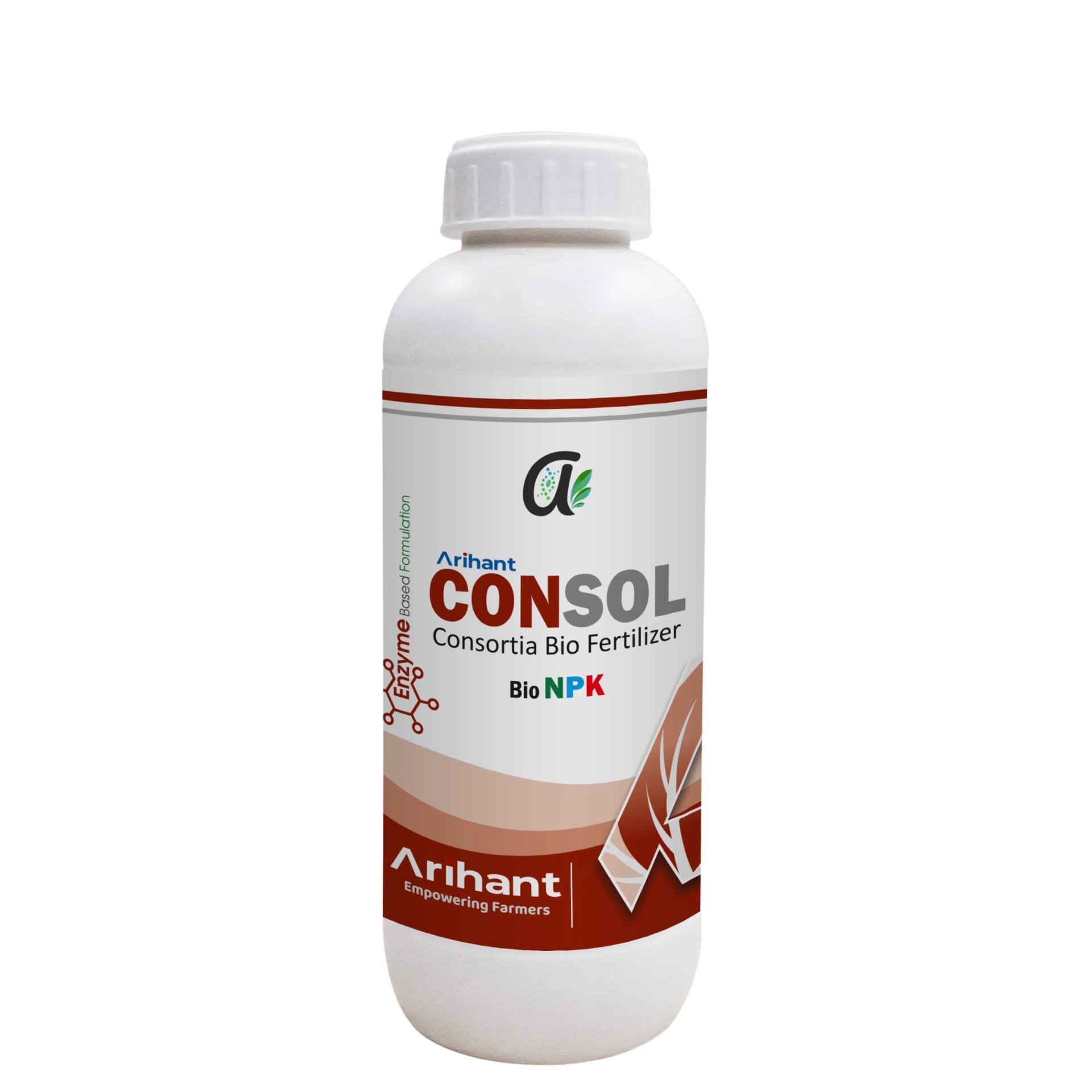
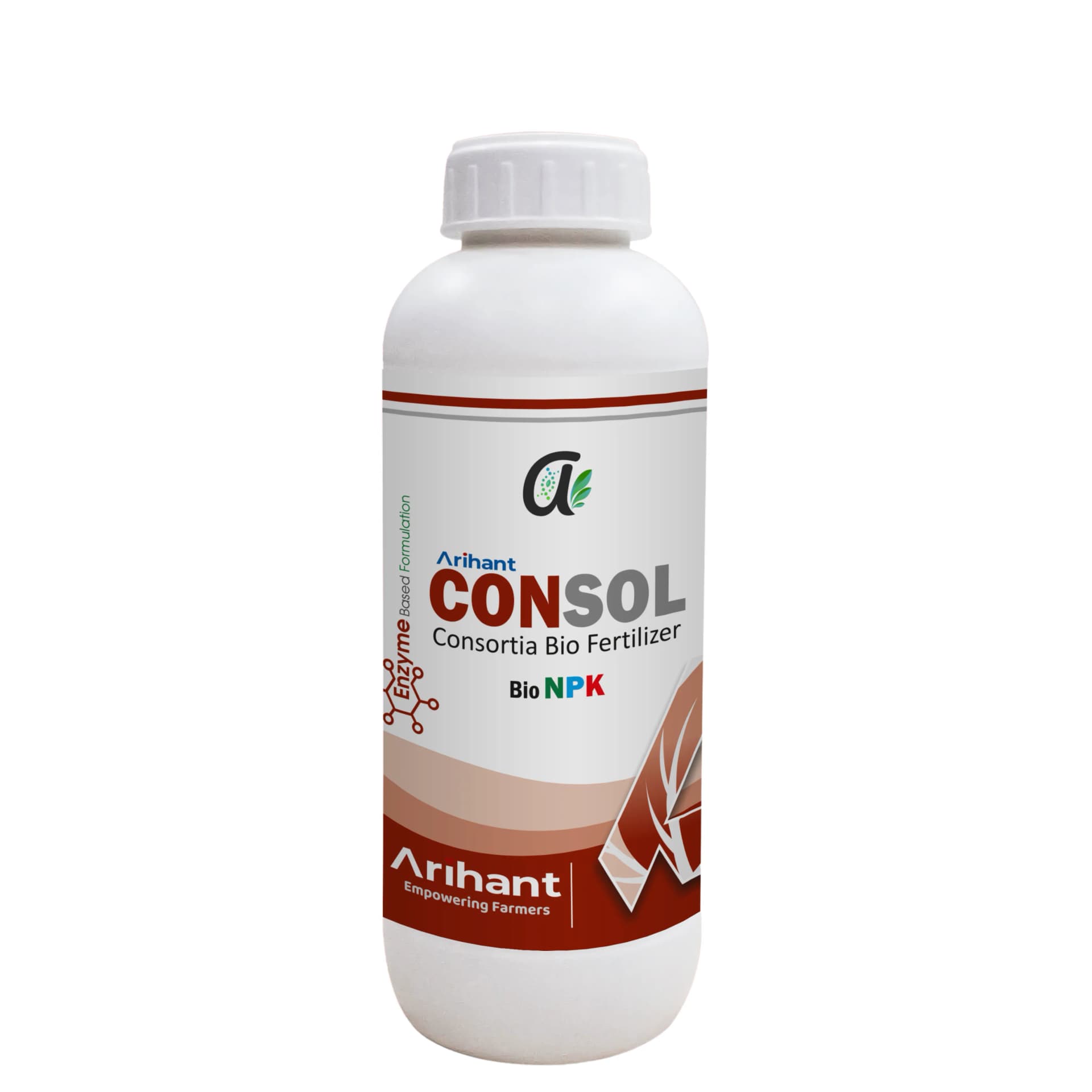
NPK Consortia is a liquid biofertilizer containing a combination of beneficial microorganisms that helps convert nutrients into the available form for crops. Consortia biofertilizer supports nutrient utilization and enhances soil fertility. Consortia Biofertilizer is used for fruit crops, vegetables, plantation crops, and other recommended plants.
Key Features and Benefits of NPK Consortia:
Better Nutrient Availability: Phosphate solubilizing bacteria release organic acids that help make fixed phosphorus more available to plants.
High Yield: Bio NPK Consortia help improve the availability of nutrients and increase crop production.
Supports Root Structure: Liquid Consortia NPK releases beneficial bacteria and improves root strength, reducing the risk of crop loss.
Fulfills Nutrient Deficiency: Bio NPK Consortia Bacteria can provide essential nutrients to the crops and ensure healthy growth.
Balanced Nutrient Content: Bio NPK Consortia Bacteria provides better access to nitrogen, phosphorus, and potassium, supporting healthy plant development.
NPK Consortia Uses:
Bio NPK Consortia biofertilizer is used as a biological nutrient support product for different crops and plant groups.
Fruit Crops: Grapes, banana, citrus, mango, pomegranate
Vegetable Crops: Tomato, potato, brinjal, onion, garlic, chilli, beans, okra, pea, cabbage, cauliflower, carrot
Field Crops: Groundnut, cotton, soybean, sugarcane, paddy, rice, wheat, sorghum, bajra, maize, oat, barley
Oilseed Crops: Mustard, sunflower
Plantation Crops: Coconut
Other Plants: Lawns, gardens, and greenhouse plants
Bio NPK Consortia can be used through seed treatment, root dipping, soil application, drip irrigation, and foliar spray according to the recommended application method.
NPK Consortia Dose:
The recommended dose of Liquid Consortia NPK is 1 litre per acre.
Crop | Purpose | Dose / Acre | Per 15 L Pump | Application Method |
|---|
Grapes | Nutrient availability and plant growth | 1 litre | 75 ml | Soil Application |
Banana | Root zone nutrition and plant growth | 1 litre | 75 ml | Soil Application |
Citrus | Nutrient uptake and plant growth | 1 litre | 75 ml | Soil Application |
Mango | Root zone nutrition and plant development | 1 litre | 75 ml | Soil Application |
Tomato | Nutrient support and crop growth | 1 litre | 75 ml | Soil Application |
Pomegranate | Nutrient availability and plant growth | 1 litre | 75 ml | Soil Application |
Groundnut | Nutrient uptake and crop development | 1 litre | 75 ml | Soil Application |
Cotton | Nutrient availability and plant growth | 1 litre | 75 ml | Soil Application |
Soybean | Nutrient uptake and crop development | 1 litre | 75 ml | Soil Application |
Coconut | Root zone nutrition and plant growth | 1 litre | 75 ml | Soil Application |
Potato | Nutrient support and crop development | 1 litre | 75 ml | Soil Application |
Brinjal | Nutrient uptake and plant growth | 1 litre | 75 ml | Soil Application |
Onion | Nutrient availability and bulb development | 1 litre | 75 ml | Soil Application |
Garlic | Nutrient availability and crop growth | 1 litre | 75 ml | Soil Application |
Cumin | Nutrient uptake and crop development | 1 litre | 75 ml | Soil Application |
Chilli | Nutrient support and plant growth | 1 litre | 75 ml | Soil Application |
Beans | Nutrient availability and crop growth | 1 litre | 75 ml | Soil Application |
Okra | Nutrient uptake and plant development | 1 litre | 75 ml | Soil Application |
Pea | Nutrient support and crop growth | 1 litre | 75 ml | Soil Application |
Cabbage | Nutrient availability and crop development | 1 litre | 75 ml | Soil Application |
Cauliflower | Nutrient uptake and plant growth | 1 litre | 75 ml | Soil Application |
Sugarcane | Nutrient availability and crop growth | 1 litre | 75 ml | Soil Application |
Paddy | Nutrient uptake and crop development | 1 litre | 75 ml | Soil Application |
Wheat | Nutrient uptake and crop development | 1 litre | 75 ml | Soil Application |
Sorghum | Nutrient support and crop growth | 1 litre | 75 ml | Soil Application |
Bajra | Nutrient uptake and plant development | 1 litre | 75 ml | Soil Application |
Maize | Nutrient availability and crop growth | 1 litre | 75 ml | Soil Application |
Oat | Nutrient support and crop development | 1 litre | 75 ml | Soil Application |
Barley | Nutrient uptake and plant growth | 1 litre | 75 ml | Soil Application |
Mustard | Nutrient availability and crop development | 1 litre | 75 ml | Soil Application |
Sunflower | Nutrient support and plant growth | 1 litre | 75 ml | Soil Application |
Carrot | Nutrient uptake and root development | 1 litre | 75 ml | Soil Application |
Note: The 75 ml per 15-litre pump is calculated from 1 litre per acre, assuming 200 litres of water per acre. Adjust the quantity according to the actual water volume used. PHI is not applicable because NPK Consortia biofertilizer is not a pesticide.
How to Use NPK Consortia:
Measure 1 litre of NPK Consortia according to the cultivated area.
For seed treatment, mix the recommended quantity with water and coat the seeds evenly before sowing.
For root dipping, prepare the required solution and dip the roots before transplanting.
For soil application, mix the product with suitable organic material or apply around the active root zone.
For drip irrigation, introduce the product through a suitable irrigation system.
For foliar application, dilute according to the recommended spray concentration.
Mix properly before application and use the prepared solution promptly.
Maintain suitable soil moisture after soil application to support microbial activity.
Best Time to Apply:
Apply NPK Consortia biofertilizer during sowing, transplanting, or early crop growth when roots are actively developing. Soil and drip applications can also be used during the vegetative stage when the crop requires additional biological nutrient support.
Frequency of Application and Compatibility:
Frequency of Application: Follow the crop-specific recommendation and product label.
Application: Use through seed treatment, root dipping, soil application, drip irrigation, or foliar spray as recommended.
Microbial Activity: Maintain suitable soil moisture after soil application.
Chemical Fertilizers: Avoid excessive use of chemical fertilizers when applying a biological nutrient product.
Compatibility: Do not mix Consortia biofertilizer directly with fungicides, insecticides, herbicides, or incompatible chemical fertilizers unless compatibility is confirmed.
Storage: Protect the live microbial formulation from excessive heat and direct sunlight.
Safety Precautions and Handling:
Use only the recommended quantity of NPK Consortia.
Shake the container properly before use.
Wear gloves while handling the product.
Avoid direct contact with eyes and skin.
Do not eat, drink, or smoke during application.
Keep the Consortia biofertilizer away from children and animals.
Avoid exposing the Liquid Consortia NPK to excessive heat or direct sunlight.
Follow the Consortia Biofertilizer label instructions during application.
Storage Instructions:
Store NPK Consortia in its original sealed container.
Keep the product in a cool and dry place.
Protect it from direct sunlight and excessive heat.
Keep away from food, animal feed, medicines, and drinking water.
Store Consortia Biofertilizer out of reach of children and animals.
Keep the Consortia Biofertilizer tightly closed when not in use.
Product Specification:
Specification | Details |
|---|
Product Name | Arihant Consol NPK Consortia Biofertilizer |
Brand | Arihant |
Manufacturer | Arihant Bioscience India Pvt Ltd |
Category | Biofertilizer |
Technical Name | Consortia Bio NPK |
Formulation | Liquid |
Microbial Type | NPK Consortia Bacteria |
Microbial Combination | Any 2 or a maximum of 3 of Azotobacter, Rhizobium, and Azospirillum |
Azotobacter Count | 5 x 10^7 per ml |
Rhizobium Count | 5 x 10^7 per ml |
Azospirillum Count | 5 x 10^7 per ml |
Total Viable Count | Minimum 1.5 x 10^8 cells per ml |
Functional Microbes | Nitrogen-fixing bacteria, phosphate-solubilizing bacteria, and potassium-mobilizing bacteria |
Application Methods | Seed Treatment, Root Dipping, Foliar Spray, Soil Application and Drip Irrigation |
Dose | 1 litre per acre |
Recommended Crops | Grapes, Banana, Citrus, Mango, Tomato, Pomegranate, Groundnut, Cotton, Soybean, Coconut, Potato, Brinjal, Onion, Garlic, Cumin, Chilli, Beans, Okra, Pea, Cabbage, Cauliflower, Sugarcane, Paddy, Wheat, Sorghum, Bajra, Maize, Oat, Barley, Mustard, Sunflower and Carrot |
Pack Sizes Available | 250 ml, 500 ml, 1 litre |
Country of Origin | India |