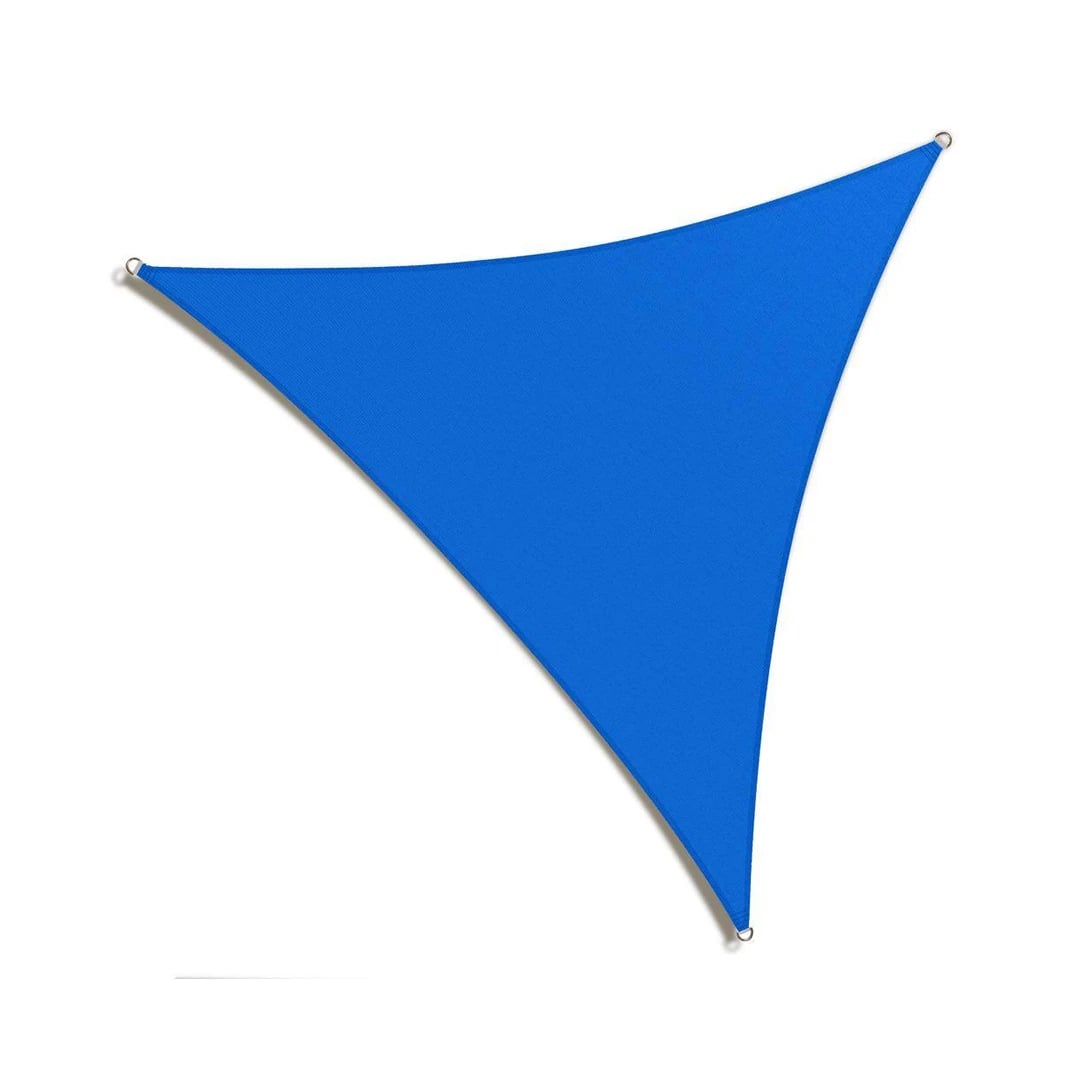
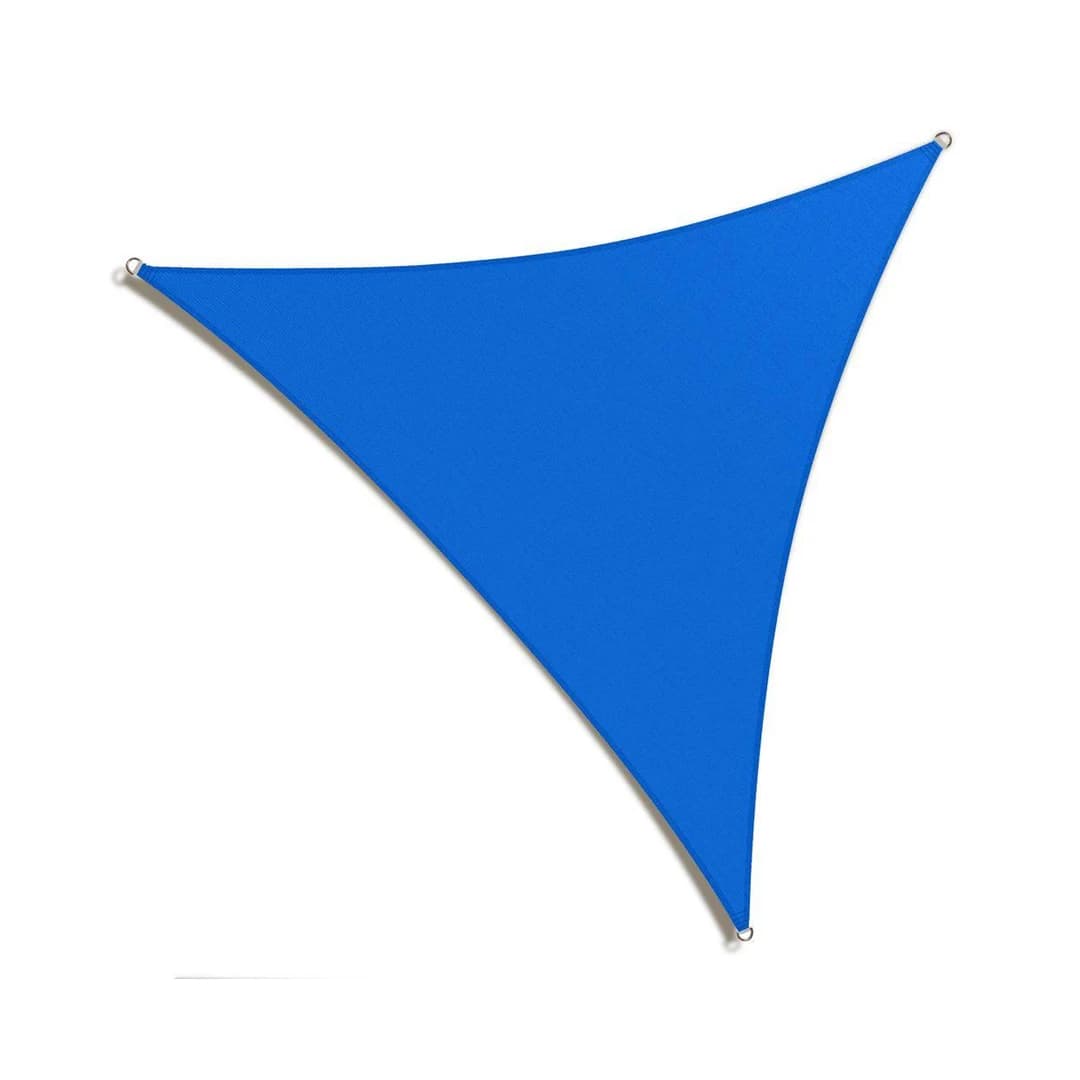
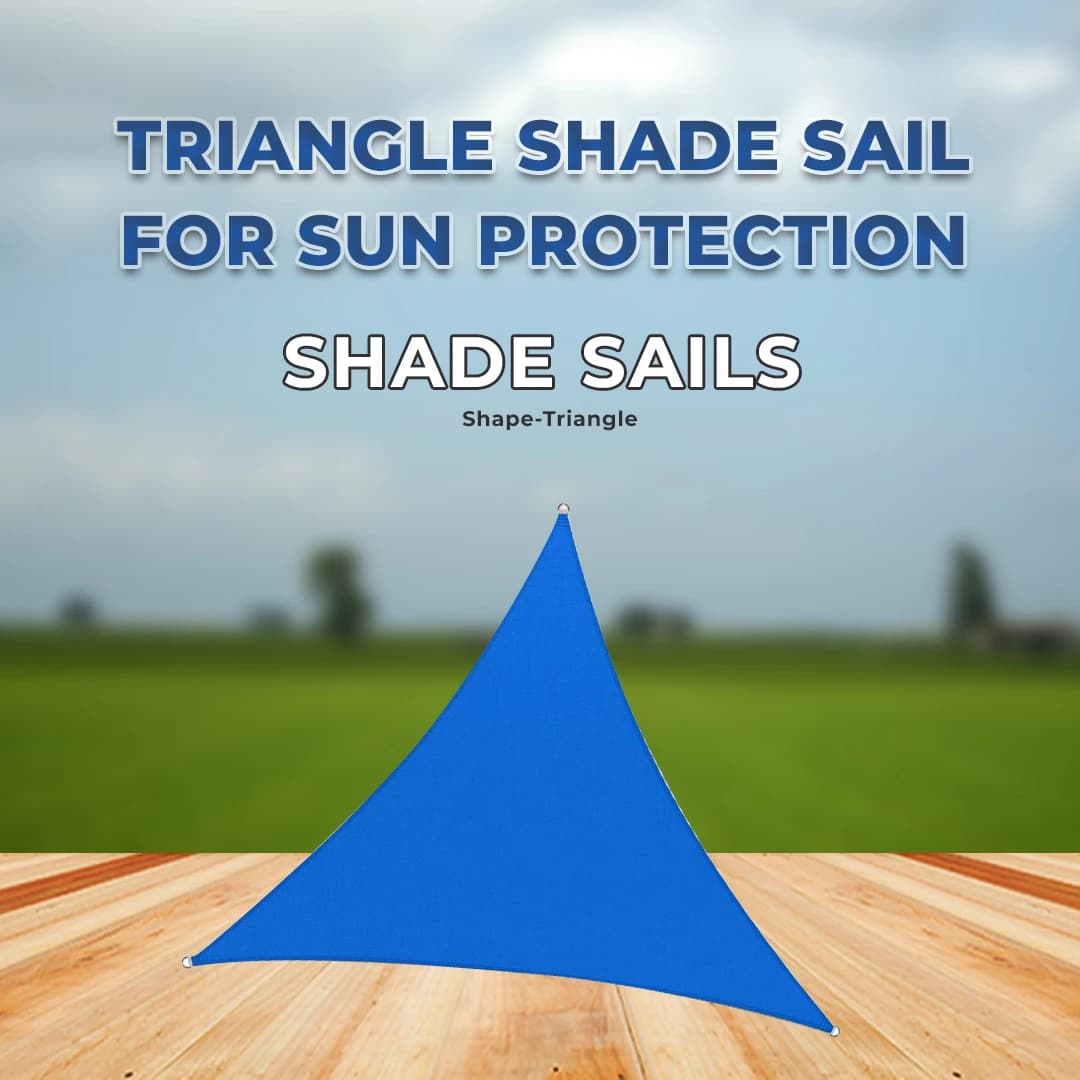
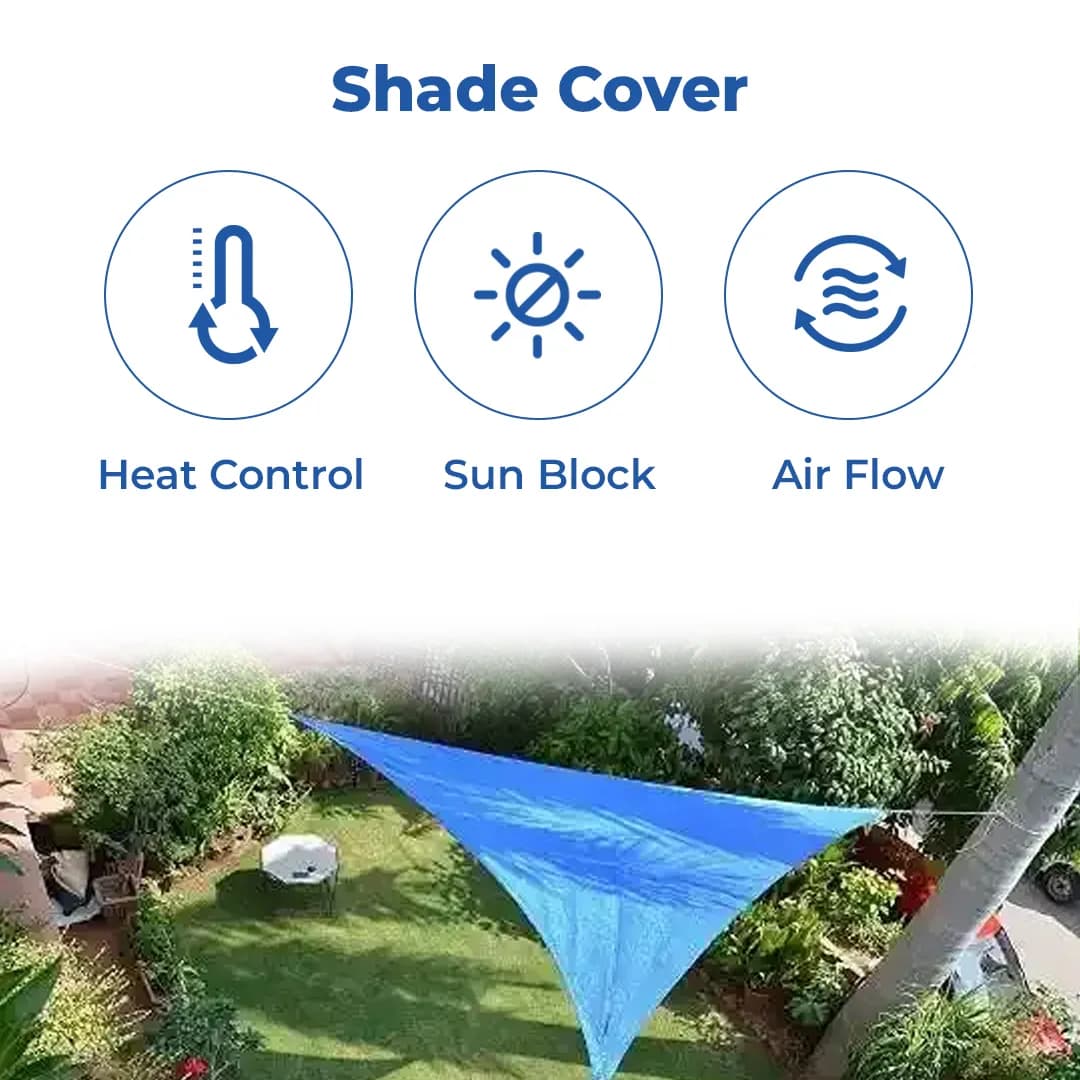
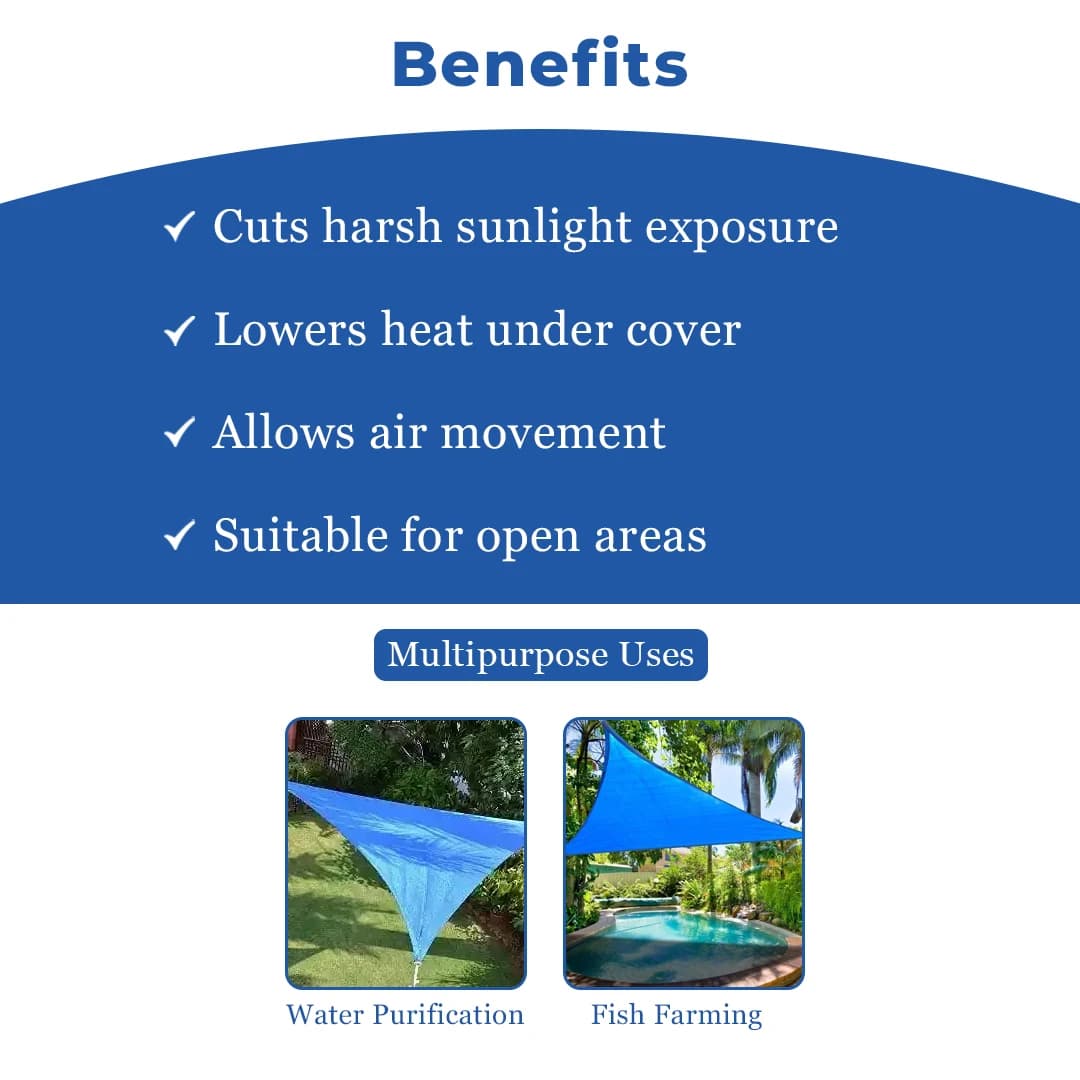
The Econet Sun Shade Sails are UV-stabilized triangle sail shades designed to provide effective sun and heat protection for outdoor spaces at farms, domestic, and industrial spaces. This sail triangle shade is constructed from HDPE (High Density Polyethylene) fabric that blocks 90% of sunlight from passing through. This triangle sail shade allows for easy airflow, which helps maintain cool temperatures, and has a very durable build for long-lasting utility.
Key Features and Benefits of Econet Sun Shade Sails:
90% Sun Blockage: The HDPE material used in this triangle sail shade blocks up to 90% of the sunlight.
Supports Airflow: These triangle sail shades allow air to pass through easily, providing effective cooling.
Strong Build: This sail triangle shade has heavy-duty stitching along its sides, preventing fraying, edge deformation, and tearing.
Stainless Steel Hooks: The triangle shade net provides stainless steel hooks at each corner, providing a secure and easy mode of installation.
UV Stabilised: This Triangle Sail Shade is treated with UV-stabilizing compounds that help prevent fading, deterioration, etc.
Versatile Use: These triangle sail shades can be used for gardens, pool areas, terraces, farms, and many other uses.
Econet Sun Shade Sails Specifications:
Specification | Details |
|---|
Product Name | Sun Shade Sails — UV Stabilized Material (Triangle, Blue) |
Brand | Econet |
Shape | Equilateral Triangle |
Size | 16 × 16 × 16 Feet |
Colour | Blue |
Material | UV-Stabilized HDPE (High Density Polyethylene) |
Sun Blockage | 90% |
UV Protection | Yes — UV-Stabilized Fabric |
Breathability | Yes — Air and Moisture Permeable |
Perimeter | Reinforced Webbing on All Sides |
Corner Hardware | SS-316 Stainless Steel Triangle Hooks |
Design | Radial Cut — All Sides |
Rope Included | 8 Metres Nylon Rope |
UV Warranty | 3 Years under Normal Usage and Weather |
Country of Origin | India |
Category | Gardening — Garden Shade Net |
How to Use Econet Sun Shade Sails:
Identify three secure anchor points — walls, pillars, fence posts, trees, or purpose-installed steel or wooden poles — that match the 16 × 16 × 16 feet dimensions of this triangle sail shade.
Ensure the anchor points are strong enough to support the tension of a taut sail — embedded posts in concrete footings give the most secure results.
Attach the included nylon rope or separate stainless steel hardware (turnbuckles and eye bolts for best tension) to each corner hook of the sail triangle shade.
Install the sail at a 20–40 degree angle rather than horizontally — an angled installation improves water runoff, reduces sagging, and increases tension across the fabric.
Tension the sail gradually and evenly from all three corners — a well-tensioned triangle shade net should be taut with no visible centre sag.
Measure the distance between anchor points from D-ring to D-ring when planning — leave 1.5–2 feet of rope or hardware between the sail corner and each attachment point to allow for tension adjustment.
Check all corner connections and rope attachments are secure before leaving the installation unattended.
Care and Maintenance:
Inspect all three corner hooks and the perimeter webbing at least once a month; check for any signs of fraying, rust, or loosening at the anchor connections and re-tension if the sail shows visible sagging.
Clean the triangle sail shade fabric regularly by rinsing with clean water and a mild detergent; avoid harsh chemicals or pressure washers that can damage the HDPE fibres and UV coating.
Remove the sail triangle shade and store it indoors; severe weather, strong storms, heavy rain, and hail can damage even UV-stabilized sails; taking it down protects both the sail and the anchor fixings.
After cleaning, allow the sail to air-dry completely before folding and storing, as storing while damp can cause mildew growth on the fabric surface.
Store folded loosely in a cool, dry, shaded place away from direct sunlight when not in use, prolonged UV exposure during off-season storage degrades the fabric faster than field use.
At the start of each season, inspect all stitching along the reinforced perimeter webbing; repair any loose threads immediately to prevent edge delamination from spreading across the seam.