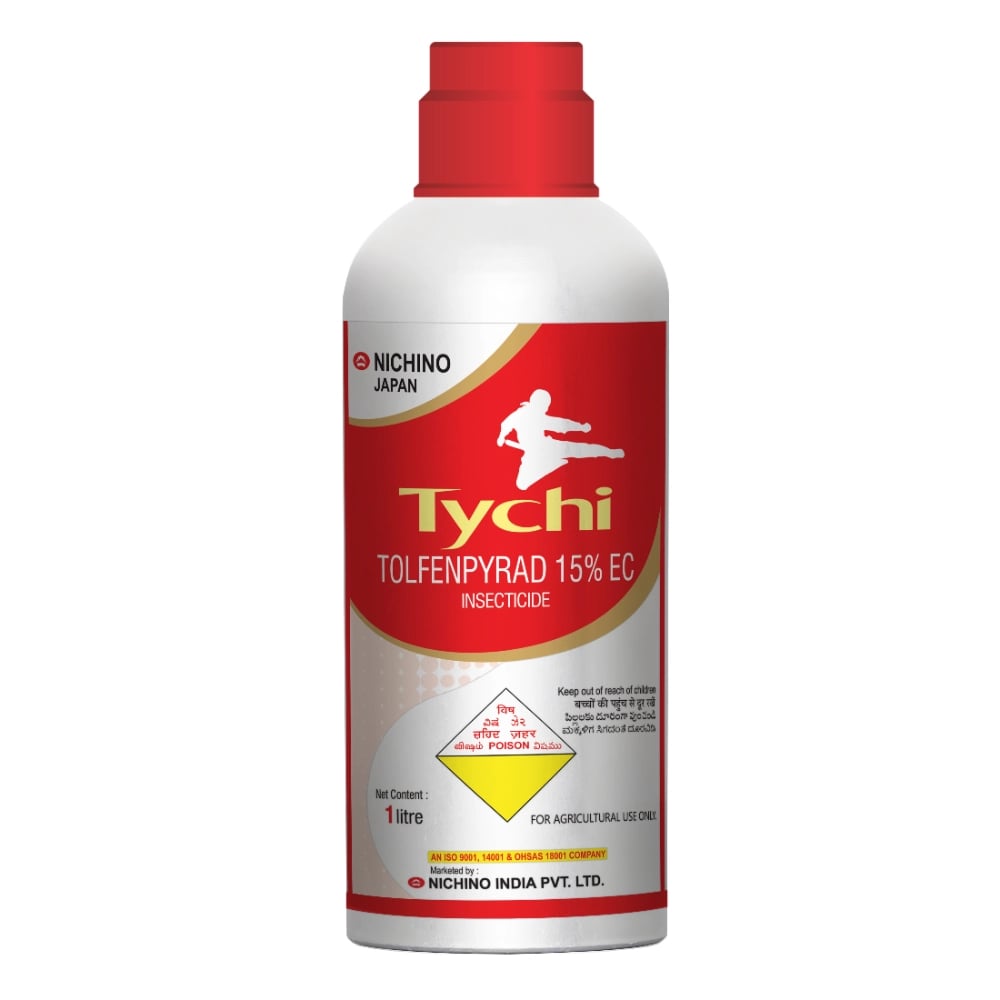
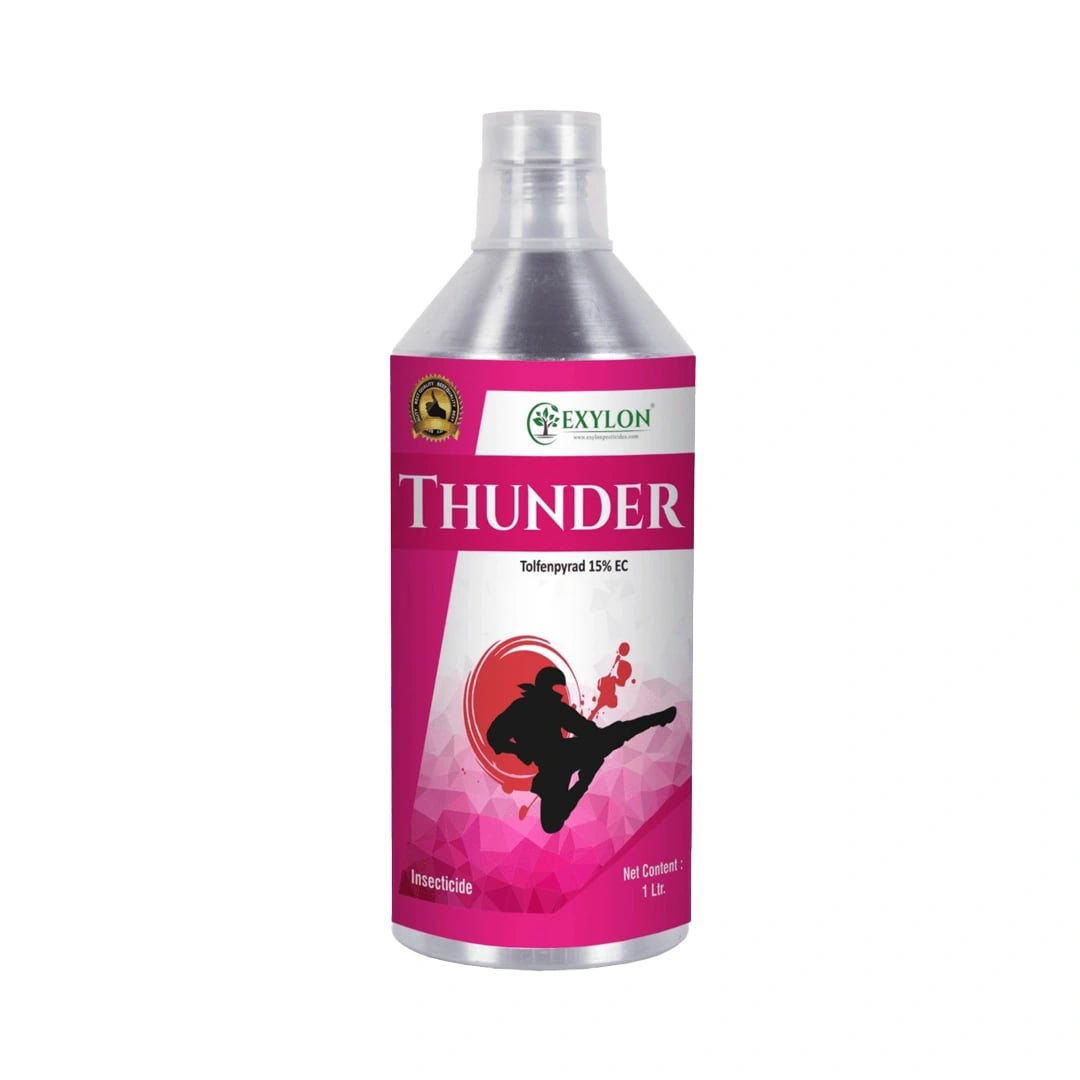
Exylon Thunder Insecticide (Tolfenpyrad 15% EC) - Broad Spectrum Contact Insecticide For Sucking And Chewing Pests In Chilli, Cotton, Cabbage, Mango & Onion
₹539₹1340
Save ₹80160% Off
🎉 You Save ₹248 (31% OFF)
Buying In Bulk?
Get Special Pricing for large orders, contact us now!
| Brand: | TATA RALLIS |
| Product Code: | 11897 |
| Country of Origin: | India |
| Category: | Crop Protection |
| Sub Category: | Insecticides |




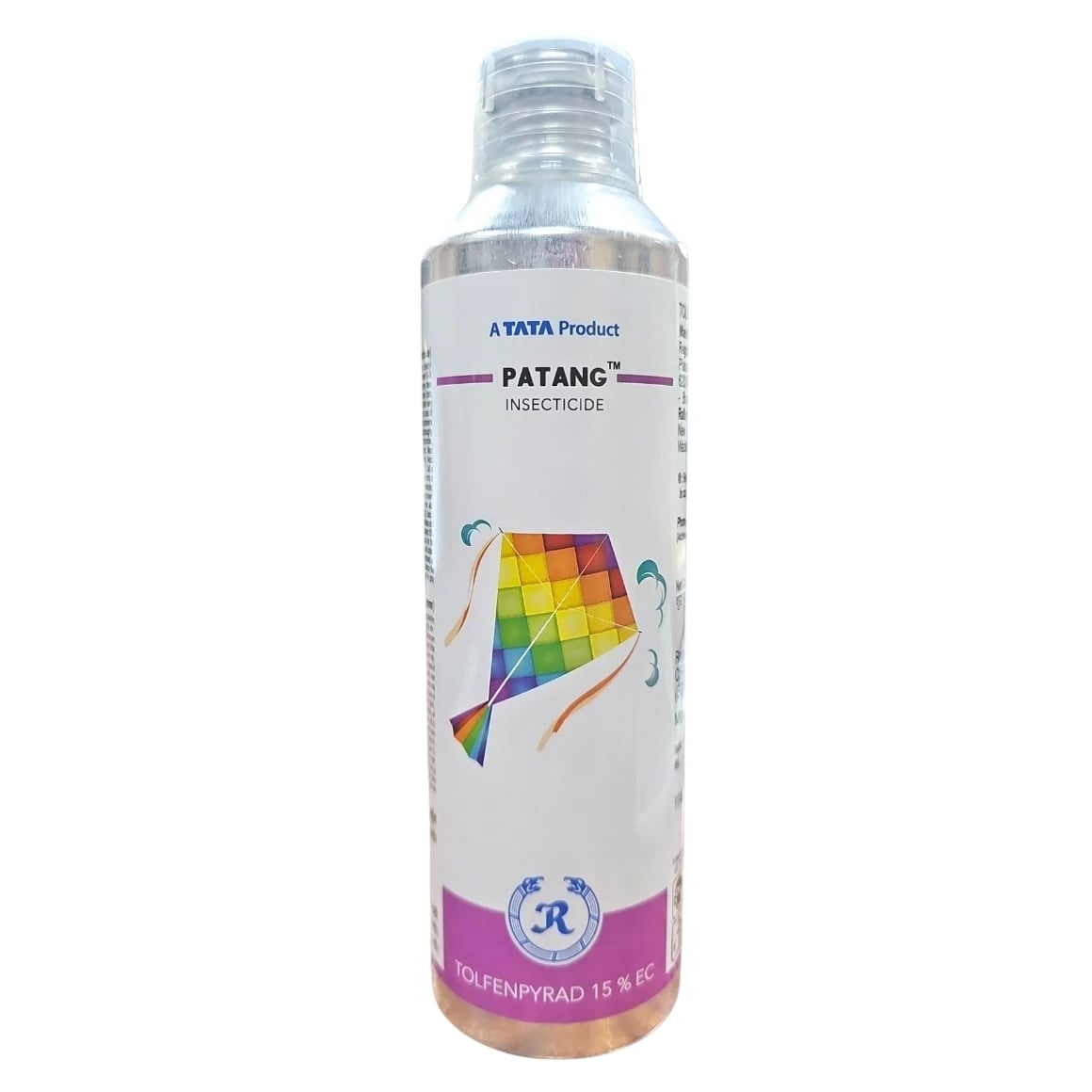
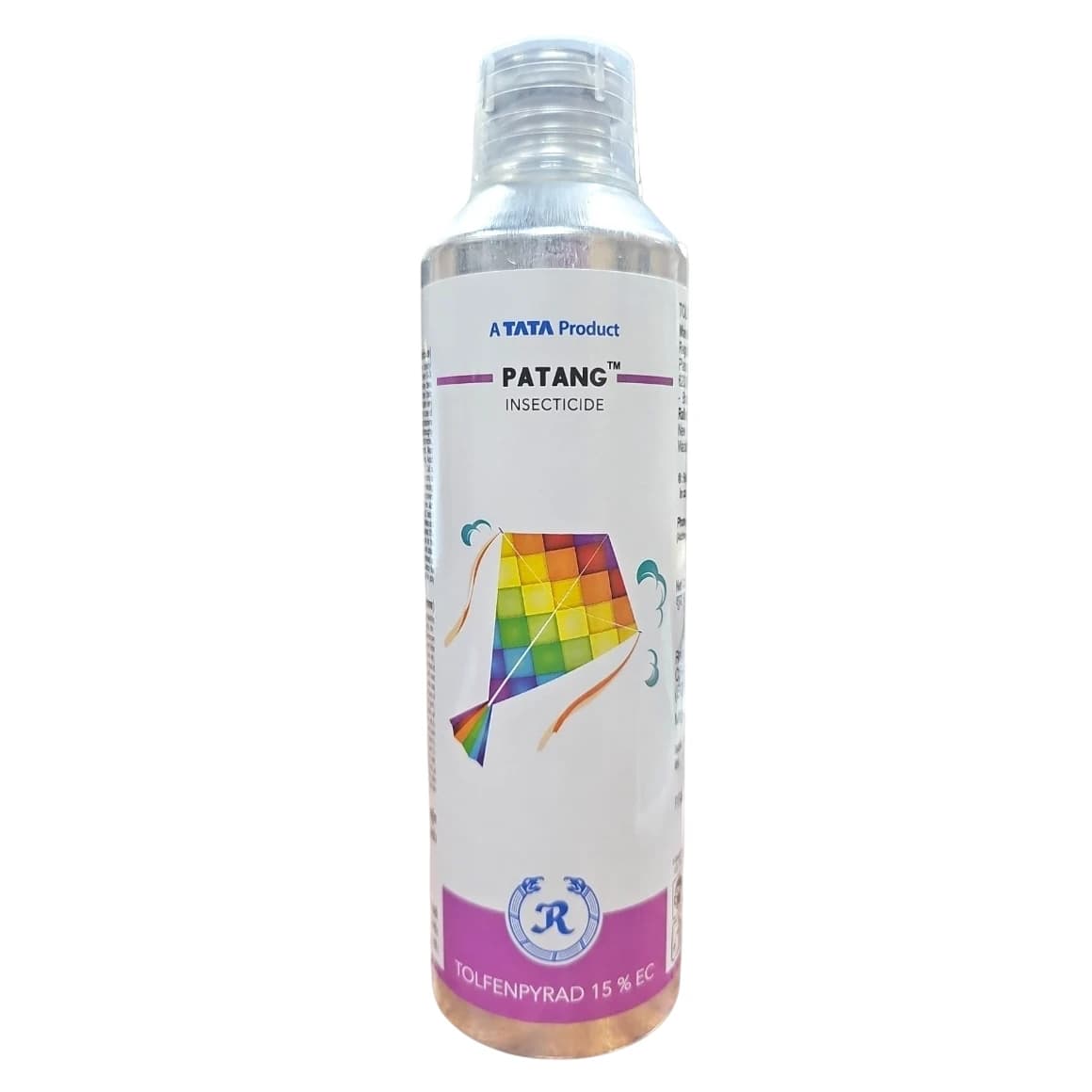
Tata Patang insecticide is a broad-spectrum contact insecticide from Rallis India that handles sucking pests and small caterpillars in the same round. Tata Patang insecticide carries tolfenpyrad, which shuts down energy production inside the pest by blocking mitochondrial electron transport. Tata Patang insecticide also has a useful side benefit, holding back powdery mildew and anthracnose in crops such as chilli, cumin and mango.
Broad-Spectrum: Tata Patang insecticide covers sucking pests along with chewing and biting pests.
Quick Action: The anti-feedant action of Tata Patang means damage halts within hours, even though full knockdown takes a day or two.
Dual Action: Patang insecticide holds down powdery mildew and anthracnose, providing fungal and pest protection.
Resistance Management: Tata Patang insecticide offers prolonged effectiveness due to its unique formula.
Even Coverage: The EC formulation of Tata Patang insecticide emulsifies cleanly in the tank and spreads well across leaf surfaces.
Tata Patang insecticide is registered against these problems:
Aphids: In cabbage, okra, cotton, cumin and chilli.
Jassids and Thrips: Heavy sucking pressure in okra, cotton, chilli and onion.
Whitefly: In okra and cotton, where honeydew and sooty mould follow the feeding.
Diamondback Moth: The main caterpillar of cabbage and other cole crops.
Powdery Mildew and Anthracnose: Suppression in chilli, mango and cumin.
The usual Tata Patang insecticide dose per litre of water is 1.5 to 2 ml, which works out to about 30 ml in a 15-litre pump and roughly 400 ml per acre at 200 litres of spray water. Waiting periods for Tata Patang insecticide vary sharply between crops, so the last column matters as much as the first.
Crop | Target Problem | Dose per Acre | Dose per Litre | Waiting Period |
|---|---|---|---|---|
Cabbage | Diamondback moth, aphids | 400 ml | 1.5–2 ml | 5 days |
Okra | Aphids, jassids, thrips, whitefly | 400 ml | 1.5–2 ml | 3 days |
Chilli | Aphids, thrips, powdery mildew, anthracnose | 400 ml | 1.5–2 ml | 7 days |
Onion | Thrips | 400 ml | 1.5–2 ml | 10 days |
Mango | Powdery mildew, anthracnose | 1.5–2 ml per litre | 1.5–2 ml | 7 days |
Cotton | Aphids, jassids, thrips, whitefly | 400 ml | 1.5–2 ml | 26 days |
Cumin | Aphids, powdery mildew, blight | 400 ml | 1.5–2 ml | 29 days |
Check that the sprayer is clean and correctly calibrated before starting.
Measure the dose for the tank size from the table above.
Stir the measured Tata Patang insecticide into a small quantity of clean water to make a pre-mix.
Add the pre-mix to a part-filled spray tank and top up with the balance water.
Keep the tank agitated right through the round so strength stays even.
Fit a hollow cone nozzle and wet the crop thoroughly, including leaf undersides where thrips and aphids sit.
Plan for two to three dry hours after spraying, and postpone if a storm is close.
Rinse the sprayer well with clean water once the job is finished.
Spray Tata Patang insecticide at the first sign of pest build-up or at economic threshold, and for diamondback moth, aim for the egg-laying stage. Early morning or late evening is the right window — cooler air reduces drift, and more importantly, honeybees are not active then. On flowering mango or cumin, evening spraying is the safer choice.
Frequency: Repeat Tata Patang insecticide only if scouting calls for it, keeping 10 to 15 days between rounds.
Rotation: Do not use Tata Patang insecticide for two sprays back to back. Alternate with an unrelated IRAC group to protect the chemistry.
Re-Entry: Keep workers and livestock out of the treated block for 24 hours, and re-enter with full protective gear.
Tank-Mix: Tata Patang insecticide is compatible with most fungicides, but keep it away from Bordeaux mixture, lime sulphur and other alkaline partners. Jar-test first.
Tata Patang insecticide carries a yellow triangle toxicity label, so treat every step with care.
Wear gloves, goggles, a mask and full-sleeved clothing while mixing and spraying.
Do not inhale the spray mist, and never spray against the wind.
Nothing goes in the mouth during the spray job — no food, no water, no tobacco.
Toxic to honeybees, so avoid spraying when bees are working the flowers.
Toxic to fish, so keep Patang insecticide away from ponds, canals and fish farms.
Wash exposed skin with soap and change into clean clothes once the work is over.
Triple-rinse empty containers, puncture them, and discard as per local waste rules.
Keep the Tata Patang bottle sealed and upright in a cool, dry, shaded place.
Store away from sunlight, heat, food grain, seed, feed, and drinking water.
Keep it locked away from children, pets, and cattle at all times.
Never shift Tata Patang insecticide into a food or drink container.
Specifications | Details |
|---|---|
Product Name | Tata Patang insecticide |
Brand Name | Tata Rallis |
Tata Patang Technical Name | Tolfenpyrad 15% EC |
Formulation Type | Emulsifiable Concentrate (EC) |
Chemical Group | Pyrazole carboxamide |
Mode of Action | Contact action with anti-feedant effect; blocks mitochondrial complex I energy transport |
IRAC Group | Group 21A |
Recommended For | Cabbage, okra, cotton, cumin, chilli, mango and onion |
Pack Sizes Available | 100 ml |
Country of Origin | India |
Shelf Life | As printed on the pack |
Pre-Harvest Interval | 3 to 29 days, depending on the crop |
Application Method | Foliar spray |
Recommended Dose | 1.5–2 ml per litre; about 400 ml per acre |
Target Pests | Aphids, jassids, thrips, whitefly and diamondback moth, with suppression of powdery mildew and anthracnose |
Product Category | Broad-spectrum contact insecticide |