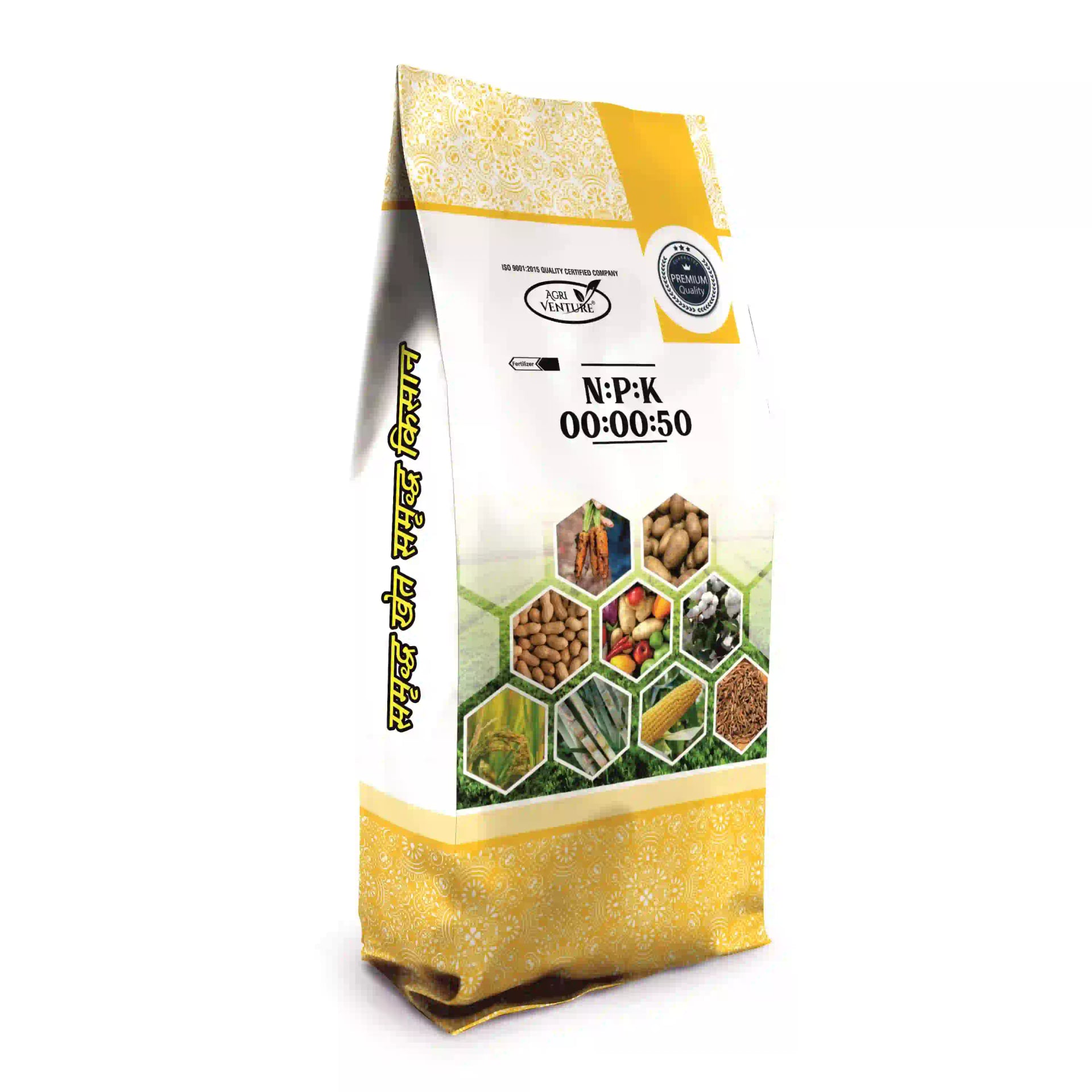

Agriventure Npk 00:00:50 Imported 100% Water Soluble Fertilizer For Drip And Foliar Spray, Suitable For All Crops
₹4150₹9999
Save ₹584959% Off

🎉 You Save ₹1028 (23% OFF)
Buying In Bulk?
Get Special Pricing for large orders, contact us now!



| Brand: | Essential Biosciences |
| Product Code: | 11326 |
| Country of Origin: | India |
| Category: | Fertilizers |
| Sub Category: | Bulk Fertilizer |




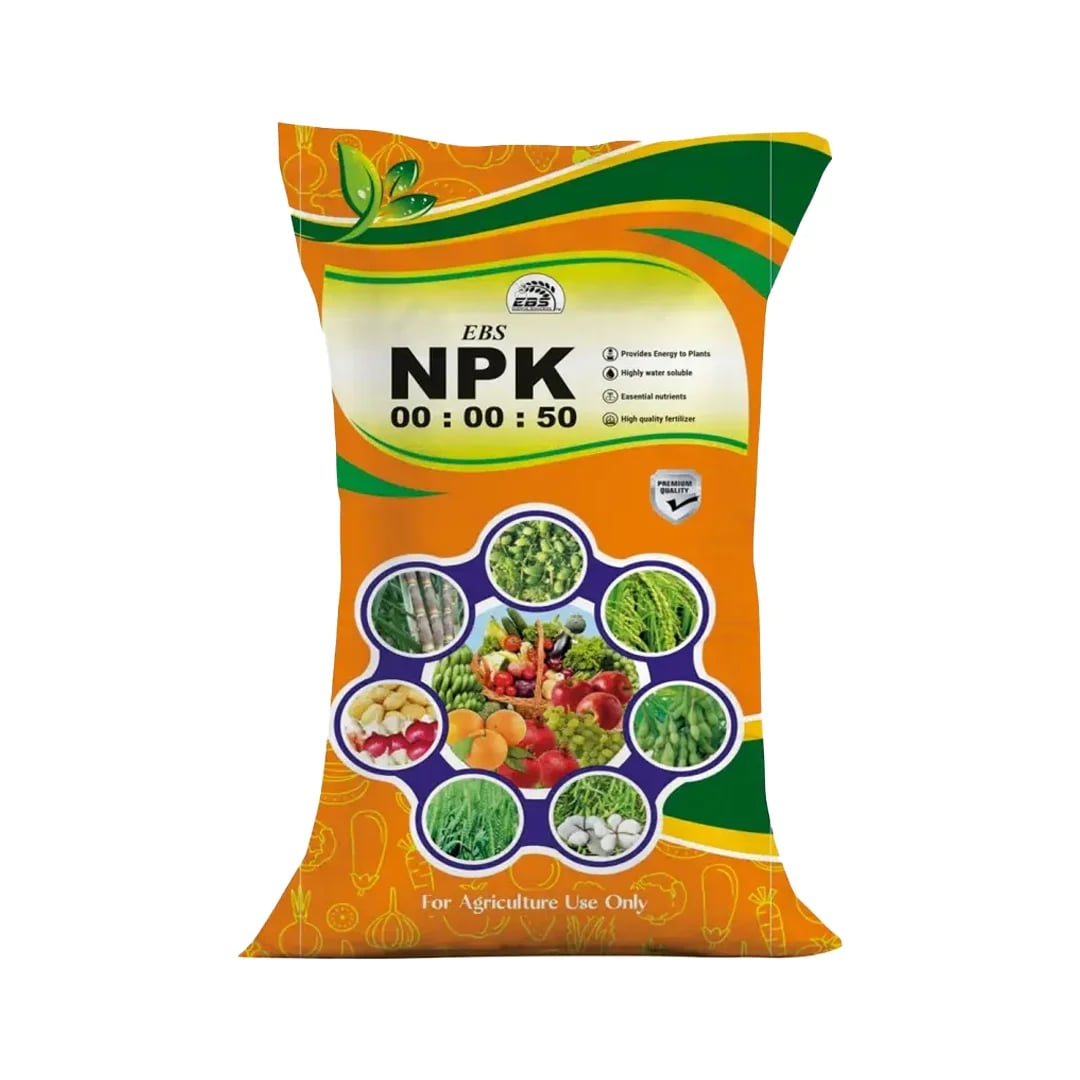
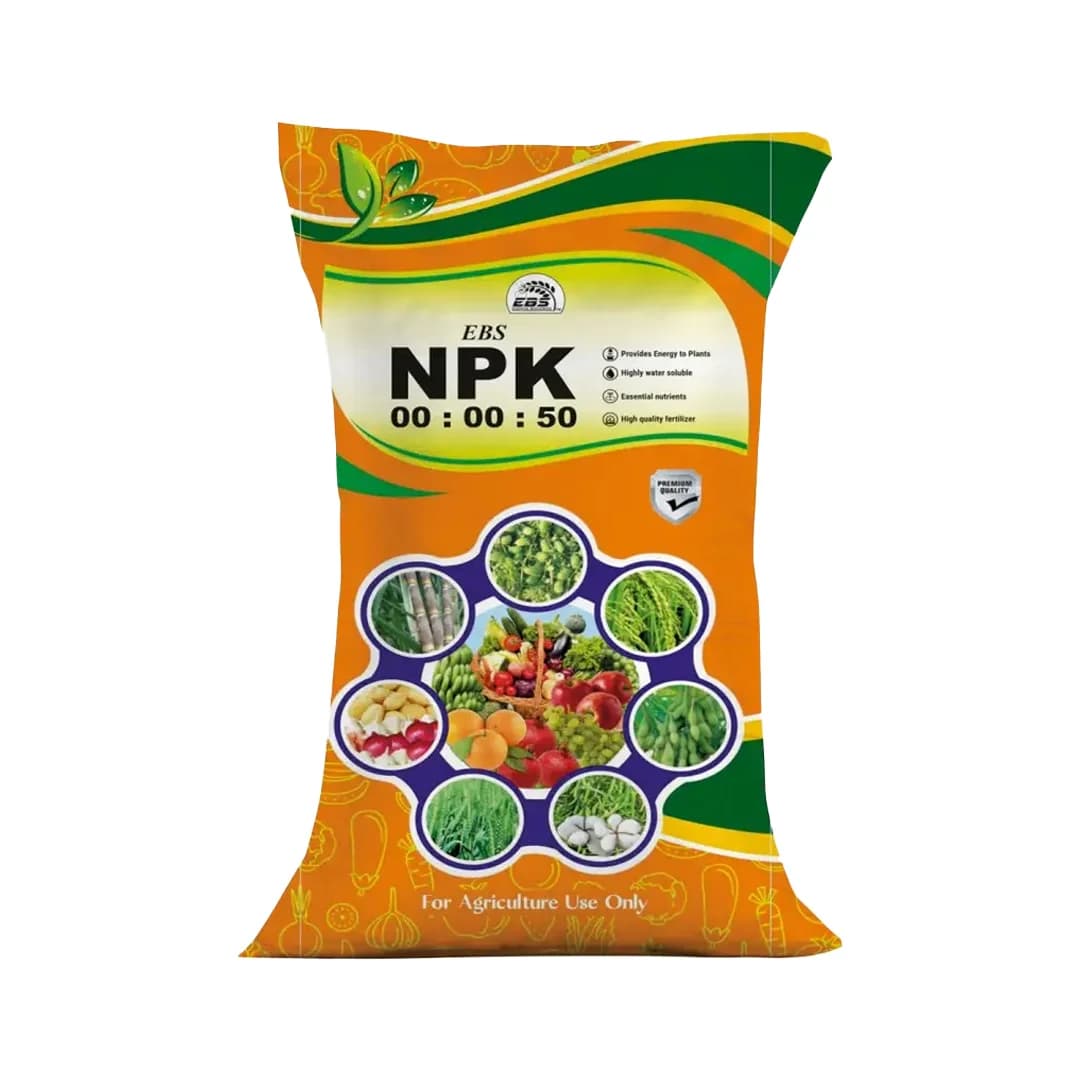
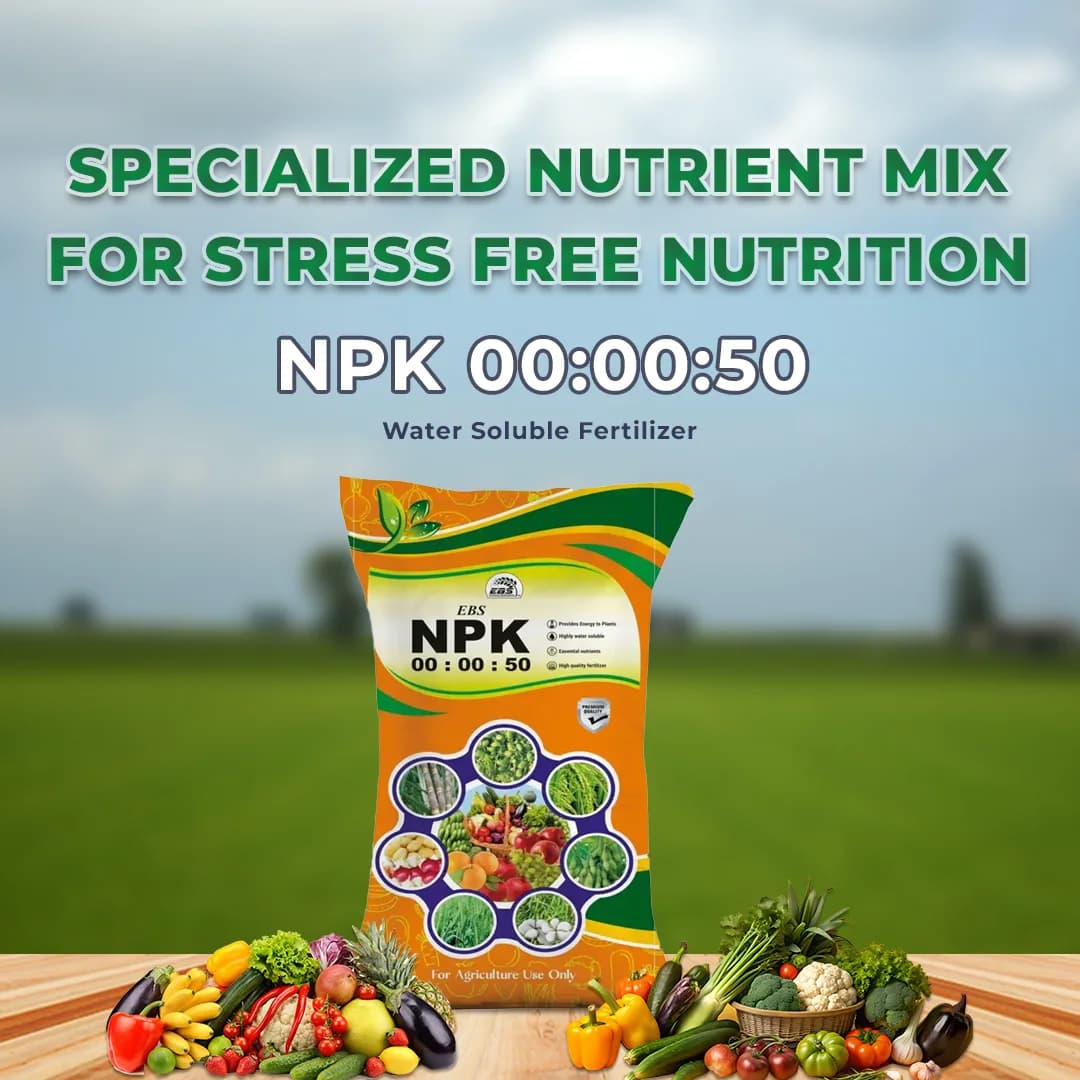
EBS NPK 0:0:50 is a premium 100% water-soluble Potassium Sulphate Fertilizer designed to boost potassium and sulphur supply across all major crops. Also known as Sulphate of Potash (SOP), the product contains 50% K2O (potassium) along with 17.5% sulphur in a free-flowing white powder form. NPK 0:0:50 fertilizer dissolves quickly in water, allowing easy application through drip fertigation, foliar spray, sprinkler systems, and soil application. This Potassium Sulphate Fertilizer improves fruit quality, sugar content, colour, shelf life, and stress tolerance in crops, while the sulphur content supports protein synthesis, oil formation, and chlorophyll production.
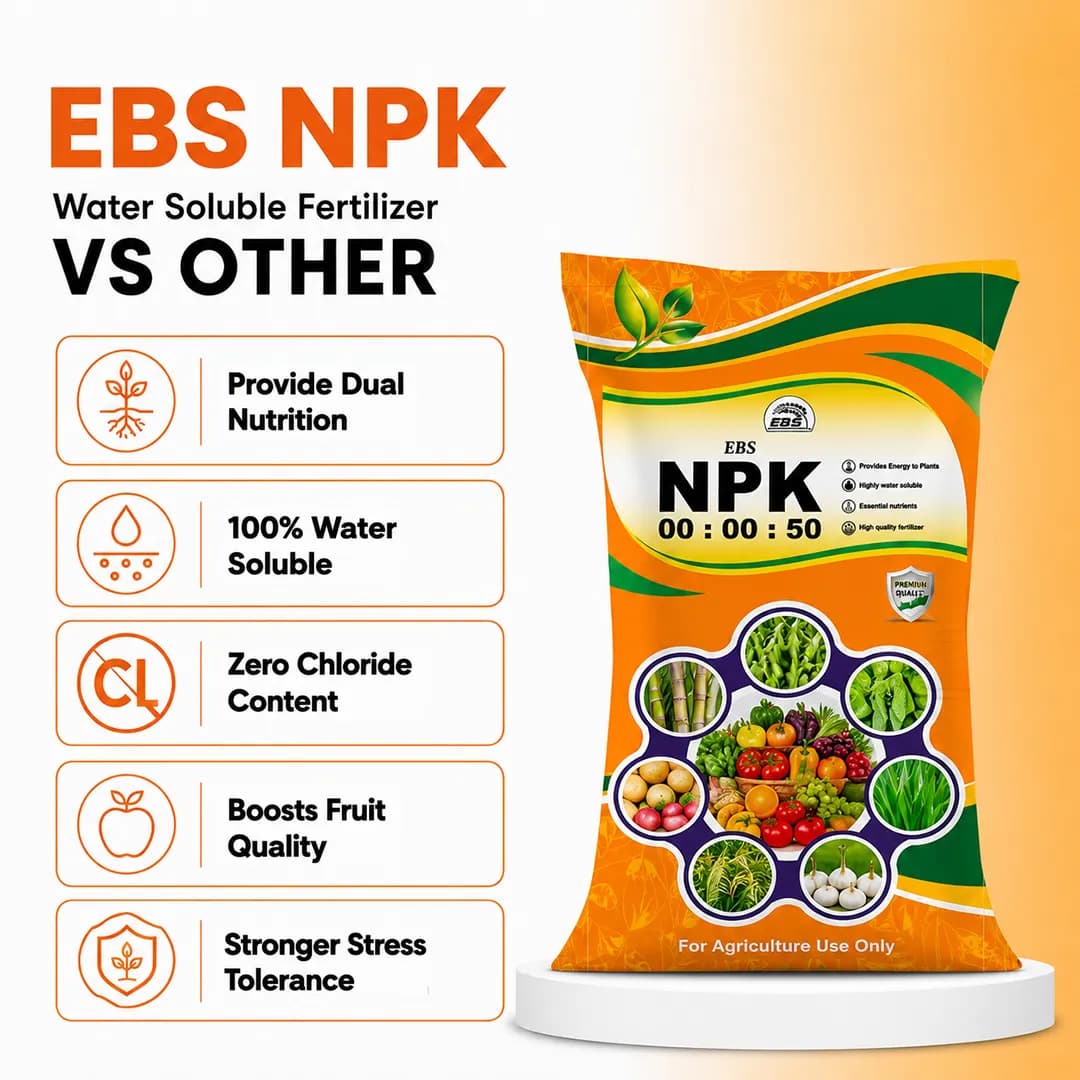
Provide Dual Nutrition: NPK 0:0:50 fertilizer supplies 50% K2O and 17.5% sulphur in one balanced formulation, covering two essential nutrient needs.
100% Water Soluble: The Potassium Sulphate Fertilizer dissolves quickly in water without leaving any residue, ideal for drip fertigation and foliar spray.
Zero Chloride Content: Unlike Muriate of Potash (MOP), this Potassium Sulphate Fertilizer is chloride-free, perfect for chloride-sensitive crops like grapes, tobacco, and potatoes.
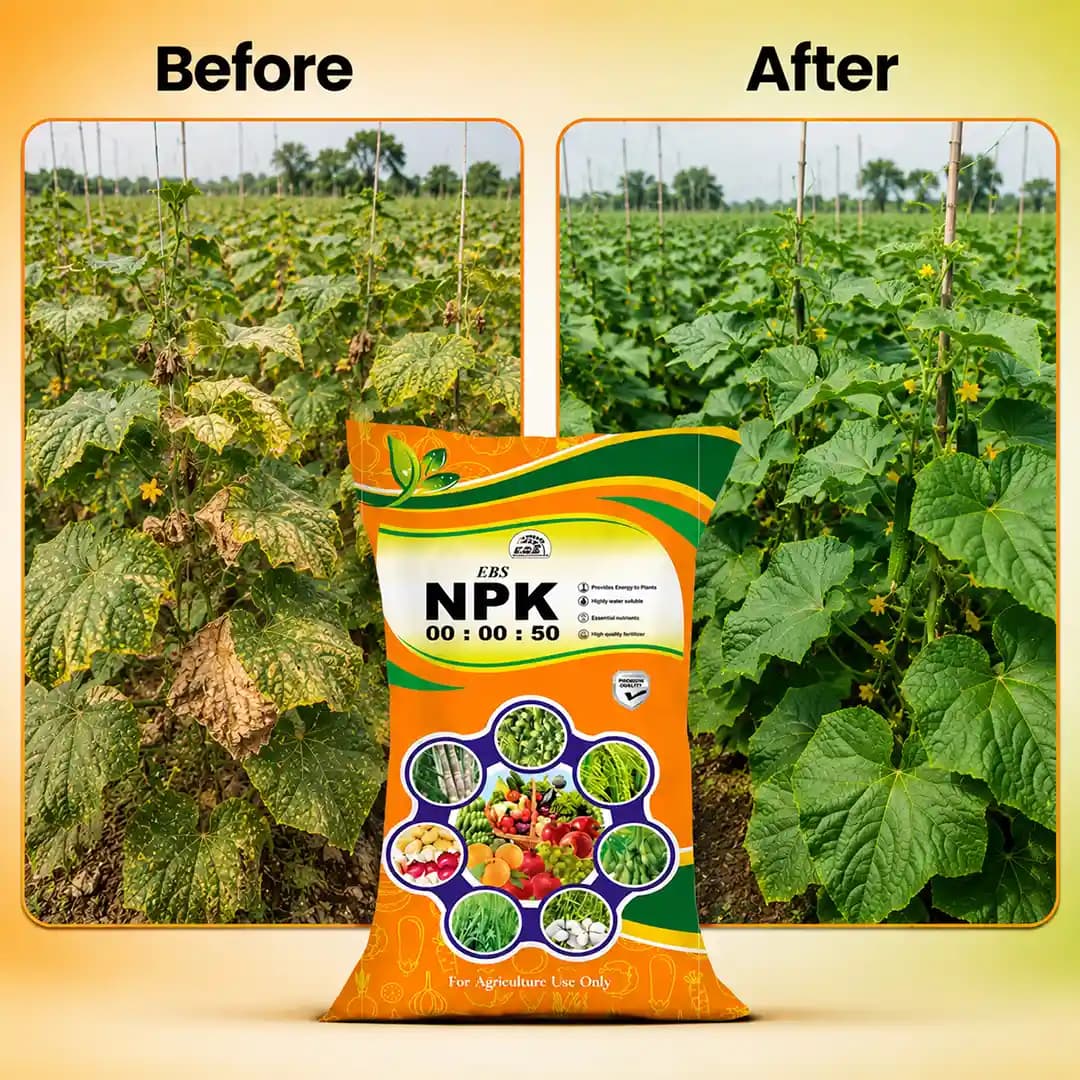
Boosts Fruit Quality: This Potassium Sulphate Fertilizer improves fruit colour, sugar content, taste, shelf life, and overall produce quality.
Stronger Stress Tolerance: The product increases plant tolerance to drought, heat, and disease pressure during critical growth stages.
Improves Sulphur Nutrition: The 17.5% sulphur in EBS NPK 0:0:50 fertilizer supports protein synthesis, oil formation, and dark green leaf colour.
Versatile Application: NPK 0:0:50 fertilizer can be applied through drip fertigation, foliar spray, sprinkler systems, or direct soil application.
NPK 0:0:50 is recommended for the following crops:
Cereals: Paddy, Wheat, Maize, Jowar
Cash Crops: Cotton, Sugarcane, Tobacco
Pulses: Tur, Chana, Moong, Urad, Soybean
Oilseeds: Groundnut, Sunflower, Mustard, Sesame
Vegetables: Tomato, Potato, Onion, Chilli, Brinjal, Cabbage, Cauliflower
Fruits: Mango, Grapes, Citrus, Banana, Pomegranate, Apple, Strawberry
Plantation: Tea, Coffee, Coconut, Arecanut, Cardamom
Flowers: Rose, Marigold, Gerbera, Chrysanthemum
Mix the Potassium Sulphate Fertilizer thoroughly with clean water and apply through the chosen delivery method:
Application Method | Dose | When to Apply |
|---|---|---|
Drip Fertigation | 1 to 2 kg per acre in 200 L of water | Fruit development stages (every 15 days) |
Foliar Spray | 5 to 10 g per litre of water (200-300 L per acre) | Active growth, flowering, and fruit setting |
Soil Application | 25 to 50 kg per acre | Before sowing or at land preparation |
Hydroponic | 1 to 2 g per litre of nutrient solution | Throughout the growth cycle |
Note: Do not mix the Potassium Sulphate Fertilizer with copper or calcium-containing agrochemicals, as it can cause adverse reactions and precipitation in the spray tank.
Measure the required quantity of NPK 0:0:50 fertilizer based on the dose table and the crop area to be treated.
For foliar spray, dissolve 5 to 10 grams of the Potassium Sulphate Fertilizer per litre of clean water in a half-filled spray tank.
Stir well until fully dissolved, then top up the tank with the remaining water for an even solution.
Spray uniformly on both upper and lower leaf surfaces using a fine-mist nozzle for full canopy coverage.
For drip fertigation, dissolve the Potassium Sulphate Fertilizer fully in a small bucket of water first, then inject the diluted solution into the drip line through a venturi or fertilizer tank.
For soil application, broadcast the powder evenly across the field before sowing or transplanting, then mix lightly with the topsoil.
Avoid mixing the product with copper or calcium-containing chemicals in the same tank.
Always do a small jar test before tank-mixing with other fertilizers or pesticides for compatibility.
NPK 0:0:50 fertilizer works best when applied during cool morning or late evening hours, when temperatures are mild, and humidity is high. For foliar spray, avoid spraying the Potassium Sulphate Fertilizer during peak afternoon heat or just before rain, as this reduces nutrient absorption. For drip fertigation, apply during active growth, flowering, and fruit development stages, when crops need the most potassium and sulphur for quality produce.
Frequency of Application: Apply NPK 0:0:50 fertilizer every 15 to 20 days during the crop cycle. For drip fertigation, use weekly small doses for a continuous nutrient supply.
Re-Entry Period: There is no waiting period after application. Field work can resume once the spray dries on the leaves, usually within 2 to 4 hours.
Compatibility: The Potassium Sulphate Fertilizer mixes well with most NPK fertilizers, urea, water-soluble fertilizers, and many pesticides. Do NOT mix with copper or calcium-containing agrochemicals.
Wear chemical-resistant gloves, goggles, and a face mask while measuring and mixing EBS NPK 0:0:50 fertilizer to avoid skin contact and lung irritation.
Do not inhale the fine powder during weighing or mixing; the dust can cause throat and eye irritation.
Wash hands, face, and exposed skin thoroughly with soap and water after every application of the Potassium Sulphate Fertilizer.
Keep the product out of reach of children, pets, and farm animals at all times.
Do not eat, drink, or smoke during application or handling of the Potassium Sulphate Fertilizer.
Avoid contact with eyes; in case of accidental splash, rinse thoroughly with clean water for at least 15 minutes.
In case of accidental swallowing, drink plenty of water and seek medical help immediately, carrying the product label along to the doctor.
Store NPK 0:0:50 fertilizer in its original sealed pack in a cool, dry, well-ventilated room away from direct sunlight.
Keep the pack away from moisture and humidity, since the Potassium Sulphate Fertilizer can clump when exposed to damp air.
Store separately from food, animal feed, drinking water, and seeds.
Always keep the pack out of reach of children, pets, and farm animals.
Storage Temperature: Below 30°C in cool, dry conditions.
Shelf Life: 2 years from the date of manufacture when stored sealed and dry.
Specifications | Details |
|---|---|
Product Name | NPK 0:0:50 |
Technical Name | Potassium Sulphate Fertilizer (Sulphate of Potash) |
Chemical Formula | K2SO4 |
Composition | K2O 50%, Sulphur 17.5% |
Formulation | Free-Flowing White Powder / Crystals |
Solubility | 100% Water Soluble |
Chloride Content | Zero / Nil |
Grade | Agriculture Grade (FCO Specifications) |
Recommended For | All crops, especially chloride-sensitive crops |
Application Methods | Drip Fertigation, Foliar Spray, Sprinkler, Hydroponic, Soil Application |
Pack Sizes Available | 25 kg |
Country of Origin | India |
Shelf Life | 2 years from the date of manufacture |