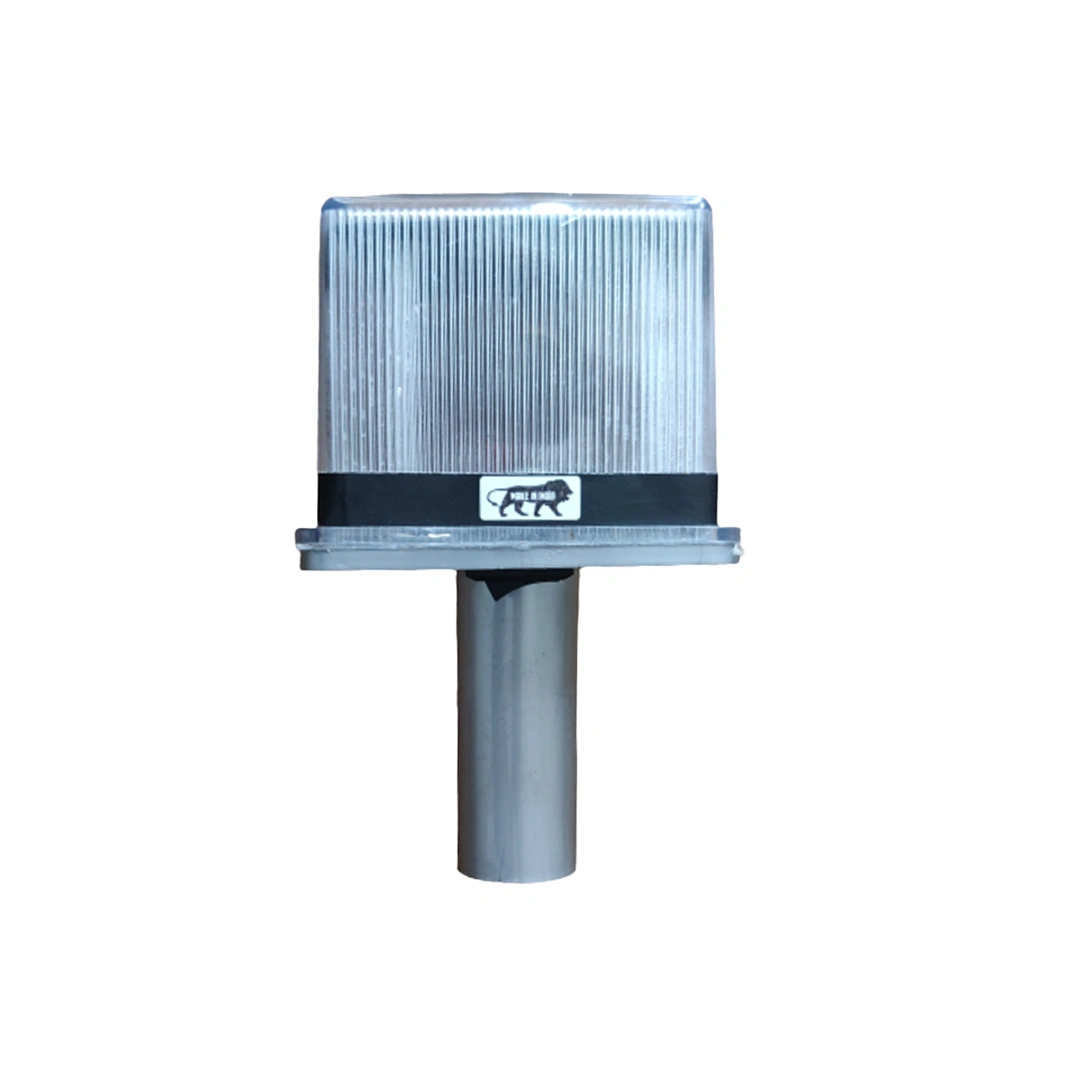
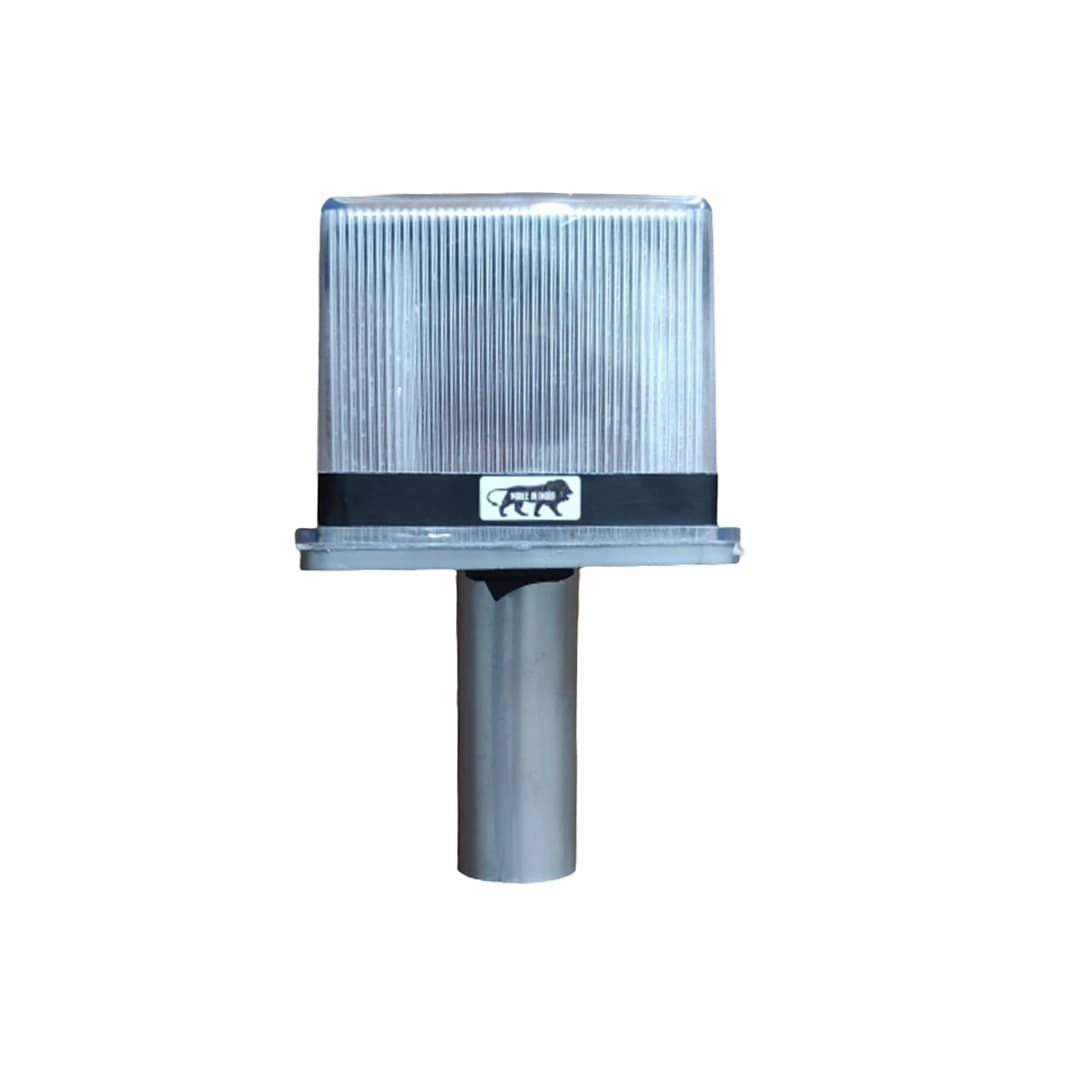
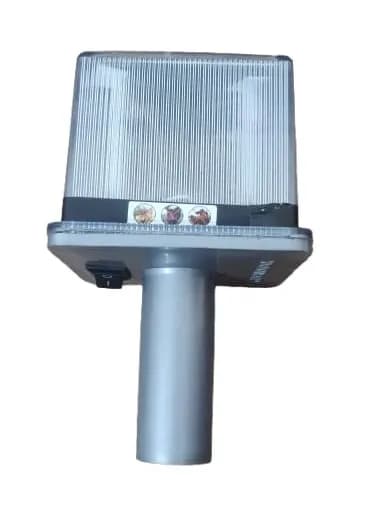
The solar lights for fences are a fully automatic crop protection device built to safeguard farms from wild boar, nilgai, monkeys, stray cattle, and other crop-raiding animals. These solar lights for fences combine a bright LED light with a preprogrammed sound system that creates the illusion of human presence on the farm at night. It is solar-powered, with a top-mounted solar panel that charges the battery by day and runs automatic light and sound cycles through the entire night. This fencing light is waterproof, shockproof, harmless to humans and animals, and works all season throughout the year. A typical pack includes 2 ready-to-install units that switch on automatically at dusk and switch off at dawn.
Key Features and Benefits:
Automatic Operation: The solar lights for fences switch on at dusk and switch off at dawn automatically, with no manual switching needed.
Preprogrammed Cycles: The solar lights for fences give intermittent light flashes and sound bursts in a preprogrammed pattern, creating the impression that a person is patrolling the farm.
100% Solar Powered: The top-mounted solar panel charges the built-in battery by day, and the fencing light runs through the entire night on stored solar energy.
No Fencing Needed: Unlike electric fence systems, the solar lights for fences work as a standalone unit with no wires, no fencing, and no electricity bills.
Safe and Humane: This smart solar light causes no harm to wild animals, livestock, or humans — it simply scares animals away using light and sound.
Waterproof and Shockproof: The outdoor-rated body of the solar lights for fences handles monsoon rain, heat, and rough farm conditions all year.
Solar Lights for Fences – Specifications:
Specifications | Details |
|---|
Product Name | Solar Light for Farm (Smart Sound Light) |
Brand | VRT |
Type | Solar-Powered Automatic Light + Sound Alarm |
Light Type | LED |
Light Colour | Red + Green (Flickering) |
Visibility | More than 500 metres |
Solar Panel | 6V, 100 mA |
Battery | Lithium-Ion 1200 mAh (Rechargeable, Inbuilt) |
Backup Time | 2 to 3 nights |
Operation | Fully Automatic (Auto On at Dusk, Auto Off at Dawn) |
Output | Preprogrammed Light + Sound Cycles |
Dimensions (L × W × H) | 75 × 75 × 140 mm |
Weight | 180 grams (Approx.) |
Material | PET / PP (Polyethylene Terephthalate / Polypropylene) |
Special Feature | Waterproof |
Application | Crop Fields, Orchards, Farm Boundaries, Plantations |
Country of Origin | India |
How to Use:
Unpack the solar lights for fences units and check that all parts — the main unit with LED light, top solar panel, and mounting bracket — are intact and undamaged.
Choose a clear, open spot on the farm boundary or near known animal entry points, away from heavy tree cover that may block sunlight from reaching the solar panel.
Mount the fencing light at a height of 5 to 7 feet on a wooden pole, bamboo stake, iron pipe, or shed corner using the supplied bracket and tie wire.
Position the top-mounted solar panel facing south or south-east, where it gets direct sunlight for at least 6 to 8 hours during the day.
Charge the solar lights for fences fully in direct sunlight for one full day before activating, to build up enough battery reserve for night operation.
Switch on the unit using the power button; the fencing light will stay off during the daytime and switch on automatically at dusk every evening.
For a typical 1 to 2-acre farm, install one unit of solar lights for fences per acre at known wild animal entry points, with the second unit placed at the opposite end for full coverage.
Inspect the unit weekly and wipe the solar panel with a soft dry cloth every 7 to 10 days to maintain peak charging efficiency through the season.
Safety Instructions:
Mount the solar lights for fences at 5 to 7 feet high so children, livestock, and pets cannot tamper with the unit or accidentally damage the solar panel.
Avoid placing the fencing light directly under a heavy tree canopy, since reduced sunlight will weaken battery charging and shorten nightly runtime.
Do not open the body of the solar lights for fences or tamper with the built-in battery; the sealed waterproof design protects internal electronics from damage.
Keep the unit away from open flames, welding sparks, and hot machinery, since the plastic body can melt or warp under high heat.
Bring the smart solar light indoors during cyclonic storms, severe hailstorms, or extreme weather to prevent physical damage to the solar panel and casing.
Clean the solar panel gently with a soft dry cloth only — avoid abrasive scrubbers, hard brushes, or chemical solvents that can scratch the panel surface.
Frequently Asked Questions (FAQs):
Q1. How do solar lights for fences protect the farm from wild animals?
The solar lights for fences work by creating an illusion of human presence on the farm at night. The unit gives preprogrammed light flashes and sound bursts in random cycles, which makes wild boar, nilgai, monkeys, and other animals feel that someone is patrolling the field. They are scared off without any harm.
Q2. Does this fencing light need wiring or electricity to work?
No, the fencing light is completely self-powered through its top-mounted solar panel and built-in rechargeable battery. There is no need for fencing, wiring, mains electricity, or any external power source.
Q3. How many solar lights for fences do I need per acre?
For most farms, 1 to 2 units of solar lights for fences per acre give effective coverage, depending on the field shape and animal pressure. Install at known wild animal entry points and along the farm boundary.
Q4. Will this smart solar light continue to work during monsoon and cloudy weather?
Yes, this smart solar light is waterproof and continues to work through monsoon rain and short cloudy spells. The built-in battery can store enough charge from a single sunny day to power the unit through 2 to 3 nights.
Q5. How long do the solar lights for fences last in field use?
With proper care and weekly cleaning, the solar lights for fences give 3 to 5 years of reliable field service. The inbuilt rechargeable battery may need replacement after 2 to 3 years of continuous use, while the solar panel and casing typically last much longer.