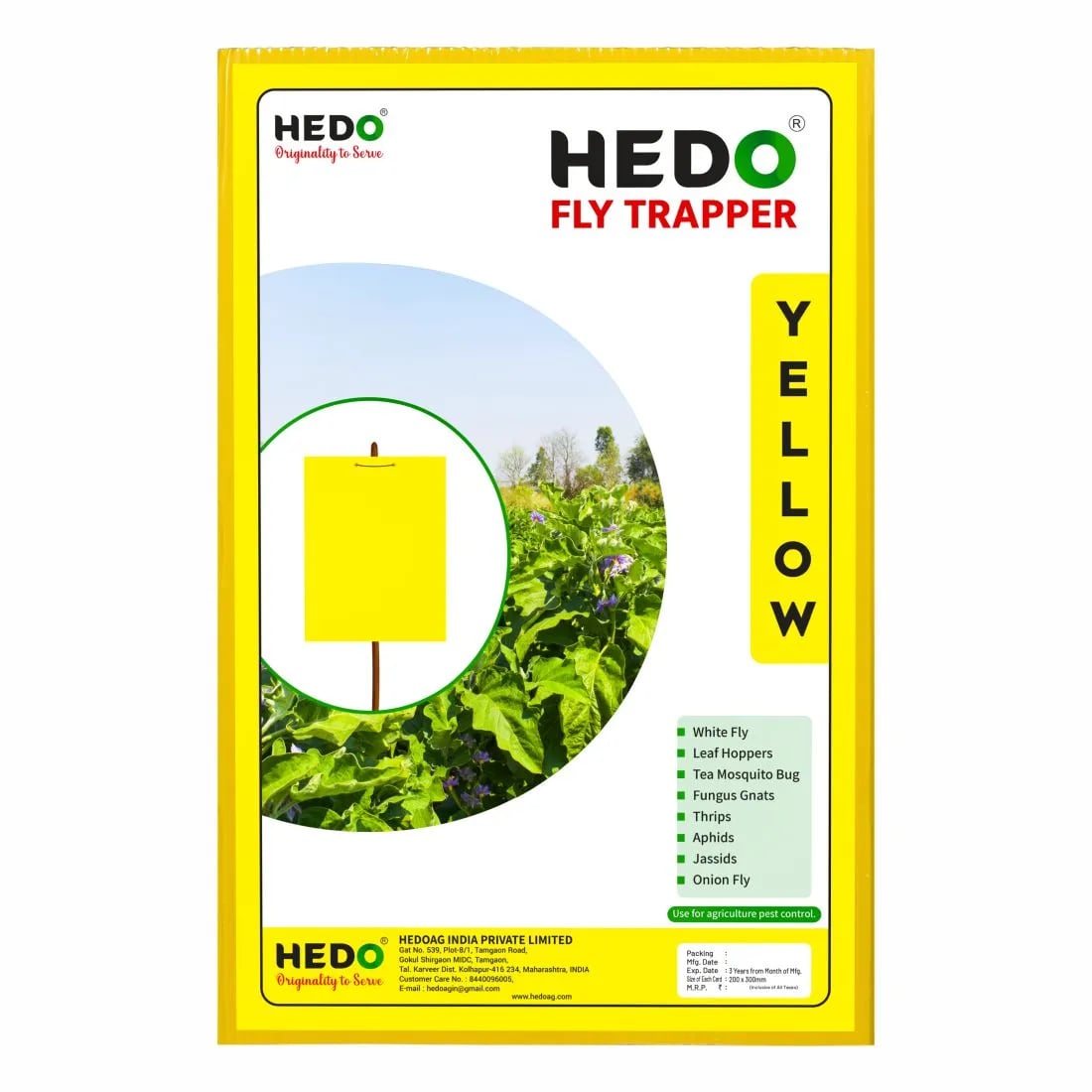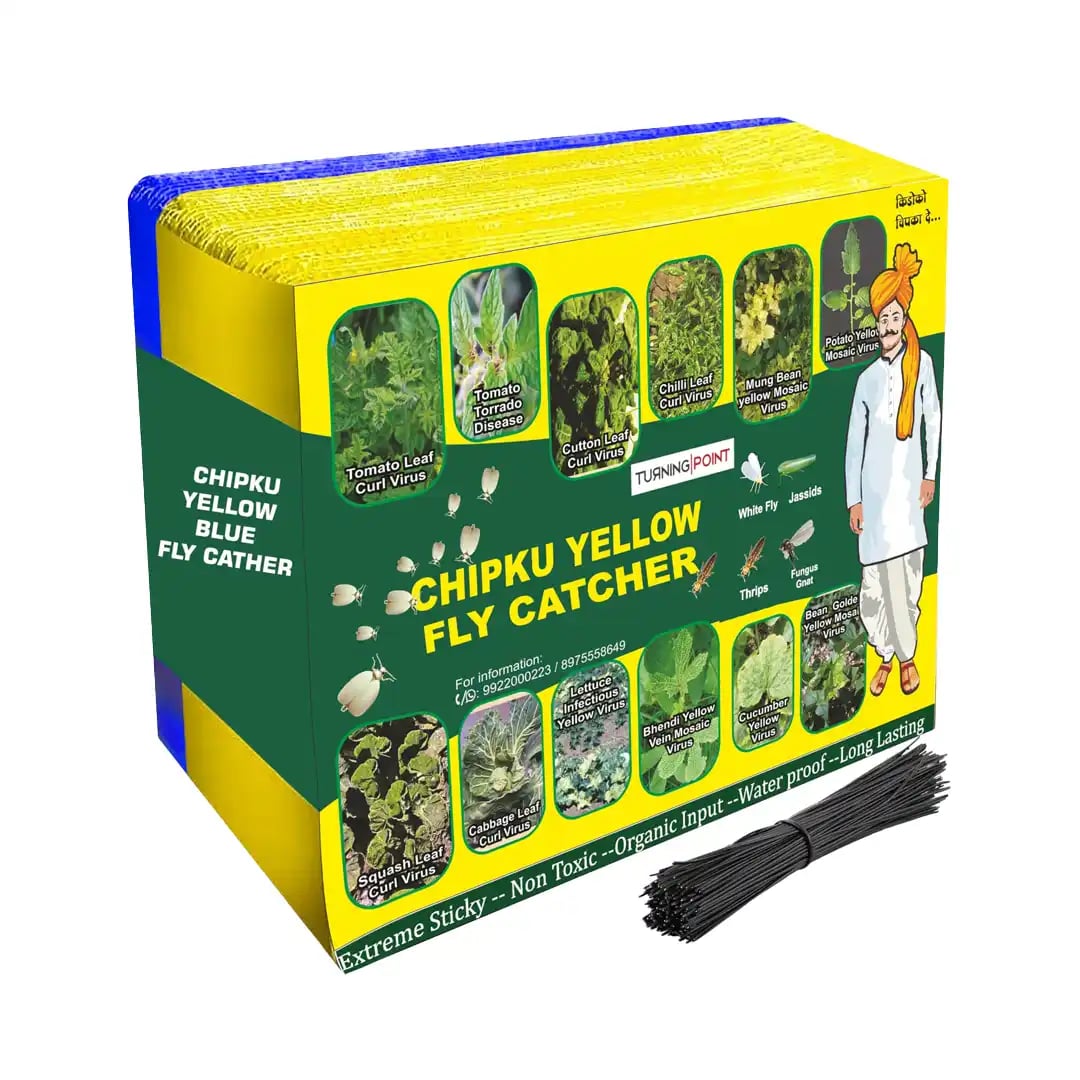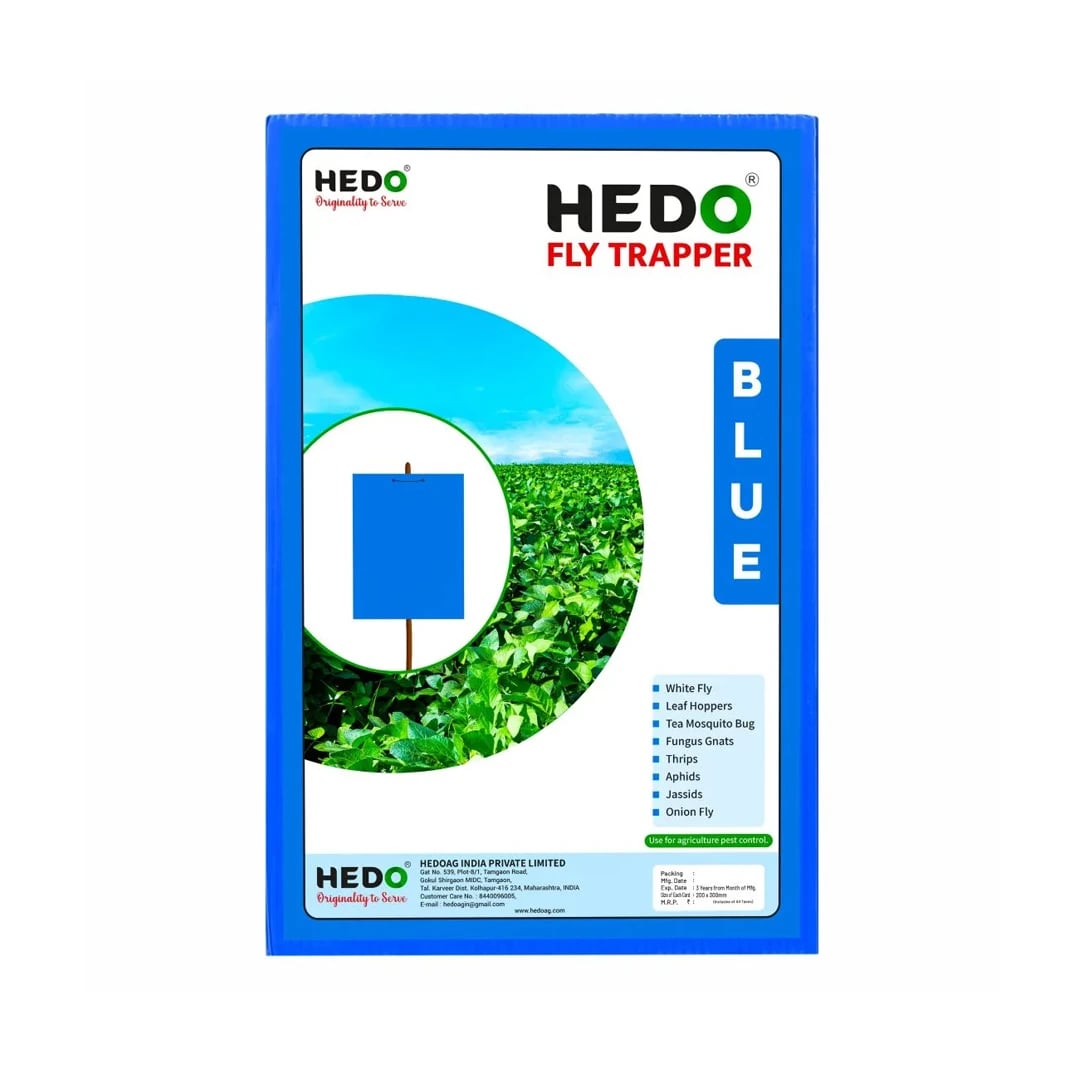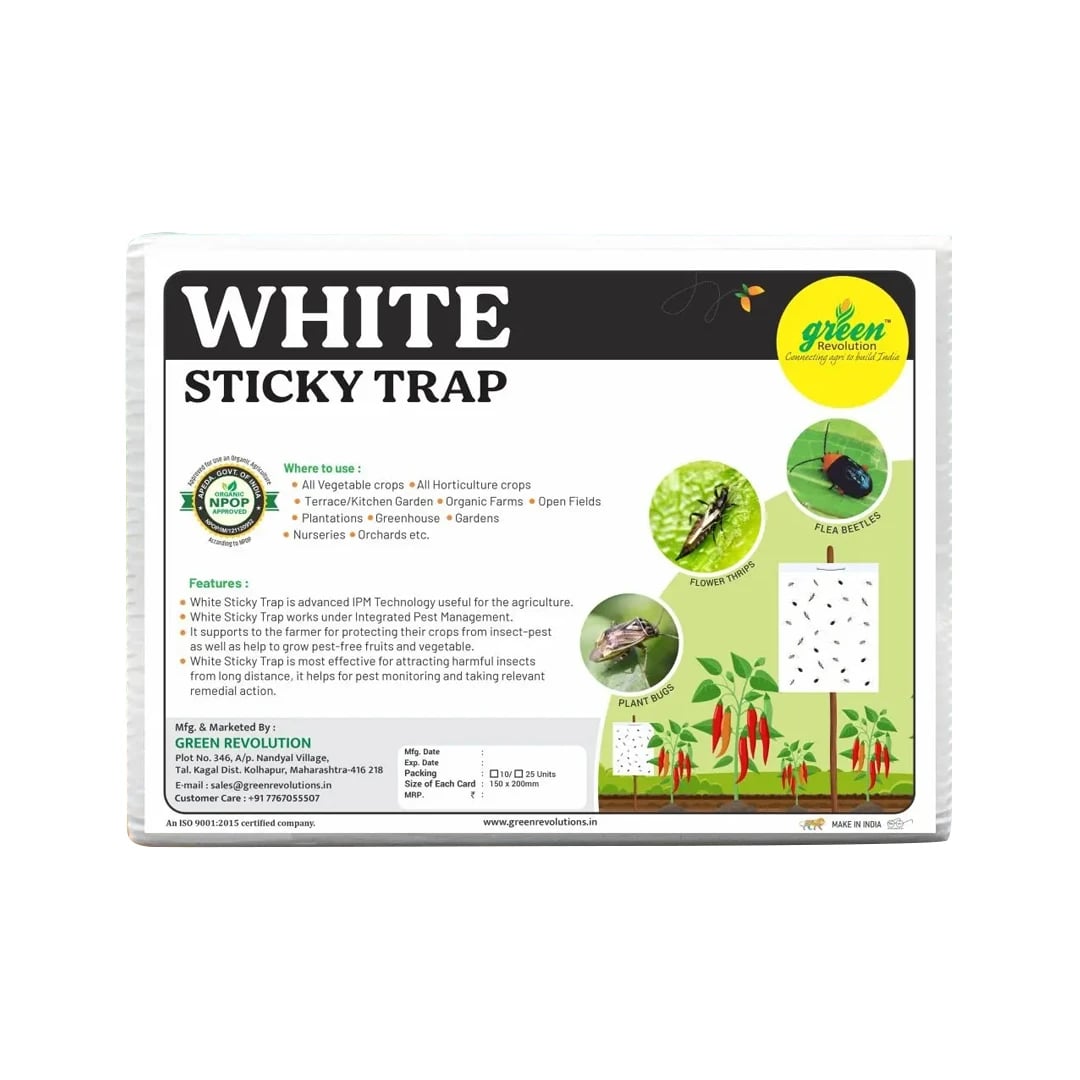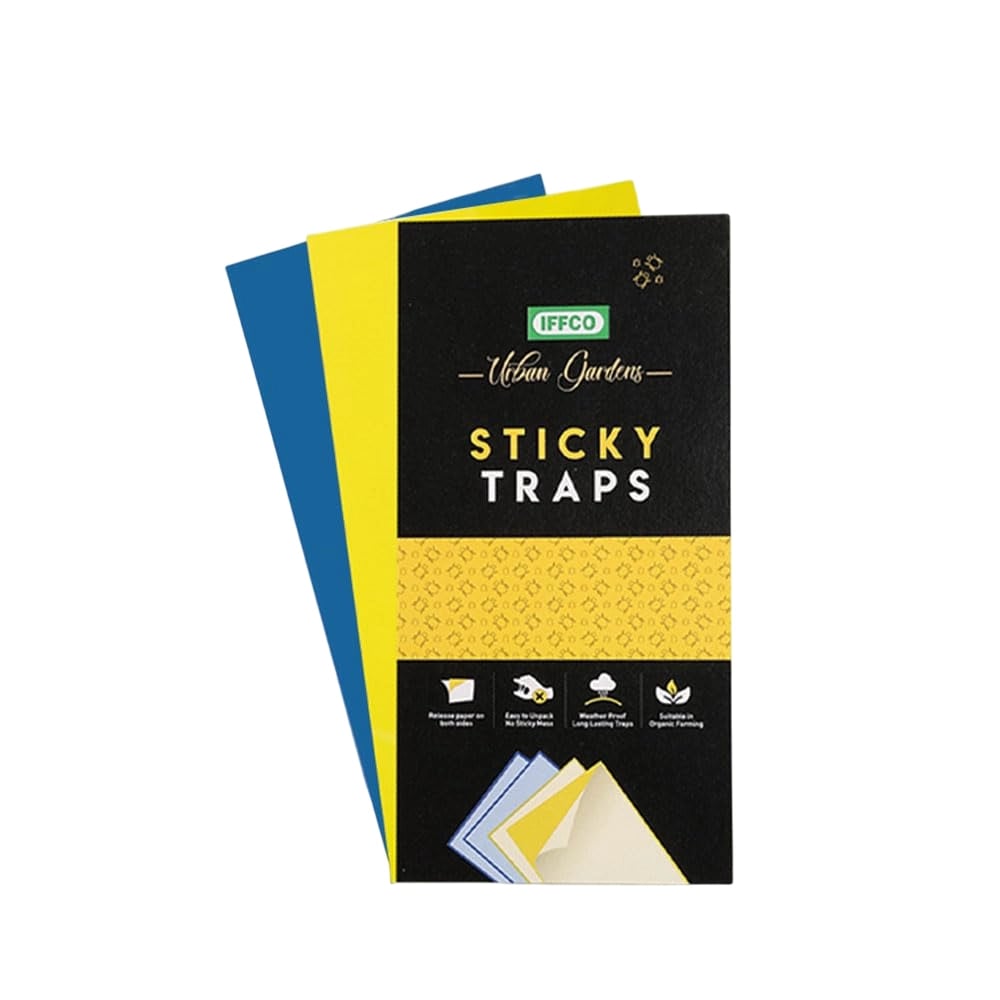
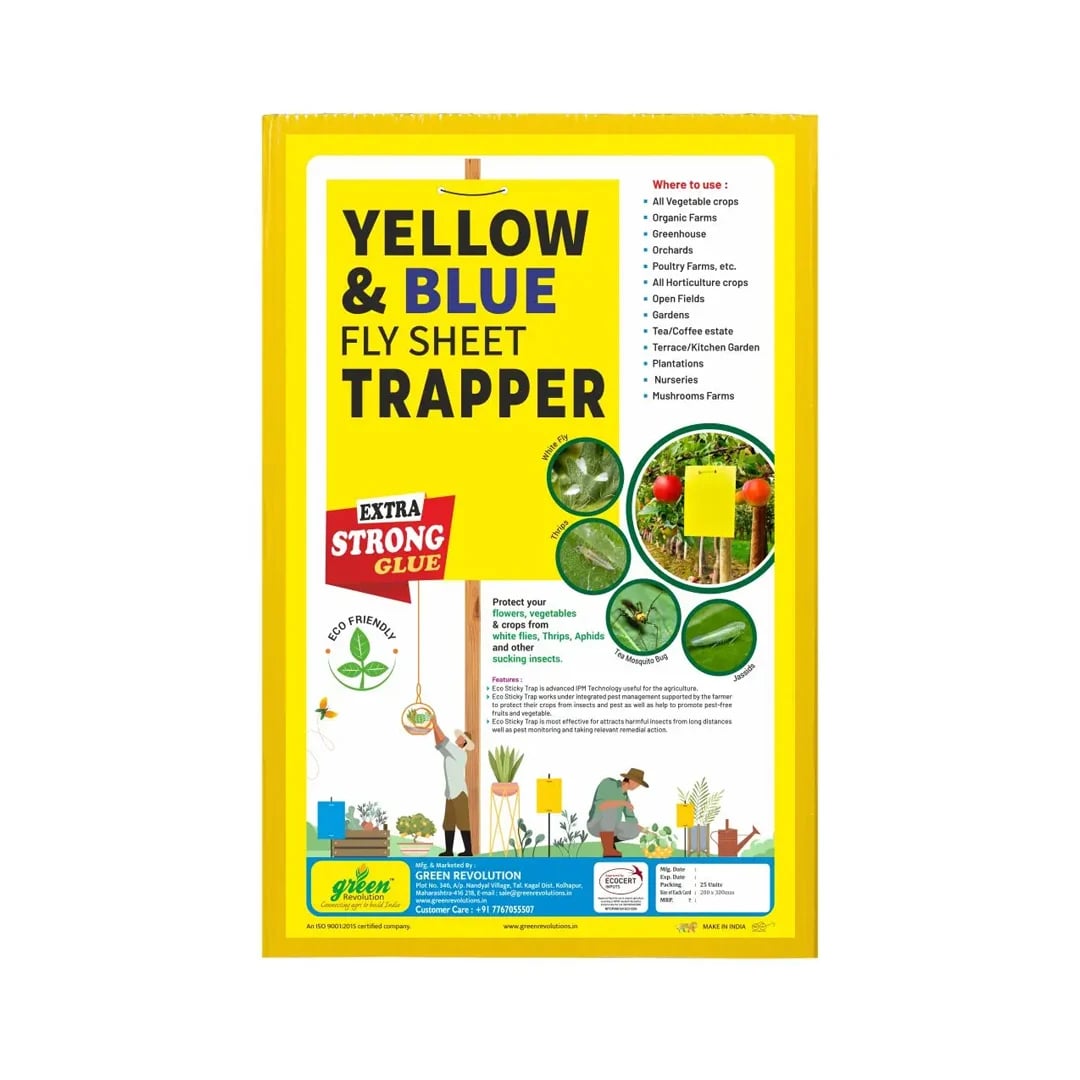
Green Revolution A4 Size Yellow And Blue Sticky Traps
₹439₹650
Save ₹21133% Off
🎉 You Save ₹872 (35% OFF)
Buying In Bulk?
Get Special Pricing for large orders, contact us now!
| Brand: | Green Revolution |
| Product Code: | 10966 |
| Country of Origin: | India |
| Category: | Equipments |
| Sub Category: | Traps |
| Sub Sub Category: | Sticky Traps |




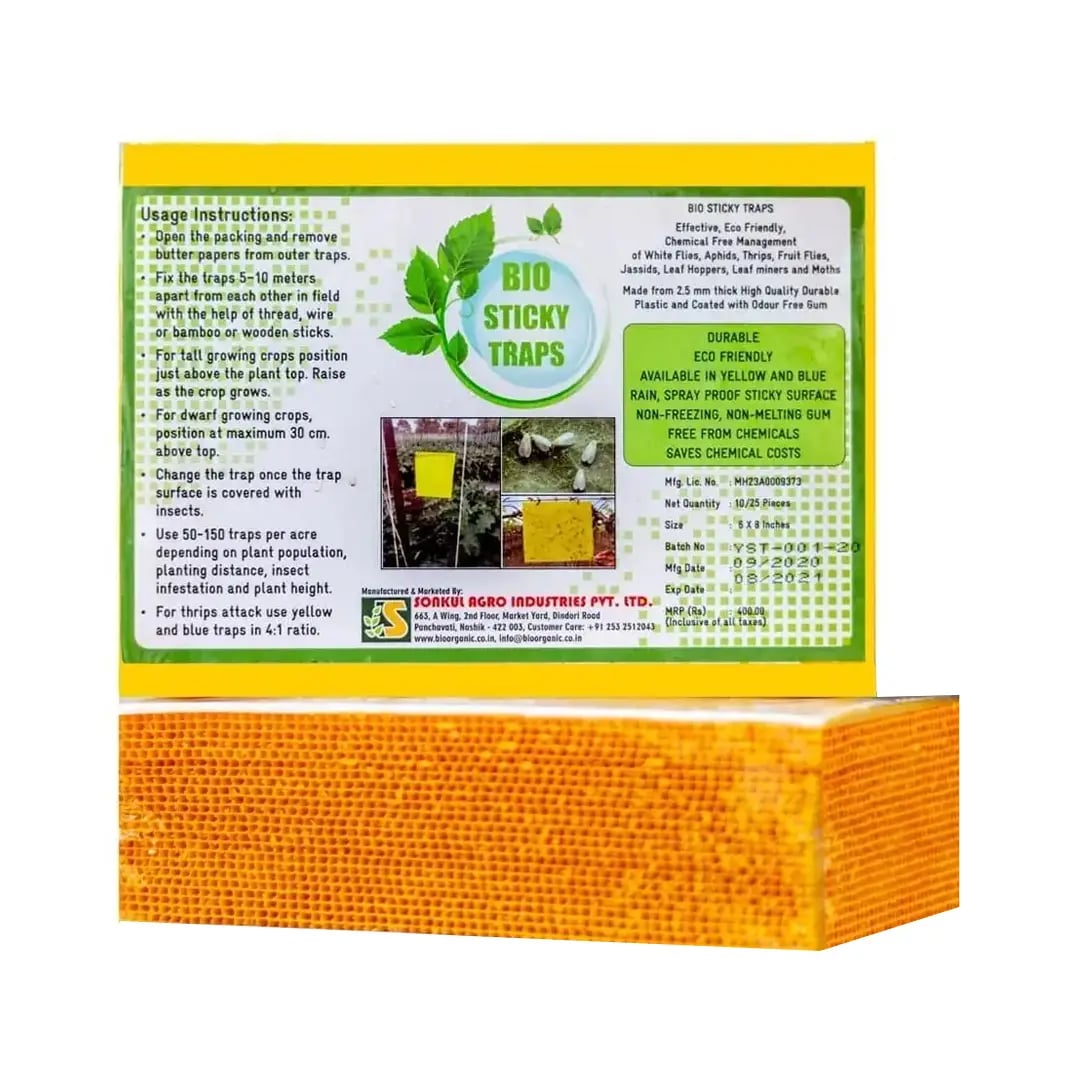
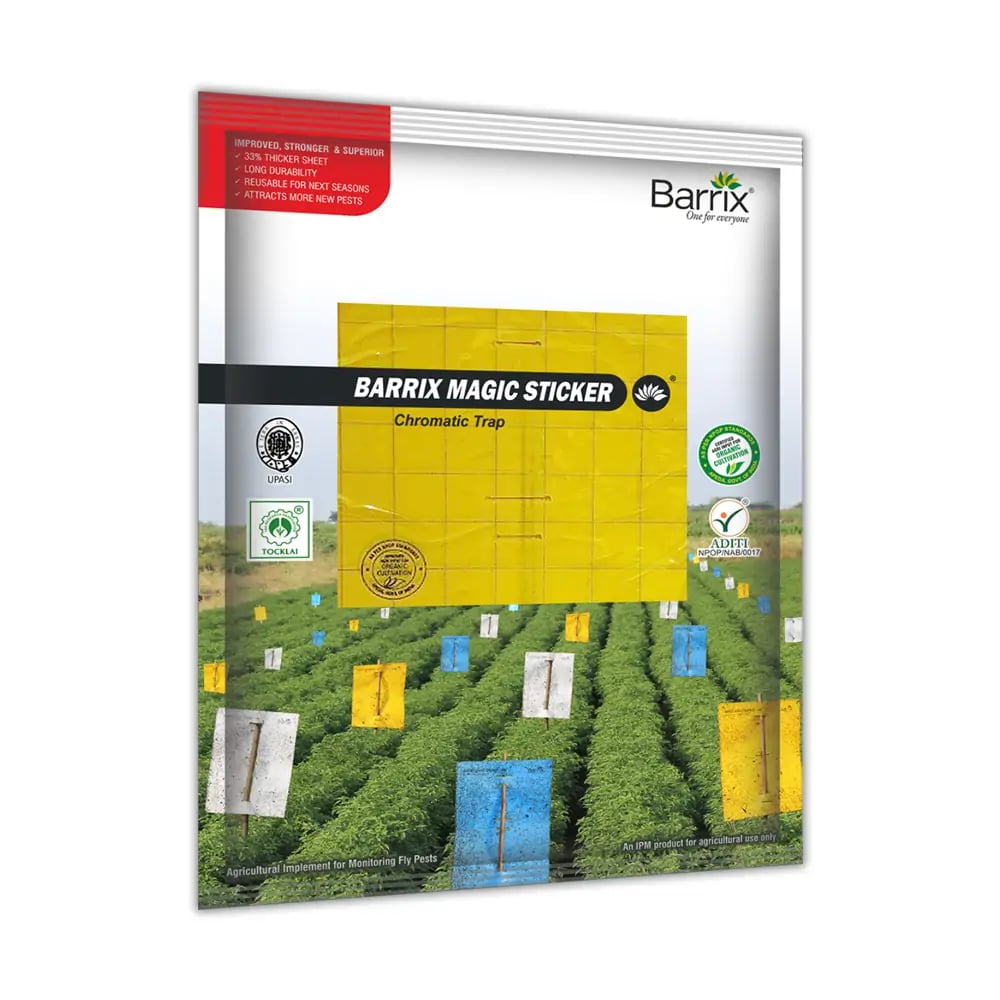
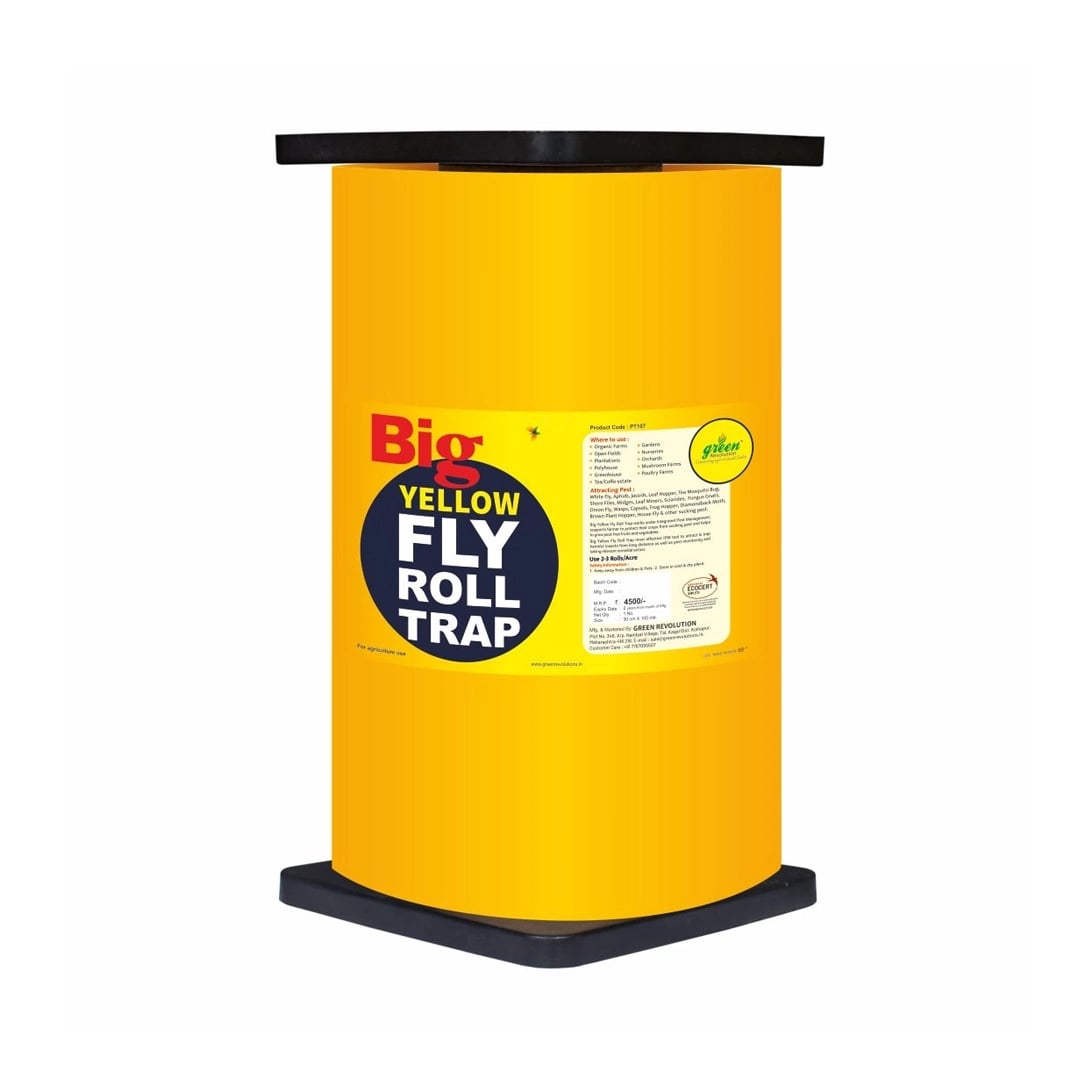
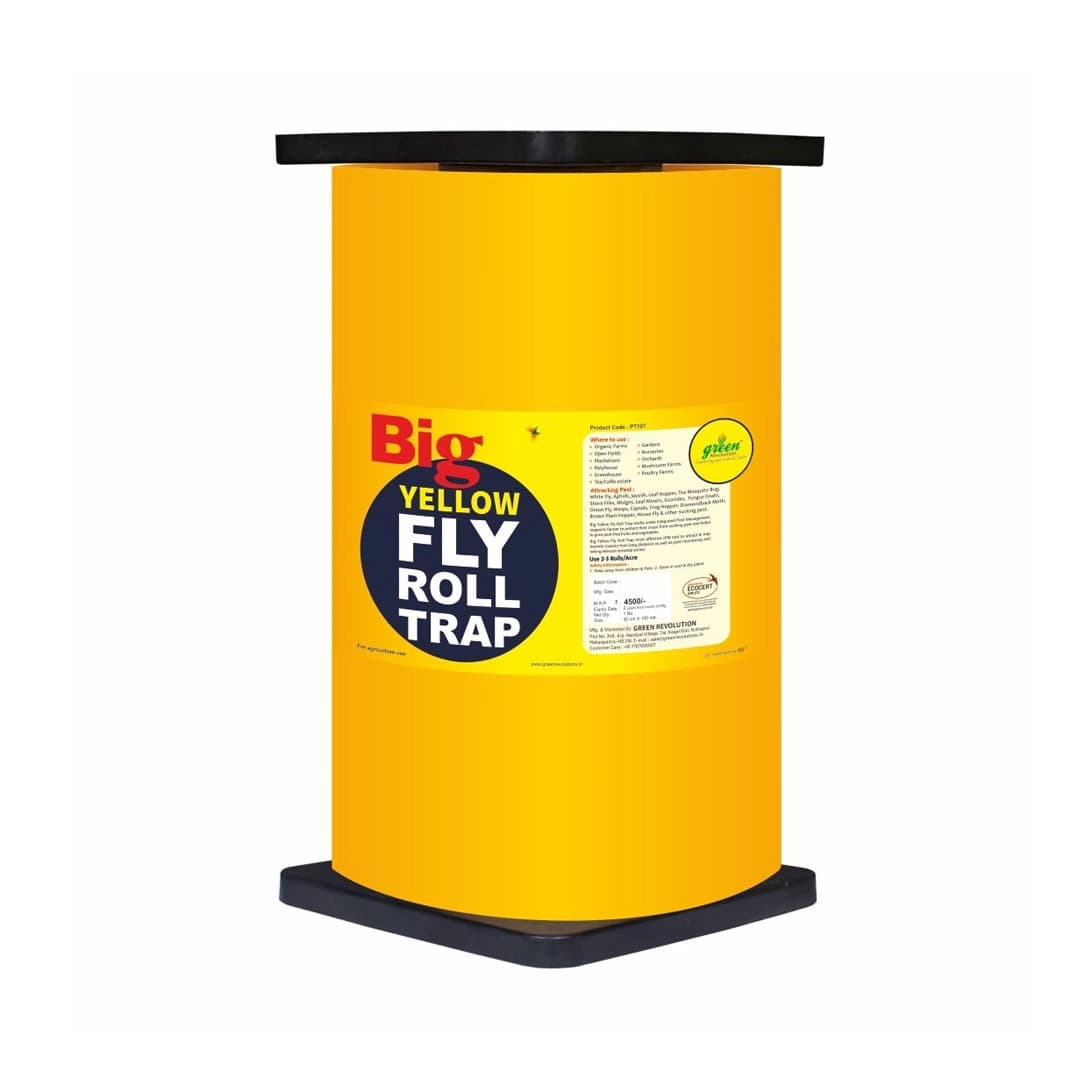
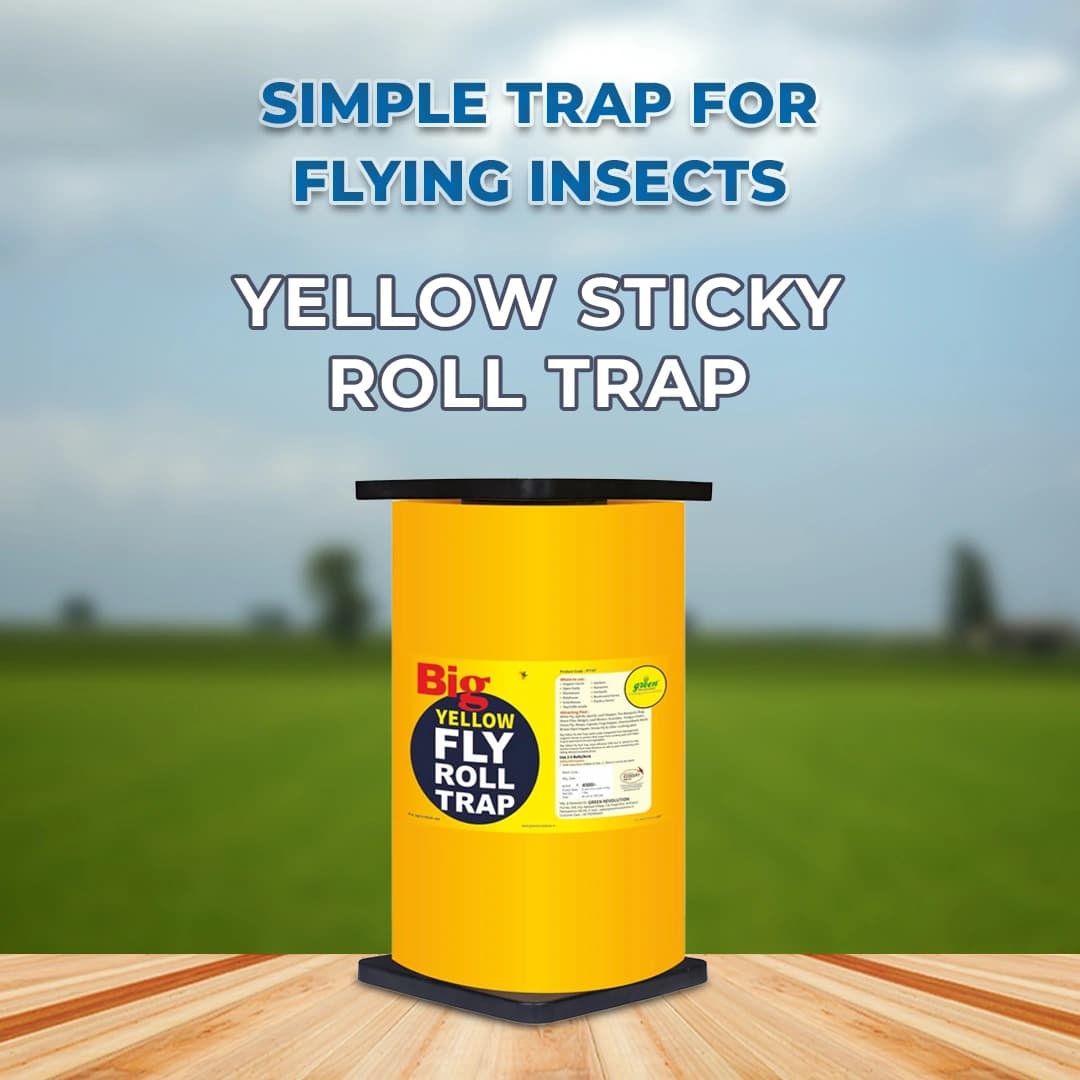
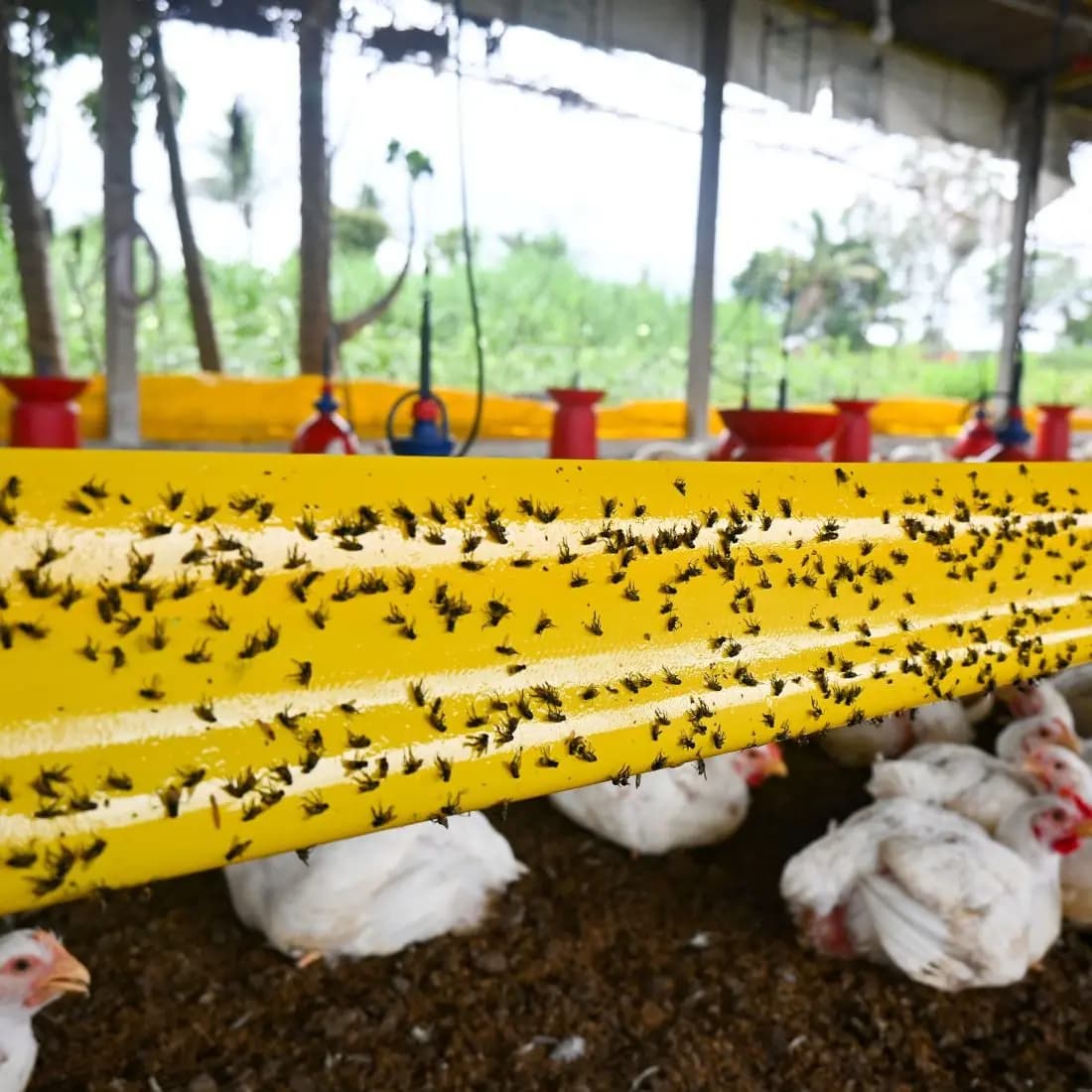
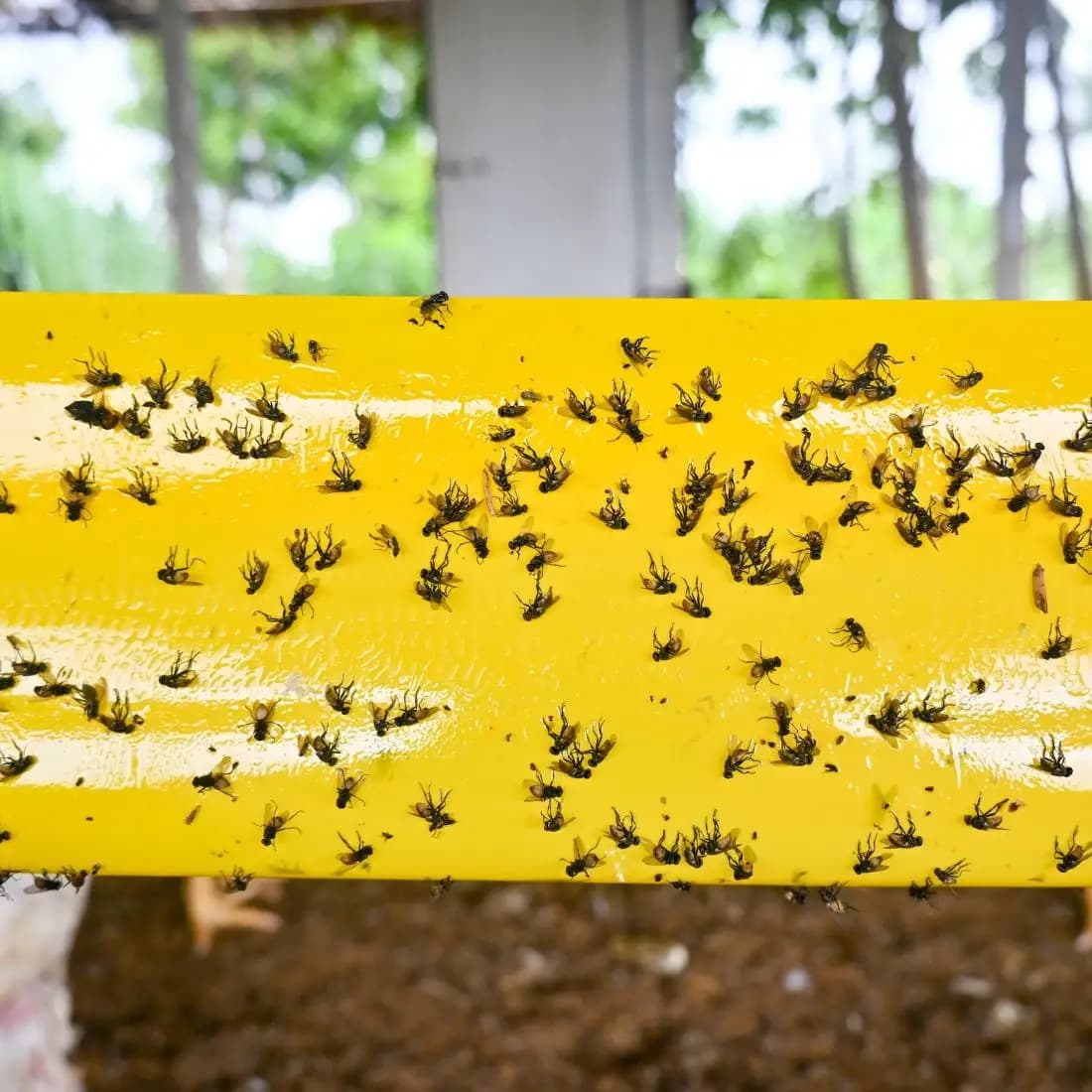
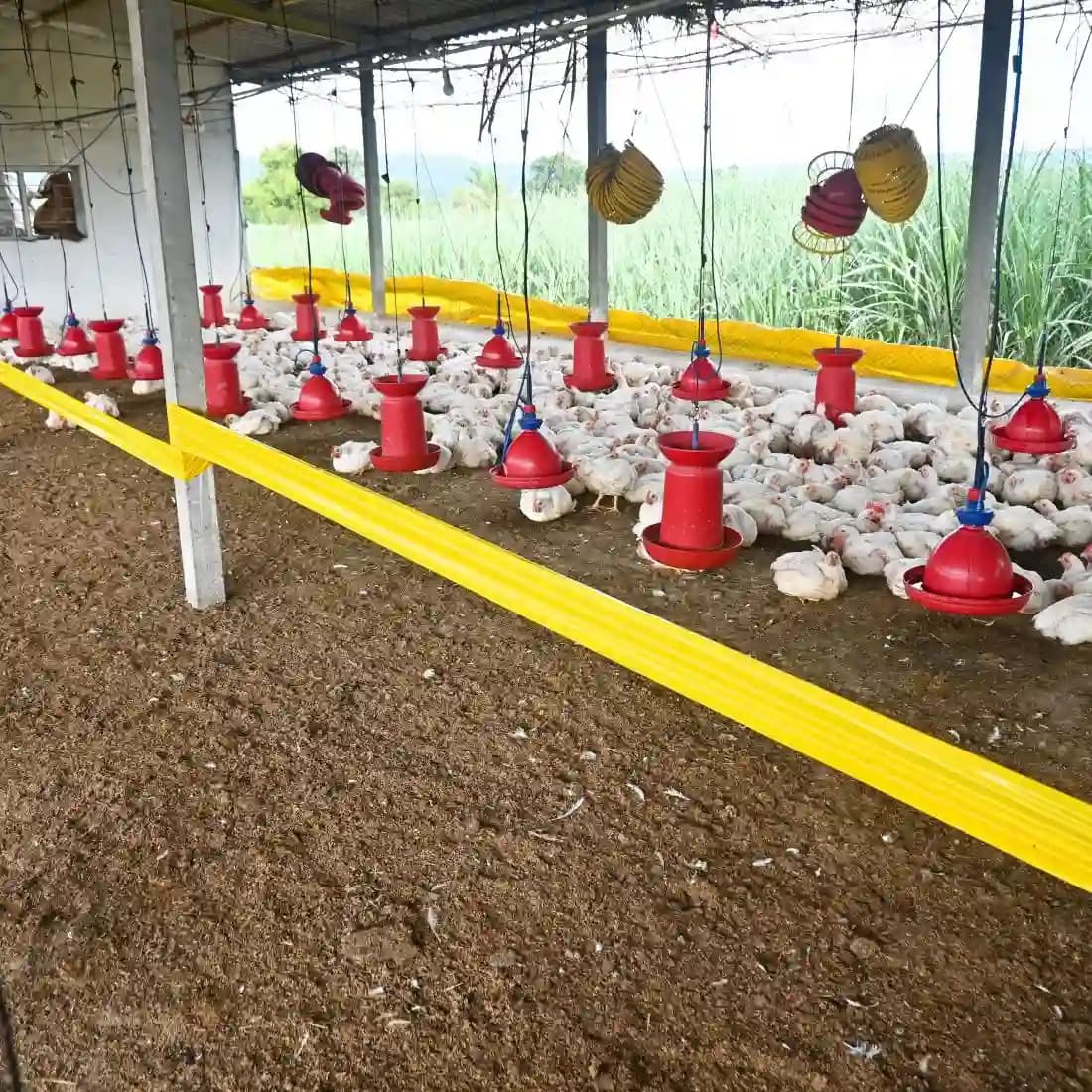
The Green Revolution yellow sticky trap roll is a large-format, eco-friendly insect monitoring and mass-trapping tool used across greenhouses, polyhouses, tea estates, poultry farms, and open vegetable fields. The yellow sticky trap roll uses a bright yellow colour to attract a wide range of flying pests and a non-toxic, slow-drying adhesive that traps any insect landing on the surface. This yellow sticky roll trap is a chemical-free solution against whiteflies, aphids, jassids, leaf hoppers, leaf miners, and other flying pests on vegetable and flower crops.
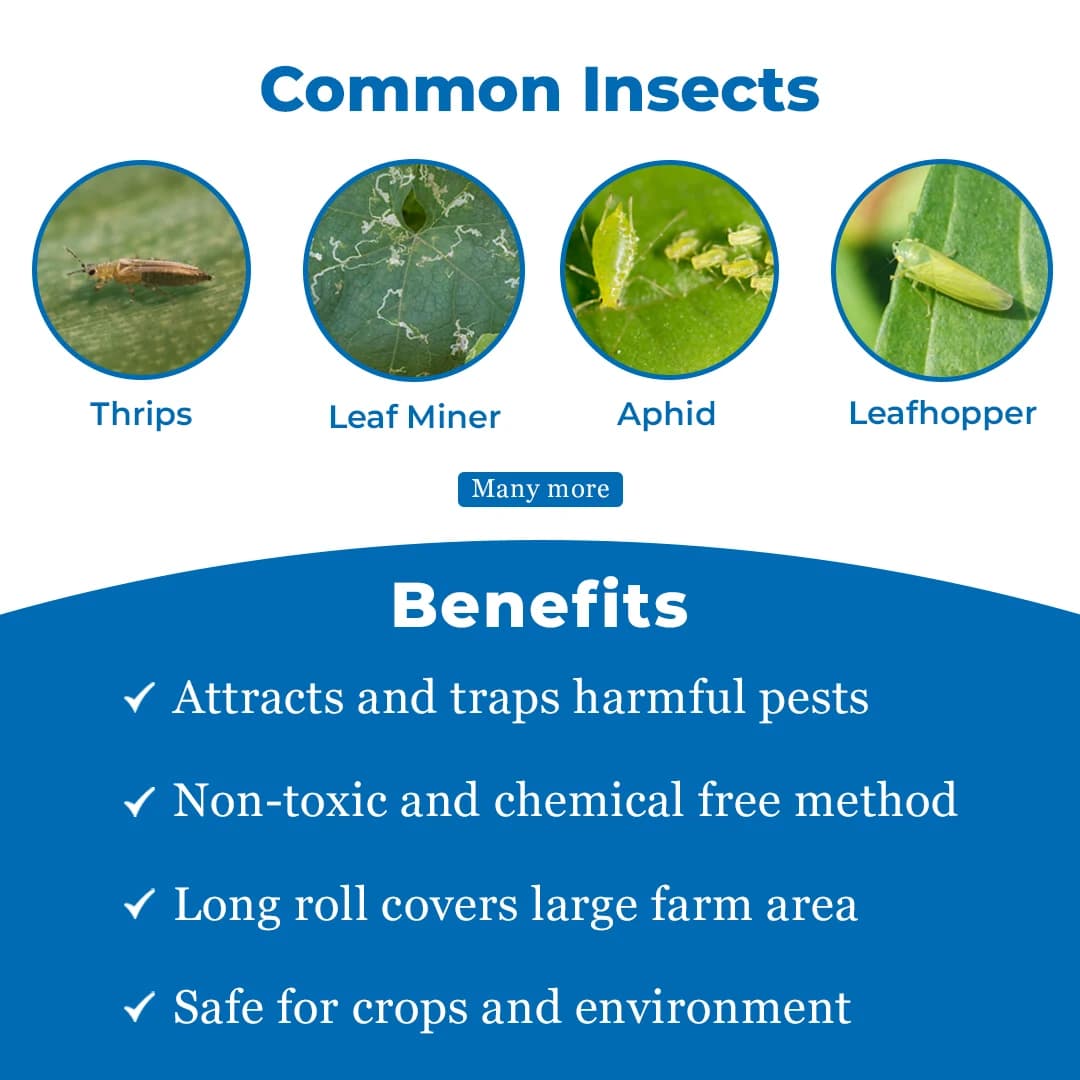
Wide-Range Insect Attraction: The yellow sticky roll trap uses a bright yellow shade that draws whiteflies, aphids, jassids, leaf hoppers, leaf miners, fungus gnats, and shore flies from a long distance.
Non-Toxic Slow-Drying Glue: The yellow sticky trap roll is coated with a high-quality non-toxic adhesive that does not dry out quickly, holding captured pests securely for weeks.
Two Practical Sizes: The product is available in 15 cm × 100 m or 30 cm × 100 m, suitable for both standard polyhouses and large open-field installations.
Chemical-Free Pest Control: The yellow sticky roll trap reduces pesticide use significantly in greenhouses, fitting naturally into IPM and organic farming programs.
Easy to Install: The roll can be unrolled along a crop row in minutes, with no batteries, no electricity, and no special tools needed.
Dual Use — Monitor and Mass-Trap: The yellow sticky trap roll works for both early pest detection and continuous mass-trapping during high-infestation stages.
Wide Crop Suitability: The trap is suitable for tomato, capsicum, cucumber, brinjal, chilli, roses, gerbera, and other vegetable and flower crops.
Specifications | Details |
|---|---|
Product Name | Green Revolution Yellow Sticky Roll Trap |
Type | Yellow Sticky Roll Trap (Mass-Trapping and Monitoring) |
Brand | Green Revolution |
Colour | Bright Yellow |
Sizes Available | 15 cm × 100 m, 30 cm × 100 m |
Adhesive | Non-Toxic, Slow-Drying Glue |
Target Pests | Whiteflies, Aphids, Jassids, Leaf Hoppers, Leaf Miners, Fungus Gnats, Shore Flies |
Recommended Use | Greenhouses, Polyhouses, Tea Estates, Poultry Farms, Open Vegetable Fields |
Suitable Crops | Vegetables, Flowers, Fruits |
Country of Origin | India |
Choose installation points along likely pest-entry zones — doors, vents, corners, walkways, and the perimeter of the polyhouse — for the best yellow sticky trap roll performance.
Cut the required length from the roll using sharp scissors, based on the crop row length to be covered.
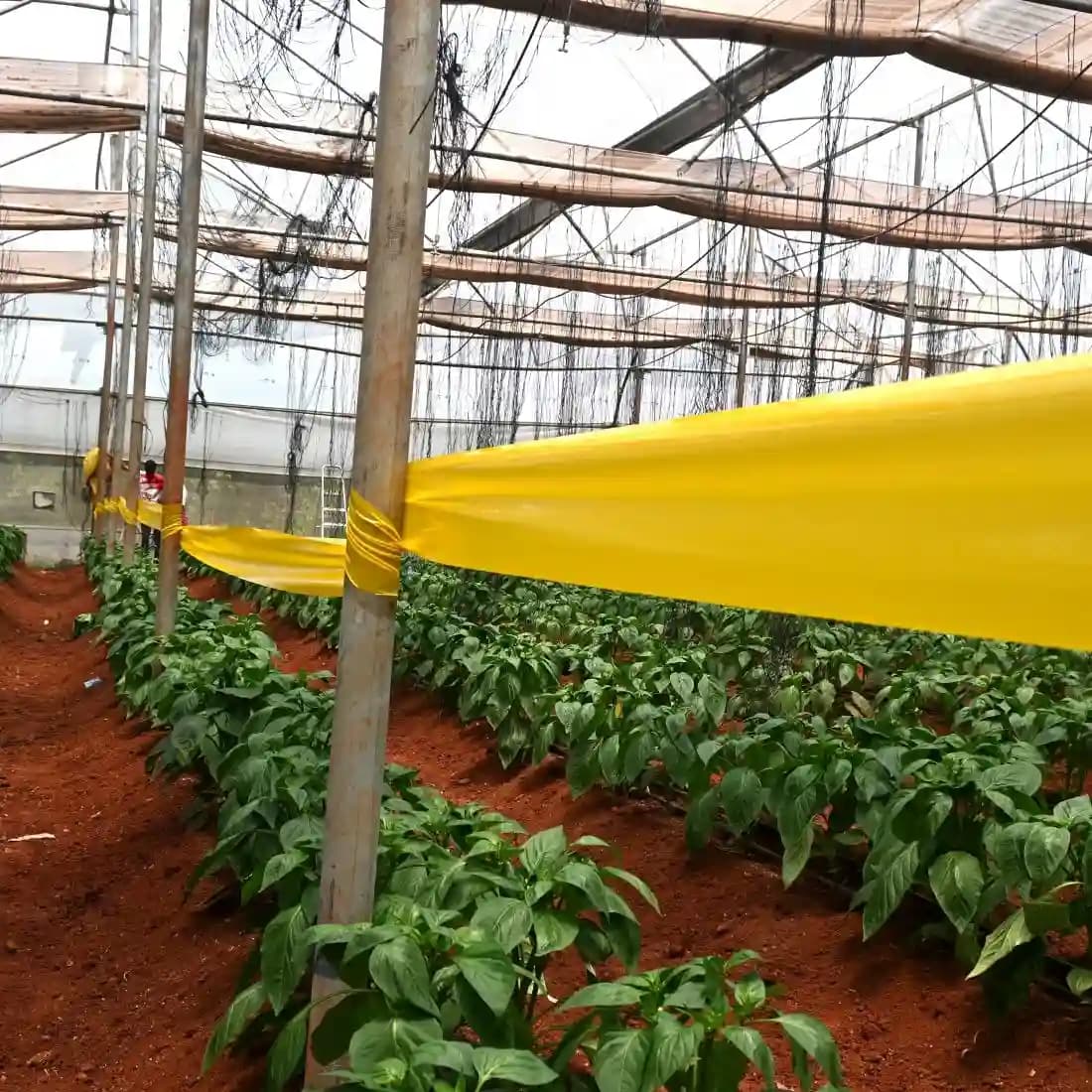
Hold one end of the roll and tie it securely to a wire, stake, post, or trellis at one end of the crop row.
Unroll the yellow sticky trap roll slowly along the length of the row, keeping it 20 to 40 cm above the top of the crop canopy.
Tie the other end of the roll to a wire, post, or stake at the far end of the row, keeping the surface stretched flat.
For greenhouse and polyhouse use, install one yellow sticky roll trap per crop row, with rolls spaced 4 to 5 metres apart between adjacent rows.
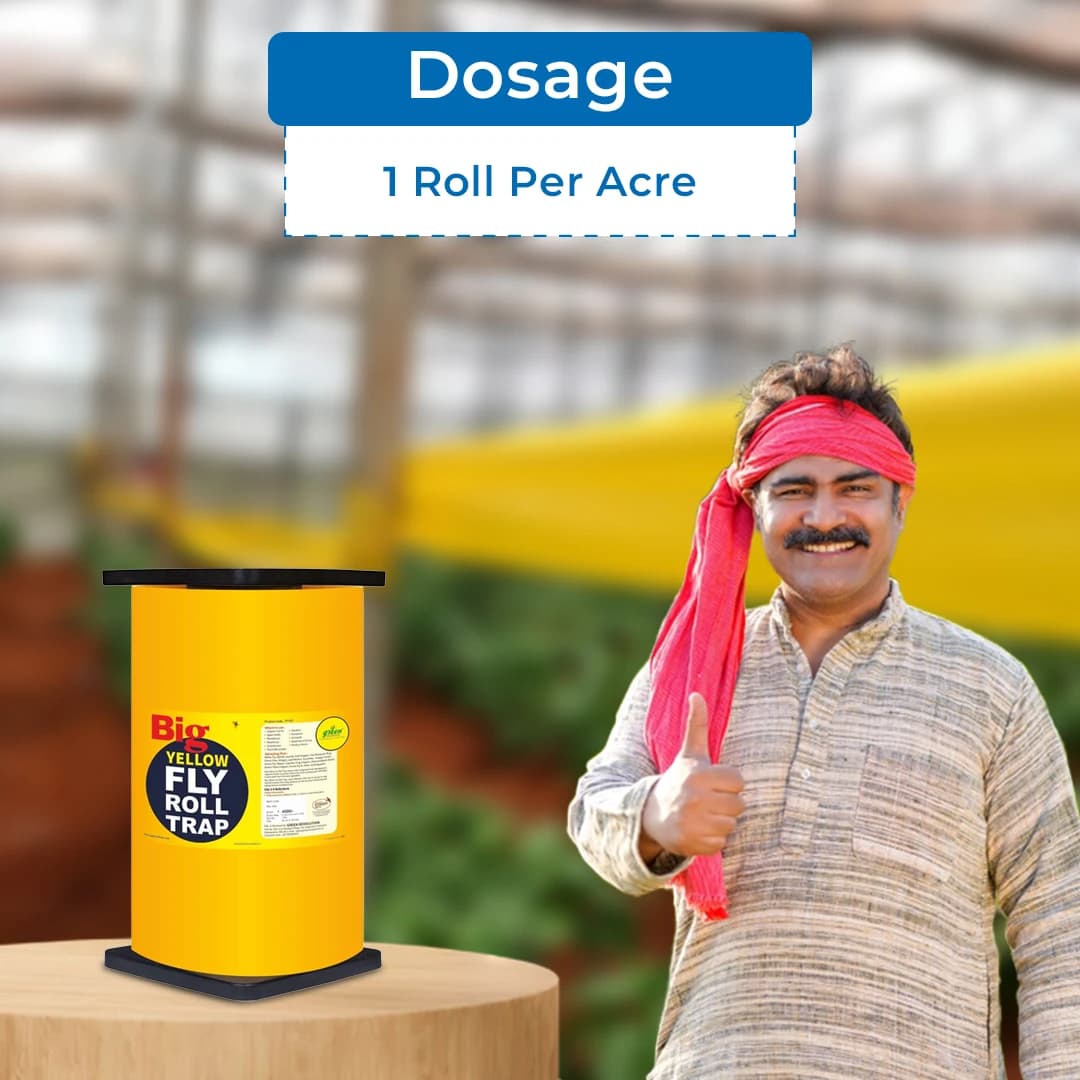
For open-field use, apply 2 to 3 rolls per acre at known pest-entry hotspots and along the field boundary.
As the crop grows, raise the roll height with the canopy by re-tying the support strings at a higher point.
Inspect the rolls every 7 to 10 days and replace each saturated section once the surface is fully covered with trapped pests or dust.
Always wear gloves while unrolling the yellow sticky trap roll, since the adhesive sticks firmly to skin, clothes, and hair on contact.
Keep the rolls out of reach of children and pets; accidental contact with the wet glue is hard to remove and best avoided.
Do not install the yellow sticky roll trap on hot tar surfaces, plastic sheets, or near open flames, as the adhesive can soften and run under heat.
If glue sticks to skin, hands, or fabric, use vegetable oil or kerosene to dissolve the adhesive, then wash off with soap and water.
Dispose of used yellow sticky trap roll sections in sealed bags through proper waste channels, and never burn them in open fields.
Avoid installing the roll near beneficial insect release zones, as predatory wasps and lacewings can also get trapped by mistake.
The yellow sticky roll trap catches a wide range of flying pests, including whiteflies, aphids, jassids, leaf hoppers, leaf miners, fungus gnats, shore flies, and winged thrips. The bright yellow shade attracts these insects from a long distance, and the non-toxic adhesive holds them firmly once they land on the surface.
For mass trapping in open fields, 2 to 3 rolls per acre give good coverage when installed at known pest-entry points. In a greenhouse or polyhouse, install one yellow sticky trap roll per crop row with rolls spaced 4 to 5 metres apart between adjacent rows.
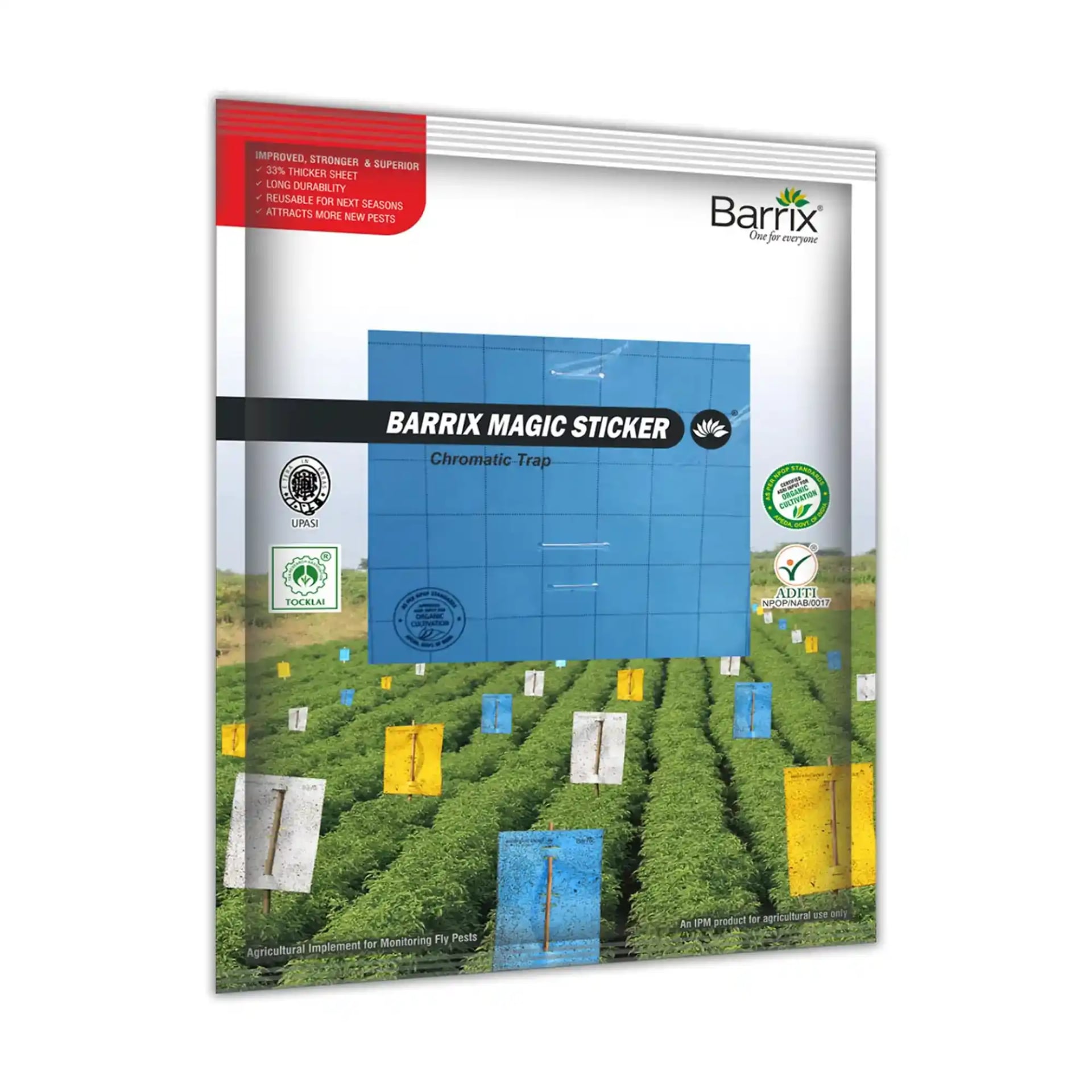
Yellow attracts the widest range of flying pests, including whiteflies, aphids, and leaf miners. For thrips and some specific pests, a blue sticky trap works better. The Green Revolution yellow sticky roll trap is designed for broad-spectrum monitoring and mass-trapping in vegetable and flower crops.
The yellow sticky trap roll should hang 20 to 40 cm above the top of the crop canopy. As the crop grows, raise the roll along with it by re-tying the support strings higher. This keeps the trap in the flight path of flying pests at all growth stages.
A yellow sticky trap roll section should be inspected every 7 to 10 days. Replace the saturated parts when the surface is covered with dead pests, dust, or pollen, or when the glue loses its tackiness. Most rolls last 4 to 8 weeks of active field use.
Yes, the yellow sticky roll trap is fully safe for organic farming and IPM programs. The adhesive is non-toxic and contains no chemical pesticides. Take care to keep the roll away from honeybee colonies and biocontrol release zones, as beneficial insects can also get trapped by mistake.