Funnel Trap With Gulabi Fly Lure (Pectinophora Gossypiella) For Pink Bollworm, Best For Cotton and Okra
₹299₹300
Save ₹11% Off
🎉 You Save ₹18 (3% OFF)
Buying In Bulk?
Get Special Pricing for large orders, contact us now!
| Brand: | Turning point natural Care |
| Product Code: | 3203 |
| Country of Origin: | India |
| Category: | Equipments |
| Sub Category: | Traps |
| Sub Sub Category: | Traps And Lures |




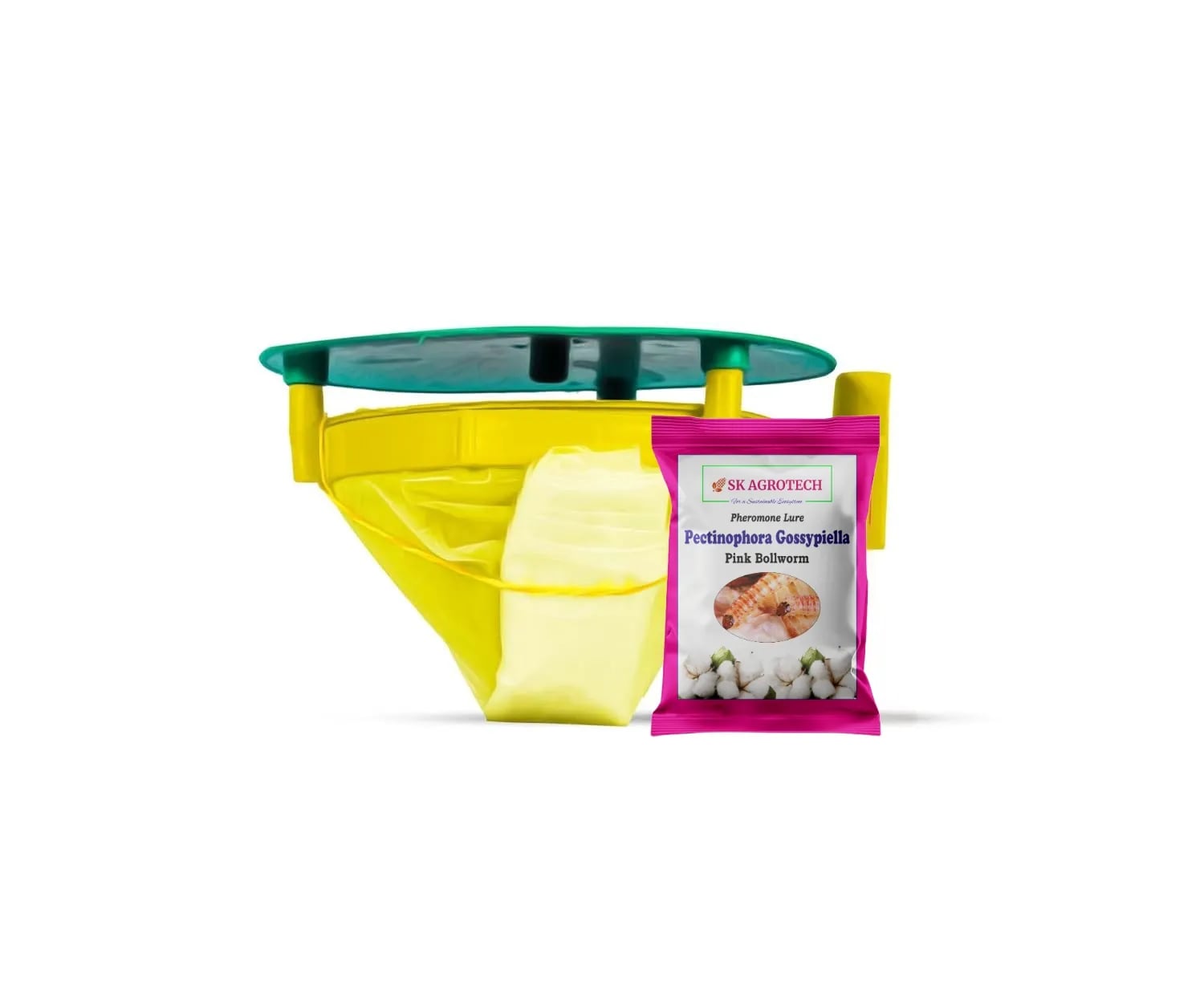
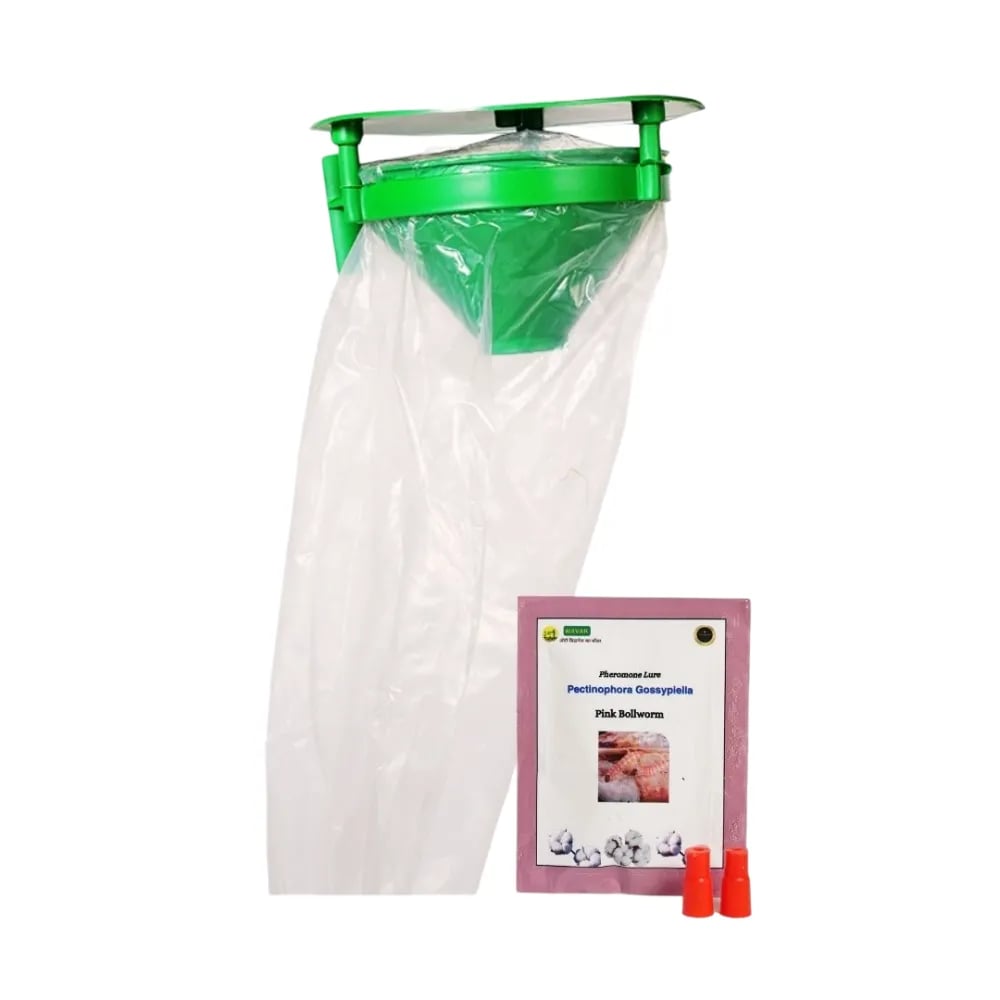
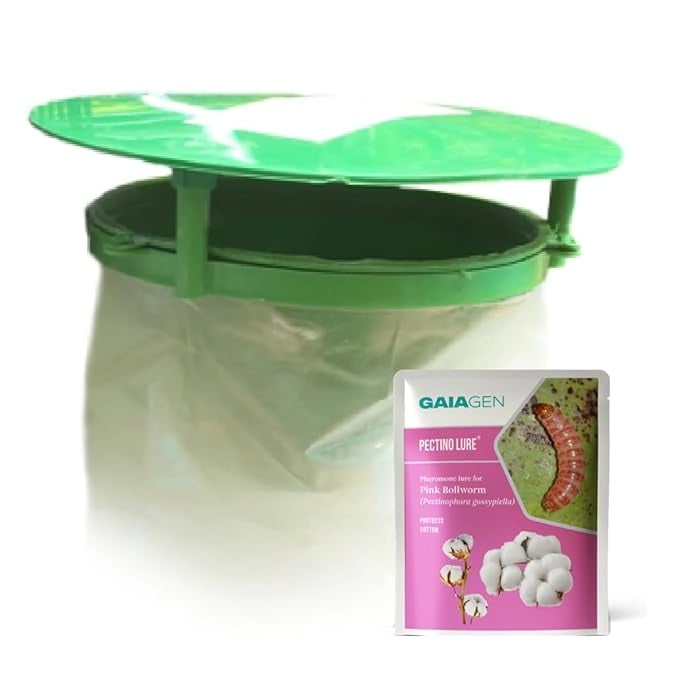
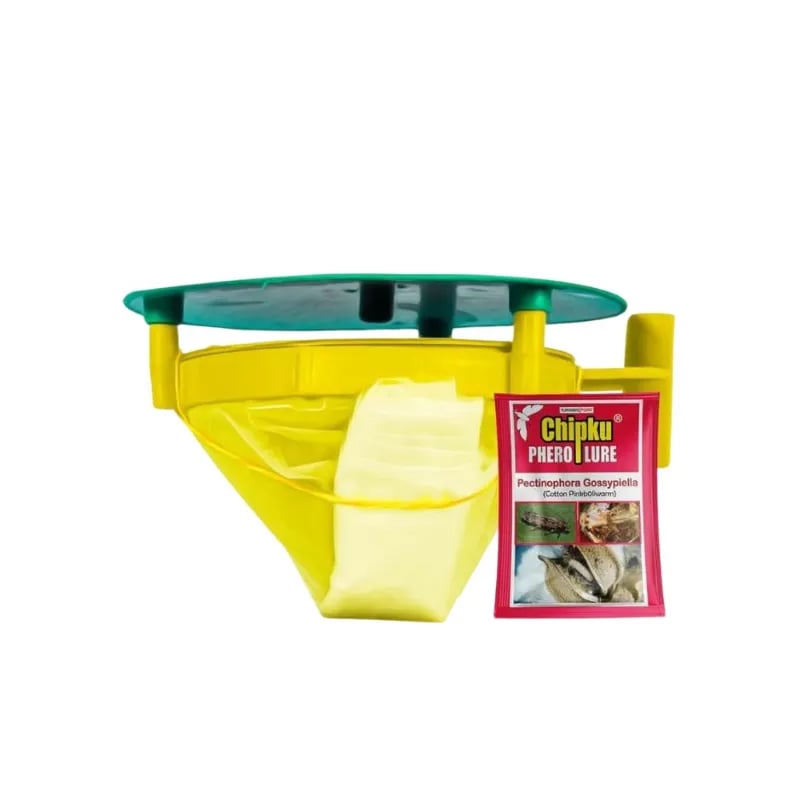
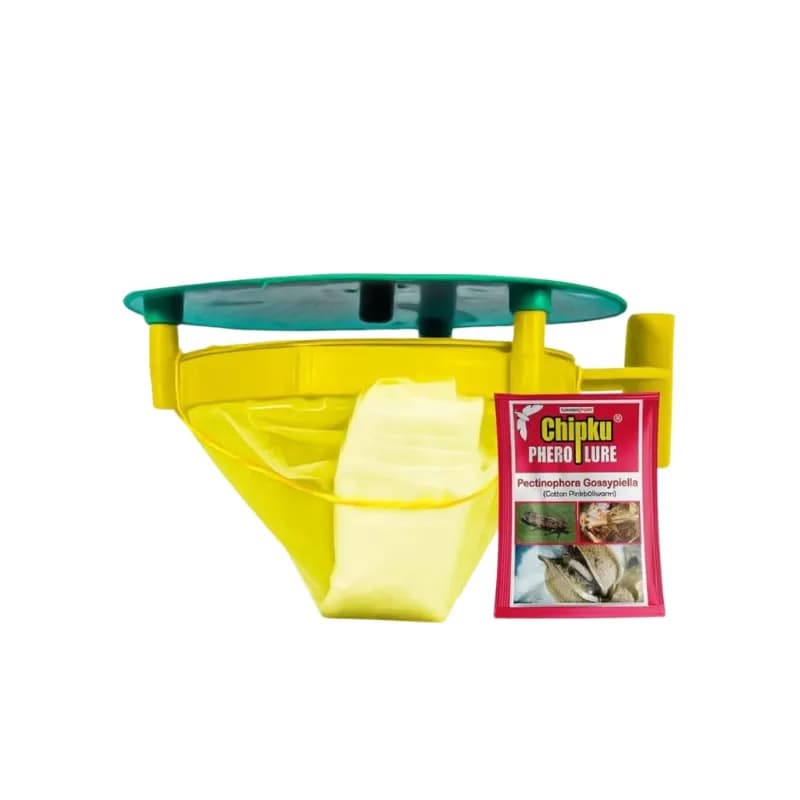
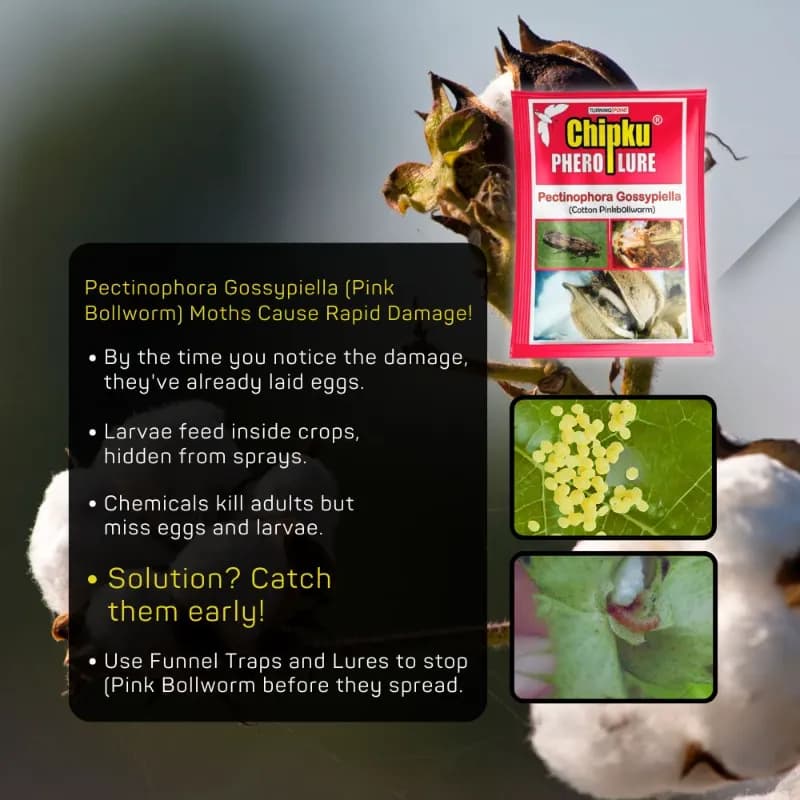
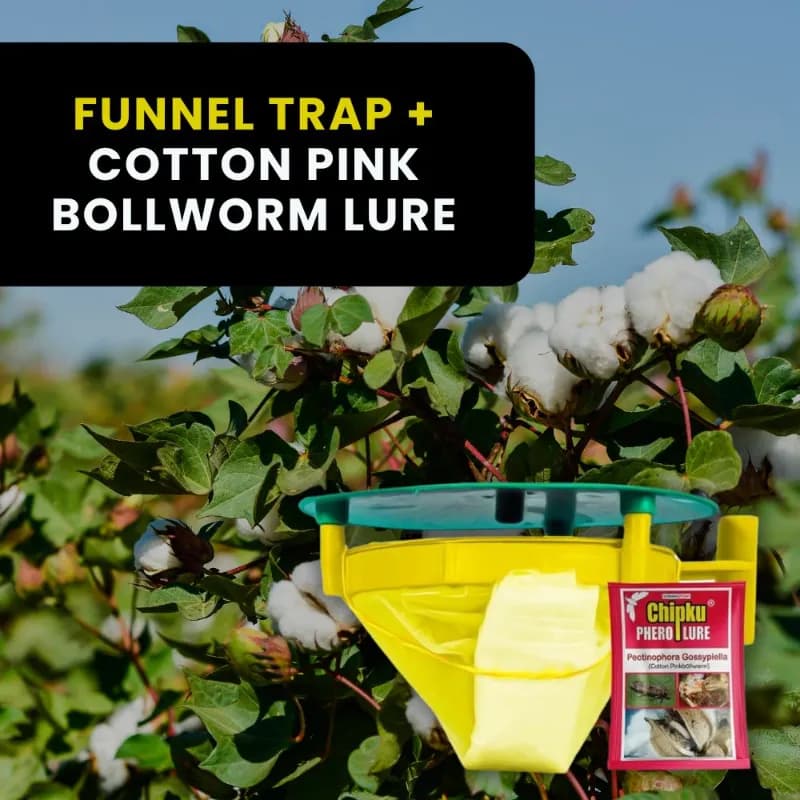
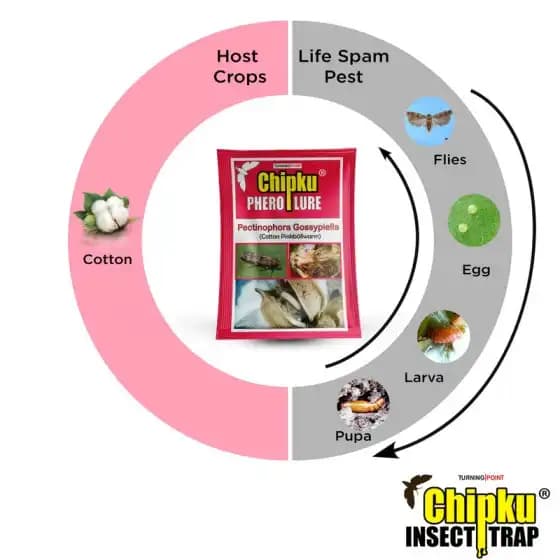
The Chipku Pheromone Trap Funnel with Pink Bollworm Lure is a safe and eco-friendly funnel trap made for cotton fields. It is built to catch male moths of Pectinophora gossypiella (Pink Bollworm). The lure inside the funnel trap gives off the same smell as the female moth, which pulls the male moths straight into the funnel. Once the male moths fall inside, they cannot escape or mate again, and the breeding cycle of the pest stops on its own. Each set comes with one Chipku funnel trap and one ready-to-use Pectinophora gossypiella lure. This setup reduces the need for pesticide sprays and helps cotton farmers monitor pink bollworm activity from flowering to the boll stage.
Species-Specific Lure: The Pectinophora gossypiella lure attracts only male pink bollworm moths, leaving honeybees, ladybugs, and other beneficial organisms unharmed
Chemical-Free Pest Control: This funnel trap works on scent only, with no pesticide spray needed, making it safe for organic and natural cotton farming.
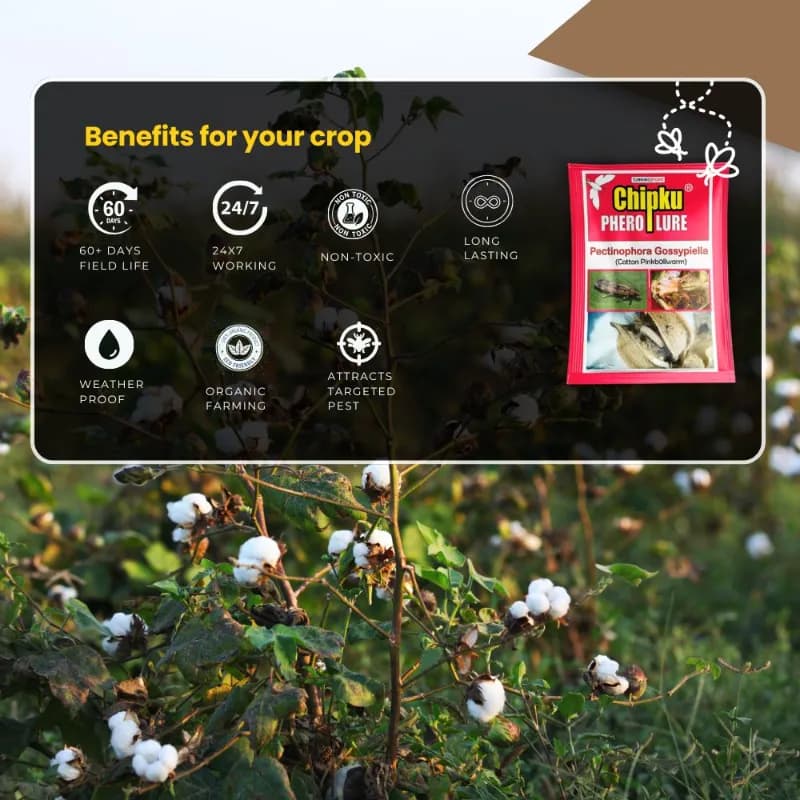
Long-Lasting Lure: Each Pectinophora gossypiella lure stays active for 30–45 days in field conditions before needing a replacement.
Reusable Funnel Trap: The funnel trap body is built from sturdy plastic and can be reused for 2–3 cotton seasons with just a lure refill.
Easy Field Installation: The funnel trap hangs from a bamboo pole or wire frame with a simple loop; no tools needed for setup.
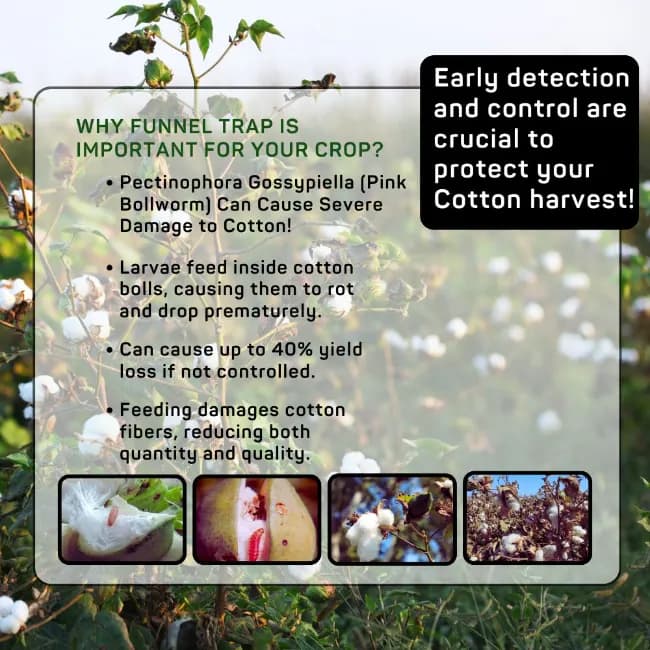
Reduces Pesticide Cost: Regular use of the Pectinophora gossypiella funnel trap reduces insecticide spray rounds by 2–3 per season, saving cost and protecting soil health.
Specifications | Details |
|---|---|
Product Name | Chipku Pheromone Trap Funnel with Pink Bollworm Lure |
Brand | Turning Point Natural Care (Chipku) |
Type | Funnel Trap with Pheromone Lure |
Target Pest | Pink Bollworm (Pectinophora gossypiella) |
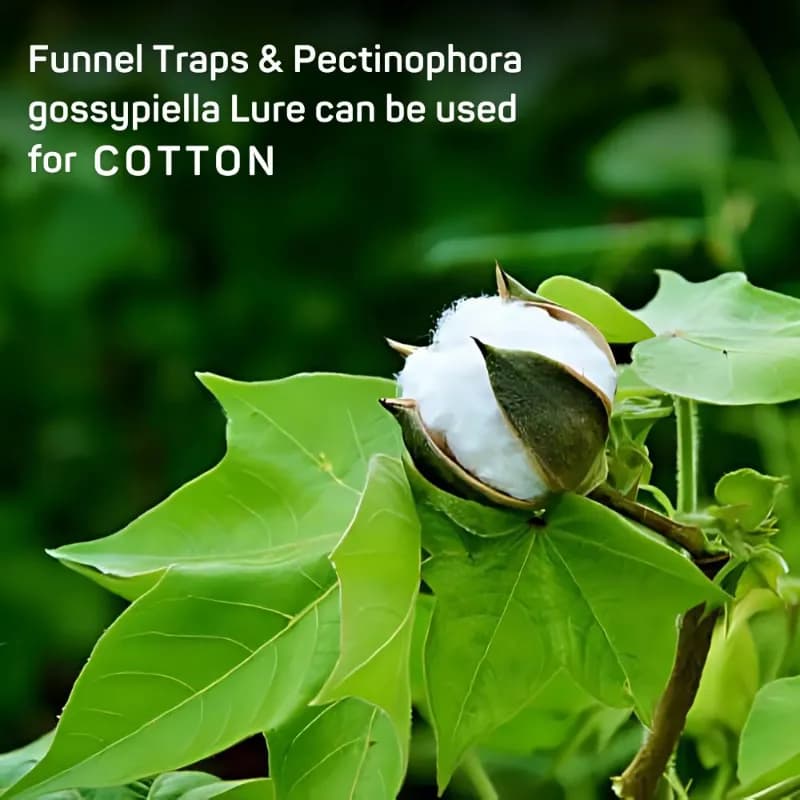
Target Crop | Cotton |
Lure Active Life | 30 to 45 days |
Trap Material | UV-stabilized Plastic |
Trap Reusability | 2 to 3 seasons (with lure refill) |
Recommended Dose | 6 to 8 traps per acre |
Pack Variants | 10 Sets, 20 Sets, 50 Sets, 100 Sets (Trap + Lure); Lure-Only packs also available |
Application | Cotton fields (flowering to boll stage) |
Country of Origin | India |
Take out the funnel trap body and unfold the three-piece design (top funnel, middle hanger, bottom collection bag) on a clean surface.
Fix the top green funnel cap onto the white middle hanger by pressing both pieces firmly until they click and lock.
Tear open the sealed sachet of the Pectinophora gossypiella lure only at the time of installation, since the pheromone evaporates fast once exposed to air.
Place the Pectinophora gossypiella lure inside the lure holder basket fixed under the top funnel cap; use a stick or pin to push it in if needed.
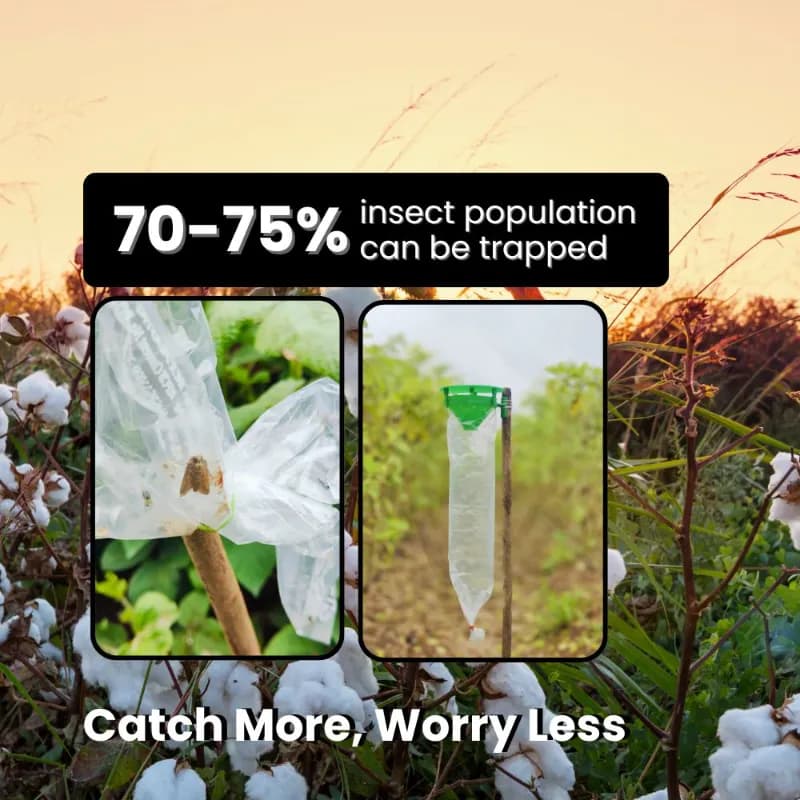
Attach the bottom transparent collection bag to the funnel trap by twisting it into the groove at the base of the middle hanger.
Tie a strong nylon or jute string through the loop at the top of the funnel trap for hanging support.
Hang the funnel trap on a bamboo stake or wire frame at a height of 30–45 cm above the cotton canopy, spaced 25 m apart for monitoring or 15 m apart for mass trapping.
Install 6–8 funnel traps per acre starting from 45 days after sowing (flowering stage) and check the collection bag every 4–5 days to count trapped Pectinophora gossypiella moths.
Do not open the sealed Pectinophora gossypiella lure pouch until the funnel trap is ready to be hung in the field, as the pheromone evaporates quickly once exposed.
Avoid touching the Pectinophora gossypiella lure with bare hands; the human scent can mask the pheromone and reduce trap efficiency, so use gloves or a stick.
Do not install the funnel trap near insecticide spray paths, as the chemical spray drift can damage the lure and shorten its working life.
Hang the funnel trap at the correct height (30–45 cm above the cotton canopy); too low or too high reduces moth catch rates significantly.
Replace the Pectinophora gossypiella lure every 30–45 days for continuous protection; an expired lure stops attracting moths even if it looks intact.
Store unused lures in their sealed pouch inside a cool, dry place away from sunlight, kitchen heat, and strong-smelling chemicals like kerosene or naphthalene.
For monitoring purposes, install 3 to 4 funnel traps per acre of cotton to track pink bollworm moth activity and decide when to start sprays. For mass trapping and active pest control, increase the count to 6 to 8 traps per acre, spaced 15 m apart. In heavily infested zones, some farmers go up to 10 traps per acre during peak Pectinophora gossypiella moth flight periods.
Start installing the Pectinophora gossypiella trap 45 days after sowing or at the flowering stage of the cotton crop, whichever comes first. This is when the first generation of pink bollworm moths emerges from over-wintering pupae. Continue trapping till the last boll picking is done, replacing the lure every 30–45 days for consistent results.
The Pectinophora gossypiella lure stays active for 30 to 45 days in normal Indian field conditions. In very hot summer fields (above 40°C), the lure life may drop to 25–30 days. Always replace the lure on schedule, even if the product is still catching a few moths, because pheromone strength drops sharply after the active period.
Yes, the Chipku trap body is built for 2–3 cotton seasons of reuse. After the season, empty out the dead moths, wash the trap with plain water (no soap or chemicals), let it dry fully in shade, and store in a cardboard box. Buy only fresh Pectinophora gossypiella lures for the next season; the lure cannot be reused.
No, the Pectinophora gossypiella lure mimics the female moth's mating pheromone, so it attracts and traps only the male pink bollworm moths. Removing males from the breeding pool, it stops mating and egg-laying, which indirectly reduces the next generation of larvae. Female moths are not directly trapped, but their reproduction is broken at the source.
No, the Pectinophora gossypiella pheromone is species-specific and only attracts pink bollworm moths, which mainly attack cotton (and rarely okra). For other crops like brinjal, tomato, or paddy, use the matching pheromone trap — Leucinodes orbonalis lure for brinjal, Tuta absoluta for tomato, and Scirpophaga incertulas for paddy. The body of the trap remains the same; only the lure changes.