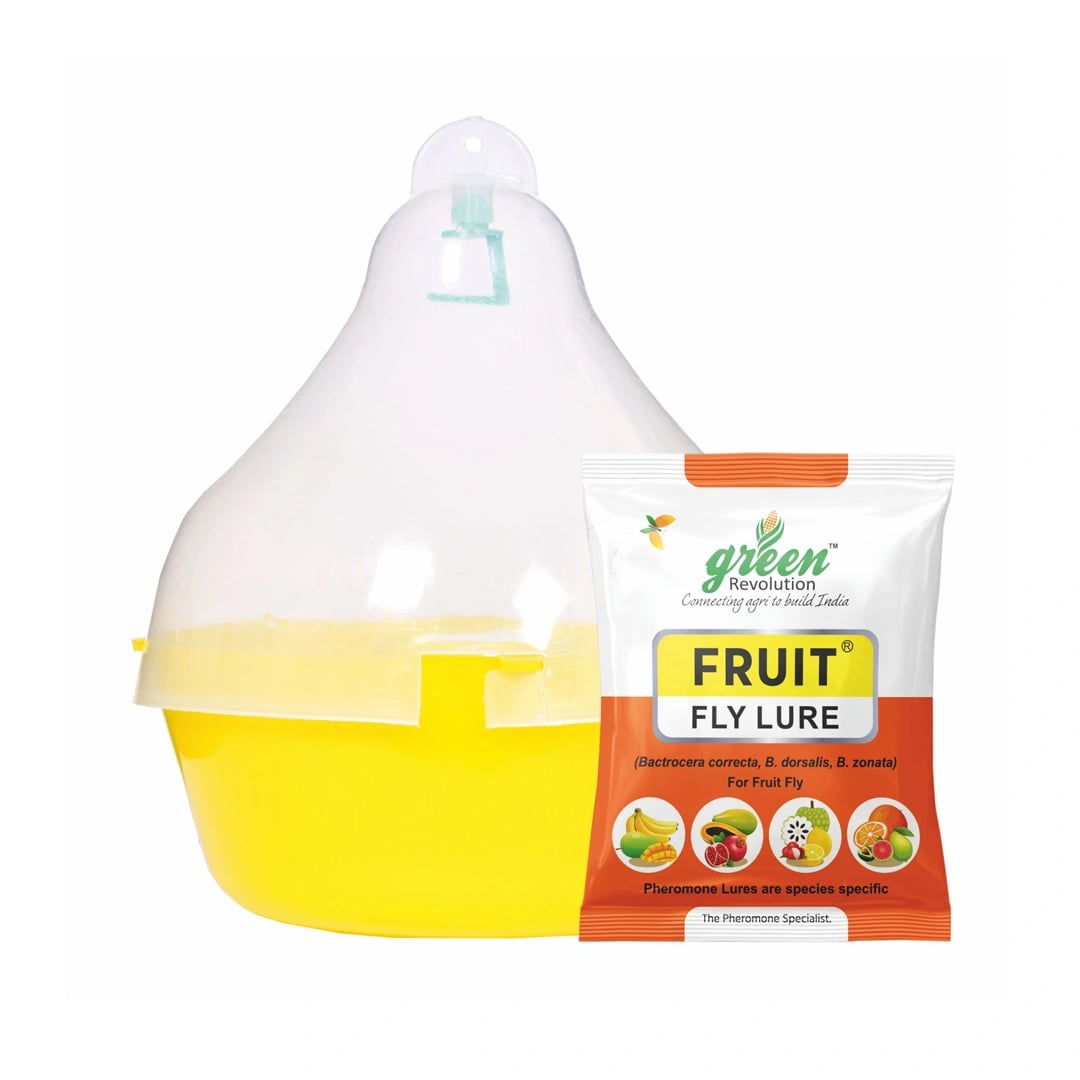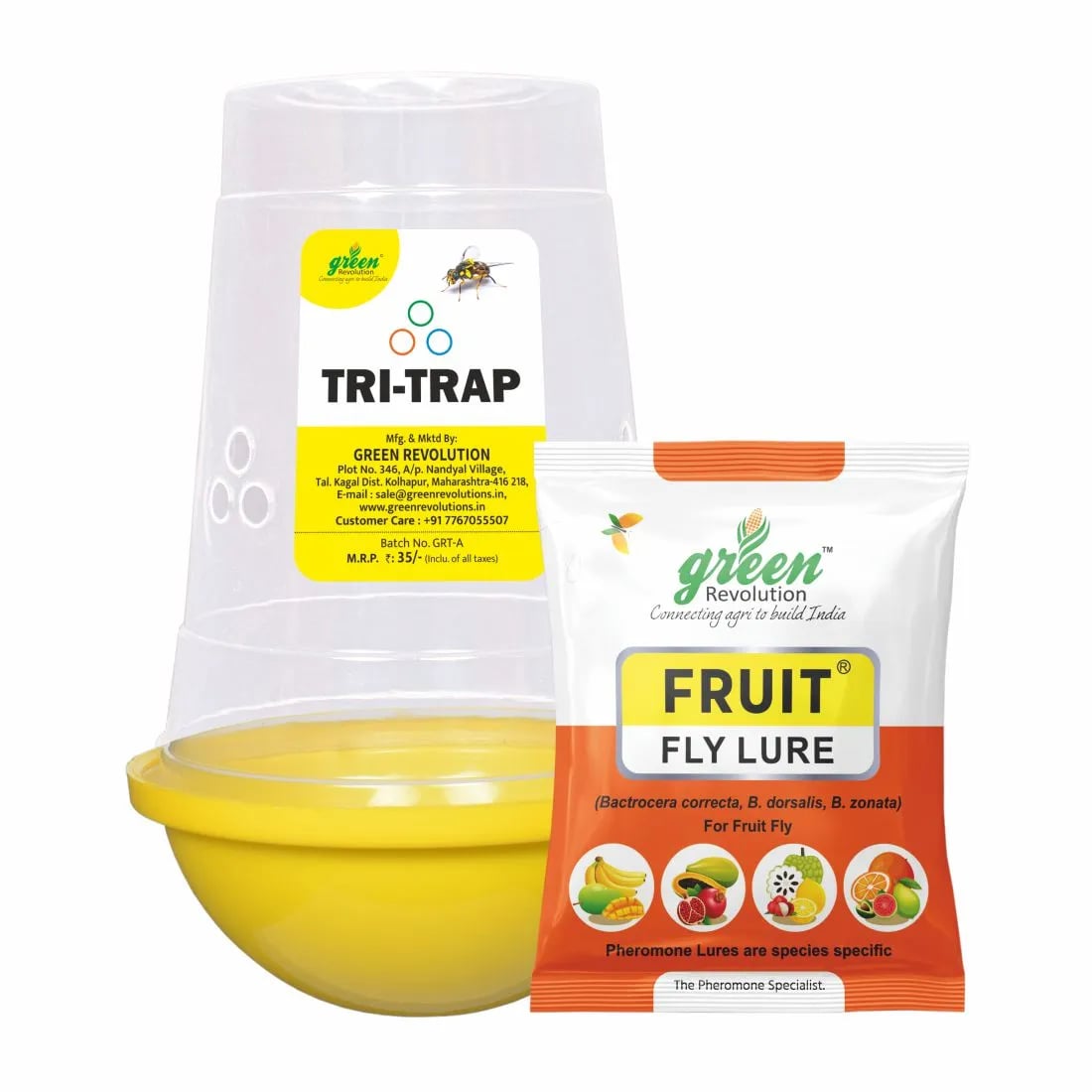
Green Revolution TRI Trap And Fruit Fly Lure (Bactrocera Correcta, Bactrocera Zonata, Bactrocera Dorsalisa), Economically Affordable, Easy To Install
₹753₹1000
Save ₹24725% Off
🎉 You Save ₹152 (21% OFF)
Buying In Bulk?
Get Special Pricing for large orders, contact us now!



| Brand: | Green Revolution |
| Product Code: | 4556 |
| Country of Origin: | India |
| Category: | Equipments |
| Sub Category: | Traps |
| Sub Sub Category: | Traps And Lures |




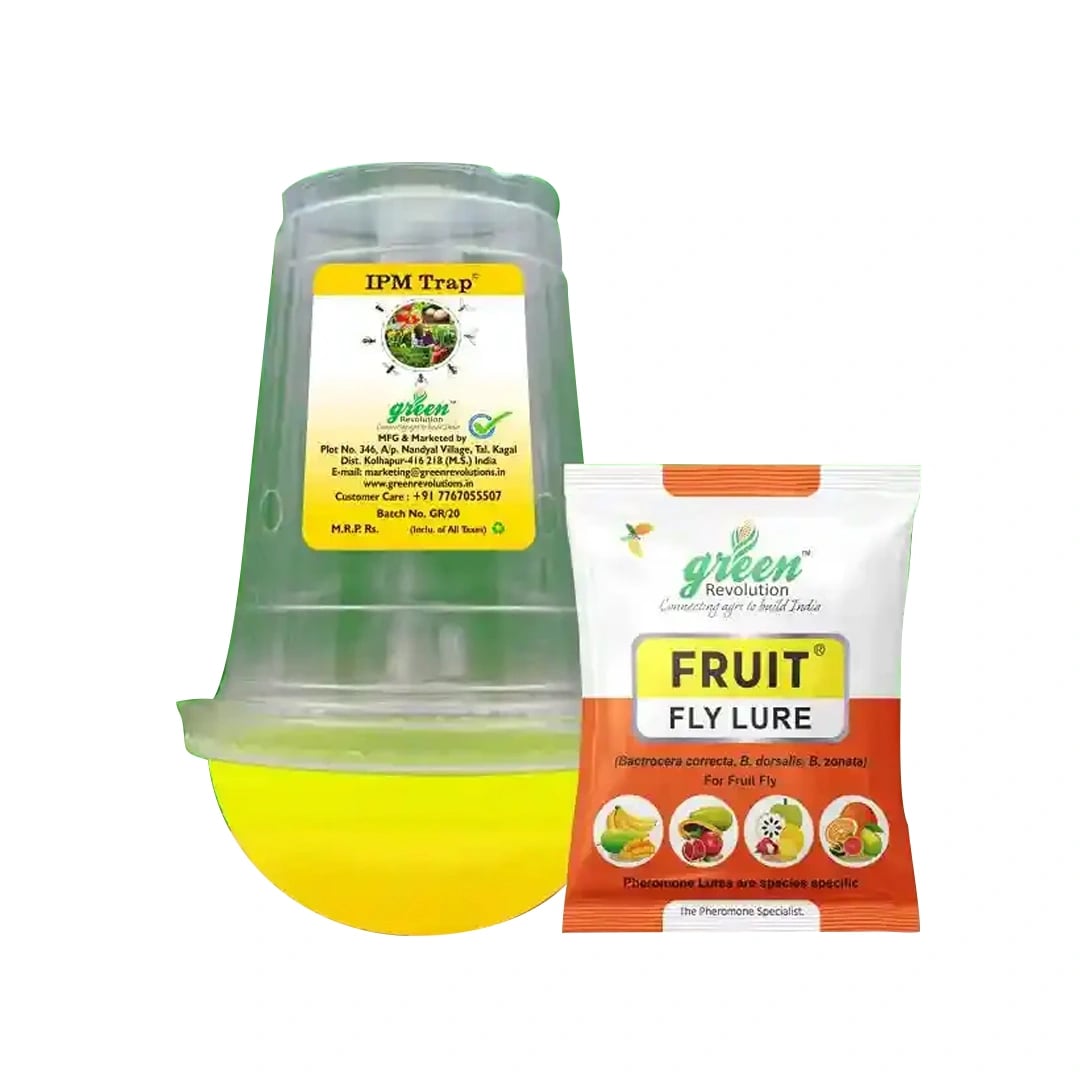
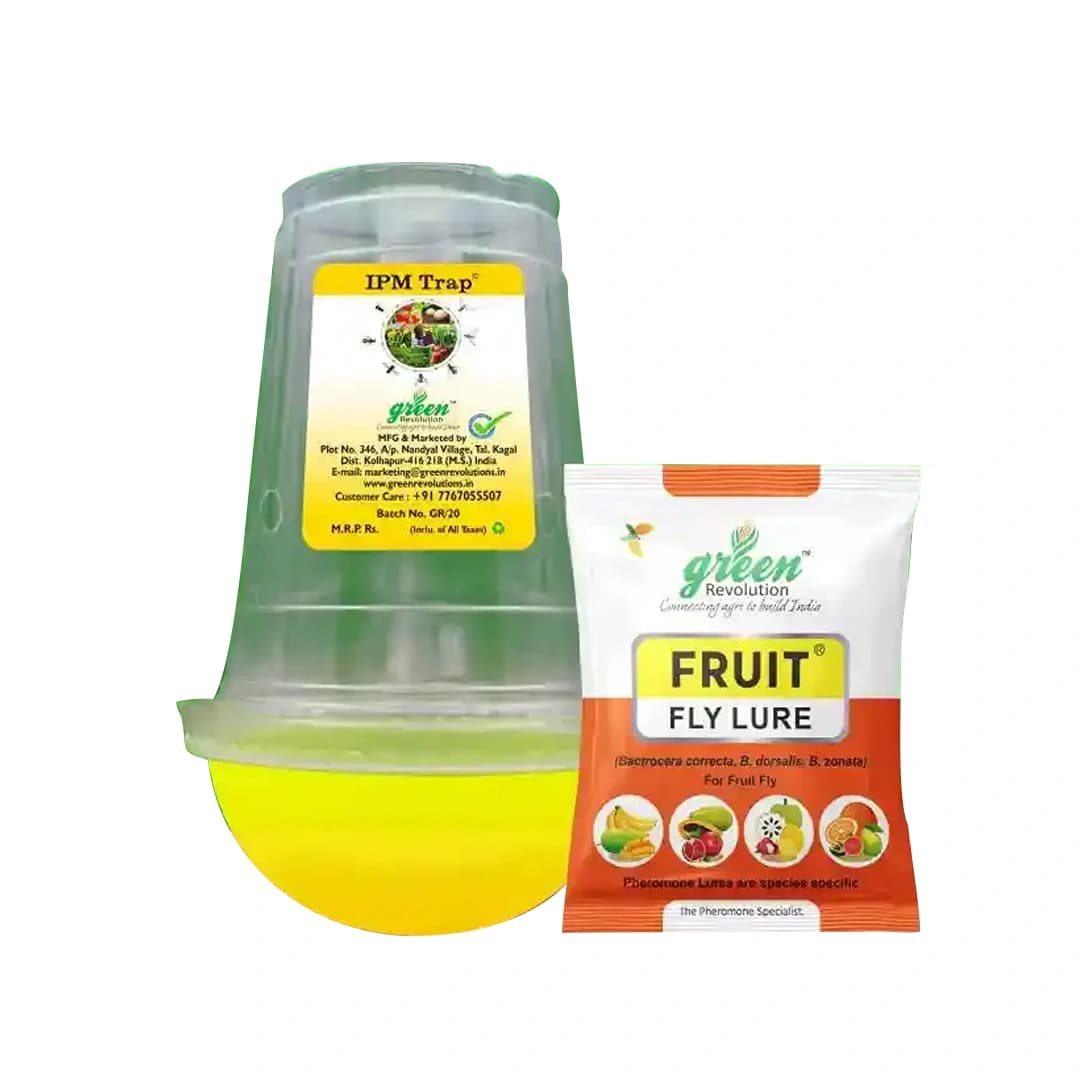
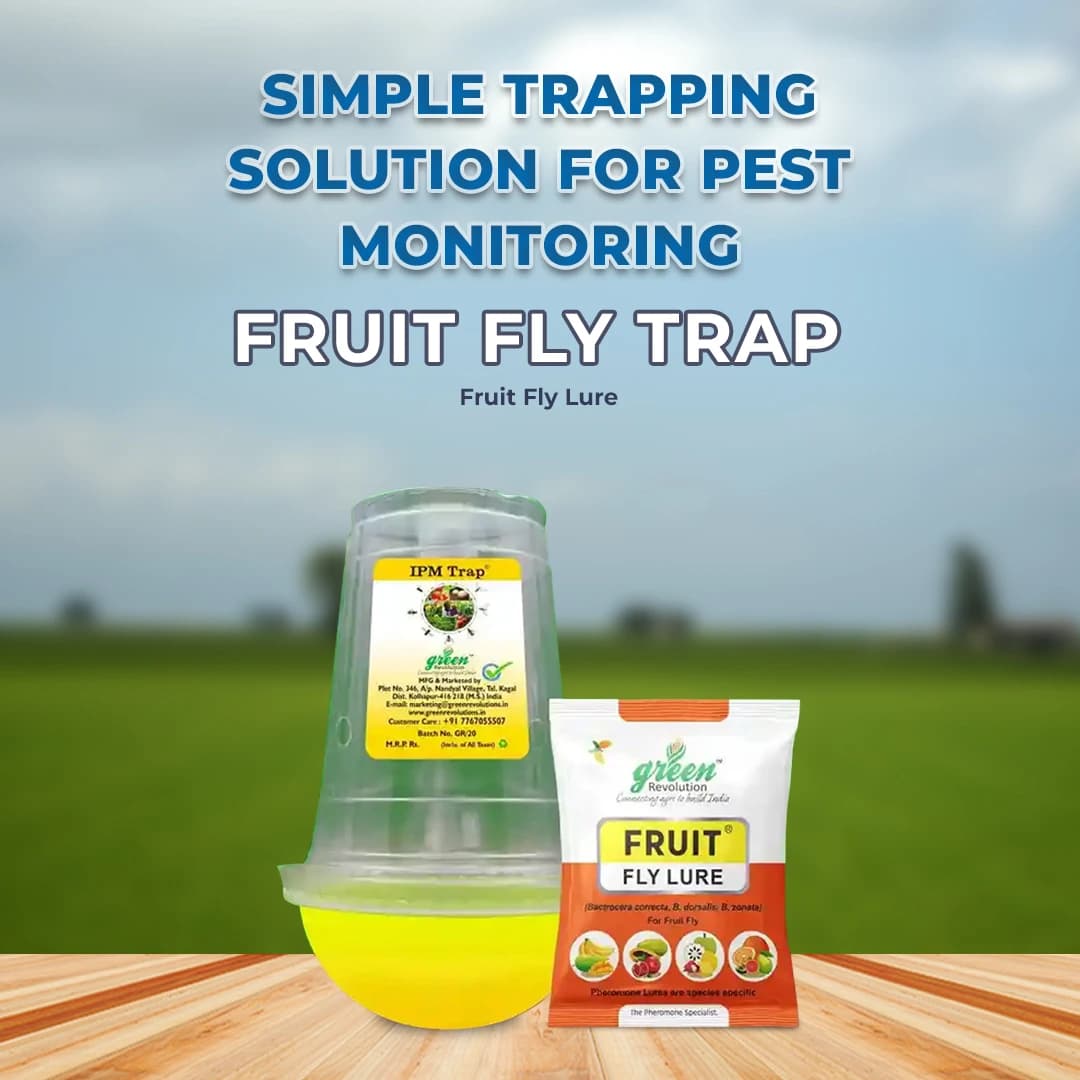
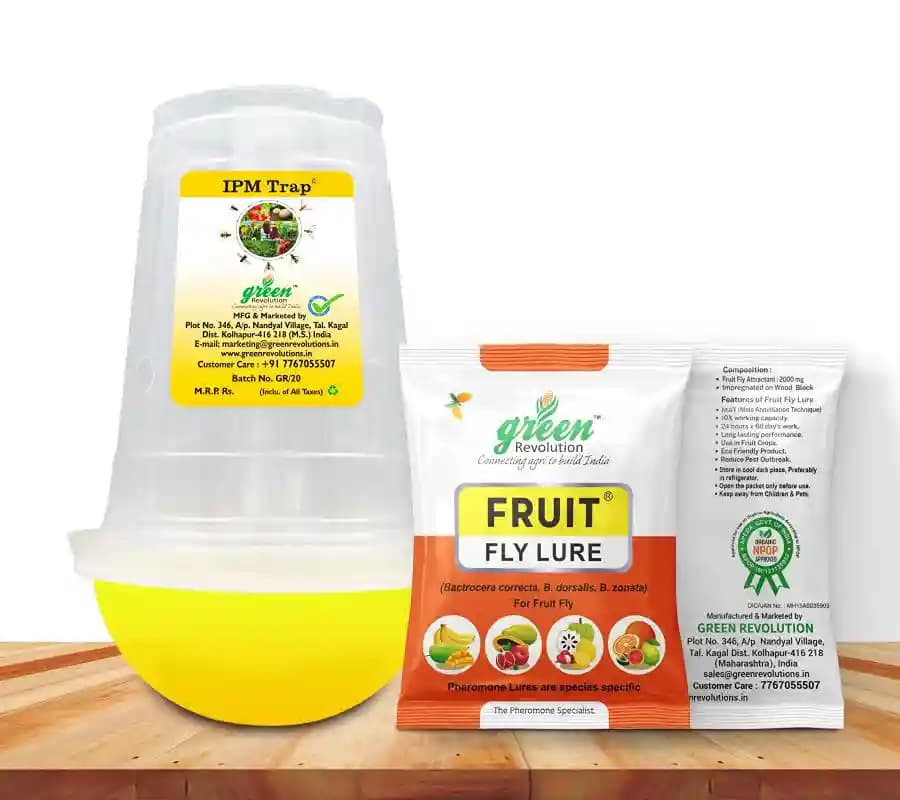
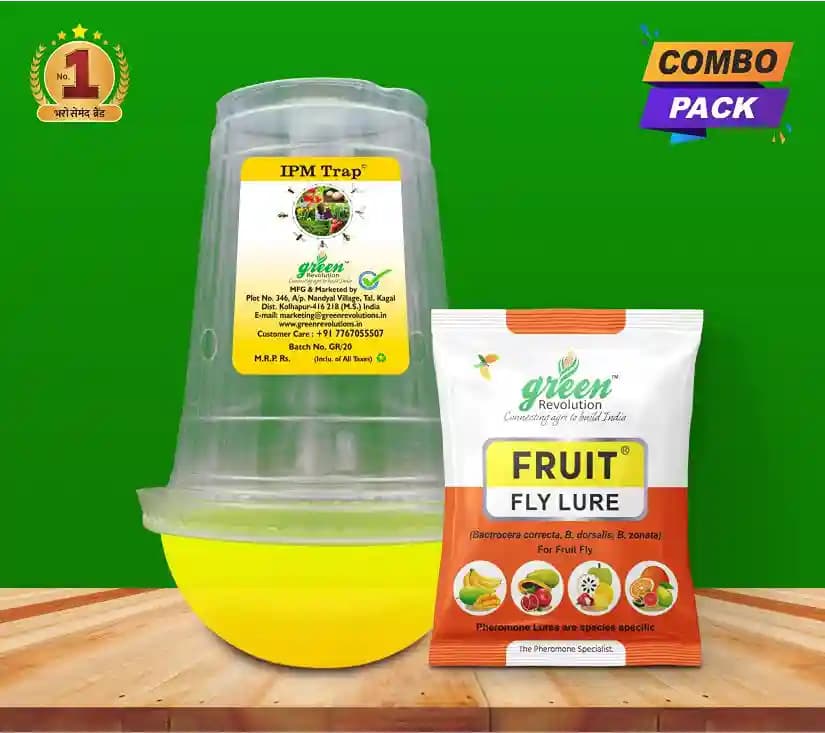
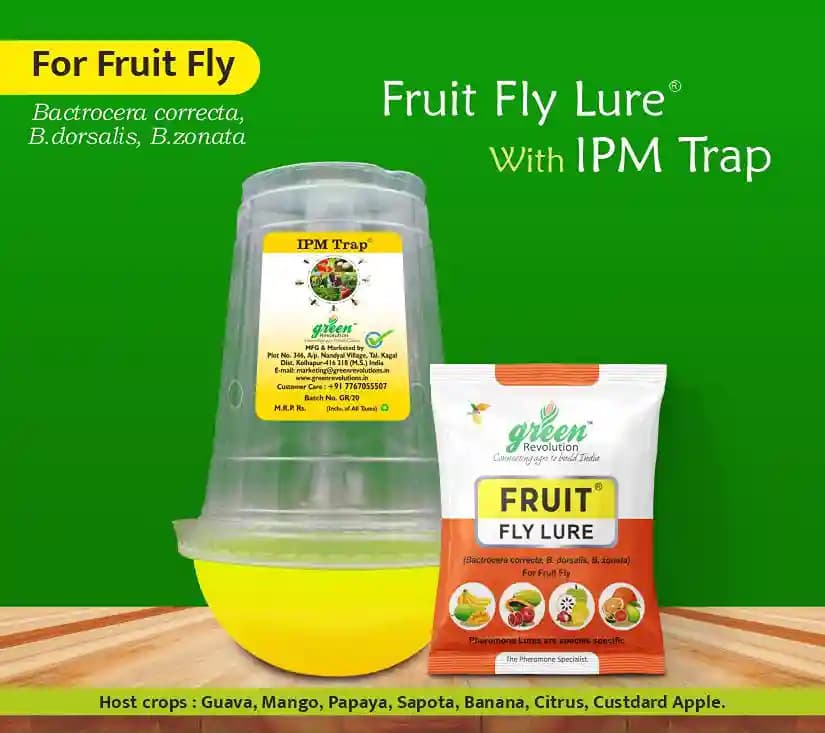
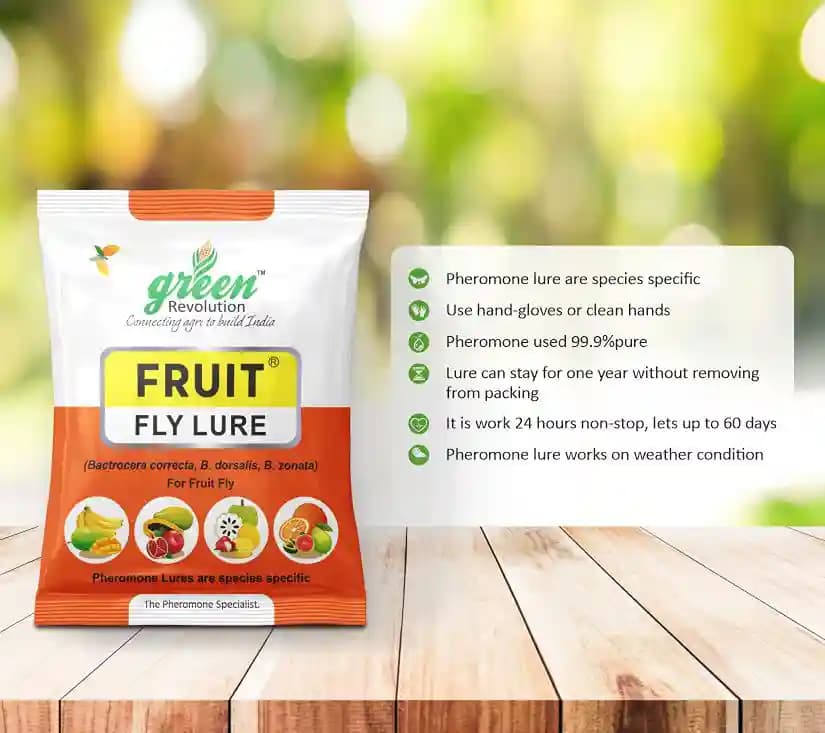
The Green Revolution Fruit Fly Pheromone Trap Set is a complete 1-acre kit built for mango, guava, sapota, papaya, and citrus orchards. Each set comes with 6 ready-to-install IPM trap units along with matching fruit fly lures. The pheromone trap pulls in male flies from a long distance and locks them inside before they can mate. This breaks the breeding cycle and stops maggot damage in ripening fruit. Regular use of this fruit fly lure cuts 3 to 4 spray rounds per season and keeps the fruit market-ready without chemical residue.
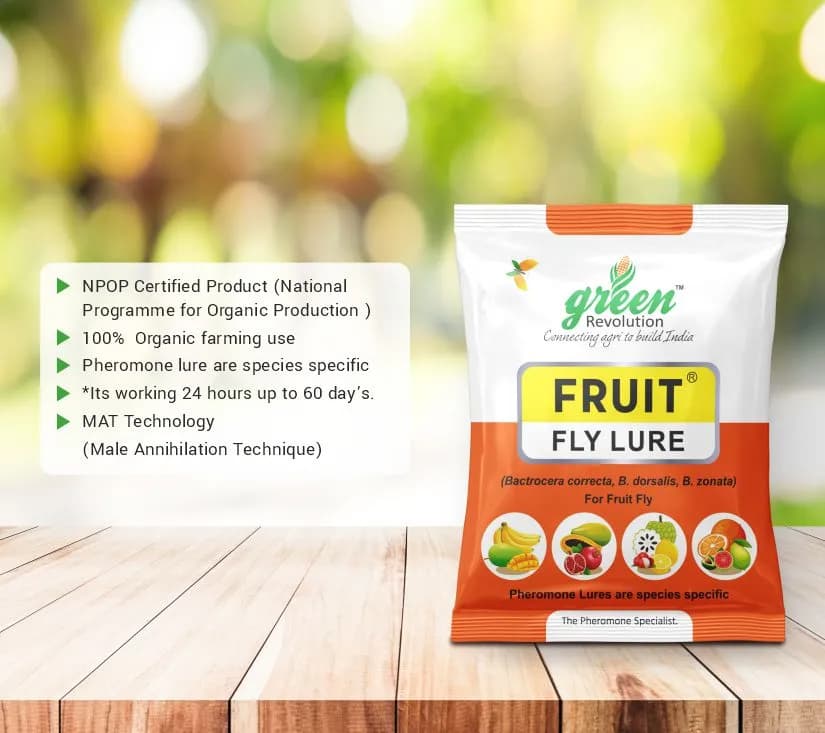
Long Field Life: Each fruit fly lure stays active for 60 to 90 days, covering the full pre-harvest window of fruit crops.
Reusable Trap Body: The IPM trap body is built for 3 to 4 fruit seasons of reuse, with only the fruit fly lure needing replacement each cycle.
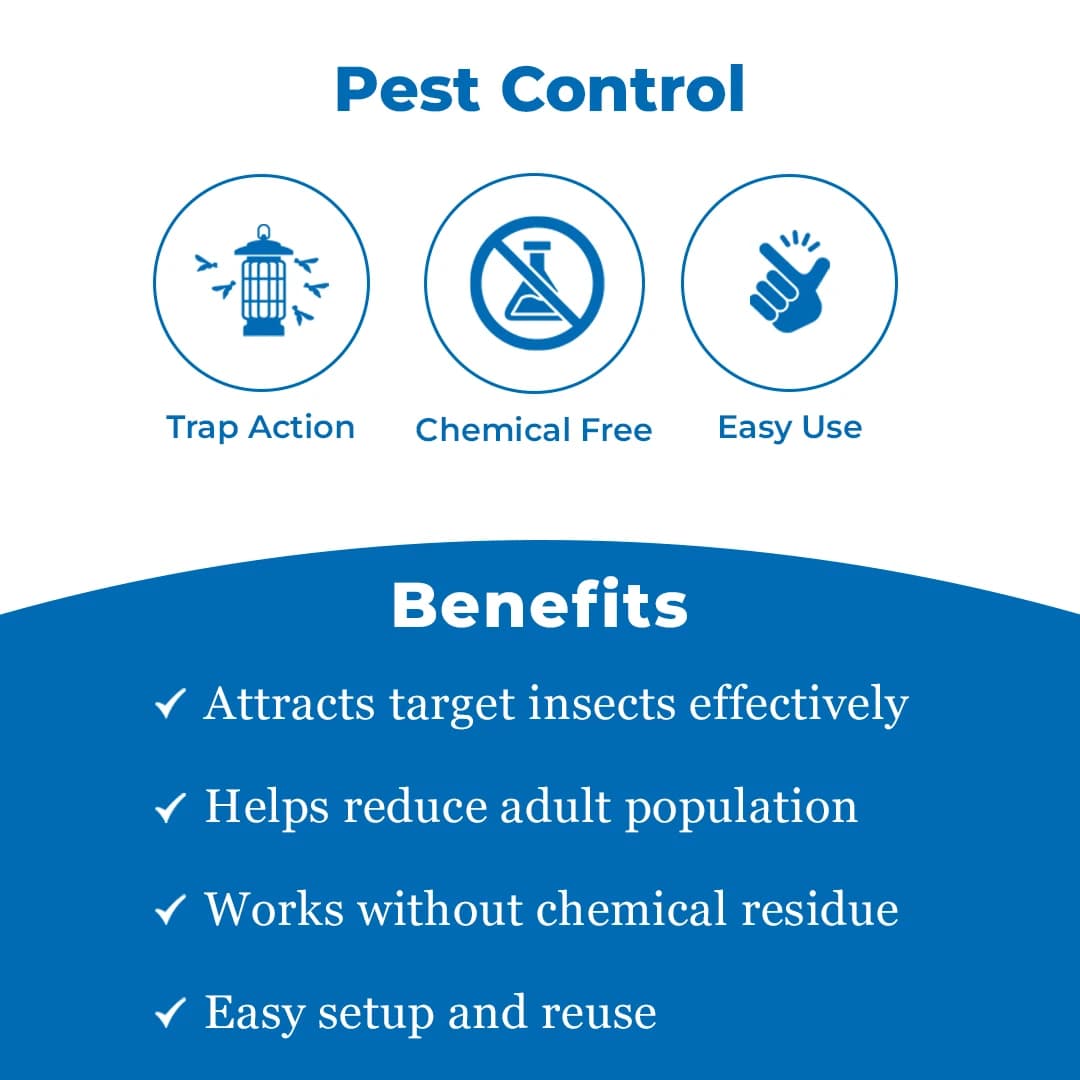
Approved for Organic Use: The pheromone trap uses scent only, with no chemical spray contact on the fruit, making it safe for organic and export-grade orchards.
Easy Tree-Hang Design: The IPM trap hangs straight from a tree branch with a built-in wire loop, no extra hardware needed.
Cost-effective: Regular use of this fruit fly pheromone trap saves 3 to 4 spray rounds per season, lowering input cost and keeping the fruit residue-free.
Specifications | Details |
|---|---|
Product Name | Fruit Fly Pheromone Trap Set for 1 Acre |
Brand | Green Revolution |
Type | Pheromone Trap with Methyl Eugenol Lure |
Target Pests | Bactrocera dorsalis, Bactrocera correcta, Bactrocera zonata |
Lure Type | Methyl Eugenol (Para-pheromone) |
Lure Active Life | 60 to 90 days |
Trap Material | UV-stabilized Plastic |
Trap Reusability | 3 to 4 fruit seasons (with lure refill) |
Recommended Dose | 6 traps per acre |
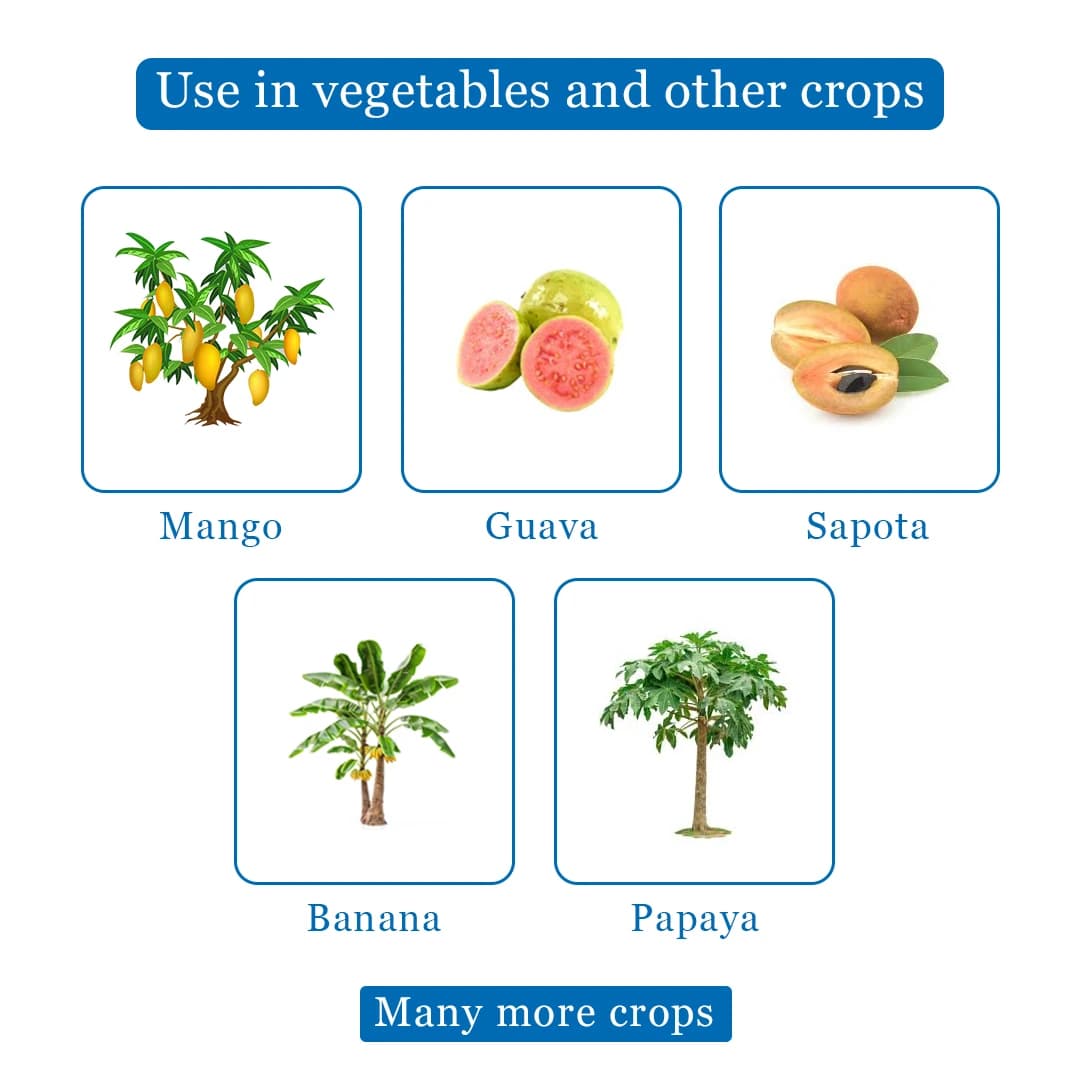
Target Crops | Mango, Guava, Sapota, Papaya, Banana, Citrus, Pomegranate |
Country of Origin | India |
Open the pheromone trap set box and check that all parts are present — the main trap body, the top cap with hanging loop, the lure holder basket, and the sealed fruit fly lure block.
Press the top cap firmly onto the trap body until it locks in place over the side entry holes for flies.
Tear open the sealed fruit fly lure pouch only at the time of installation, since the Methyl Eugenol scent fades within minutes of exposure.
Place the fruit fly lure block inside the lure holder basket using gloves or a small stick, then clip the holder under the top cap of the IPM trap.
Fix the metal wire loop on top of the pheromone trap for easy hanging on a tree branch or bamboo stake.
Hang the IPM trap on the eastern side of the tree (where morning sunlight reaches first), at a height of 1.5 to 2 meters above the ground, in the upper one-third of the canopy.
Install 6 pheromone trap units per acre, spaced 25 to 30 meters apart in a grid pattern across the orchard, starting 45 days before harvest.
Check the trap chamber every 7 to 10 days, empty out the dead fruit flies, and replace the fruit fly lure every 60 to 90 days for continuous control.
Do not open the sealed fruit fly lure pouch before the pheromone trap is ready to be hung, since the Methyl Eugenol scent escapes fast in open air.
Avoid handling the fruit fly lure with bare hands, as human skin oils can mask the scent and reduce IPM trap efficiency; always use gloves or a small stick.
Keep the pheromone trap out of direct rain spray, since heavy water entering the trap chamber dilutes the lure scent and shortens its working life.
Empty dead flies from the IPM trap every 7 to 10 days and bury them at least one foot deep, since rotting flies inside the trap can attract ants and other pests.
Replace the fruit fly lure block every 60 to 90 days, even if the trap is still catching flies, since an old lure loses its pulling power well before it looks empty.
Store unused fruit fly lure pouches in a cool, dry place inside the original sealed pack, away from kerosene, naphthalene, kitchen heat, and direct sunlight.
The fruit fly pheromone trap works best on mango, guava, sapota (chikoo), papaya, banana, citrus (orange, lemon, kinnow), pomegranate, and ber. It also gives good results on jackfruit, fig, custard apple, and passion fruit. Any fruit crop attacked by Bactrocera dorsalis, correcta, or zonata will respond well to this IPM trap, since the Methyl Eugenol lure is a strong attractant for all three fruit fly species.
Install the fruit fly pheromone trap at least 45 days before the expected harvest date, since this is when adult flies start laying eggs on developing fruits. For mango, that means installing the IPM trap during March in most parts of India. For guava (rainy-season crop), install during June–July. Keep the trap active in the orchard until the last fruit is harvested for full pre-harvest protection.
Yes, the fruit fly pheromone trap is fully safe for organic farming and export-grade fruit production. The Methyl Eugenol lure works on scent only, with zero pesticide contact on the fruit, so there is no residue risk. The IPM trap catches only male fruit flies, keeping honeybees and other pollinators safe. Most organic certification bodies in India accept Methyl Eugenol pheromone traps as an approved tool under IPM and organic standards.
A new pheromone trap usually starts catching male fruit flies within 24 to 48 hours, but in some cases it can take 5 to 7 days. Slow catch in the first week usually means the orchard has a low fly population (which is good news), or the IPM trap is hung in a windy or fully shaded spot. Try moving the trap to the eastern side of a sun-touching branch where the Methyl Eugenol scent can spread freely, and the fruit fly lure will start pulling in flies within a few days.
Keep the fruit fly lure sealed in its original foil pouch and store it in a cool, dry place like a kitchen cupboard or store-room shelf. Stay away from direct sunlight, kitchen heat, and strong-smelling items like kerosene, naphthalene balls, or onions. A sealed fruit fly lure stays fresh for up to 2 years from the manufacturing date. Once the foil pouch is torn open, install the lure in the pheromone trap within a few minutes, since Methyl Eugenol fades quickly in open air.