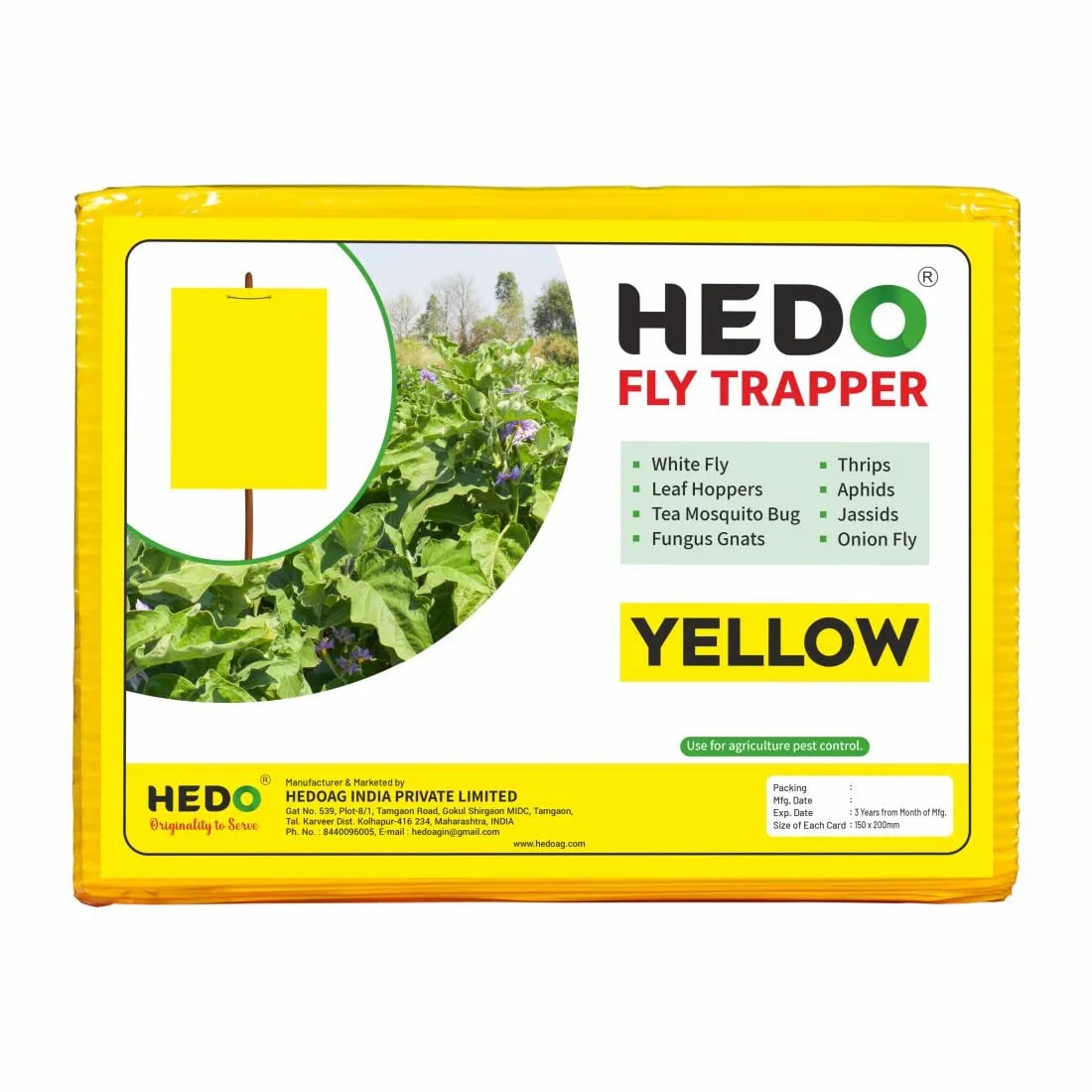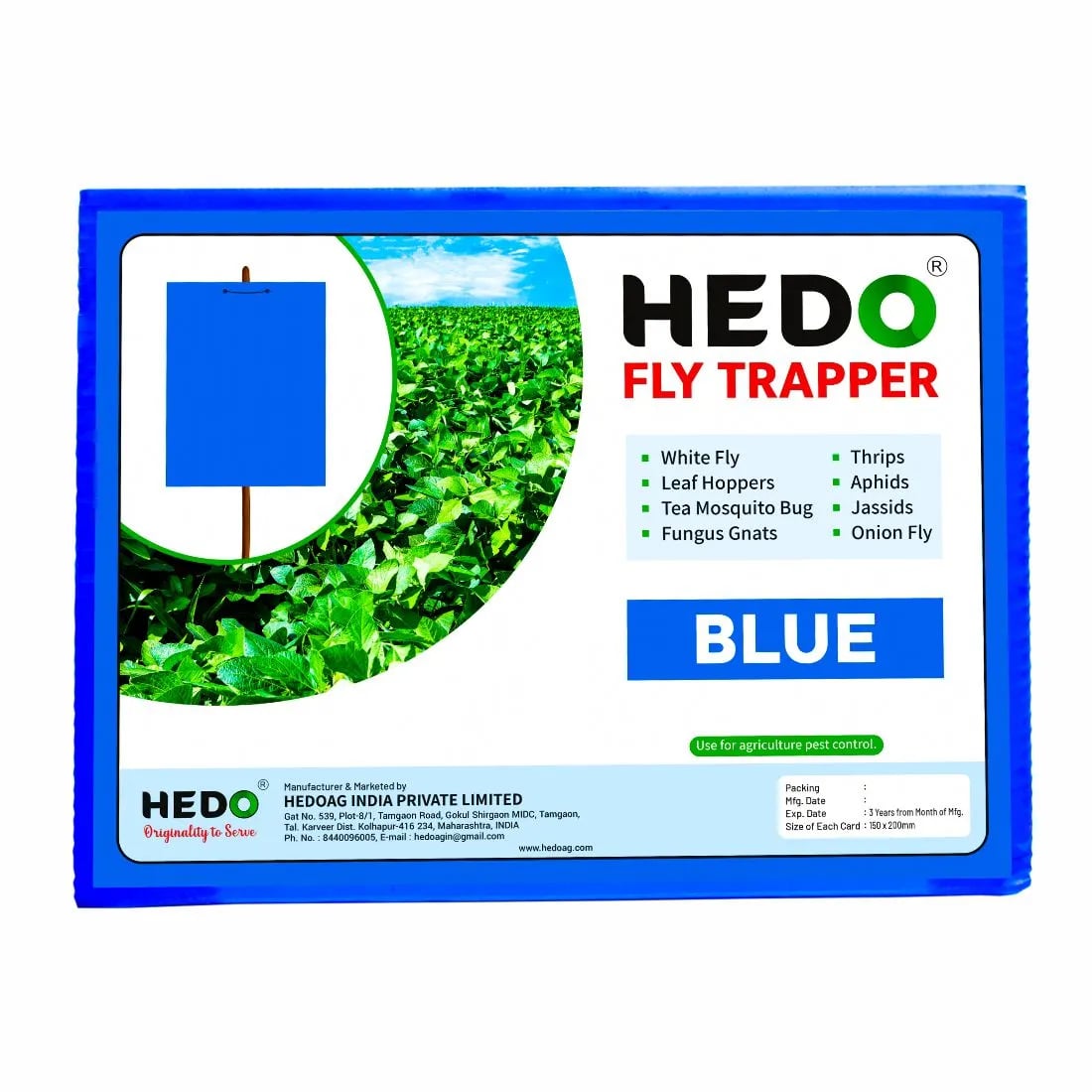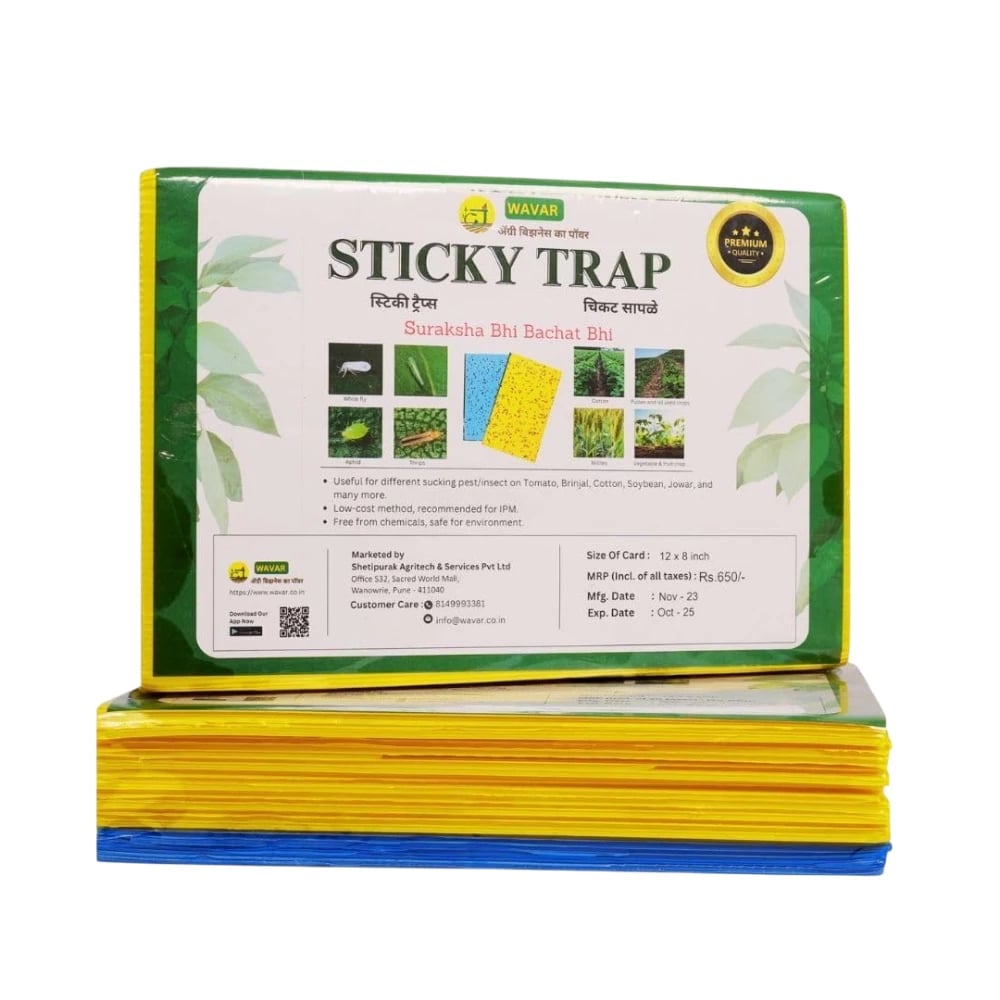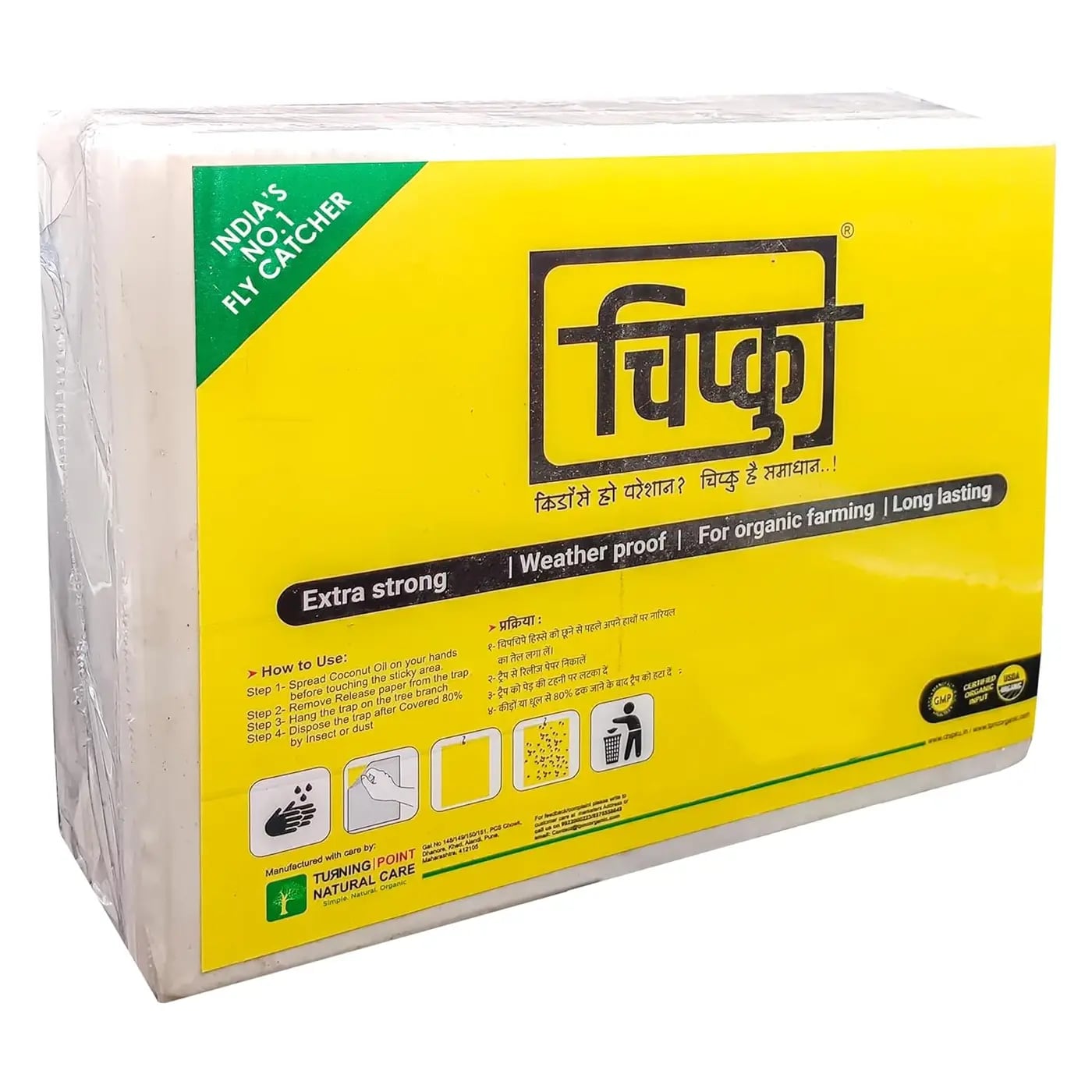
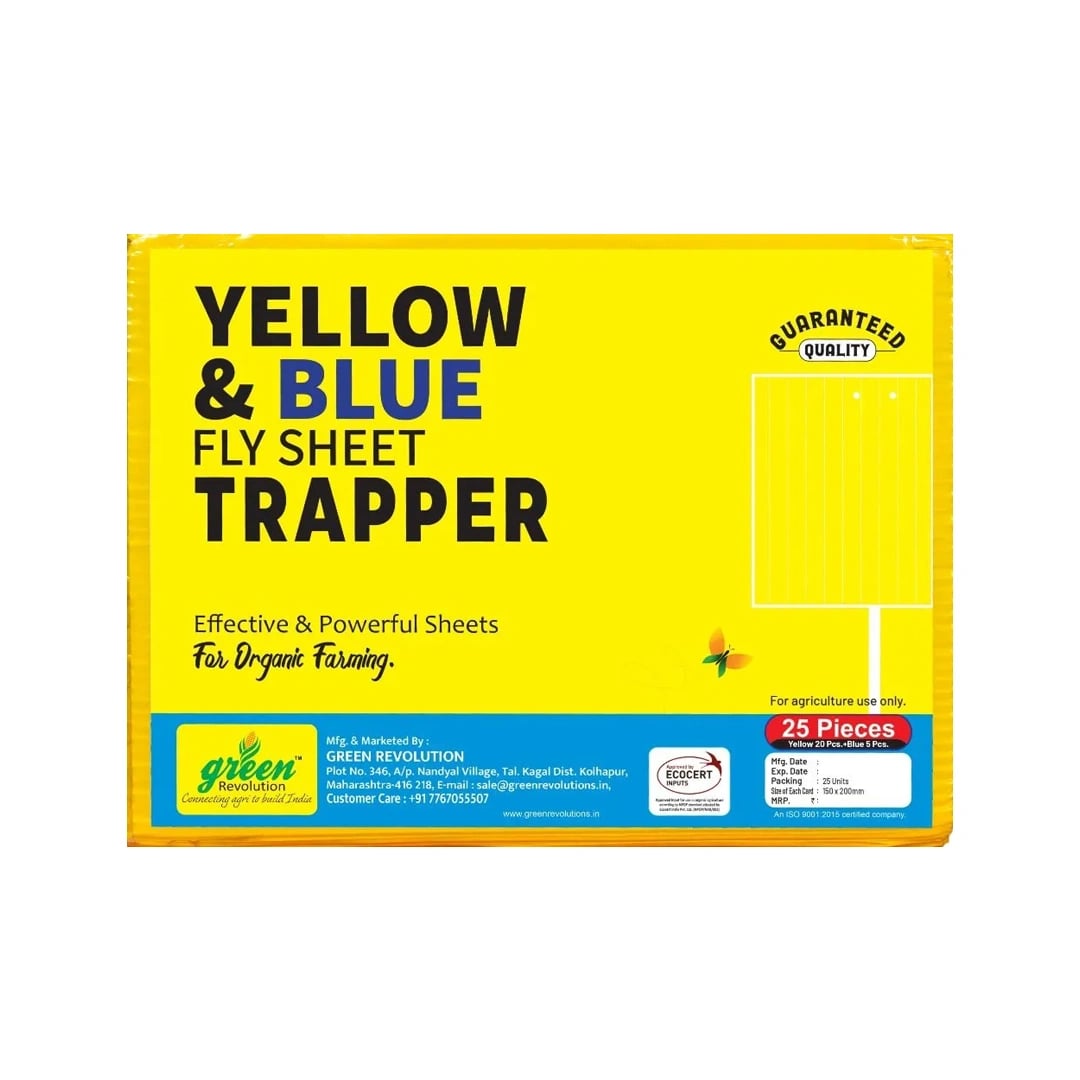
Yellow Sticky Traps For Insect - A5 Size
₹459₹550
Save ₹9117% Off
🎉 You Save ₹174 (32% OFF)
Buying In Bulk?
Get Special Pricing for large orders, contact us now!


| Brand: | Green Revolution |
| Product Code: | 6741 |
| Country of Origin: | India |
| Category: | Equipments |
| Sub Category: | Traps |
| Sub Sub Category: | Sticky Traps |




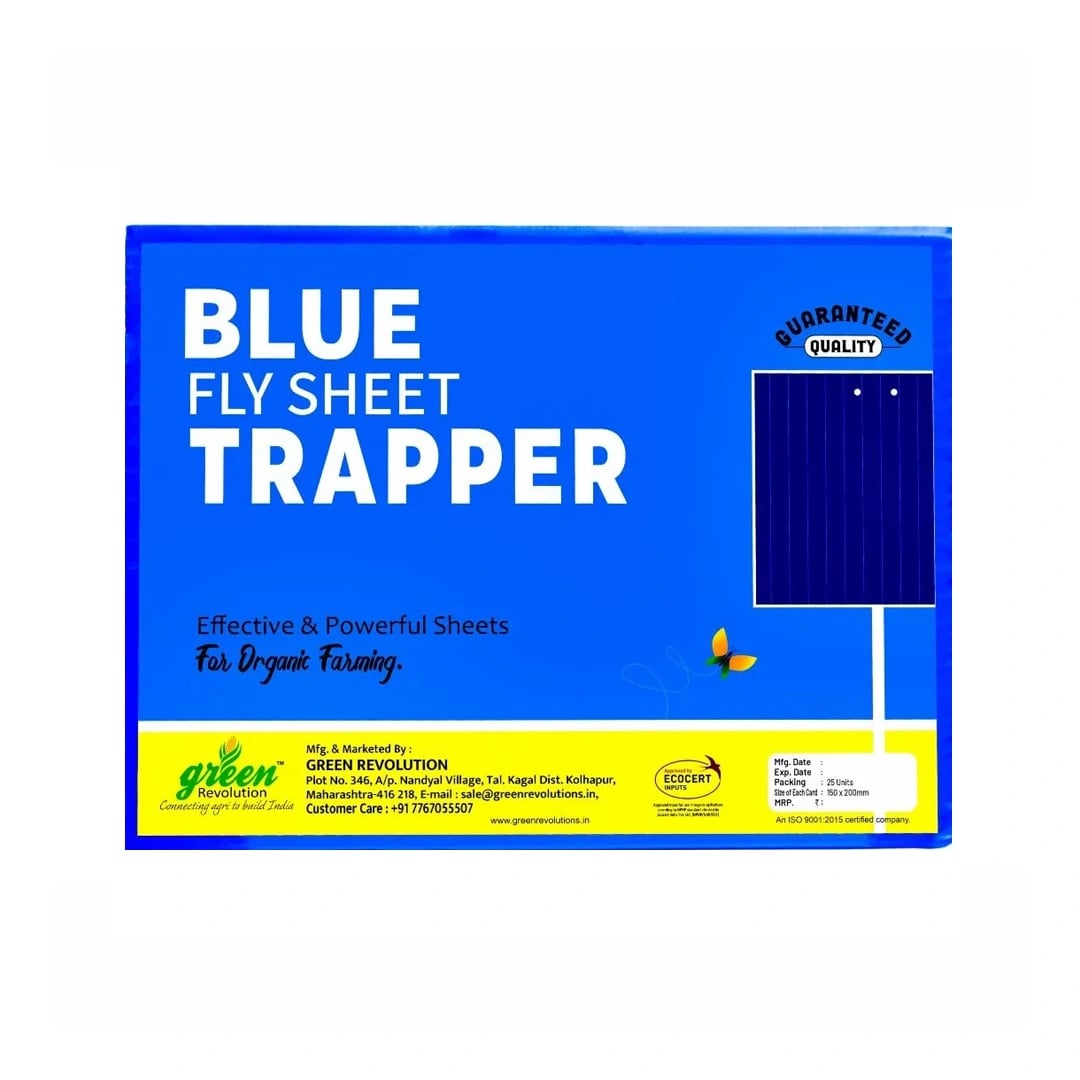
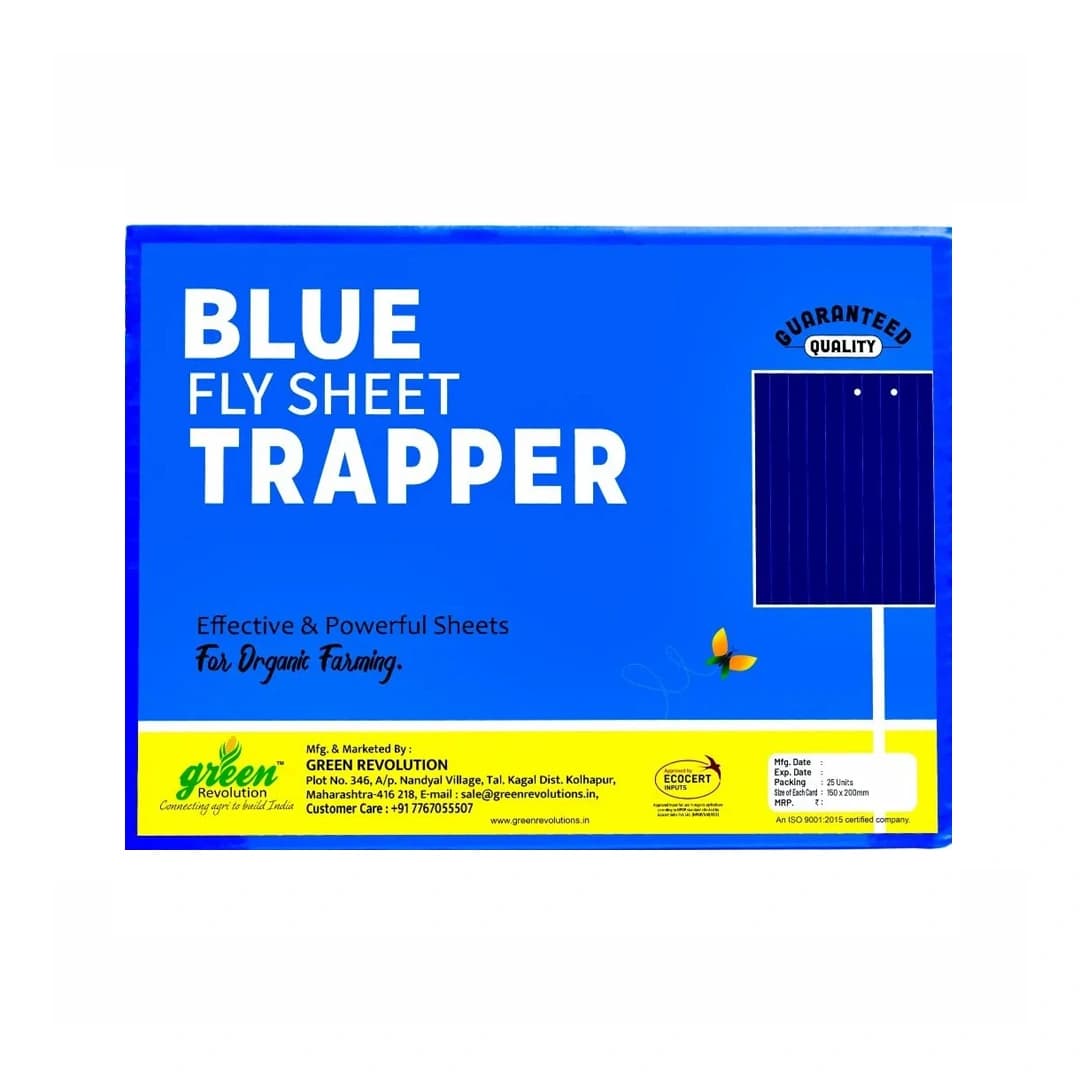
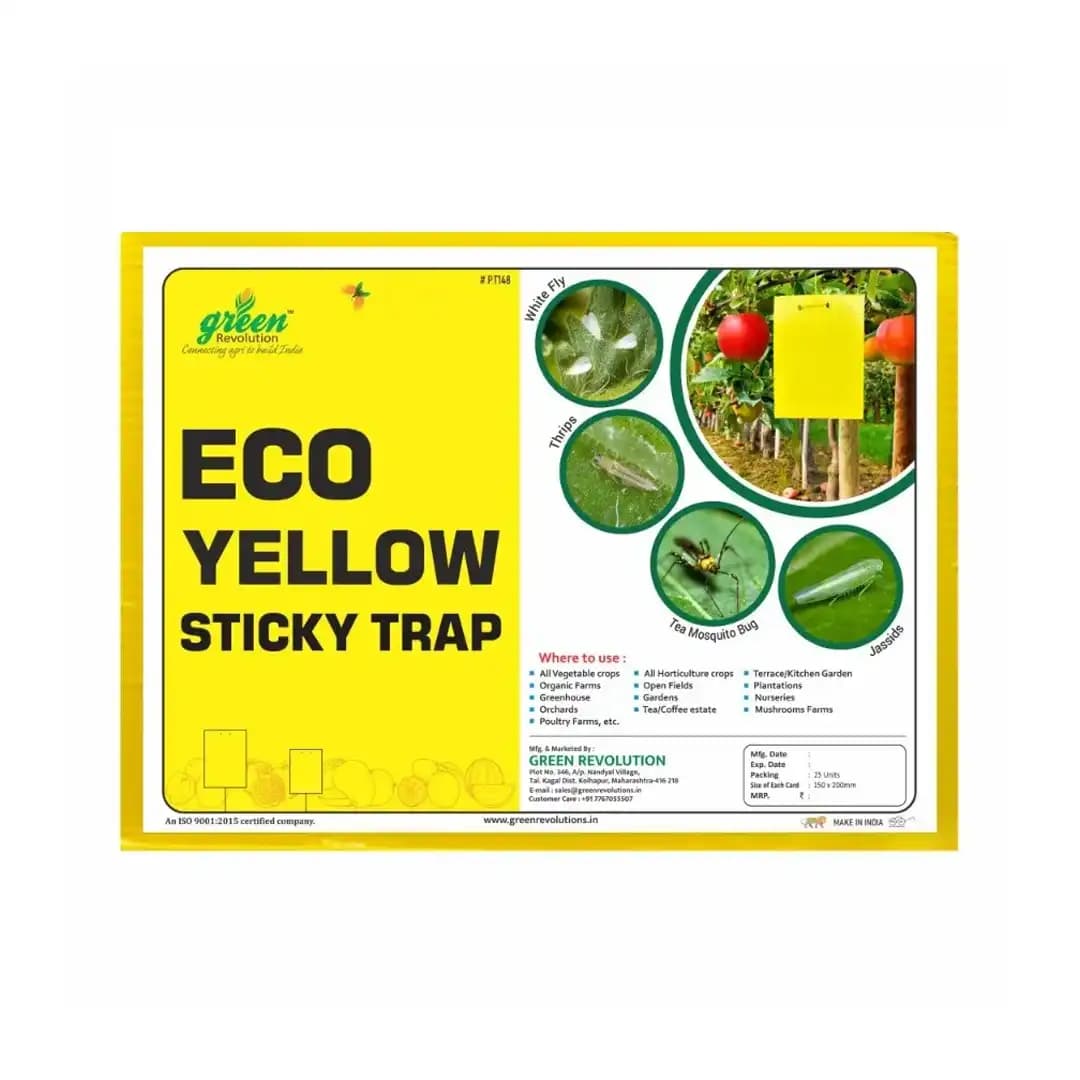
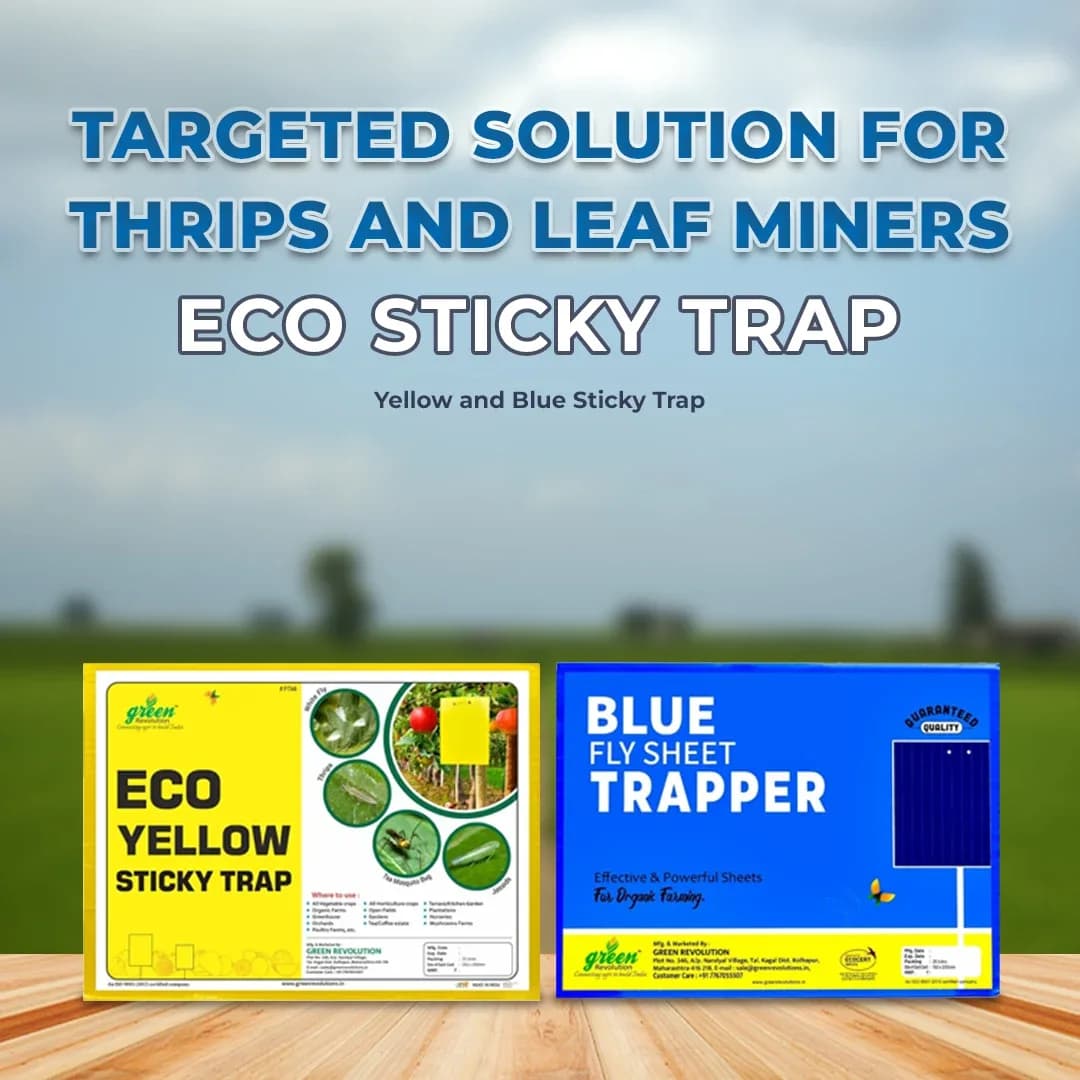
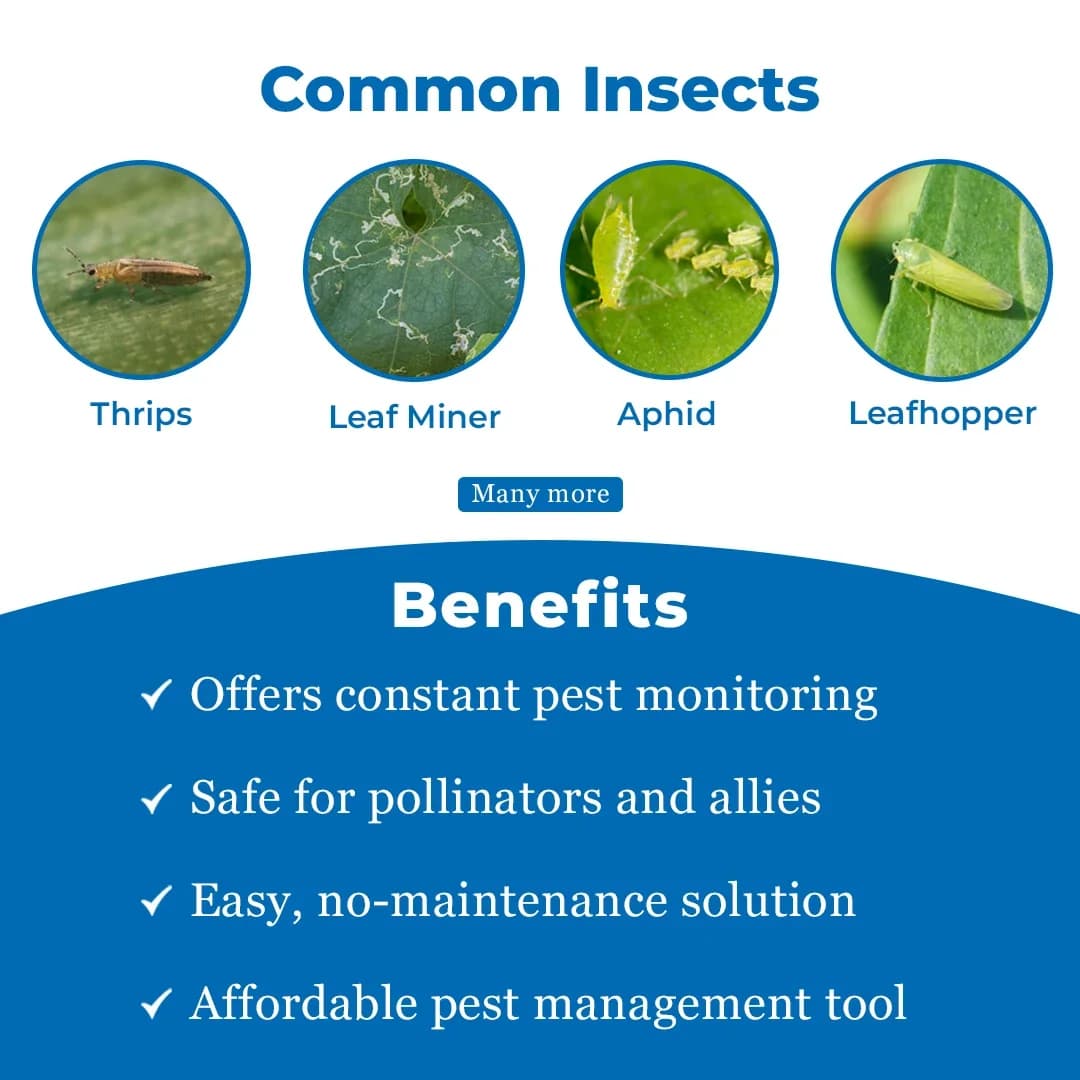
The Green Revolution A5 Size Blue Sticky Trap is a chemical-free, color-based pest monitoring and control solution designed for farms, home gardens, and greenhouses. Sized at 150 mm x 200 mm, these blue sticky traps have a vivid adhesive surface that naturally lures thrips, leaf miners, aphids, and other harmful flying insects, trapping them on contact with a non-drying glue coating. Two key benefits that set them apart are their selective targeting — blue sticky traps attract thrips far more effectively than yellow traps while posing minimal risk to beneficial insects — and their weatherproof build that stays effective across a full growing season without replacement.
Targeted Blue Color Attraction: The specific shade of blue attracts thrips and leaf miners more effectively than other colors, making these blue sticky traps a precision pest management tool for vulnerable crops.
Double-Sided Adhesive Surface: Both sides are coated with a long-lasting, non-drying sticky glue, doubling the trapping area and increasing the chance of capturing flying insects from any direction.
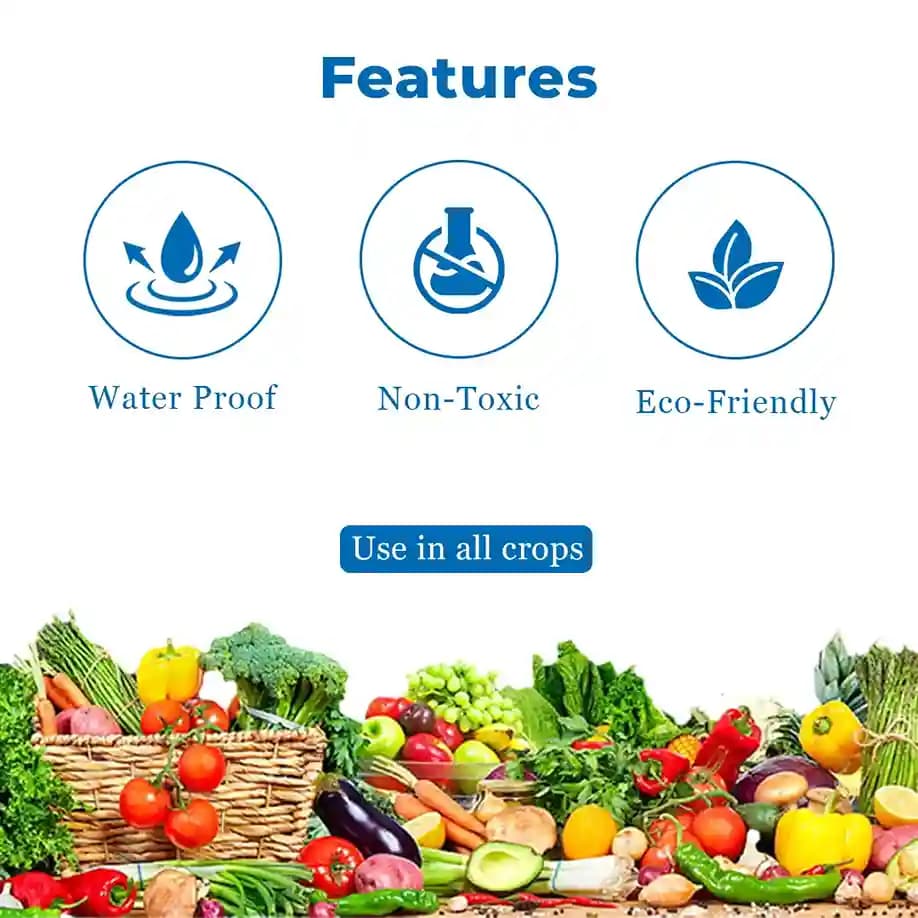
Safe and Chemical-Free: These blue sticky traps for insects work entirely through physical adhesion with zero toxic chemicals, making them safe for edible crops and vegetables.
Beneficial Insect Friendly: Unlike broad-spectrum pesticide sprays, blue sticky traps are less attractive to helpful insects such as bees and parasitic wasps, making them suitable for IPM programmes.
Weatherproof and Durable: The trap material resists rain, humidity, and outdoor exposure, maintaining its stickiness and structural integrity throughout the entire growing season.
Pest Population Monitoring: One of the most practical uses of blue sticky traps is early pest detection, helping farmers identify species, track population trends, and act before crop damage escalates.
Portable: Lightweight and compact at A5 size, these traps can be hung from branches or stakes in open fields, greenhouses, polyhouses, or kitchen gardens with minimal effort.
Specification | Details |
|---|---|
Product Name | Green Revolution A5 Size Blue Sticky Traps |
Brand | Green Revolution |
Size | 150 mm x 200 mm (A5) |
color | Blue |
Adhesive Type | Non-drying sticky glue |
Adhesive Sides | Double-sided |
Target Pests | Thrips, Leaf Miners, Aphids, Whiteflies, Jassids |
Mode of Action | color attraction + physical adhesion |
Weatherproof | Yes |
Safe for Beneficial Insects | Yes |
Suitable Environments | Fields, Greenhouses, Polyhouses, Gardens |
Chemical Free | Yes |
Available Pack Sizes | 50 qty |
Country of Origin | India |
Peel off the protective release liner or unfold the trap to expose the sticky blue surface on both sides before placing it in the field.
Punch a small hole at the top of the trap (if not pre-punched) and pass a twist tie, wire, or thread through it for hanging.
Hang the trap at plant canopy height — ideally near new growth, flowers, or the top one-third of the plant where thrips and leaf miners are most active.
Secure the trap to a bamboo stake, branch, or wire support so it hangs vertically and stays stable against wind; avoid laying it flat as this reduces visibility to flying insects.
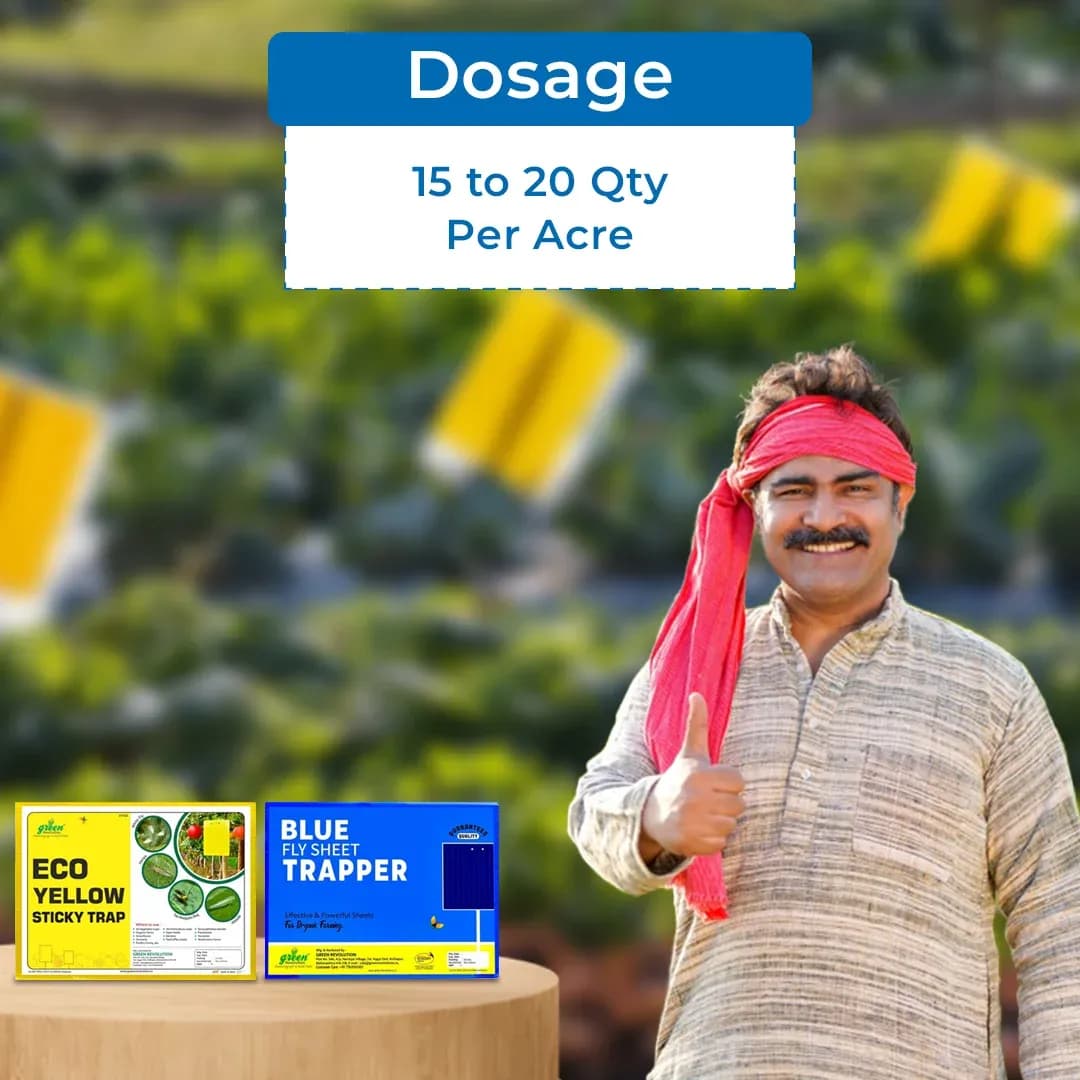
Space traps approximately every 6 to 10 feet (2 to 3 meters) apart, or place one at the end of each crop row for systematic coverage.
In areas with higher pest pressure or known infestation hotspots, reduce spacing and add extra traps to improve capture rates.
Adjust the hanging height as the crop grows taller, keeping the trap consistently level with the top of the plant canopy.
Replace the trap once both surfaces are fully covered with insects, or at the end of the season, whichever comes first.
Keep traps out of reach of children, as the adhesive is very strong and difficult to remove from skin, hair, or clothing.
Handle only by the non-coated edges or corners — avoid touching the sticky surface directly with bare hands.
Avoid placing traps too close to heavily flowering plants that attract pollinators, as even blue sticky traps for insects can occasionally catch bees if positioned incorrectly.
Do not attempt to identify or handle trapped insects without gloves, as some pests caught on the trap may carry plant pathogens.
Dispose of used traps responsibly — wrap in paper and place in a waste bin; do not burn, as the adhesive coating may release fumes.
Store unused traps flat in their original packaging in a cool, dry place away from direct sunlight to prevent the adhesive from degrading before use.