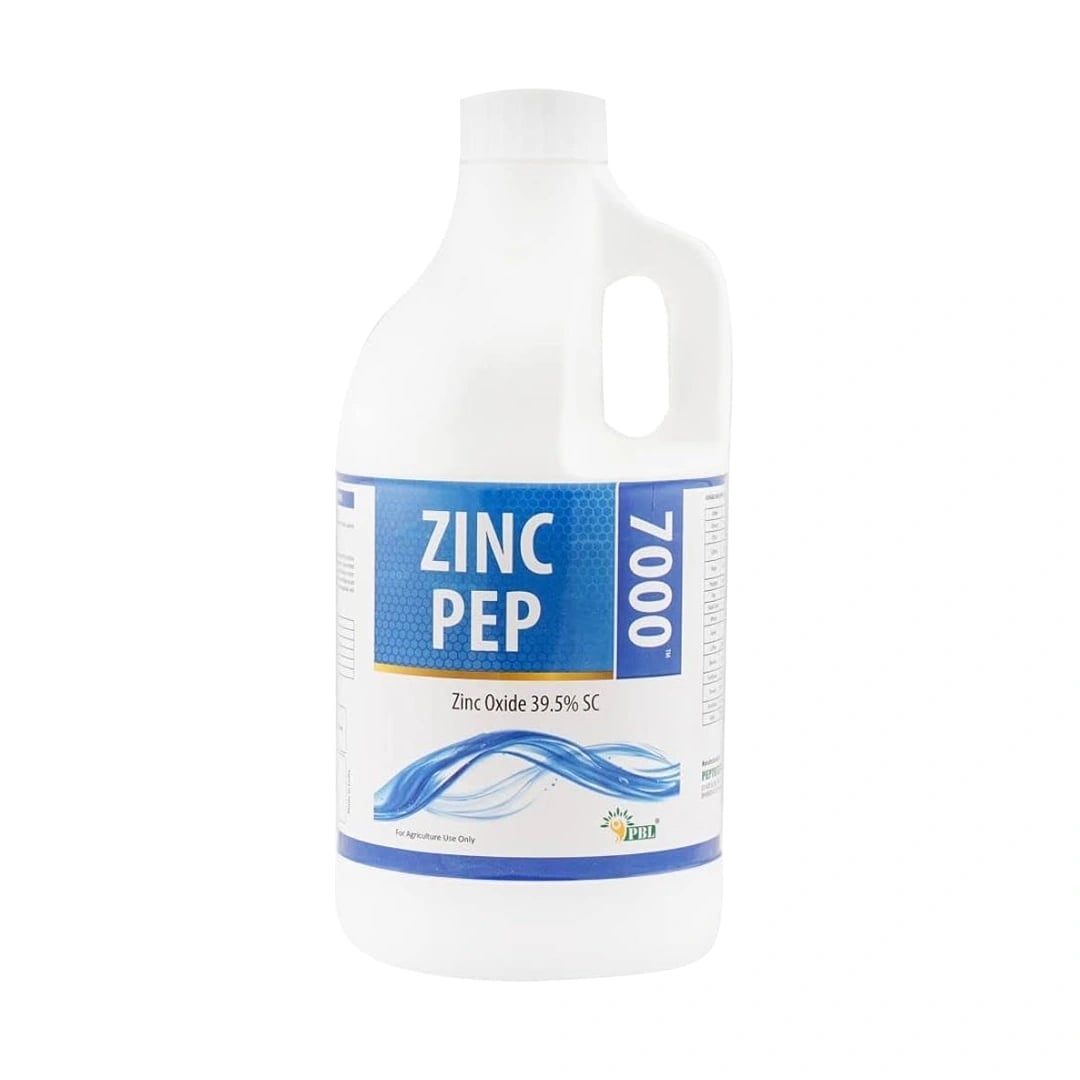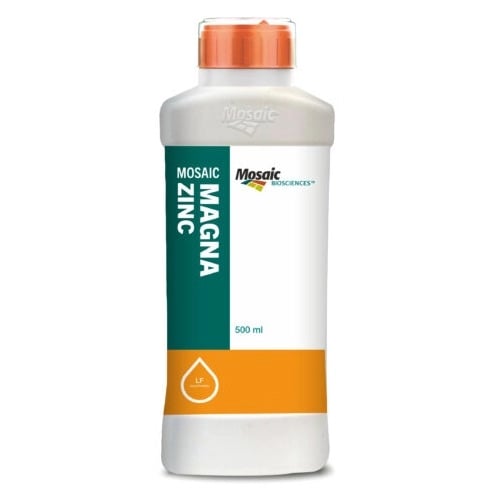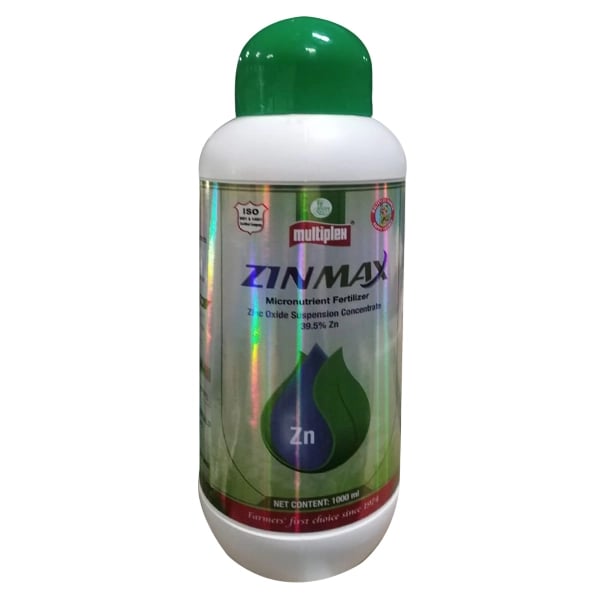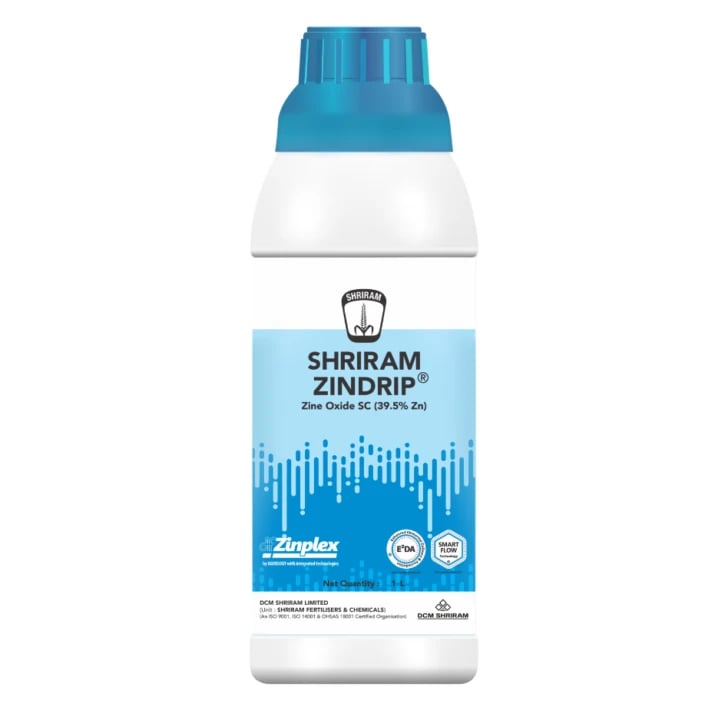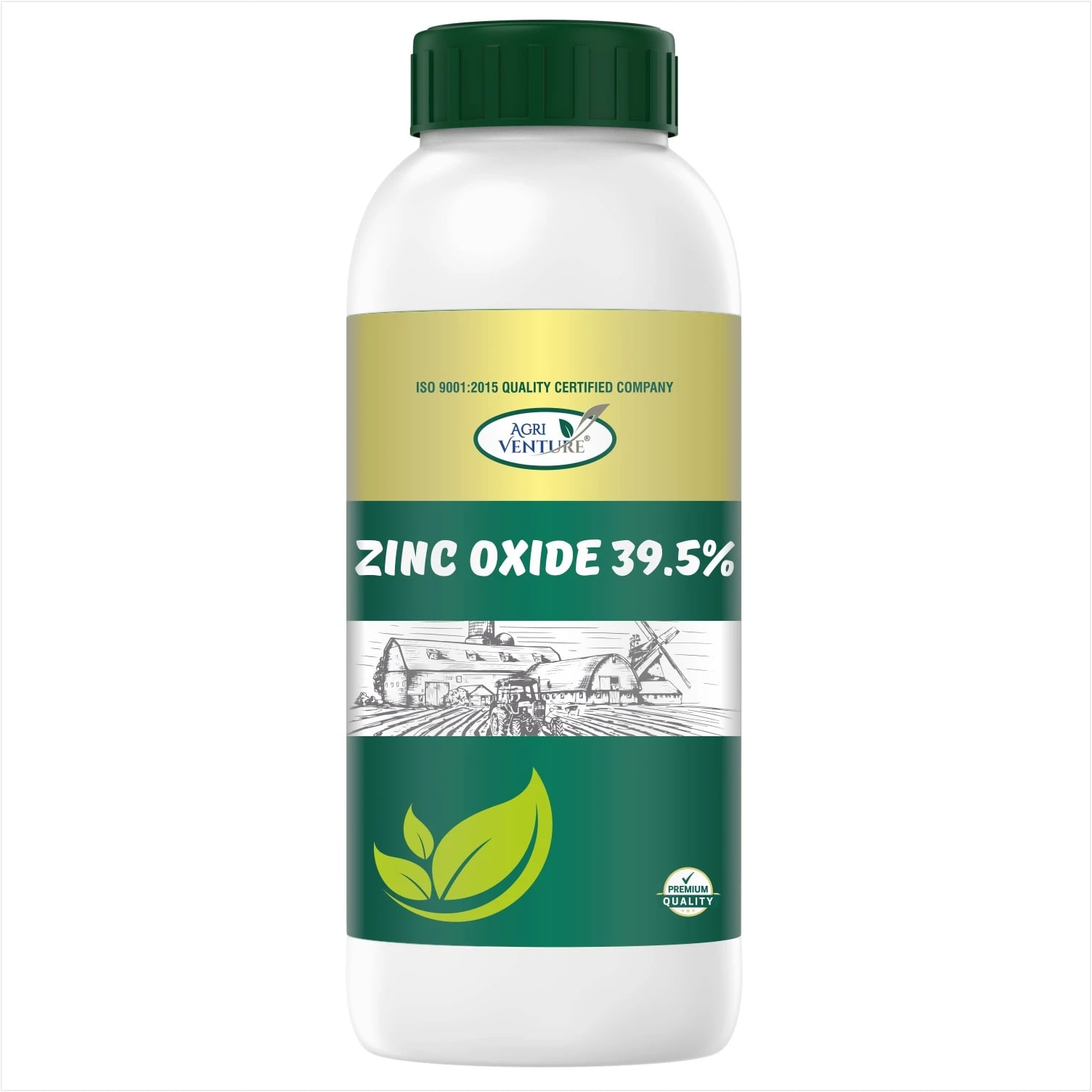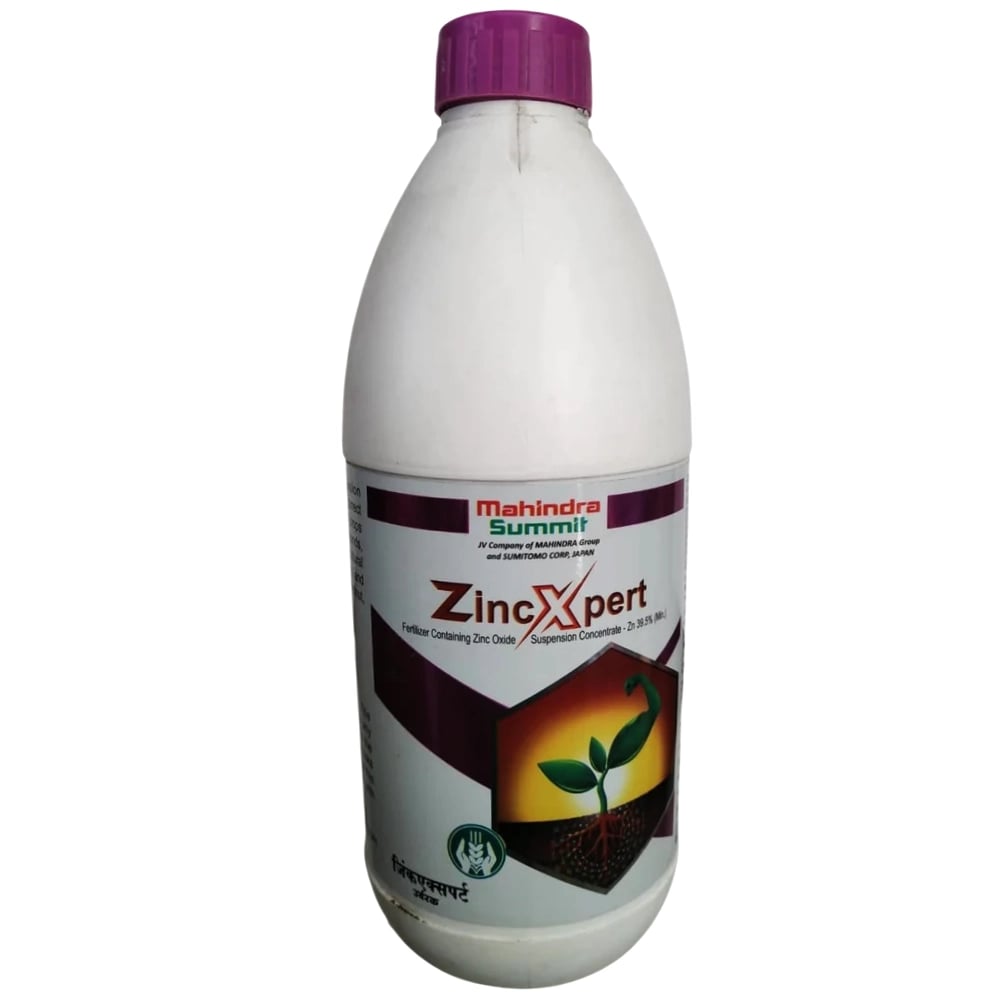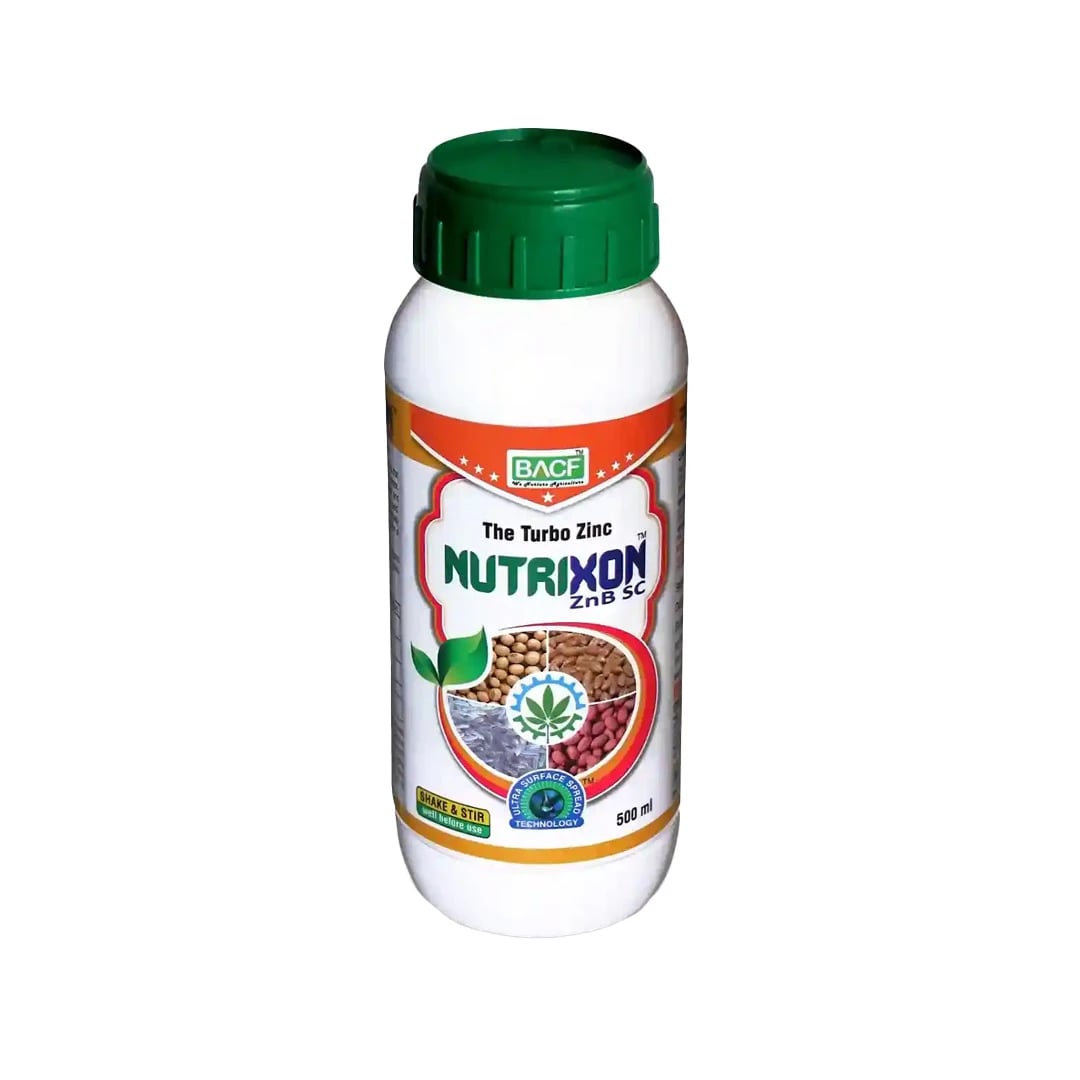
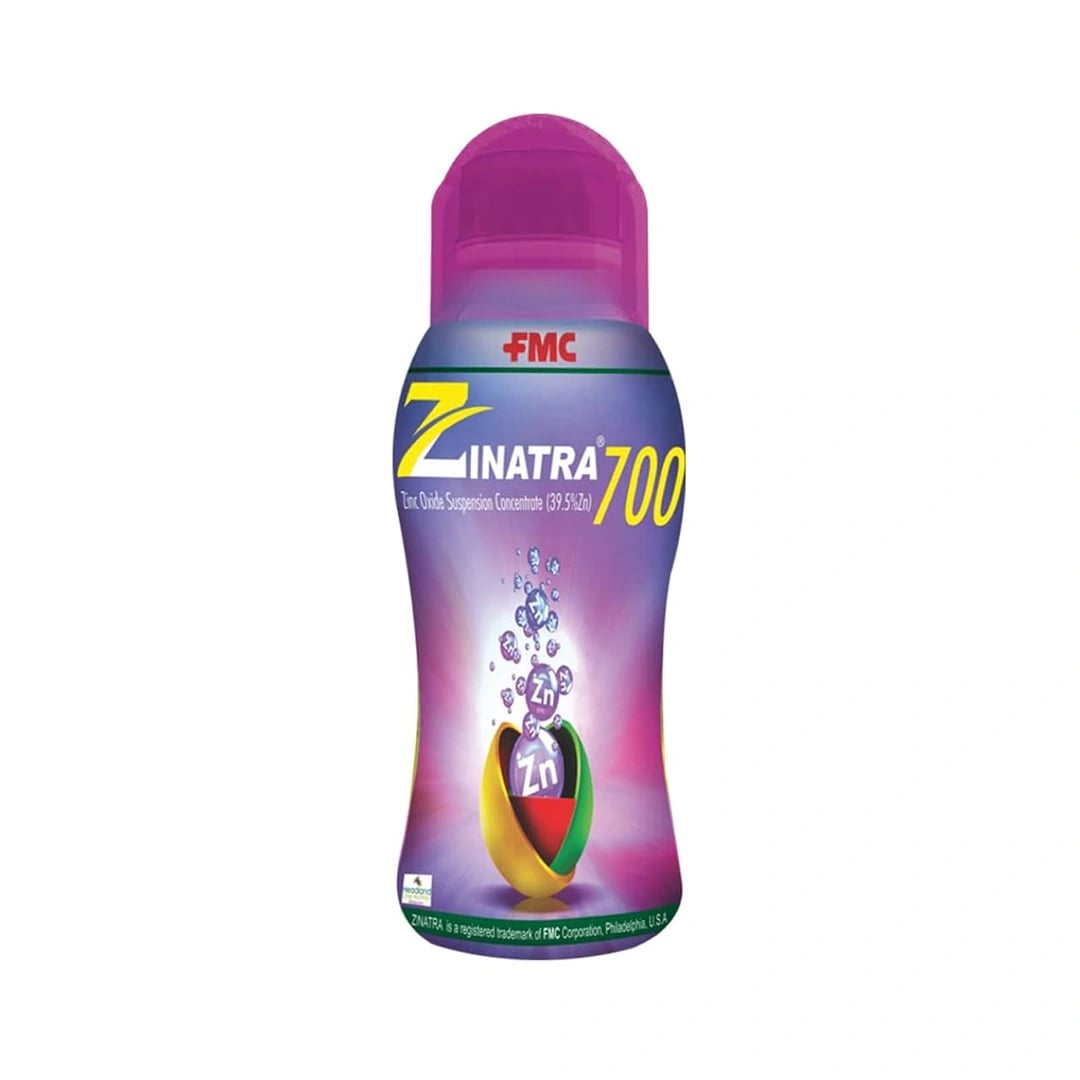
FMC Zinatra 700 fertilizer
₹407₹627
Save ₹22035% Off

🎉 You Save ₹1255 (36% OFF)
Buying In Bulk?
Get Special Pricing for large orders, contact us now!



| Brand: | Cropex |
| Product Code: | 4122 |
| Country of Origin: | India |
| Category: | Fertilizers |
| Sub Category: | Liquid Fertilizers |



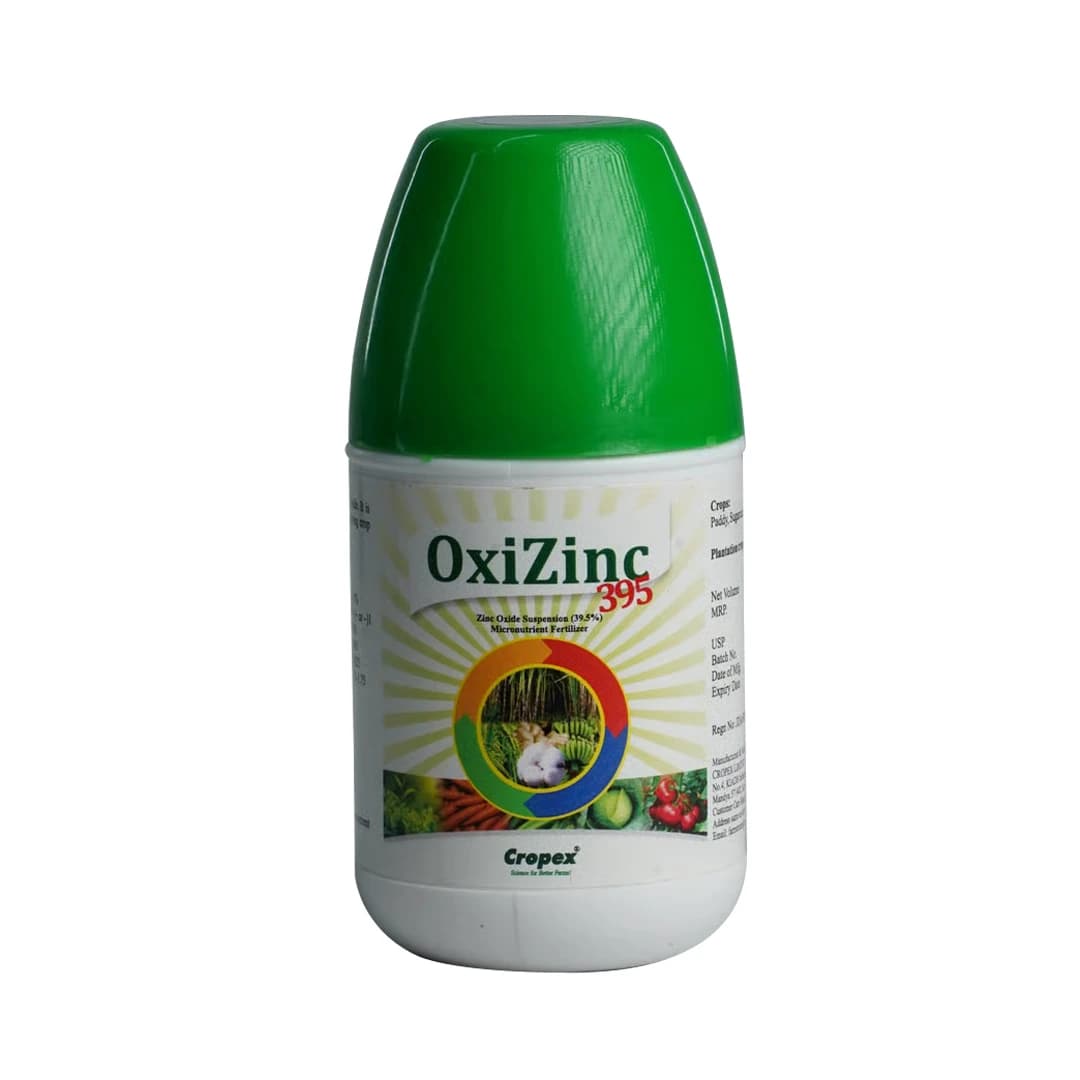
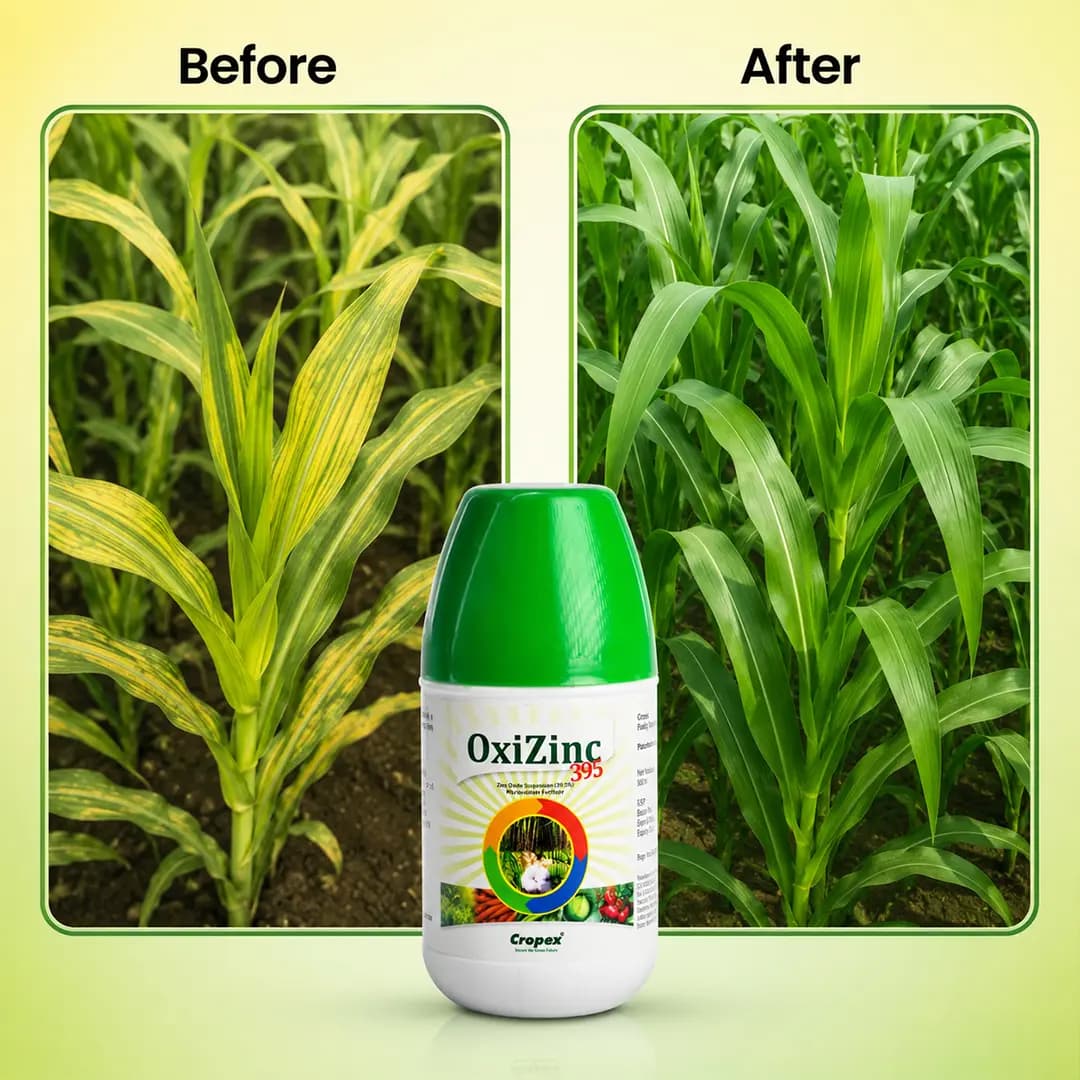
Oxizinc 395 is a high-concentration liquid zinc fertilizer that helps farmers correct zinc deficiency in crops with a smaller dose and faster effect. The product is built on Zinc Oxide 39.5% SC, a suspension concentrate formulation carrying 39.5% zinc by weight in nanoparticle form. It works through both rapid uptake by leaves and slow-release feeding over time, giving the crop a quick boost plus long-term zinc support. Oxizinc 395 corrects yellowing, stunted growth, and "little leaf" symptoms caused by low zinc, while also boosting chlorophyll, enzyme activity, and protein synthesis. This Zinc Oxide 39.5% SC fertilizer even has mild fungicidal action and is widely used on cereals, cotton, sugarcane, potato, fruit trees, vegetables, and oilseeds across India.
High Zinc Load: Zinc Oxide 39.5% SC supplies 39.5% zinc — much higher than common zinc sulphate (21%) or chelated zinc (12%) — so smaller doses give better results.
Rapid Uptake: Oxizinc 395 has nanoparticle zinc that is absorbed quickly through leaves, with a visible response within days.
Long-Term Feeding: Zinc Oxide 39.5% SC slowly releases zinc on the leaf surface, giving steady nutrition over a longer period.
Low Dose, Lower Cost: Oxizinc 395 needs only 1 to 2 ml per litre of water, saving farmers on fertilizer cost compared to traditional zinc sources.
Tank-Mix Friendly: Zinc Oxide 39.5% SC mixes well with most fungicides, insecticides, and water-soluble fertilizers in one spray tank.
Boosts Nitrogen Use: Oxizinc 395 supports nitrogen metabolism, helping the crop convert urea into protein and starch more efficiently.
Mild Fungicidal Action: Zinc Oxide 39.5% SC also gives mild protection against fungal leaf diseases by damaging fungal cell membranes.
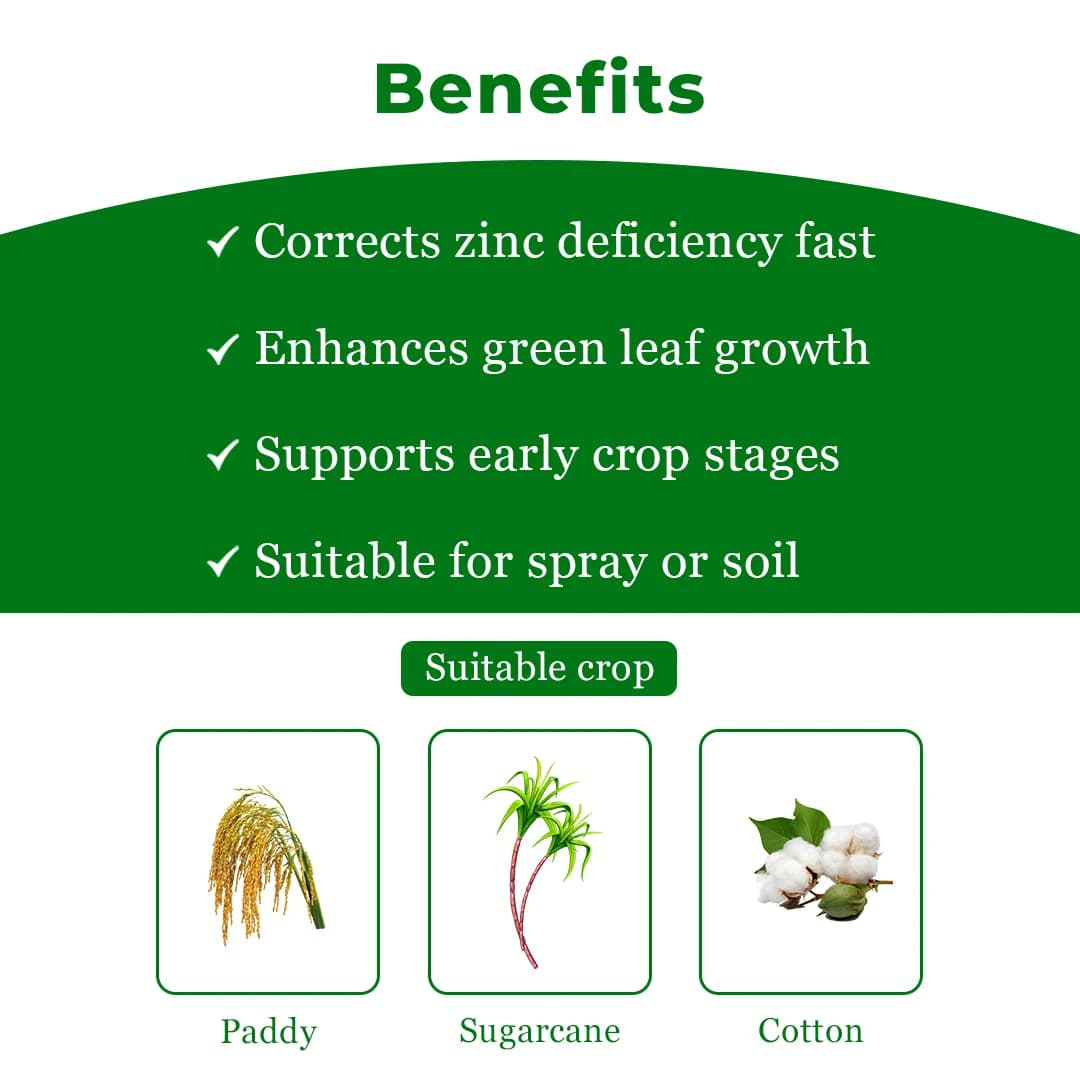
Oxizinc 395 is recommended for the following crop groups:
Cereals (Paddy, Wheat, Maize, Sorghum): Corrects leaf yellowing, improves tillering, grain filling, and overall yield.
Cotton: Improves boll development, fibre quality, and stress tolerance.
Sugarcane: Boosts cane sugar content, leaf flush, and stress tolerance.
Potato and Vegetables (Tomato, Chilli, Brinjal, Onion): Fixes stunted growth, improves uniform size, and produces quality.
Fruits (Apple, Citrus, Mango, Grapes): Corrects "little leaf" symptoms, improves fruit size, colour, and tree vigour.
Pulses and Oilseeds (Soybean, Groundnut, Chickpea, Mustard): Supports nodulation, pod setting, and seed weight.
Shake the Oxizinc 395 bottle well before use and apply through the suitable method based on the crop:
Application Method | Dose | When to Apply |
|---|---|---|
Foliar Spray (Cereals) | 1.0 to 1.5 ml per litre of water | 30 to 35 days after sowing |
Foliar Spray (Fruit Trees) | 1.0 ml per litre of water | At the petal-fall stage and again post-harvest |
Foliar Spray (Vegetables) | 1.0 to 1.5 ml per litre of water | At vegetative and pre-flowering stages |
Drip Irrigation | 250 to 500 ml per acre | Early growth and vegetative stages |
Note: Use Zinc Oxide 39.5% SC as recommended. Repeat sprays at 10 to 14-day intervals if zinc deficiency continues.
Shake the Oxizinc 395 bottle thoroughly before opening, since the suspension may settle during storage.
Measure the right dose based on the crop and application method.
Pour the liquid into a bucket of clean water and stir to make a pre-mix.
Add this pre-mix into the spray tank and top up with the rest of the clean water.
Stir or shake the tank again to keep the suspension uniform during spraying.
Use a knapsack sprayer with a fine nozzle for even spray on both the upper and lower sides of leaves.
For drip irrigation, dilute the product in the drip tank and run during regular watering.
Rinse the sprayer and bottle cap with clean water after the work is finished.
Spray Zinc Oxide 39.5% SC during the cool hours of the day, in the early morning or late evening when humidity is high. The first foliar spray for cereals is 30 to 35 days after sowing. For fruit trees, the best timings are the petal-fall stage and post-harvest. Avoid spraying during rapid drying, frost, or just before rain.
Frequency of Application: Apply Oxizinc 395 once at the first sign of zinc deficiency, then repeat every 10 to 14 days if symptoms continue. Most crops need 2 to 3 sprays per season for full correction.
Re-Entry Period: There is no waiting period. Field work can resume once the spray dries on the leaves.
Compatibility: Zinc Oxide 39.5% SC is compatible with most fungicides, insecticides, and water-soluble fertilizers. Avoid mixing with strong alkaline products or phosphate-heavy sprays, and always run a small jar test first.
Do not apply Oxizinc 395 during rapid drying weather, frost, or just before expected rain, as crop uptake drops sharply and product is wasted.
Wear chemical-resistant gloves and a face shield while opening the bottle and pouring the concentrate, as zinc oxide suspension can irritate the skin and eyes.
Clean the sprayer thoroughly before and after use, since dried Zinc Oxide 39.5% SC residue can block fine nozzles in the next spray.
Do not apply to greenhouse and polyhouse crops unless specifically listed, as enclosed conditions can lead to leaf bronzing on sensitive varieties.
Always shake the bottle vigorously before measuring, since heavy zinc particles settle at the bottom during storage.
Avoid combining with high-phosphate foliar sprays like NPK 00:52:34, as phosphate can lock up zinc and form an insoluble precipitate.
If product splashes on skin or eyes, rinse with plenty of clean water for 15 minutes and consult a doctor if irritation continues.
Store Oxizinc 395 in its original sealed bottle in a cool, dry, shaded place away from direct sunlight, frost, and heat sources.
Keep the product separate from food, animal feed, seeds, and drinking water at all times.
Always keep Zinc Oxide 39.5% SC out of reach of children, pets, and farm animals.
Storage Temperature: Below 40°C, protected from frost.
Shelf Life: 2 years from the date of manufacture when stored sealed and cool.
Specifications | Details |
|---|---|
Product Name | Oxizinc 395 Fertilizer |
Technical Name | Zinc Oxide 39.5% SC |
Formulation Type | Suspension Concentrate (SC, Liquid) |
Biological Group | Single Micronutrient Fertilizer (Nanoparticle) |
Mode of Action | Rapid uptake plus slow-release zinc supply for chlorophyll, enzyme, and protein synthesis |
Nutrient Composition | Zinc (Zn as ZnO) 39.5% w/w |
Recommended For | Cereals, Cotton, Sugarcane, Potato, Vegetables, Fruits, Pulses, Oilseeds |
Pack Sizes Available | 250 ml, 500 ml, 1 L |
Country of Origin | India |
Shelf Life | 2 years from the date of manufacture |
Pre-Harvest Interval | Not Applicable (Safe up to harvest) |
No reviews yet. Be the first to review this product!