Introduction:
The origin story of vermicompost can be traced back to ancient Egypt. The people of Egyptian civilization considered earthworms sacred and also understood their role in greater soil fertility. Even in today's time, organic soil conditioners remain important in both conventional and sustainable farming practices.
Modern farming uses various methods to prevent pests and weeds from affecting commercial crops, but these methods generally involve chemicals that leave residues in the soil and also reduce soil fertility. There are no man-made ways to repair this damage and restore soil health.
Therefore, natural methods like vermicomposting are still relevant and effective. Soil health restoration, reduced chemical usage, growth in organic farming, and profitable crop yields are some of the many benefits of organic compost.
What is Vermicompost?
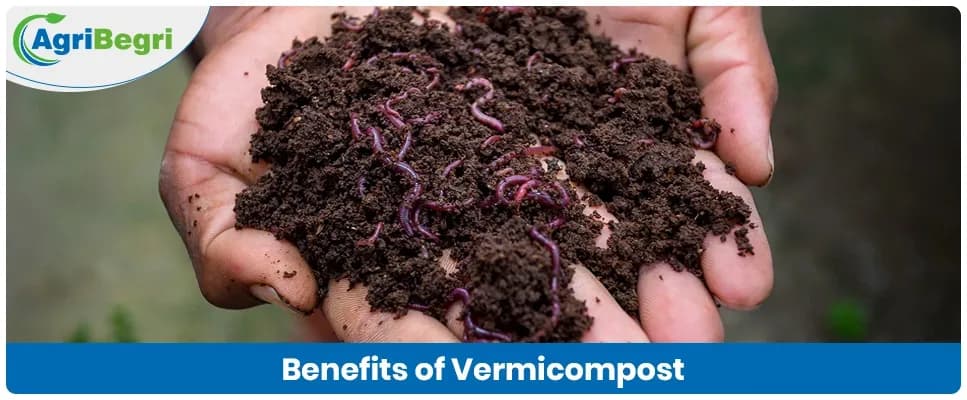
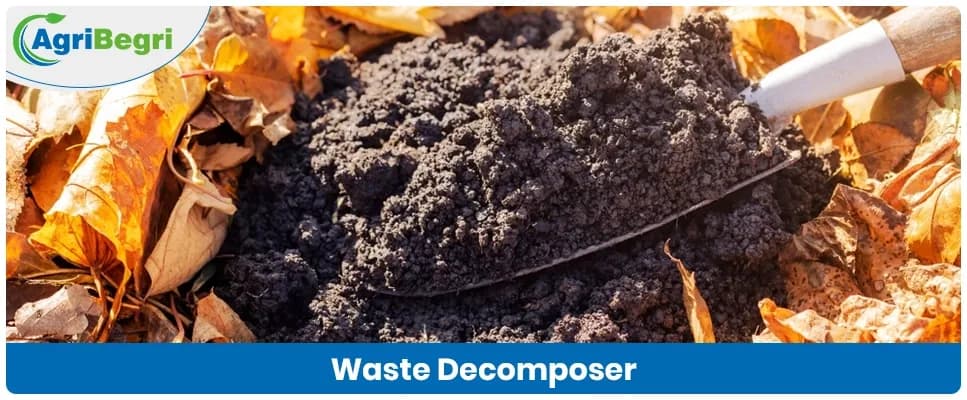
Earthworms are actively found beneath the Earth’s surface. They create a nutrient-filled organic compost by digesting and decomposing the organic matter.
What's left behind as earthworms’ waste is what we call vermi compost fertilizer.
It consists of extremely rich levels of organic compost nutrients like potassium, phosphorus, nitrogen, and other micronutrients.
Difference Between Vermicompost and Regular Compost
A regular compost is made from microbial activity and contains organic matter, but it's unevenly decomposed and has inconsistent nutrient content. When earthworms are introduced to regular compost, they create a more biologically active manure, known as an organic soil conditioner.
This mixture is diverse in terms of microbial presence and has a balanced nutrient content, while also retaining a higher quality humus. This is why organic compost is considered a more efficient and eco-friendly fertilizer, especially for organic farming.
How Vermi Compost is Produced?
Farmers produce worm compost through a systematic process, which results in a fertile end product.
The first step is to fill pits or containers with organic waste materials, such as farmyard manure, vegetable waste, and crop residues. These are pre-decomposed materials, but they are also inconsistent and uneven. Then, a specific species of earthworms like Eisenia Ferida or Eudrilus Eugeniae is added to the mix.
Over the next 45 to 60 days, earthworms break down organic matter into a nutrient-rich manure. Providing proper shade, adequate moisture, and good aeration ensures the composting process is complete and successful.
The next process is sieving, which involves cleaning and extracting only the organic compost, separating the earthworms and undecomposed matter from the final product.
This final product is organic compost fertilizer. It is granular, dark, and has a pleasant, earthy smell. These features demonstrate that the outcome is ideal for organic farming with an organic soil conditioner.

Benefits of Vermi Compost for Sustainable Farming
Improves Soil Fertility and Structure
Vermi compost in agriculture plays an extremely vital role in soil nourishment. There is an increase in soil aeration, which supports root penetration. Ultimately, such rich organic manure yields healthier crop growth, profitable yields, and sustained soil health throughout every season.
Enhances Plant Growth and Crop Yield
There have been common observations that seed germination rates are higher after the use of organic compost fertilizer, and crops grow stronger as a result. Under organic farming systems, crops such as cereals, pulses, and vegetables also exhibit significant yield improvements, thriving in soils rich in worm compost.
Boosts Soil Microbial Activity
The practice of organic farming with an organic soil conditioner can promote a very high microbial population in the soil. This further leads to nutrient cycling, facilitated by a dense population of beneficial bacteria and fungi. Additionally, this level of microbial activity contributes to reduced plant diseases and long-term soil fertility.
Provides Slow-Release & Balanced Nutrients
Vermi compost fertilizer provides balanced nutrition, promotes healthier crops, and enhances stress resilience in plants. There is a slow release of potassium, calcium, phosphorus, and nitrogen. This is a steady nutrition availability for plants, as opposed to chemical fertilizers that create sudden nutrient spikes.
Improves Water Retention in Soil
If you observe closely, the use of organic compost increases the soil's water-holding capacity. This means reduced irrigation for your convenience and minimum water evaporation in the soil. Furthermore, this becomes an advantage for regions with low rainfall.
Reduces Waste by Recycling Organics
Organic compost is made from all the organic waste. It is the best example of turning waste into wealth. Whether it is kitchen waste, farm’s organic manure, or agricultural residue, earthworms recycle everything into eco-friendly fertilizer.
Hence, there's no pile-up of waste, creating a cyclic model that is in tune with natural farming systems.
“According to ICAR (2024), vermicompost increases crop yields by 20–30% while reducing the need for chemical fertilizers by up to 50%. It consists of extremely rich levels of organic soil conditioner nutrients like potassium, phosphorus, nitrogen, and other micronutrients.”
Safe, Eco-friendly, and Non-Toxic
Vermicompost nutrients are completely non-toxic and leave no harmful residues in soils or crops, as opposed to chemical fertilizers. This is especially important if you have an organic label and are pursuing a stamp of organic guarantee, which is highly profitable. Worm compost fertilizer is inherently eco-friendly, making it an effective choice for sustainable farming practices.
Practical Uses of Vermi compost in Farming
Application methods (soil mix, top dressing, liquid vermiwash)
You can apply vermi compost in agriculture, using different methods. You can mix it into the soil before sowing and also use it as a liquid extract for foliar sprays, known as vermiwash. It can also be applied to the soil as a top dressing during crop growth stages to provide a steady supply of nutrients.
Suitable Crops for Vermi compost
A wide range of crops can benefit from organic farming with natural fertilizer. Whether it's cereals like rice and wheat, or vegetables like brinjal or tomatoes, or fruits like mangoes and bananas, worm compost fertilizer is extremely effective. Even plantation crops like coffee and tea thrive with this miraculous organic manure.
Cost-Effectiveness for Farmers
Vermi compost ensures higher crop yields and improved market value, ultimately leading to greater profitability for farmers. Soil enrichment and reduced chemical dependency lower the input costs and repair the soil damage extensively. It does require some effort, but it is cost-effective in production and yields fertile outputs while minimizing waste, providing further evidence of its cost-effectiveness.
Challenges and Considerations in Using Vermi Compost
If one considers factors such as the scalability of vermicomposting for large farms and the time required for its production, there are indeed some downsides or challenges to using vermi compost in agriculture.
Additionally, worm compost requires proper storage conditions to protect against moisture and prevent nutritional depletion over time.
It can also require more labour, along with some advanced planning and time management. The usage also needs to be in appropriate quantities. Overuse may also fail to meet your expectations.
Conclusion
In this blog, we examined the benefits of earthworm compost in both conventional and sustainable farming practices. It has the ability to enrich soil fertility and improve crop yield while acting as an eco-friendly fertilizer.
With patience and planning, integrating earthworm compost into agriculture can deliver excellent results. while also supporting natural farming. It definitely has the potential to reshape the future of Indian Agriculture.