Introduction:
Sustainable farming relies on two key factors: healthy soil and minimal use of chemical products. Across the country, farmers are now turning towards waste decomposers as a natural and affordable solution to achieving improved soil fertility and managing organic waste.
This innovative catalyst is used to recycle crop residues, reduce fertilizer costs, and enhance overall yield. The credit for its development goes to the National Centre for Organic Farming (NCOF). Farmers are increasingly adopting organic decomposers, and demand has grown rapidly both online and offline.
Through this blog, we will explore what it actually is, its methods of application, uses, benefits, and even challenges, so that even if you have recently started your organic farming journey then you can get a clear understanding about this natural fertilizer.
What is a Waste Decomposer?
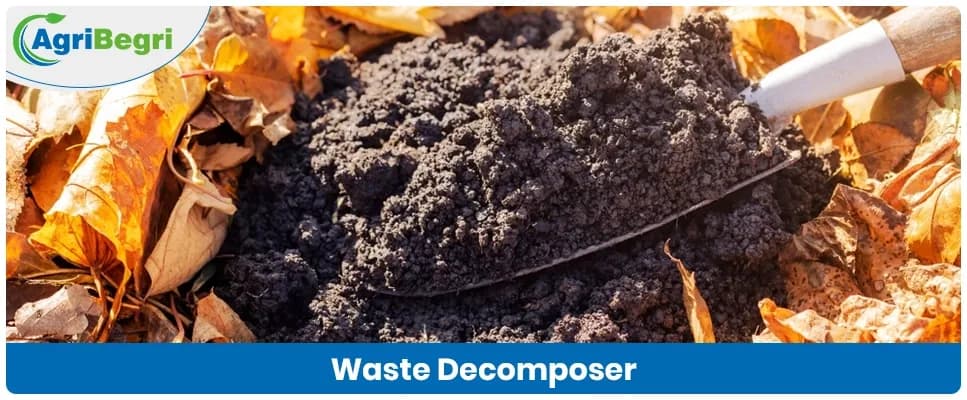
The compound used for breaking down waste is a bio-culture of naturally occurring microorganisms and enzymes, designed to decompose organic waste efficiently.
When the microorganisms in bio-culture come in contact with water and jaggery, they are activated by the presence of nutritional glucose and can rapidly multiply.
After this, they start decomposing the organic waste matter. The solution can be ready in 5 to 7 days, and it has multiple applications. It can be used as a bio-fertilizer, soil conditioner, and even as a pest repellent.
Its formulation was introduced by Dr. Krishan Chandra, the former director of NCOF. He's often called “Dr. Krishan Chandra waste decomposer” and the “Father of Organic Waste Decomposer.
Waste decomposers are extremely simple to prepare, affordable, and also available online, which is why it is considered the best natural decomposers in sustainable farming.
Waste Decomposer Uses in Agriculture
One of the strongest advantages of an organic decomposer for agriculture is its versatility. Here are some common uses and examples:
Crop Residues:
You can spray the solution directly on crop residues instead of burning them. It speeds up decomposition and enriches the soil with organic matter.
Soil Health:
The soil contains various beneficial microorganisms that boost soil fertility. This waste decomposer further enriches the soil with essential nutrients and improves its structure for enhanced plant growth.
Bio-fertilizer:
When you mix waste decomposer into the soil, it releases nutrients slowly, supporting steady plant growth while reducing reliance on synthetic fertilizers.
Pest & Disease Management:
There have been reports that the waste decomposer also acts as a suppressant for harmful soil-borne pathogens. This ultimately reduces the risk of crop diseases and helps you prevent crop loss.
For Compost:
If you add the solution to compost pits, it accelerates the breakdown of organic waste while producing high-quality compost.
Being both cost-effective and eco-friendly, it can be considered one of the most vital agricultural scrap decomposers in today's time.

How to Make a Waste Decomposer for Plants
The process of preparing a natural decomposer at home or on your farm is very simple. Here are the steps to making it yourself:
- Get a 200-liter drum container and fill it with clean water.
- Add a packet of waste decomposer powder.
- As a food for the bacteria and enzymes in the powder, add about 2 kg of jaggery and mix it well.
- Stir well and loosely cover the drum.
- After 5 to 7 days, the solution will become active and will turn into a bio-waste decomposer liquid.
Once ready, the solution can be used for soil application, composting, or foliar spray. Even a small packet is enough for preparing thousands of liters of solution. This makes it the best scrap decomposer option for cultivation of every scale, from small to large.
Benefits of Waste Decomposer
An organic decomposer in agriculture has many benefits. Here are a few of them:
Soil Fertility:
Converts organic matter into nutrients for plants and beneficial soil organisms, improving overall soil health. A leftover decomposer breaks down organic matter, which benefits the soil's other crop-friendly organisms, such as earthworms, ultimately making the soil extremely fertile.
Cost-effectiveness:
Just a single packet of organic decomposer can make barrels' worth of potent solution. It also suppresses pests, cutting down pesticide costs.
Residue-free crops:
Waste decomposers are completely microbial in nature, meaning there is no chemical residue left behind. Everything that's left behind in the soil is absorbed and utilized, enhancing its fertility. This makes it an optimal solution for organic farming.
Eco-friendly:
This non-toxic and safe-to-use fertilizer prevents crop residue burning and effectively disposes of the organic waste from the farm. Its long-term usage improves soil fertility, crop yield, and the overall sustainability of the farm.
Challenges and Limitations of Waste Decomposer
There is no denying that this method and system are extremely beneficial for both the soil and the farm. However, we must also examine the challenges that come with this natural decomposer. Here are some challenges to consider:
Scalability:
If you have a large farm, preparing a solution batch that is sufficient for a large piece of land is a significant task. Also, the storage and equipment that go into this process are labor-intensive.
Soil Types:
Not all soil types are the same. The soil's water retention, it's type, temperatures, and crop variety are all the factors that decide this organic decomposer’s effectiveness.
Storage:
After its preparation, the liquid should be stored properly or used quickly. If not used up, it may spoil and go to waste. Plus, if the mixture becomes anaerobic (a lack of air and oxygen) or the organic waste has too many nitrogen-based greens, then the solution could stink and create further residential issues.
Climate Conditions:
In colder regions, the solution may take longer to activate or may not fully develop without sufficient sunlight. In such cases, you have to depend on sunlight and careful storage for the solution to work.
In spite of these challenges, organic scrap decomposers could still be one of the most reliable sources of fertility in sustainable farming.
Application Methods of Waste Decomposer
Based on the crop stage and other farm needs, here are the different methods used for the application of waste decomposer for agriculture:
Soil Application:
The liquid is directly added to the soil before the sowing phase or during early crop growth. This ensures nutrient availability and microbial activity within the soil, for crops.
Foliar Spray
You can dilute the solution and apply it directly to the leaves. This contributes to the crops’ immunity and helps them build resistance to pests and diseases.
Seed Treatment
Before sowing, the seeds can be soaked in this solution. This could majorly prevent early-stage bacterial and fungal attacks.
Composting
Spraying the compost-ready organic waste, like farm residue with leftover decomposer liquid, can accelerate the composting process rapidly.
Irrigation Mix
Combine the solution with irrigation water to ensure even distribution across the field.
With such methods, even one single preparation is enough to serve multiple functions. This makes it one of the most versatile agricultural scrap decomposers.
Conclusion:
Waste decomposers are transformative tools for improving soil health, fertility, and management of organic residues. One simple preparation could be low-cost, eco-friendly, and an alternative to chemical-based options.
Boosting plant immunity, soil fertility, and managing pests are some common benefits, making it compatible in sustainable farming and organic farming. Although there are challenges related to awareness and scalability, the benefits can outlive the issues.
In the long run, a widespread use of this solution could support organic certification, healthier food systems, and fetch you a higher market value.