Crop Care Carezoxy Fungicide
₹646₹1743
Save ₹109763% Off
🎉 You Save ₹2596 (69% OFF)
Buying In Bulk?
Get Special Pricing for large orders, contact us now!
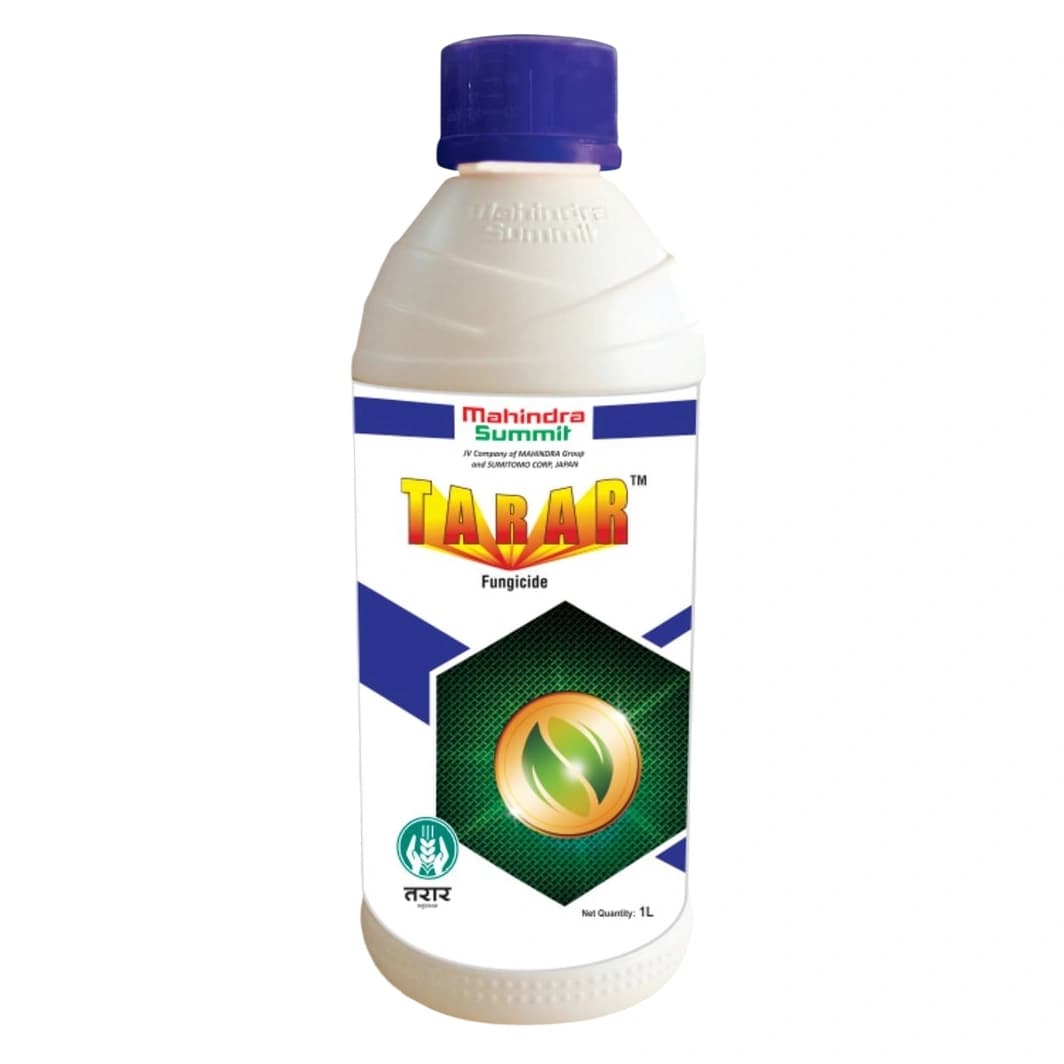
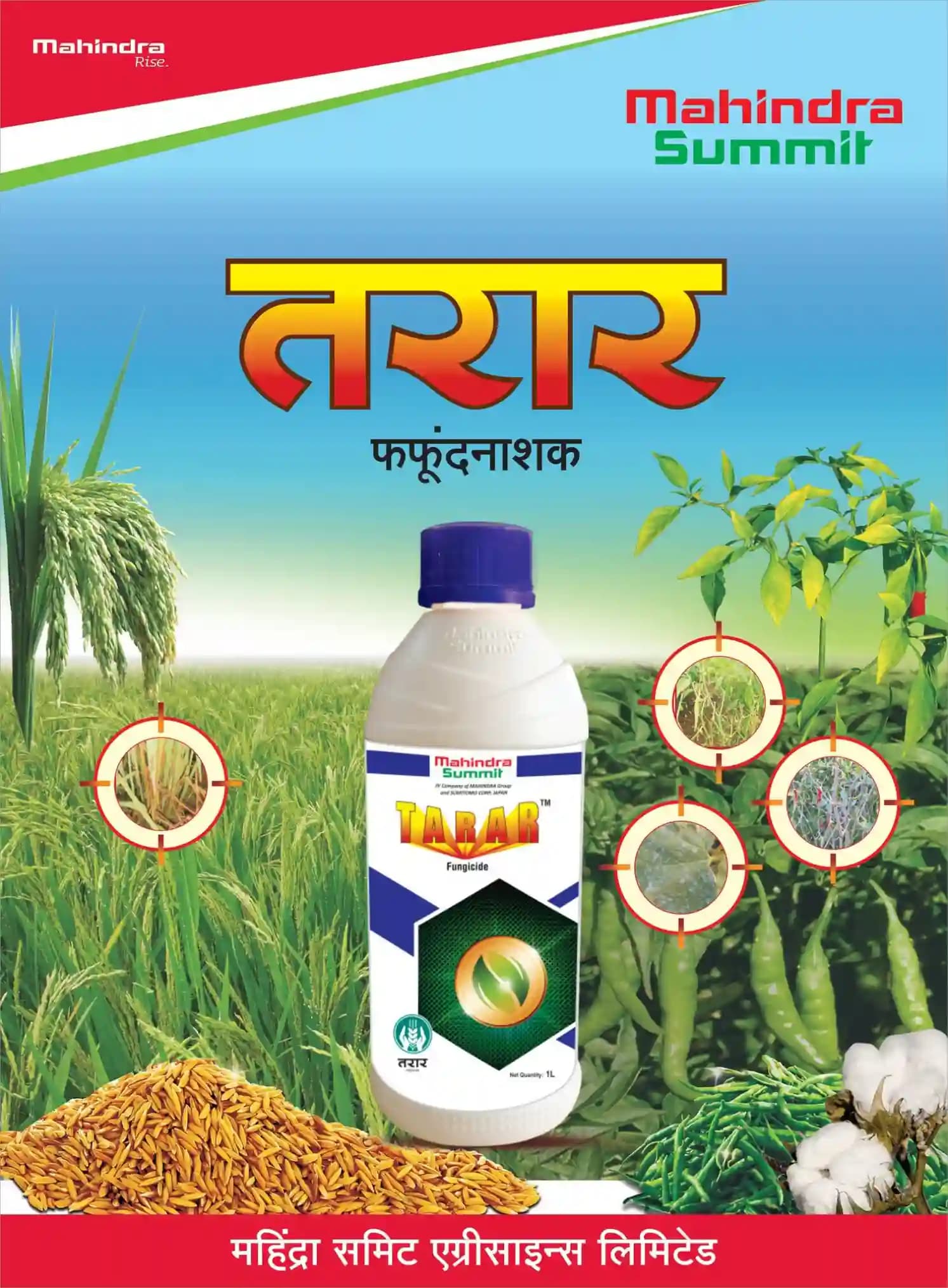
| Brand: | Mahindra Summit |
| Product Code: | 10879 |
| Country of Origin: | India |
| Category: | Crop Protection |
| Sub Category: | Fungicides |




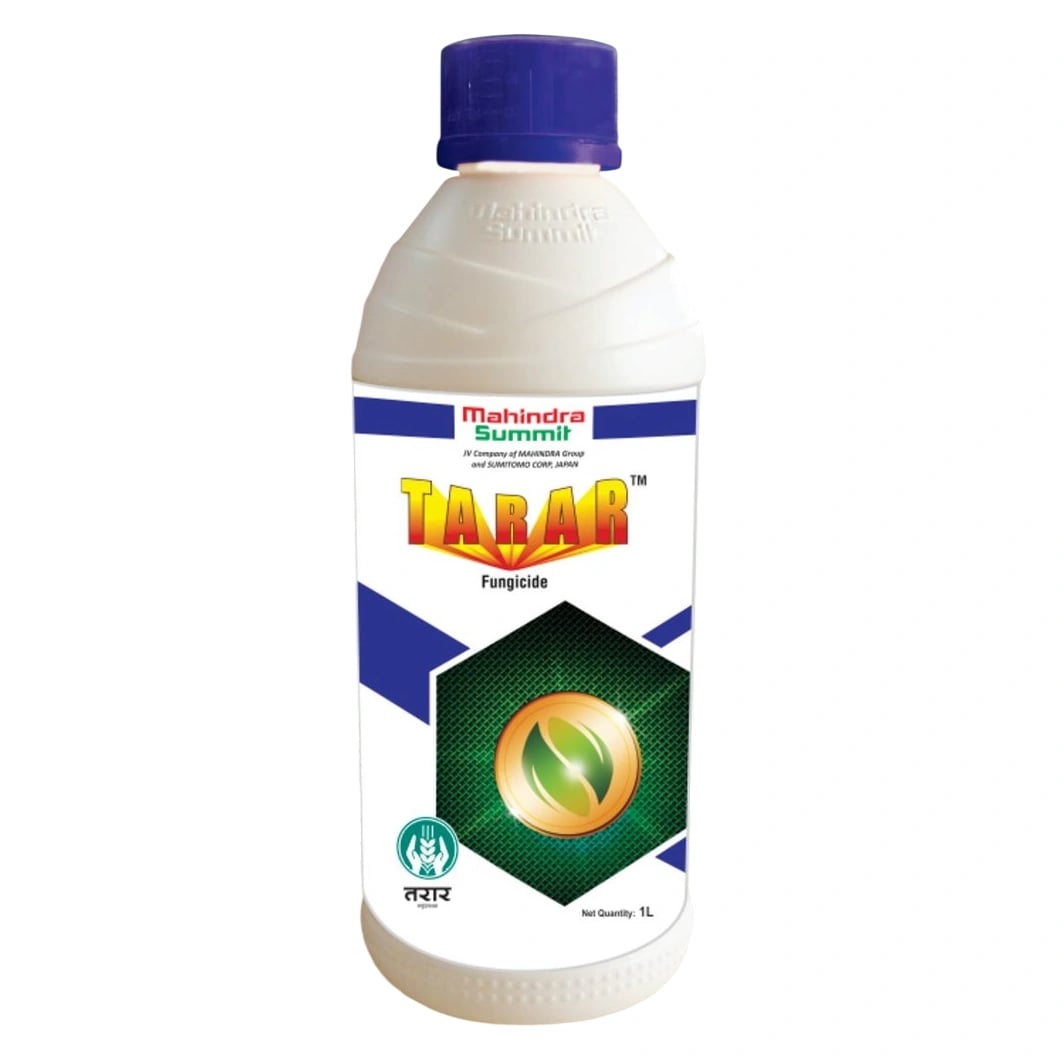
Mahindra Tarar is a broad-spectrum systemic fungicide, manufactured by Mahindra Summit Agri Sciences. It is specifically designed for Chilli, Onion, and Rice crops, where fungal diseases can cause significant yield and quality losses if left unmanaged. It stops fungal spores from germinating before infection begins and eliminates infections already established inside the plant. Mahindra Tarar fungicide maintains flag leaves disease-free and healthy in Paddy, which directly supports complete grain filling and improved grain size at harvest. It has a broad application window — giving farmers flexibility in spray timing without missing the critical treatment period.
Flag Leaf Protection: Tarar keeps the topmost leaf of the Paddy plant healthy and disease-free, ensuring the crop has enough energy for complete grain filling and better grain weight at harvest.
Anti-Sporulant Action: Mahindra Tarar fungicide inhibits spore germination and prevents disease from spreading to healthy plant parts and neighboring plants in the field.
Greening Effect: It keeps leaves greener and more productive for longer — treated crops show better photosynthetic activity and stronger growth.
Uniform Flowering: Mahindra Tarar fungicide promotes uniform and healthy flowering by keeping crop foliage disease-free during the critical reproductive stage.
Resistance Management: Two active ingredients from different chemical groups attack the fungus at two different sites, reducing the risk of resistance build-up over time.
Wide Crop Coverage: Mahindra Tarar fungicide is registered for Chilli, Onion, and Rice — also effective across Wheat, Tomato, Potato, and other field and vegetable crops.
Blights: Sheath Blight in Rice, Early Blight, Late Blight
Leaf Diseases: Leaf Spot, Purple Blotch in Onion, Leaf Blight
Mildews: Powdery Mildew, Downy Mildew
Other Diseases: Fruit Rot, Dieback, Rust, Anthracnose
Mix Mahindra Tarar fungicide in 200 liters of water per acre for foliar spray. Apply at the first sign of disease or as a preventive spray during vulnerable crop stages for best results.
Crop | Target Disease | Dose / Acre | Per 15L Pump | PHI |
|---|---|---|---|---|
Rice / Paddy | Sheath Blight | 250–300 ml | 19–22 ml | 28 days |
Chilli | Fruit Rot, Die Back, Powdery Mildew | 250–300 ml | 19–22 ml | 7 days |
Onion | Purple Blotch, Leaf Blight | 250–300 ml | 19–22 ml | 7 days |
Wheat | Yellow Rust, Leaf Rust | 250–300 ml | 19–22 ml | 28 days |
Tomato | Early Blight, Late Blight, Leaf Spot | 250–300 ml | 19–22 ml | 5 days |
Potato | Early Blight, Late Blight | 250–300 ml | 19–22 ml | 14 days |
Note: Never exceed the recommended dose.
Shake the Mahindra Tarar fungicide bottle well before measuring the required dose.
Measure the required quantity carefully and add to a sprayer tank containing about one-third the required water volume.
Fill with remaining clean water while stirring continuously until the suspension is completely uniform.
Apply evenly across the entire crop canopy, covering upper and lower leaf surfaces thoroughly.
For Paddy, ensure the spray reaches the flag leaf and lower sheaths where Sheath Blight infection starts.
For Onion, ensure thorough coverage of all leaf surfaces where Purple Blotch first appears.
Rinse the sprayer with clean water after every use.
Apply Mahindra Tarar fungicide in the early morning or late evening when temperatures are cool, and wind speed is low — apply preventively before disease appears, especially during warm and humid conditions when fungal spread is fastest.
Frequency of Application: Apply Mahindra Tarar fungicide at the first sign of disease. Repeat after 14 to 15 days if disease pressure continues. Do not apply more than 2 to 3 times per season.
Re-Entry Period: Do not enter treated fields for at least 24 hours after spraying without proper protective gear.
Tank-mix Compatibility: Compatible with most commonly used insecticides and fungicides. Always do a jar test before mixing. Do not mix with strongly alkaline products.
Always wear gloves, safety goggles, and a nose mask before measuring or handling this product.
Never eat, drink, or smoke while mixing or applying.
Wash all exposed skin and hands thoroughly with soap and water after finishing.
Keep children, pets, and livestock away from treated areas for at least 24 hours.
Avoid spraying near ponds, rivers, or fish farms.
Triple rinse all empty containers, puncture, and dispose of them as per local waste regulations.
Store Mahindra Tarar fungicide in the original sealed container in a cool, dry, well-ventilated area away from direct sunlight and heat.
Never store near food, animal feed, drinking water, or seeds.
Keep completely out of reach of children and farm animals.
Storage Temperature: Below 35°C
Shelf Life: 2 years from the date of manufacture.
Specifications | Details |
|---|---|
Product Name | Mahindra Tarar Fungicide |
Technical Name | Azoxystrobin 11% + Tebuconazole 18.3% SC |
Formulation Type | Suspension Concentrate (SC) |
Chemical Group | Strobilurin + Triazole |
Mode of Action | Systemic Preventive + Curative + Anti-Sporulant Fungicide |
FRAC Group | C3 + G1 (Group 11 + Group 3) |
Brand | Mahindra Summit Agri Sciences |
Recommended For | Chilli, Onion, Rice — also effective on Wheat, Tomato, and Potato |
Pack Sizes Available | 100 ml, 250 ml, 500 ml, 1 L |
Country of Origin | India |
Shelf Life | 2 years from the date of manufacture |
Pre-Harvest Interval | 5–28 days (crop specific) |