

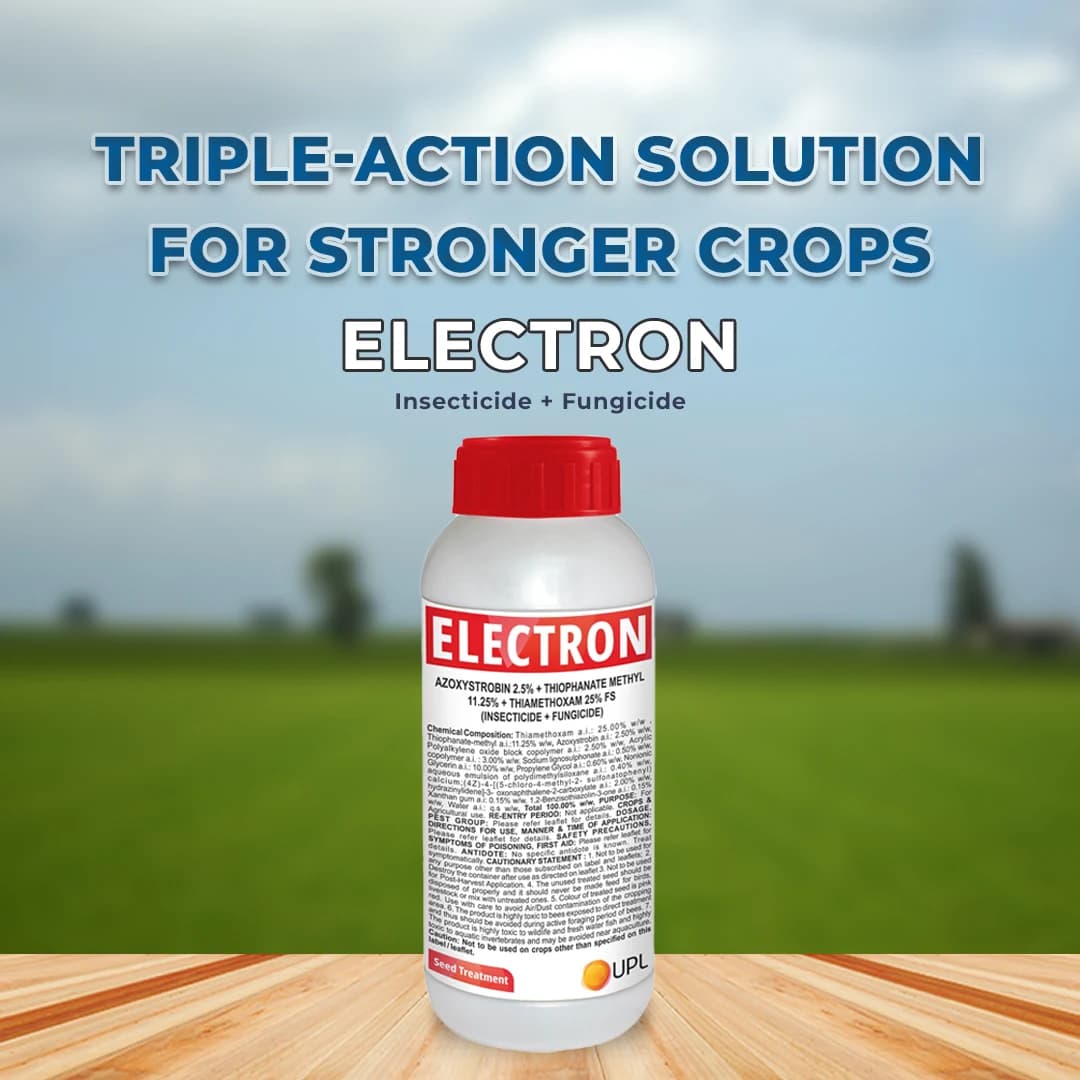
Swal Cascade Insecticide (Azoxystrobin 2.5% + Thiophanate Methyl 11.25% + Thiamethoxam 25% FS) Systematic Insecticide & Fungicide, Controls Sucking Pests In Soybean Crops
₹494₹672
Save ₹17827% Off

🎉 You Save ₹84 (14% OFF)
Buying In Bulk?
Get Special Pricing for large orders, contact us now!
| Brand: | UPL Limited |
| Product Code: | 9556 |
| Country of Origin: | India |
| Category: | Crop Protection |
| Sub Category: | Insecticides |




UPL Electron is a 3-way combination seed treatment that offers strong systemic activity. This insecticide works by disrupting mitochondrial respiration, inhibiting fungal cell division by interfering with mitosis, and acting as a nicotinic acetylcholine receptor channel blocker. The UPL Electron insecticide can be used to control fungal diseases and pests, making it highly versatile. This insecticide also helps develop better crops with long-lasting protection.
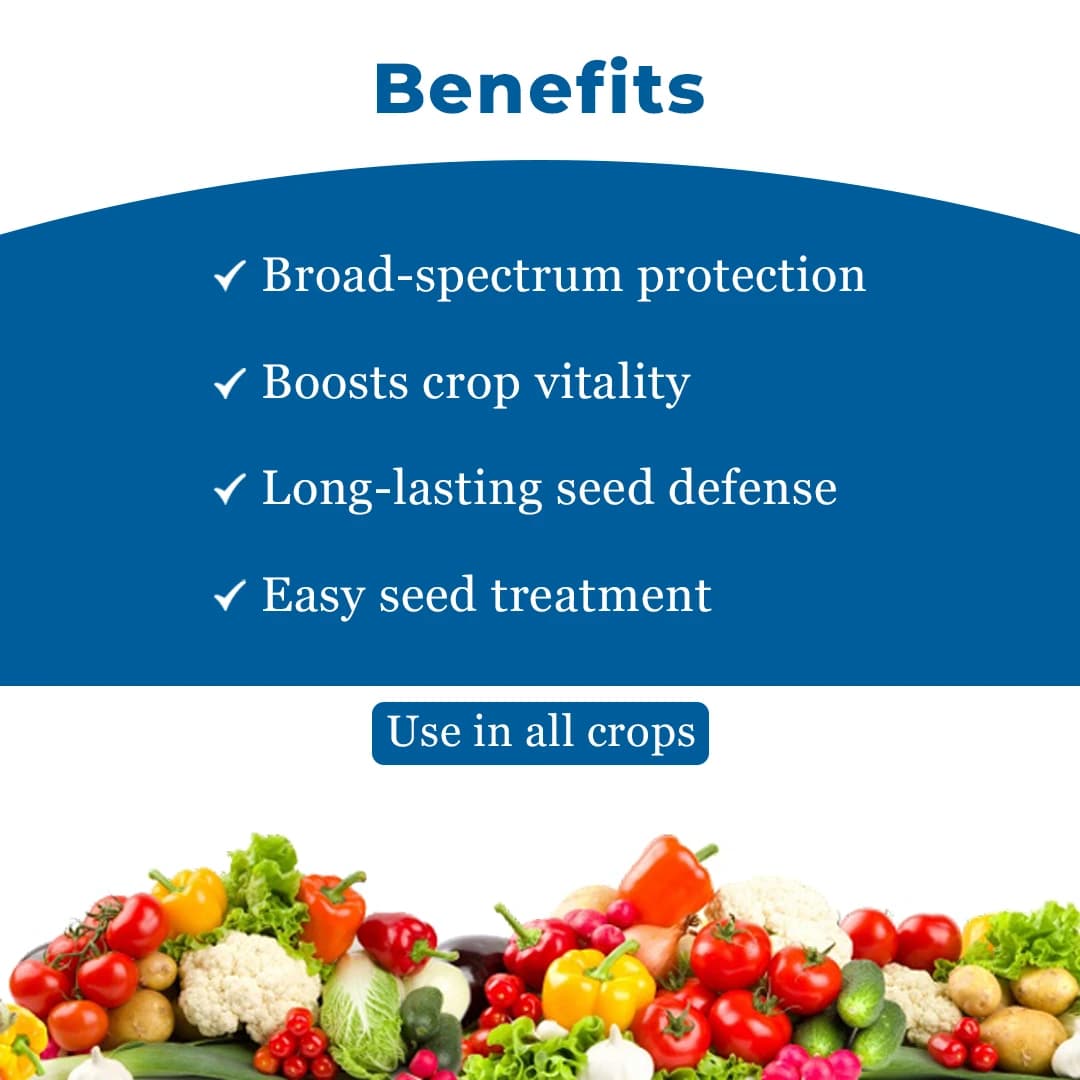
Triple Action: UPL Electron insecticide can be used against sucking pests, seed-borne fungal pathogens, and soil-borne diseases.
Systemic Protection: The Electron insecticide moves systemically through the crop, ensuring complete coverage.
Stronger Root Development: UPL Electron insecticide promotes vigorous root development, giving crops better nutrient and water uptake.
Long-Lasting: This insecticide provides strong residual protection from the seed treatment coating, reducing the need for other inputs.
Versatile Application: The UPL Electron insecticide can be used for seed treatment and soil drench at transplanting.
UPL Electron covers both early pest and disease management across registered seed treatment crops:
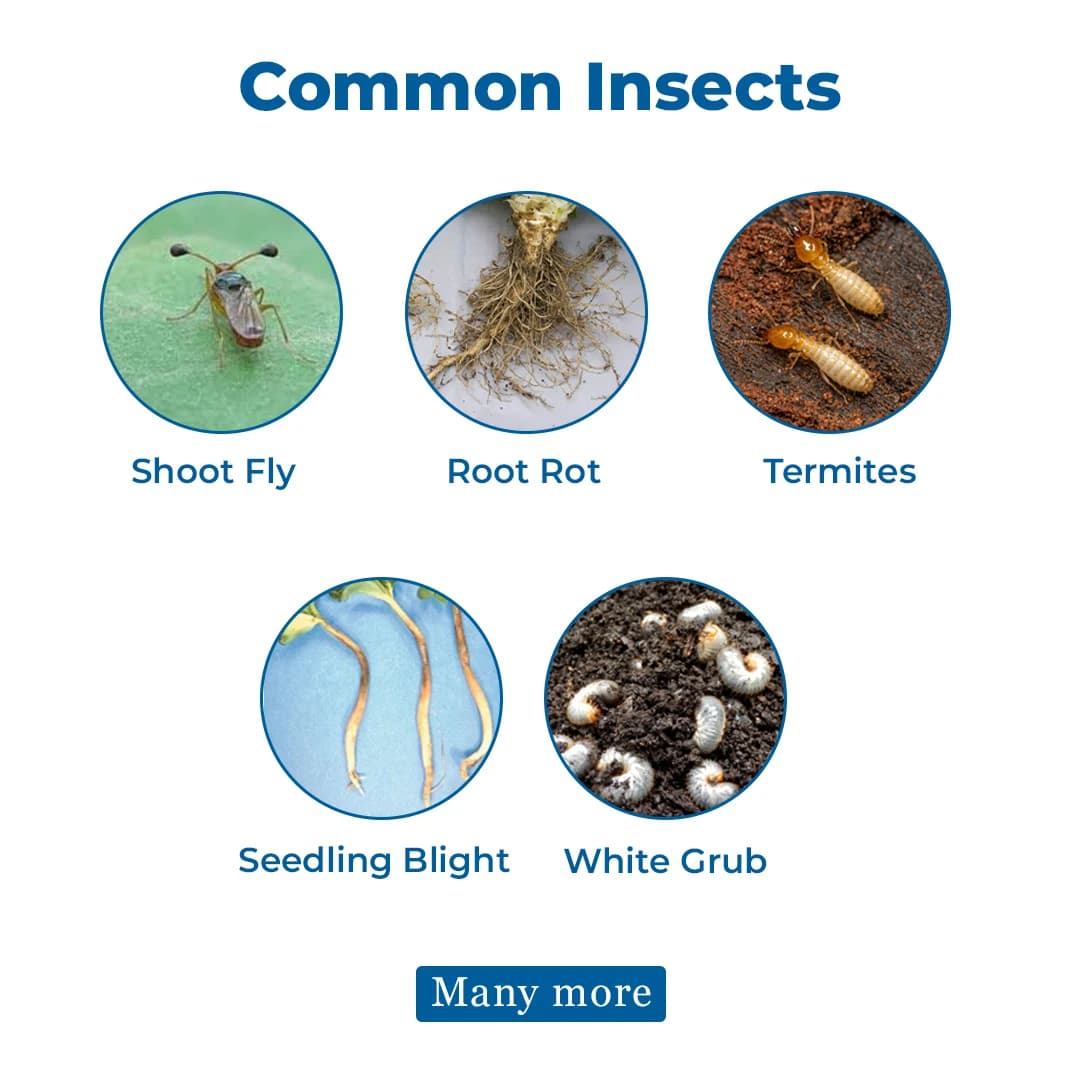
Sucking and Soil Pests: Shoot Fly, Aphids, Jassids, Thrips, Termites, White Grubs
Seed and Soil-Borne Fungal Diseases: Fusarium Root Rot, Phytophthora Root Rot, Rhizoctonia Seedling Blight, Pythium Seedling Blight
Registered Crops: Soybean (primary registration); also used on Paddy, Wheat, Maize, Gram, Peas, Cotton, Okra, Onion, Coriander, Tomato, Potato, Garlic, and Groundnut (as seed treatment for various seed sizes)
The UPL Electron Dose varies by seed type and crop as follows:
Crop / Seed Type | Dose | Application Method |
|---|---|---|
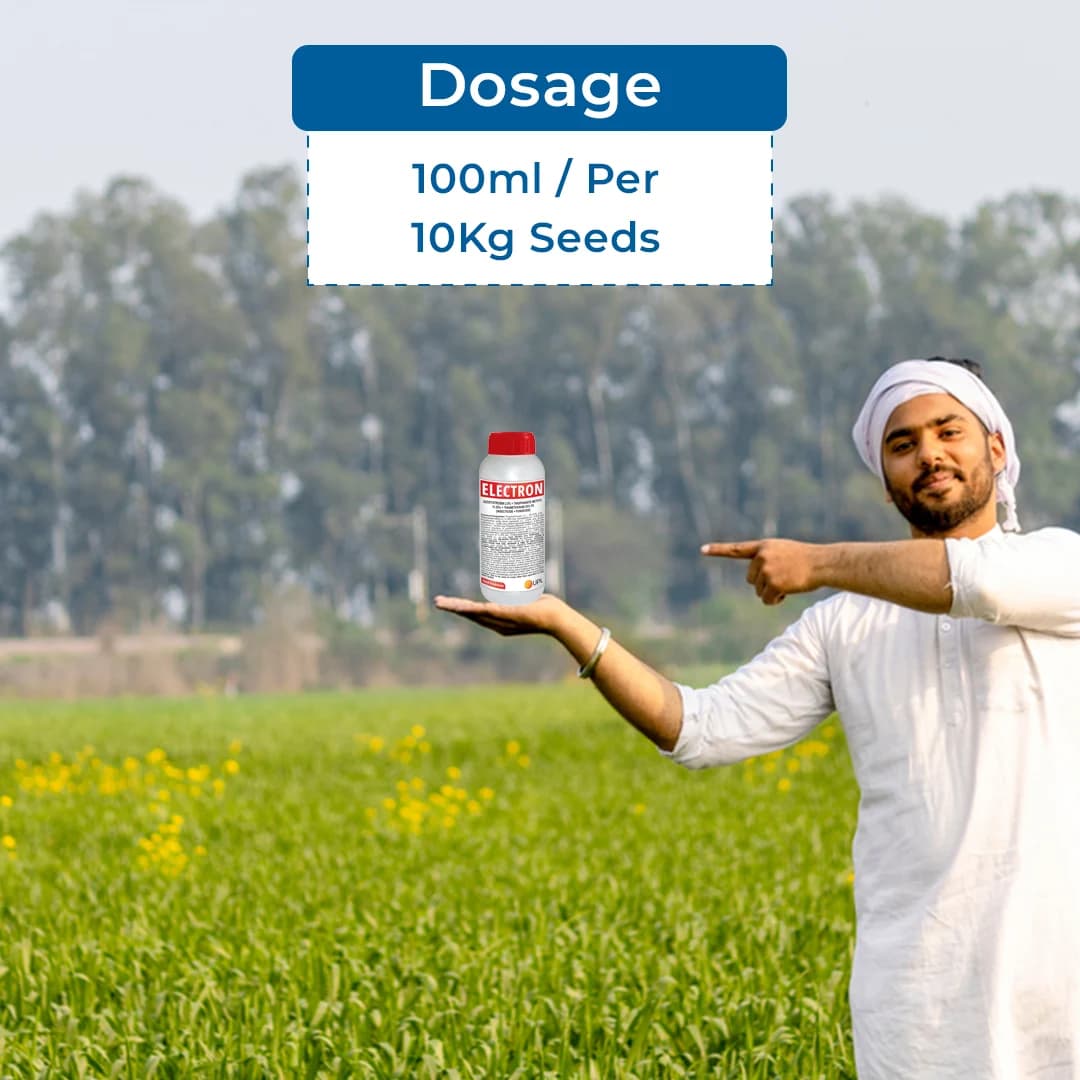
Soybean | 100 ml per 10 kg of seeds | Seed treatment — coat uniformly before sowing |
Wheat-sized seeds (Wheat, Gram, Peas) | 1 ml per kg of seeds | Seed treatment — mix thoroughly before sowing |
Potato / Sugarcane | 400 ml per acre | Soil drench or furrow application at planting |
Other crops (Paddy, Maize, Cotton) | As per label — seed size specific | Seed treatment — shade-dry before sowing |
Measure the required dose of UPL Electron as per the crop and seed type in the dose table above.
Pour the measured quantity into a mixing container with the required quantity of seeds.
Mix thoroughly until the liquid coating covers all seed surfaces uniformly — every seed must be evenly coated for consistent seedling protection.
Shade-dry the coated seeds for 30–60 minutes before sowing — never sun-dry treated seeds as UV exposure can degrade the active ingredients.
Sow the treated seeds immediately or within 24 hours of treatment — do not store treated seeds for extended periods.
For soil drench application in Potato or Sugarcane, dilute in sufficient water per the label rate and apply directly into the seed furrow at planting.
Wear gloves and a face mask during seed treatment mixing — avoid direct skin contact with the liquid formulation.
Dispose of empty containers per local agricultural waste guidelines.
Treat seeds with UPL Electron on the day of or the day before sowing for maximum active ingredient viability. Always shade-dry before sowing and sow into moist soil conditions for best germination and systemic absorption of the seed treatment.
Frequency of Application: One seed treatment application per cropping cycle — this is a seed treatment product, not a foliar spray. Apply once to the full seed lot before sowing for season-long seedling stage protection.
Re-Entry Period: UPL Electron is a seed treatment product — re-entry into the treated field after sowing follows standard post-sowing precautions. Keep the treated field unwatered for 24 hours after sowing for best seed coating integrity.
Tank-Mix Compatibility: UPL Electron is designed for use as a standalone seed treatment. Consult the label before combining with other seed treatment products. Do not mix with fertilizer slurries unless specifically confirmed as compatible.
Wear gloves, goggles, and a face mask before handling UPL Electron during seed treatment mixing.
Do not eat, drink, or smoke during the seed treatment process.
Avoid direct skin and eye contact — rinse immediately with clean water for 15 minutes if contact occurs.
Do not allow treated seeds to be used as food or feed for humans or animals — clearly label all treated seed lots.
Keep treated seeds away from children, livestock, food, and water sources.
Wash hands thoroughly with soap and water after every seed treatment session.
Triple rinse empty containers, puncture, and dispose of per local waste guidelines.
Store UPL Electron in its original sealed container in a cool, dry place away from direct sunlight.
Keep away from food, animal feed, and untreated seeds.
Store out of reach of children and farm animals.
Storage Temperature: Below 35°C.
Shelf Life: 2 years from the date of manufacture.
Specification | Details |
|---|---|
Product Name | UPL Electron — Insecticide + Fungicide |
Brand | UPL Limited |
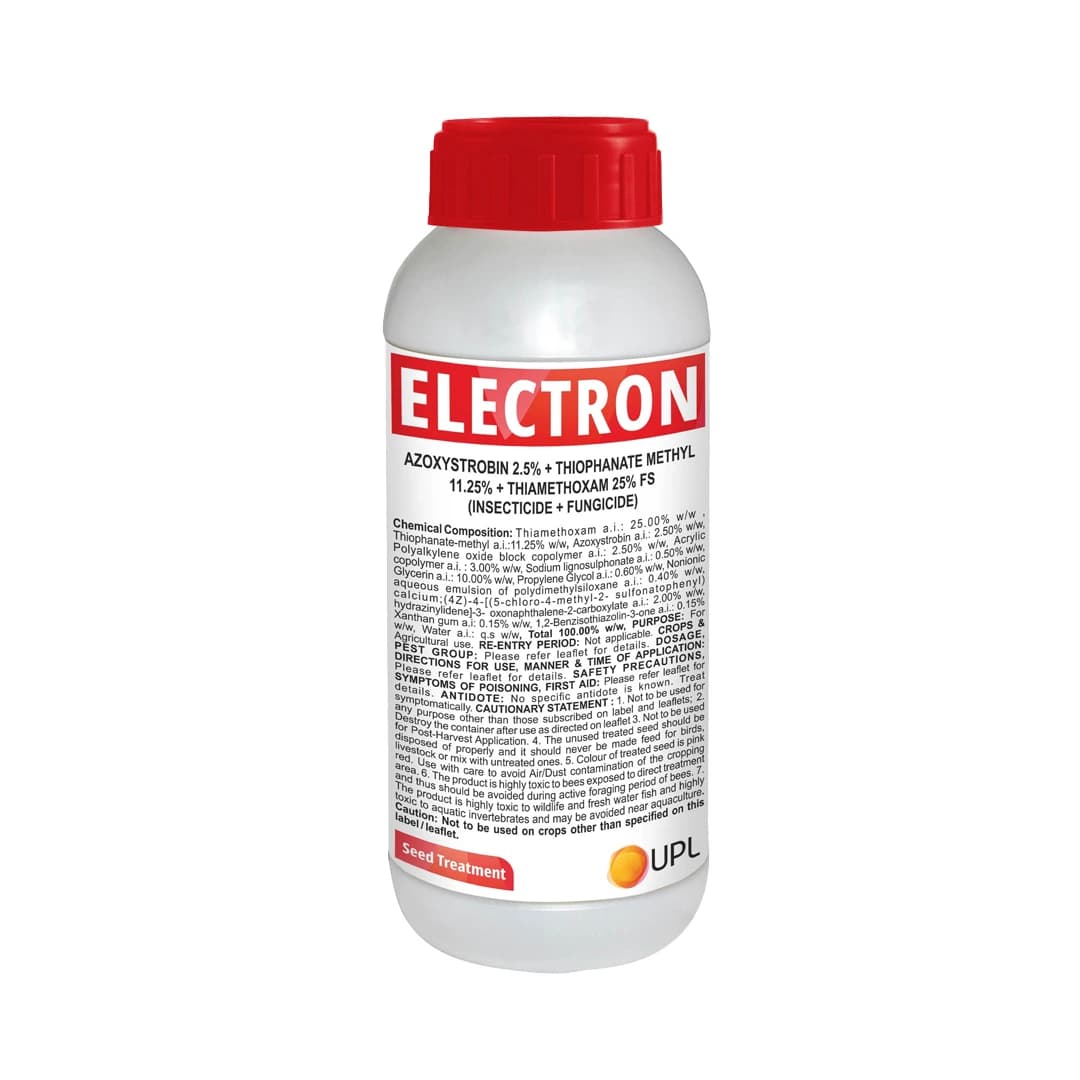
UPL Electron Technical Name | Azoxystrobin 2.5% + Thiophanate Methyl 11.25% + Thiamethoxam 25% FS (Flowable Suspension for Seed Treatment) |
Chemical Class | Strobilurin (Azoxystrobin) + Benzimidazole (Thiophanate Methyl) + Neonicotinoid (Thiamethoxam) |
FRAC / IRAC Groups | FRAC 11 (Azoxystrobin) + FRAC 1 (Thiophanate Methyl) + IRAC 4A (Thiamethoxam) |
Mode of Action | Systemic Seed Treatment — mitochondrial respiration inhibition (Azoxystrobin) + β-tubulin inhibition (Thiophanate Methyl) + nAChR blockade (Thiamethoxam) |
Application Type | Seed Treatment and Soil Drench |
Formulation Type | FS — Flowable Suspension for Seed Treatment |
Dose | 100 ml per 10 kg (Soybean); 1 ml per kg (Wheat-sized); 400 ml per acre (Potato/Sugarcane) |
Pack Sizes Available | 200 ml, 1 litre |
Country of Origin | India |
Shelf Life | 2 years from date of manufacture |