
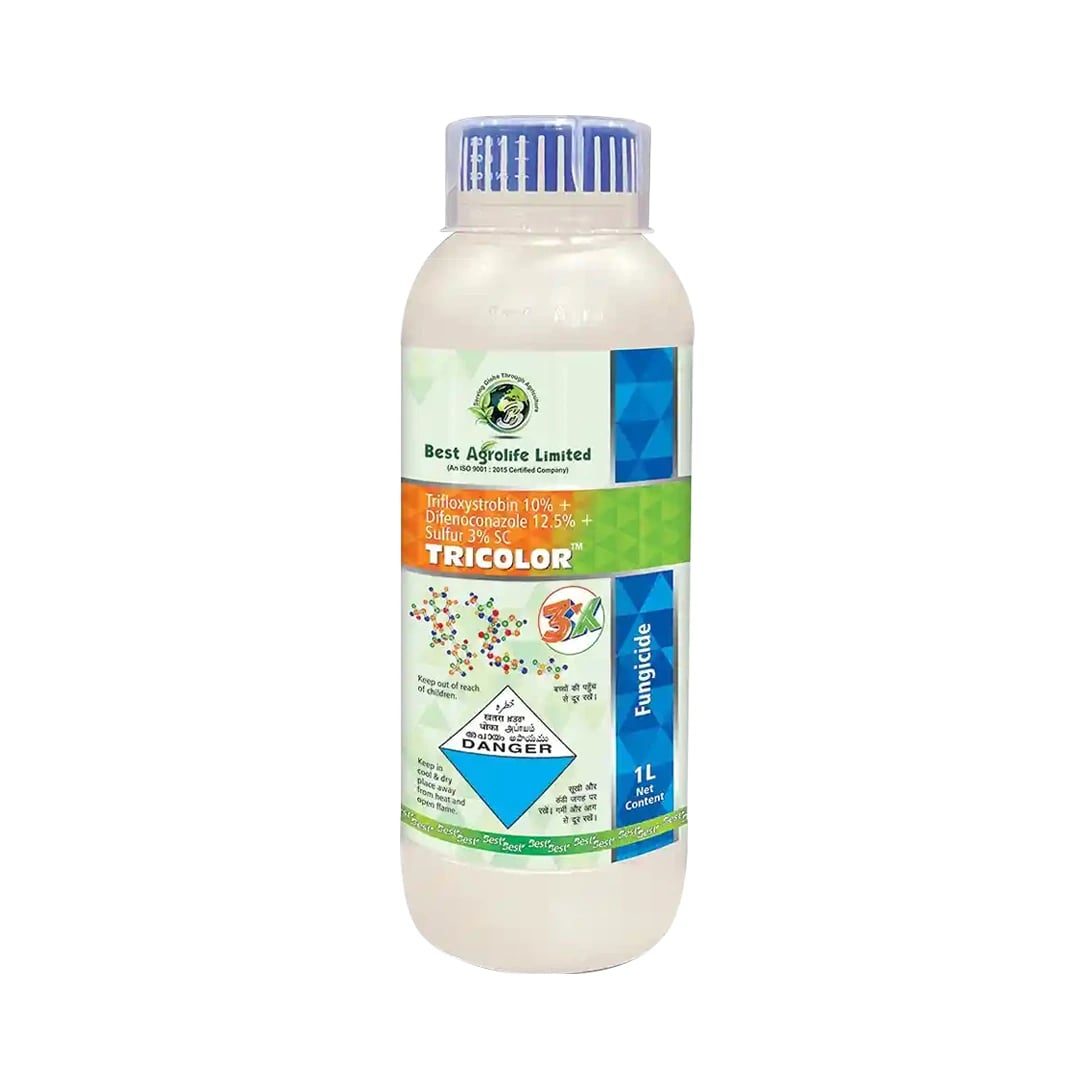
Best Agrolife Tricolor Fungicide
₹1656₹2605
Save ₹94937% Off
🎉 You Save ₹2147 (37% OFF)
Buying In Bulk?
Get Special Pricing for large orders, contact us now!
| Brand: | SUDARSHAN FARM CHEMICALS INDIA PRIVATE LIMITED |
| Product Code: | 12385 |
| Country of Origin: | India |
| Category: | Crop Protection |
| Sub Category: | Fungicides |




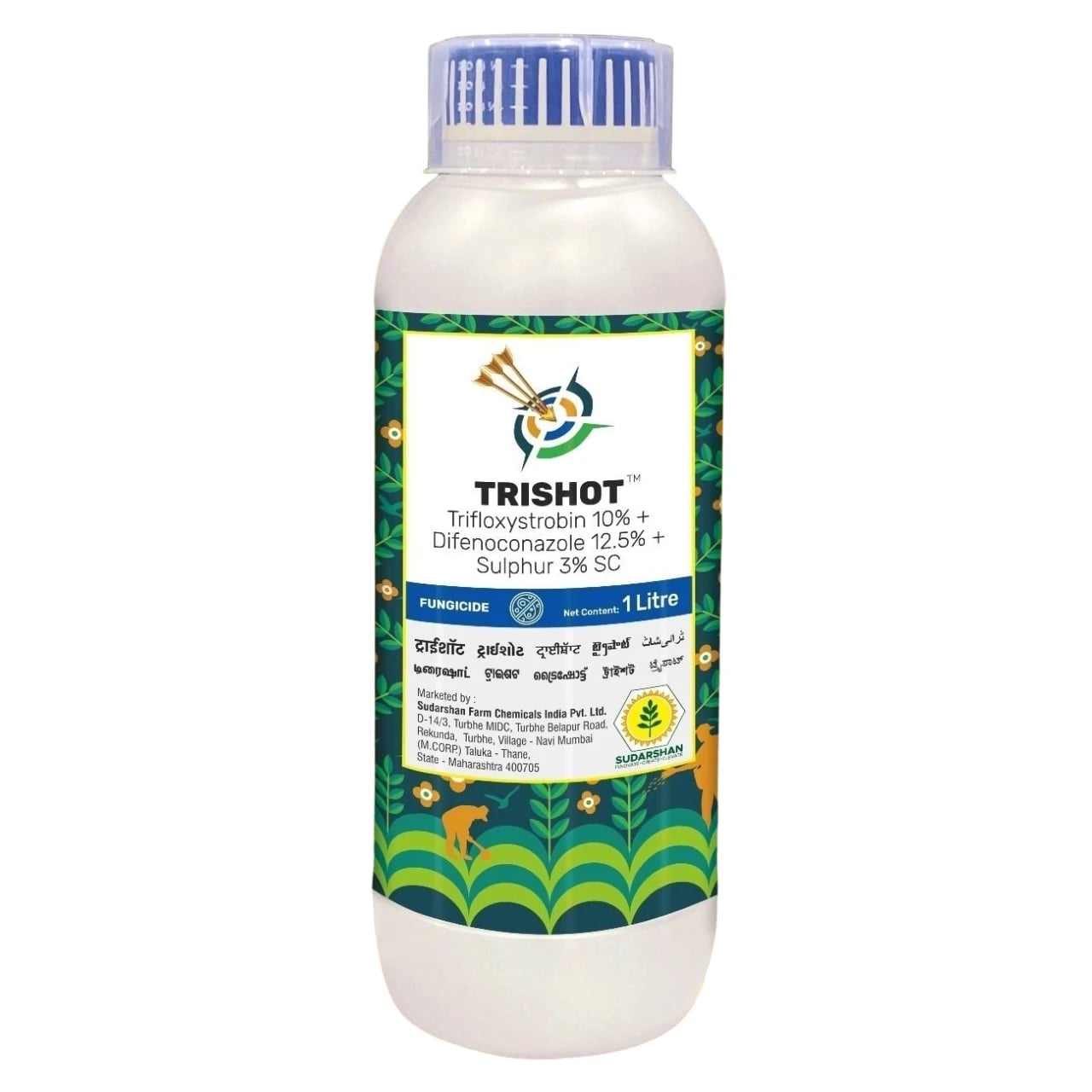
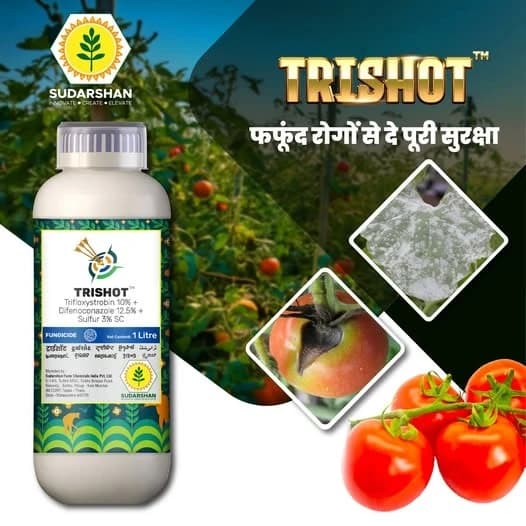
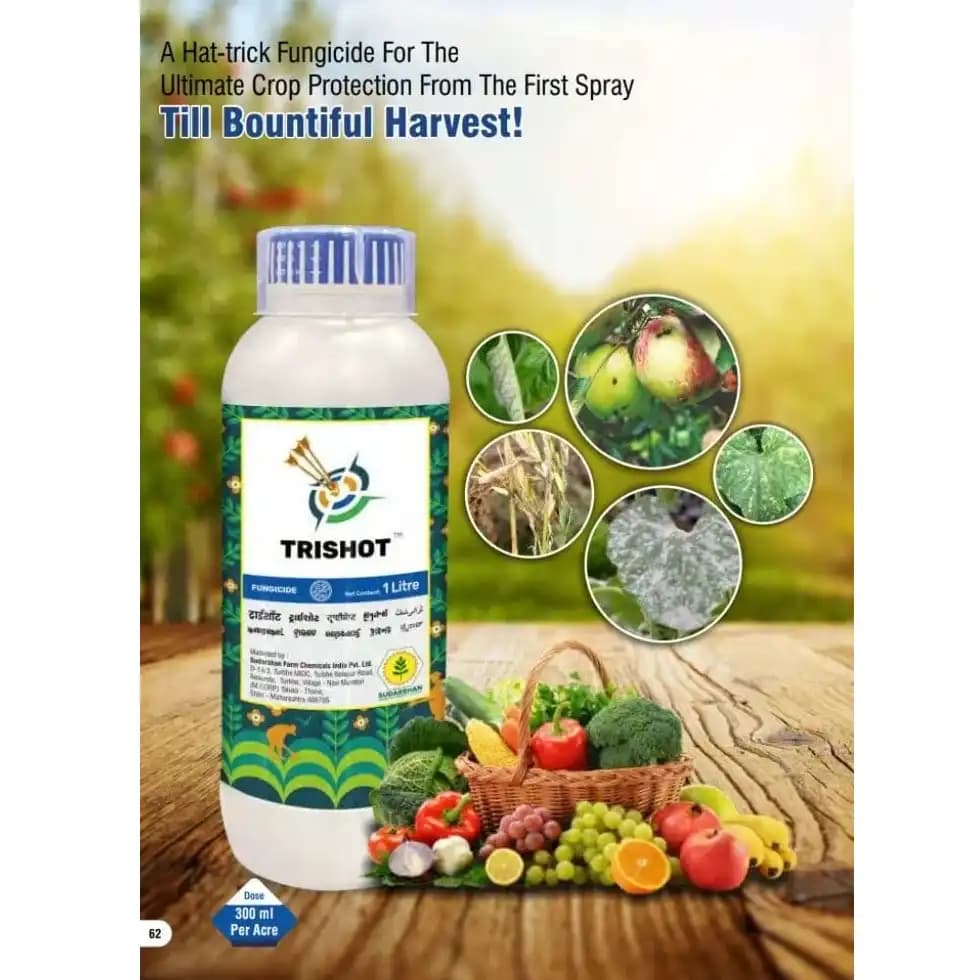
Sudarshan Trishot is a powerful fungicide that protects crops like tomato from a wide range of fungal diseases such as leaf spot, anthracnose, late blight, and others. Sudarshan Trishot fungicide interrupts the fungal cell membrane formation and protects crops from diseases. Sudarshan Trishot Fungicide provides preventive, early curative, and protectant activity when applied at the beginning of infection.
Broad-Spectrum: Trishot fungicide is effective against a wide range of fungal diseases like leaf spot, sheath blight, etc.
Healthier Growth: Sudarshan Trishot enhances crop vigour and improves disease resistance.
Dual Action: The Sudarshan Trishot fungicide offers systemic and contact-based action, ensuring complete protection.
Improved Crops: With Sudarshan Trishot fungicide, notice improved harvests as crops grow fungi-free and with boosted nourishment.
Blight Diseases: Early blight, late blight
Recommended Crop: Tomato
For best results, apply Sudarshan Trishot Fungicide as a foliar spray at the recommended dose when blight risk begins, or the first symptoms appear.
Crop | Target Disease | Dose / Acre | Per Litre | Per 15L Pump | PHI |
|---|---|---|---|---|---|
Tomato | Early blight, late blight | 180 ml | 0.9 ml | 13.5 ml | 14 days |
General Dose: Use about 180 ml in 200 litres of water per acre.
The registered recommendation is 450 ml formulation in 500 litres of water per hectare, equal to approximately 180 ml in 200 litres of water per acre.
Shake the bottle well before measuring.
Fill the spray tank halfway with clean water.
Measure the required quantity according to the field area.
Add Sudarshan Trishot Fungicide to the tank while stirring.
Add the remaining water and mix thoroughly.
Spray both sides of the tomato leaves evenly.
Use the prepared spray solution on the same day.
Apply Sudarshan Trishot Fungicide preventively during disease-favourable weather or immediately after early blight or late blight symptoms appear. Spray during calm morning or evening hours and avoid application before rainfall or during strong wind.
Frequency of Application: Apply Sudarshan Trishot Fungicide at the beginning of disease development. Repeat only when permitted by the current label or local crop recommendation.
Re-Entry Period: Keep workers and animals away until the sprayed foliage has dried.
Compatibility: Do not mix with strongly alkaline, oil-based, or unverified products. Conduct a small jar test before tank mixing.
Wear gloves, a mask, protective eyewear, long clothing, and closed footwear.
Avoid contact with the skin and eyes.
Do not inhale the spray mist.
Do not eat, drink, smoke, or chew while spraying.
Do not exceed the recommended dose.
Keep the spray away from ponds, wells, canals, and drains.
Wash hands, clothing, and spray equipment after application.
Store the product in its original, tightly sealed container.
Keep it in a cool, dry, shaded, and ventilated place.
Protect the container from direct sunlight, moisture, freezing, and excessive heat.
Keep it away from food, animal feed, drinking water, medicines, and seeds.
Store beyond the reach of children and farm animals.
Storage Temperature: Preferably below 35°C.
Shelf Life: Follow the manufacturing and expiry dates printed on the pack.
Specification | Details |
|---|---|
Product Name | Sudarshan Trishot Fungicide |
Manufacturer | Sudarshan Farm Chemicals India Pvt. Ltd. |
Trishot Fungicide Technical Name | Trifloxystrobin 10% + Difenoconazole 12.5% + Sulphur 3% SC |
Formulation Type | Suspension Concentrate (SC) |
Mode of Action | Systemic and contact action |
Category | Triple-action broad-spectrum fungicide |
Target Disease Type | Early blight, late blight |
Recommended For | Tomato |
Pack Sizes Available | 250 ml, 1 litre |
Country of Origin | India |
Shelf Life | Follow the expiry date printed on the pack |
Pre-Harvest Interval (PHI) | 14 days |
Application Method | Foliar spray |
Water Requirement | Approximately 200 litres per acre |