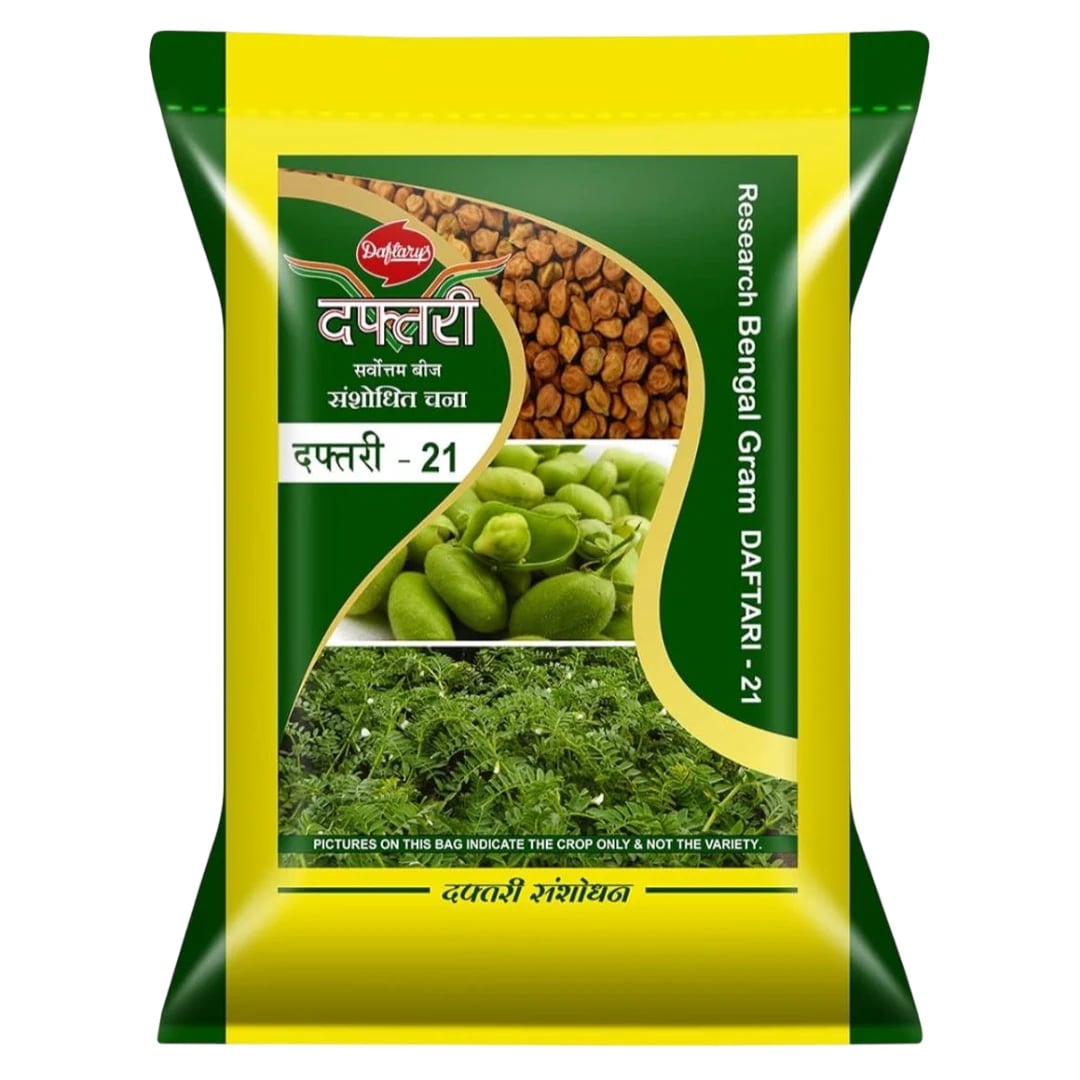
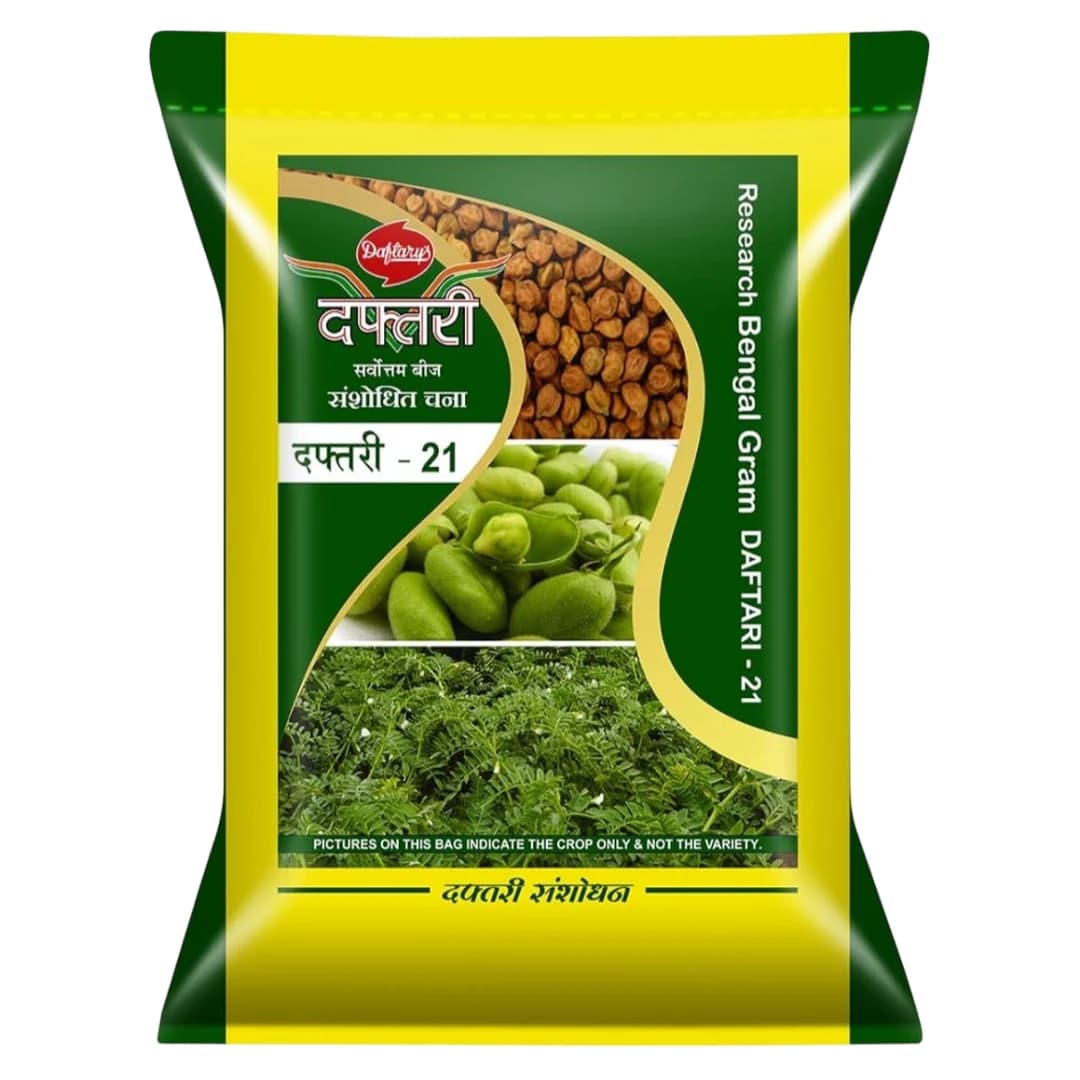
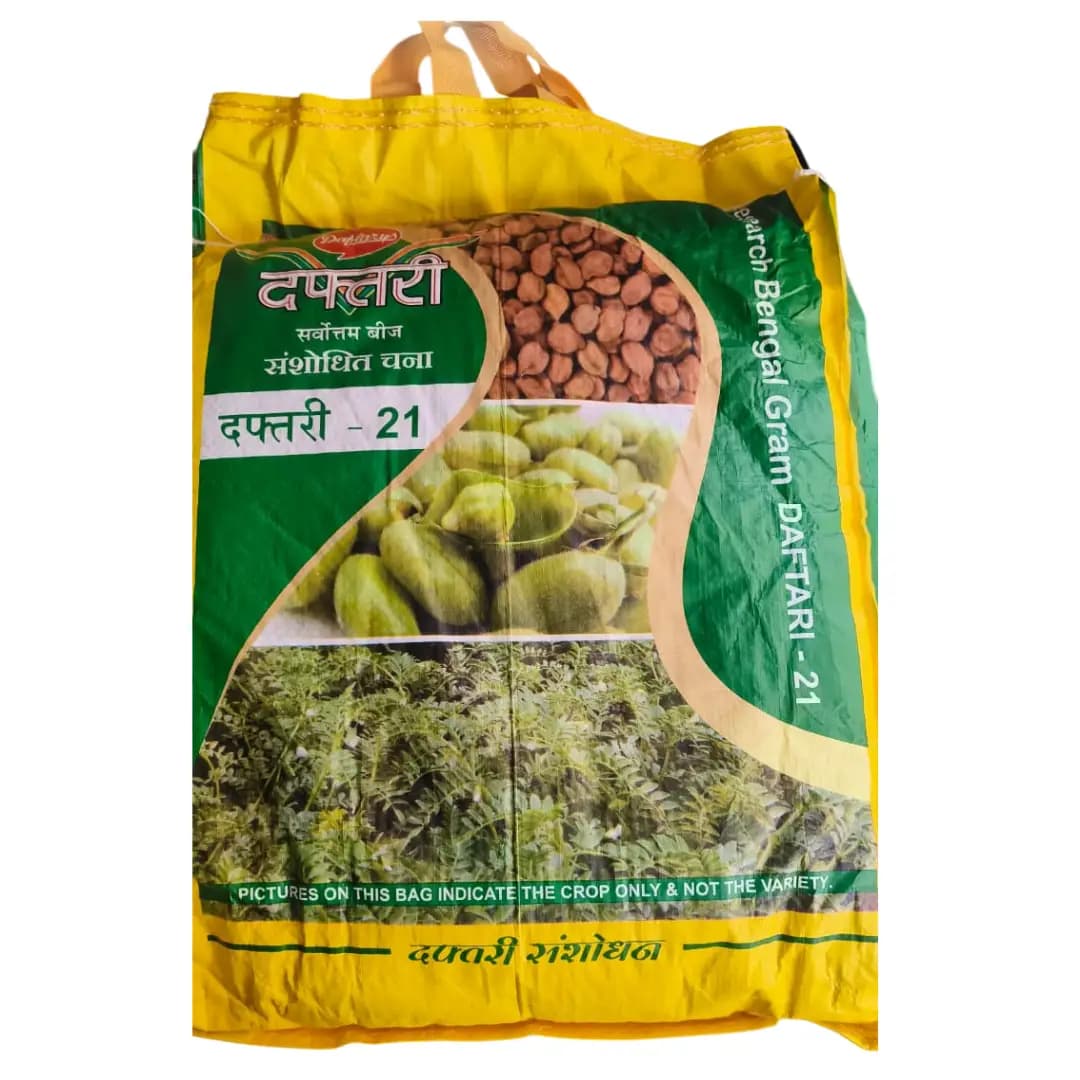
Daftari 21 Chana seeds are resistant to pests and diseases, reducing the need for insecticides and fungicides on the crops. These seeds ensure early maturity in 90 to 100 days, providing multiple harvests within a year. Chana Daftari 21 seeds are sown during October to November, depending on the region and local weather conditions.
Daftari 21 Chana Specifications:
Specifications | Details |
|---|
Name | Daftari 21 Chana seeds |
Brand Name | Daftari Agro Pvt Ltd |
Other Common Names | Chane ke beej |
Type | Improved / Research Variety |
Germination Period | 5 to 8 days |
Maturity Period | 90 to 100 days |
Plant Height | 30 to 40 cm (medium) |
Flower Colour | White or Pale Pink |
Plant Type | Medium growth, disease-resistant |
Yield Potential | 20 to 25 quintals per hectare |
Disease Tolerance | Resistant to common pests and diseases |
Daftari 21 Chana Benefits:
Daftari 21 Chana gives 20 to 25 quintals per hectare yield, ensuring strong returns for farmers.
Chana Daftari 21 shows strong disease resistance, promoting healthier crops.
Daftari 21 Chana seeds mature in 90 to 100 days, allowing early harvest at the farm.
Chana Daftari 21 seeds are suitable for irrigated and unirrigated areas.
Daftari 21 Chana Requirements:
Requirements | Details |
|---|
Season | Rabi (October to December) |
Seed Rate | 35 to 40 kg per acre |
Sowing Depth | 4 to 5 cm |
Spacing | 30 to 40 cm row-to-row, 10 to 15 cm plant-to-plant |
Soil | Well-drained fertile soil |
Soil pH | 6.0 to 7.5 |
Sunlight | 6 to 8 hours |
Temperature | 15°C to 25°C |
Water | 2 light irrigations: 1st before flowering and 2nd at pod filling. |
Fertilizer | Balanced NPK based on soil test |
Daftari 21 Chana Sowing Tips:
Prepare the field with fine, loose soil and remove unwanted weeds.
Treat the seeds with a beneficial fungus that helps protect roots from soil diseases.
Sow the seeds at a depth of about 5 to 7 cm with proper spacing between rows and plants.
Cover the seeds lightly with soil and maintain adequate moisture for proper germination.
Give 2 light irrigations, first before flowering and second at the pod-filling stage.