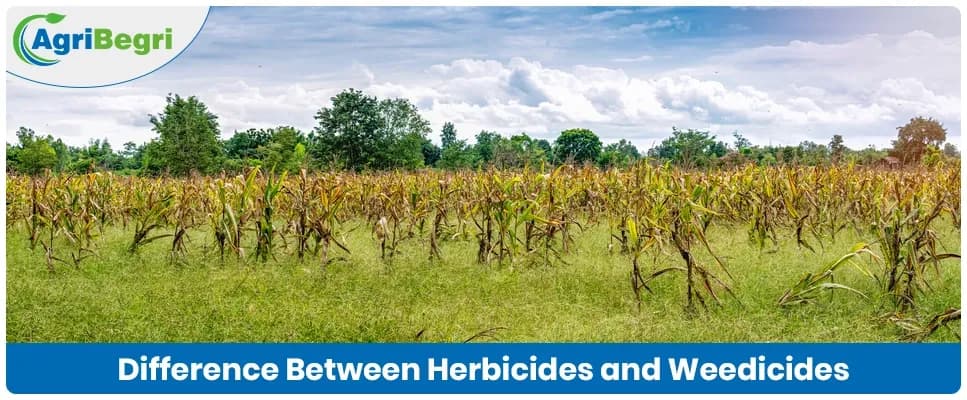
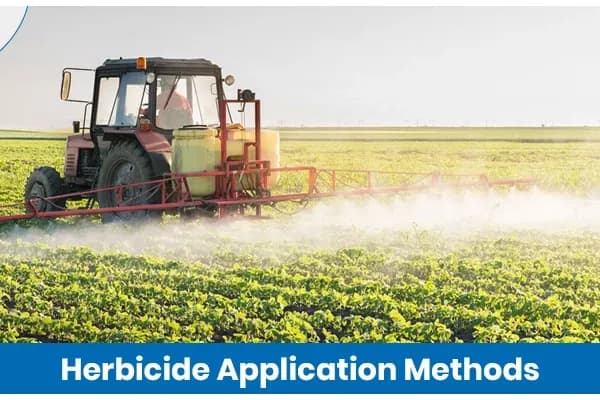
Last rabi season, Ranjit Singh, a wheat farmer from Ludhiana, Punjab, walked into his local agri-input shop looking for a weed control product. The shopkeeper handed him a bottle and told him to spray it on his crop, saying it would solve the problem. Trusting the advice, Ranjit sprayed it across his field. Two weeks later, yellow patches had spread across three acres of standing wheat. The bottle he had used was a non-selective herbicide, not the crop-safe weedicide his field actually needed.
This kind of confusion happens every day in Indian fields. Even experienced agri dealers often use the words "herbicide" and "weedicide" interchangeably. But they are not the same, and using the wrong one can cost you your entire crop.
This guide explains the real difference between herbicides and weedicides, when to use which, examples used in Indian fields crop-by-crop, and how to make the right choice without wasting money or damaging your harvest.
Key Takeaways
- Herbicide is the broader scientific term that controls unwanted plants, including weeds, grasses, shrubs, and trees.
- Weedicide is a sub-category. It is a herbicide used specifically in crop fields to control weeds without harming the main crop.
- Every weedicide is a herbicide, but not every herbicide is a weedicide.
- "Herbicide" is the term used internationally, while "weedicide" is more common in India and South Asia.
- Check the CIB&RC label before you buy anything. Picking the wrong chemical can damage your crop.
What Are Herbicides?
A herbicide is a product that contains one or more chemical substances farmers use to get rid of plants they don't want in their fields. It can kill grasses, broadleaf weeds, shrubs, and even small trees. The word "herbicide" comes from the Latin herba (plant) and caedere (to kill).
How Herbicides Work?
Herbicides work in different ways depending on their chemical group:
- Interference with photosynthesis —it stops energy production in the plants, leading to their death.
- Inhibition of cell growth — it halts root and shoot development, stopping further weed growth.
- Imitation of plant hormones — it disturbs the plant's natural hormonal balance, causing abnormal growth and killing weeds.
What Are Weedicides?
A weedicide is a type of herbicide specifically formulated to control unwanted grassy and broadleaf weeds growing in agricultural fields, without damaging the main crop.
The term "weedicide" is widely used in India, Pakistan, Bangladesh, and other South Asian countries. In international scientific literature — research papers, global agrochemical databases, and FAO guidelines — you will almost always see the word "herbicide" used instead.
The most important principle to remember:
Every weedicide is a herbicide — but not every herbicide is a weedicide.
Difference Between Herbicides and Weedicides
|
Parameter
|
Herbicide
|
Weedicide
|
|
Definition
|
A chemical used to kill any unwanted plants
|
A chemical used to kill only weeds in crop fields
|
|
Scope
|
Broader — covers shrubs, trees, grasses, weeds
|
Narrower — targets only weeds
|
|
Target
|
Any plant the farmer wants to remove
|
Specific grassy or broadleaf weeds
|
|
Use Area
|
Crop fields, roadsides, plantations, railways, lawns, bunds
|
Mainly active crop fields
|
|
Timing
|
Pre-sowing, pre-emergent, or post-emergent
|
Usually post-emergent during the crop growth stage
|
|
Examples
|
Glyphosate 41% SL, Atrazine 50% WP
|
2,4-D Amine Salt 58% SL, Pendimethalin 30% EC
|
|
Crop Safety
|
May or may not be safe for crops
|
Formulated to be safe on the target crop when used correctly
|
|
Relationship
|
Parent / broader category
|
Sub-category of herbicides
|
Types of Herbicides
Herbicides come in several types, and understanding them helps you choose the right product for your field.
1. Selective Herbicides
Selective herbicides kill specific weed types without harming the main crop. This is the most commonly used herbicide in Indian agriculture.
2. Non-Selective Herbicides
Non-selective herbicides kill every green plant they come in contact with. Used for clearing field bunds, paths, fallow land, roadsides, and between plantation rows.
3. Pre-Emergent Herbicides
Pre-emergent herbicides are usually applied to the soil before weeds germinate. They form a chemical barrier in the top soil layer that prevents weed seedlings from emerging. It is applied within 2–3 days of sowing and requires adequate soil moisture.
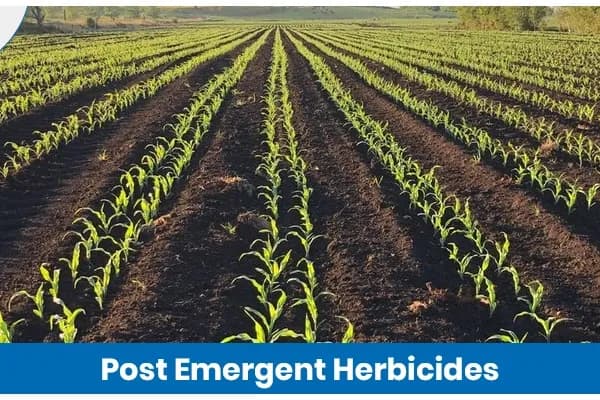
4. Post-Emergent Herbicides
Post-emergent herbicides are applied after weeds have emerged from the soil. It must be applied at the correct weed growth stage, which is usually when weeds are in the 2–4 leaf stage for best results.
Types of Weedicides
Based on how they work inside the crop field, weedicides fall into two main types
1. Contact Weedicides
Contact weedicides kill the part of the weed that comes in contact with the formulation. They are fast-acting and eliminate weeds within 24 to 48 hours of application, which makes them useful for quick clean-ups in the field. They are best for annual weeds with no deep root systems, though the roots can survive and lead to regrowth.
2. Systemic Weedicides
Systemic weedicides are absorbed by the leaves or roots and translocated through the plant's vascular tissue. They kill the entire weed from inside, including the root system. This makes them best for perennial weeds like motha (purple nutsedge) that keep coming back in the same field.
Examples of Herbicides Used in India
|
Crop
|
Product Name
|
Technical Content
|
Application Type
|
Controls
|
|
Paddy
|
Bispa Herbicide
|
Bispyribac-sodium 10% SC
|
Post-emergent
|
Grassy weeds, sedges, broadleaf weeds
|
|
Wheat
|
Atom Herbicide
|
Clodinafop-propargyl 15% WP
|
Post-emergent
|
Phalaris minor (gulli danda), wild oats
|
|
Maize
|
EBS Asar Herbicide
|
Atrazine 50% WP
|
Pre/Post-emergent
|
Annual grasses, broadleaf weeds
|
|
Sugarcane
|
Weedmar Super
|
2,4-D Amine Salt 58% SL
|
Post-emergent
|
Broadleaf weeds
|
|
Cotton
|
Strom+ Herbicide
|
Pendimethalin 30% EC
|
Pre-emergent
|
Annual grasses, broadleaf weeds
|
|
Soybean
|
Btrail & Surfactant Herbicide
|
Imazethapyr 10% SL
|
Post-emergent
|
Grasses, broadleaf weeds, sedges
|
Examples of Weedicides Used in India
|
Crop / Area
|
Product Name
|
Technical Content
|
Application Type
|
Controls
|
|
Transplanted Paddy
|
Buta Sun Herbicide
|
Butachlor 50% EC
|
Pre-emergent
|
General weeds (annual grasses, broadleaf)
|
|
Tea, Plantations, Bunds
|
Burst 24 Herbicide
|
Paraquat Dichloride 24% SL
|
Contact
|
All vegetation — non-crop use
|
|
Wheat
|
Shriram ISO 75
|
Isoproturon 75% WP
|
Selective
|
Broadleaf and grassy weeds
|
|
Soybean, Potato, Sugarcane, Tomato
|
Magnum Herbicide
|
Metribuzin 70% WP
|
Selective
|
Broadleaf weeds
|
|
Paddy (Direct Seeded Rice)
|
Pretilachlor Herbicide
|
Pretilachlor 50% EC
|
Pre-emergent
|
Annual weeds
|
How to Choose the Right Herbicide or Weedicide
The right herbicide or weedicide depends on the type of crop, the weeds in your field, and their growth stage. Follow this step-by-step approach to make the correct choice.
Step 1: Identify your crop and its growth stage
Paddy at transplanting needs Butachlor or Bispyribac-sodium. Wheat at 25–30 DAS needs Clodinafop for grassy weeds. The growth stage determines what is safe and effective.
Step 2: Identify your dominant weed type
Walk your field and look closely. Are you dealing with:
- Broadleaf weeds — bathua (Chenopodium), chaulai (Amaranthus), hirankhuri?
- Grassy weeds — jangli jai (wild oats), gulli danda (Phalaris minor), dub grass?
- Sedges — motha (purple nutsedge, Cyperus rotundus)?
Different chemicals control different weed types. A grassy weed herbicide will not control sedges.
Step 3: Decide on timing — pre- or post-emergent
Pre-emergent is cheaper per acre and prevents weed establishment, but you must act within 2–3 days of sowing with sufficient soil moisture. Post-emergent gives you flexibility but works best when weeds are small (2–4 leaf stage). Waiting too long reduces effectiveness significantly.
Step 4: Verify CIB&RC registration
Only purchase products that show a valid CIB&RC registration number on the label. Check that your specific crop is listed as an approved use crop. If it is not on the label, do not use it. You can also ask your local Krishi Vigyan Kendra (KVK) or state agriculture department for recommended products.
Safe Application Tips for Indian Farmers
Choosing the right chemical is only half the task. Applying it correctly is just as important for effective results.
- Always read the label and follow the recommended dosage exactly. Overdosing damages your crop. Under-dosing builds chemical resistance in weeds — making them harder to kill next season.
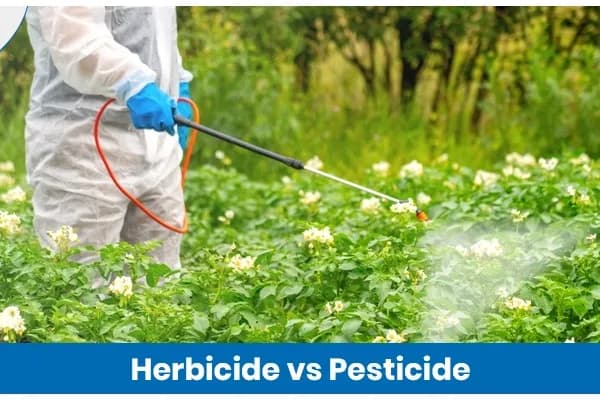
- Wear PPE every time — rubber gloves, a face mask, a long-sleeved shirt, full pants, and closed shoes. Herbicide absorption through skin is a real health risk over repeated exposure.
- Spray in the early morning or evening when the temperature is cooler, and the wind speed is below 8 km/h. Spraying in hot afternoon sun increases evaporation and drift to neighbouring crops.
- Never spray on a flowering or stress-affected crop. Herbicide sprayed during flowering can cause flower drop and yield loss.
- Calibrate your knapsack sprayer before every season. A poorly calibrated sprayer wastes chemicals and under-treats or over-treats the field.
- Never mix two herbicides without expert advice. Some combinations are incompatible and can damage the crop or reduce effectiveness. Check with your KVK or a trained agronomist before tank-mixing.
- Wash your sprayer thoroughly after each use. Herbicide residue left in the tank can kill the next crop you spray. Triple-rinse if switching from herbicide to fungicide or insecticide use.
Conclusion
The difference between herbicides and weedicides is not just a language question — it is a practical farming decision that affects your yield, your input cost, and your crop's health.
To put it simply: herbicide is the big family; weedicide is one branch of that family. All weedicides are herbicides, but not all herbicides are safe to use inside a crop field. Using a non-selective herbicide like Glyphosate inside a standing wheat field will kill your wheat along with the weeds.
The right approach:
- Know your crop and its growth stage
- Know your weed type (broadleaf, grassy, or sedge)
- Apply at the right time, at the right dose, with the right protective gear
When in doubt, call your nearest KVK — free expert advice is available and can save you from costly mistakes.