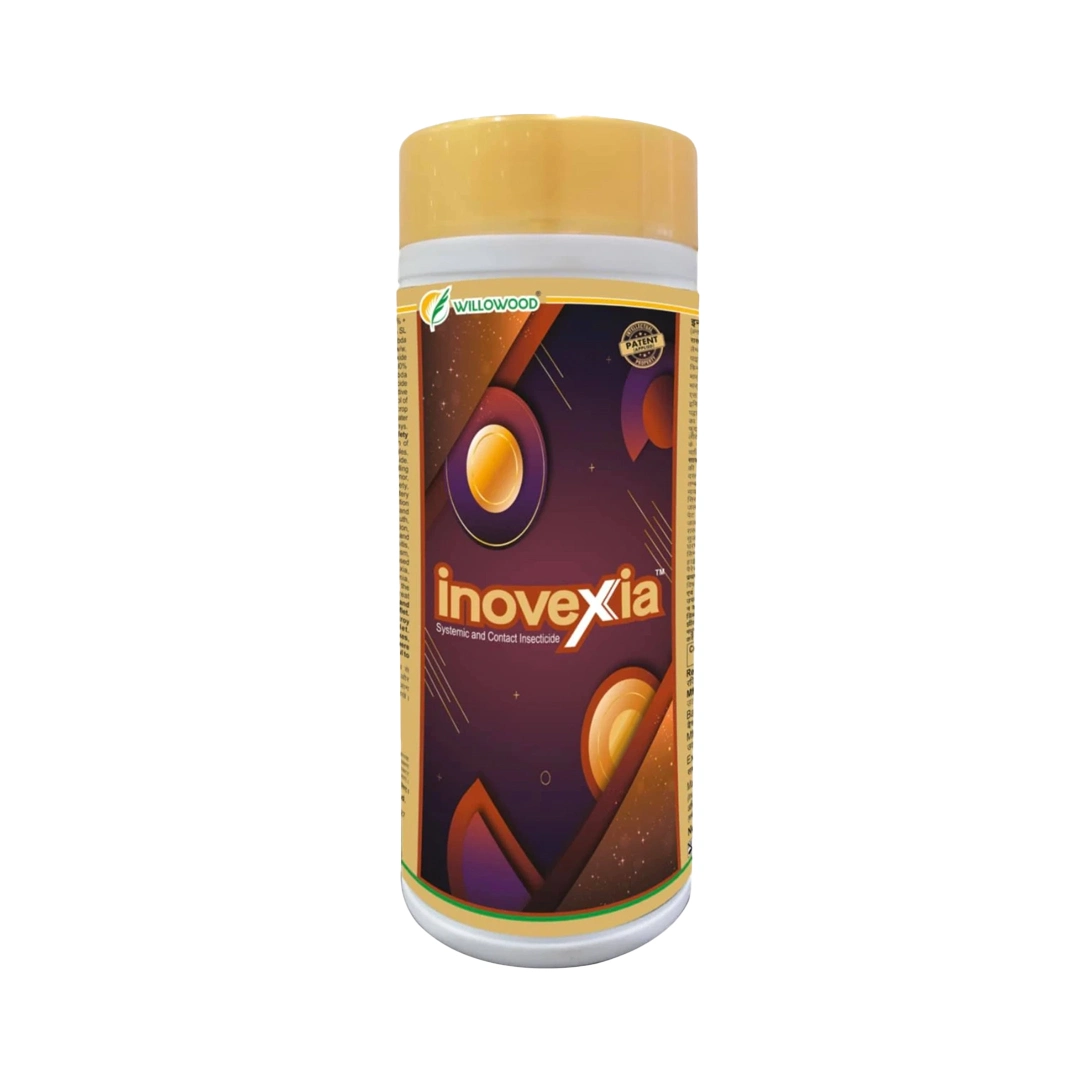
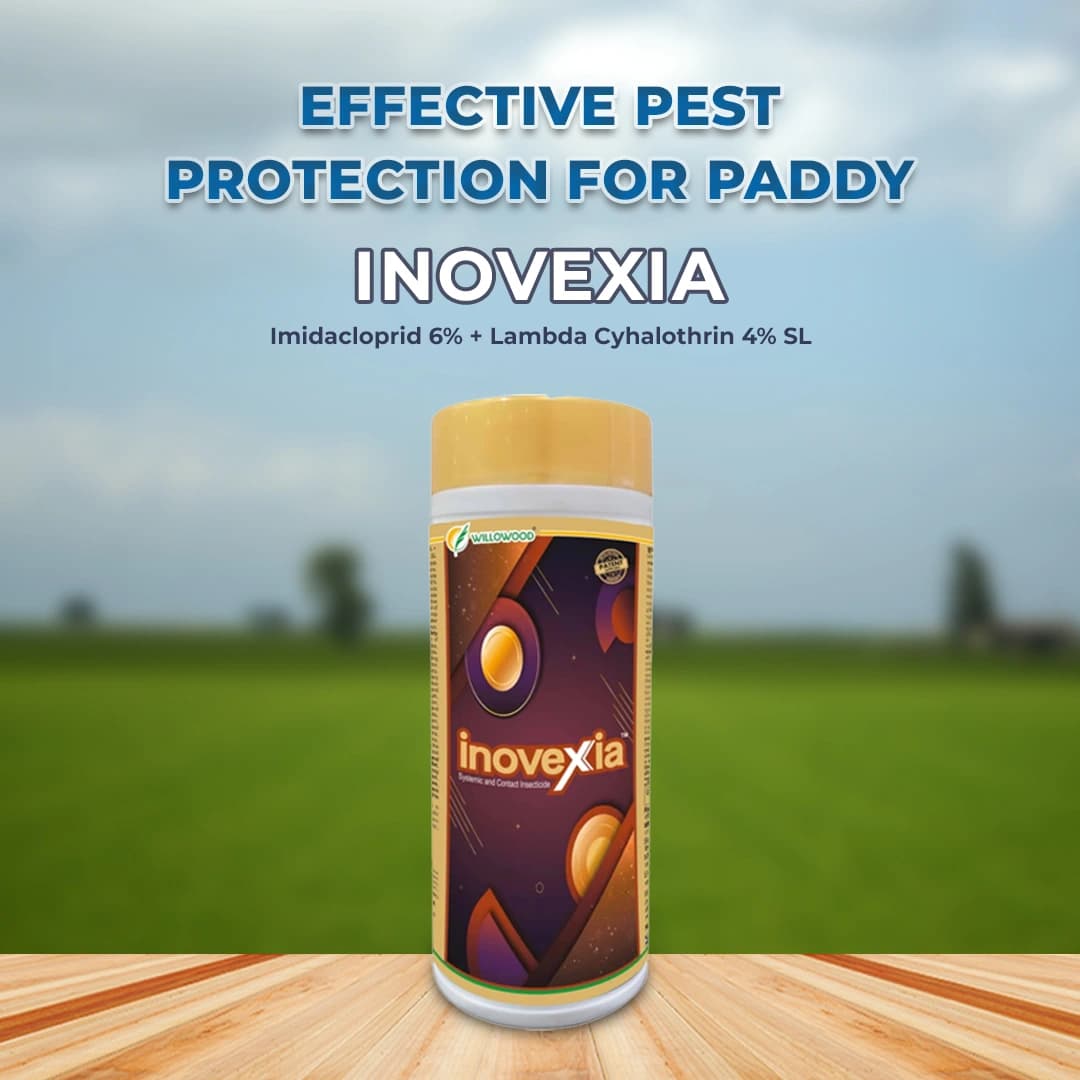
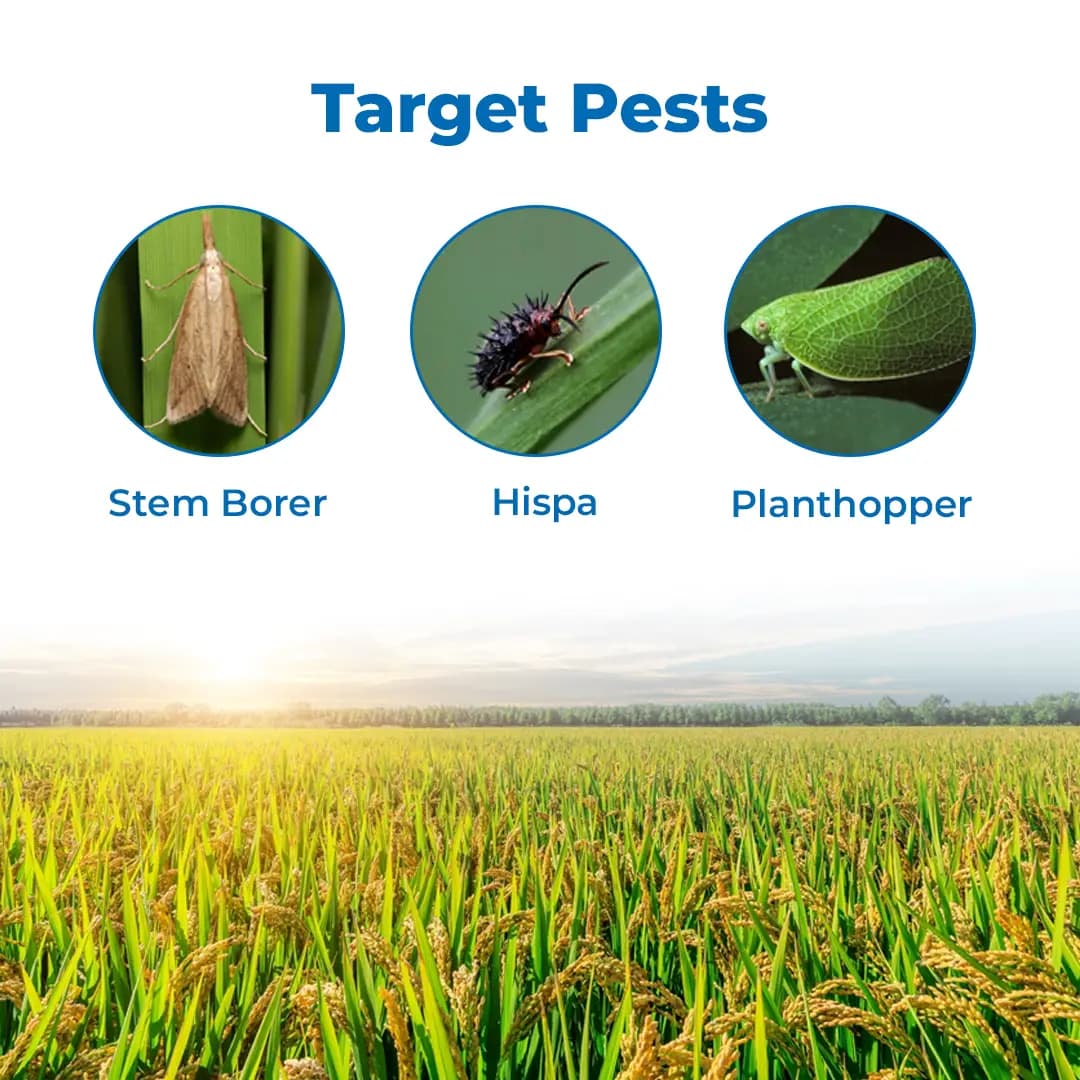
Willowood Inovexia insecticide is a ready-mix paddy insecticide that brings together two very different molecules. Imidacloprid, a systemic neonicotinoid, is taken up by the plant and travels throughout the crop, and Lambda-cyhalothrin, a contact pyrethroid, sits on the surface and kills pests in minutes upon contact. It is effective against stem borer, hispa, planthopper, and gundhi bug. Willowood Inovexia insecticide is registered for paddy, providing targeted protection that supports healthy yields.
Key Features and Benefits of Willowood Inovexia Insecticide:
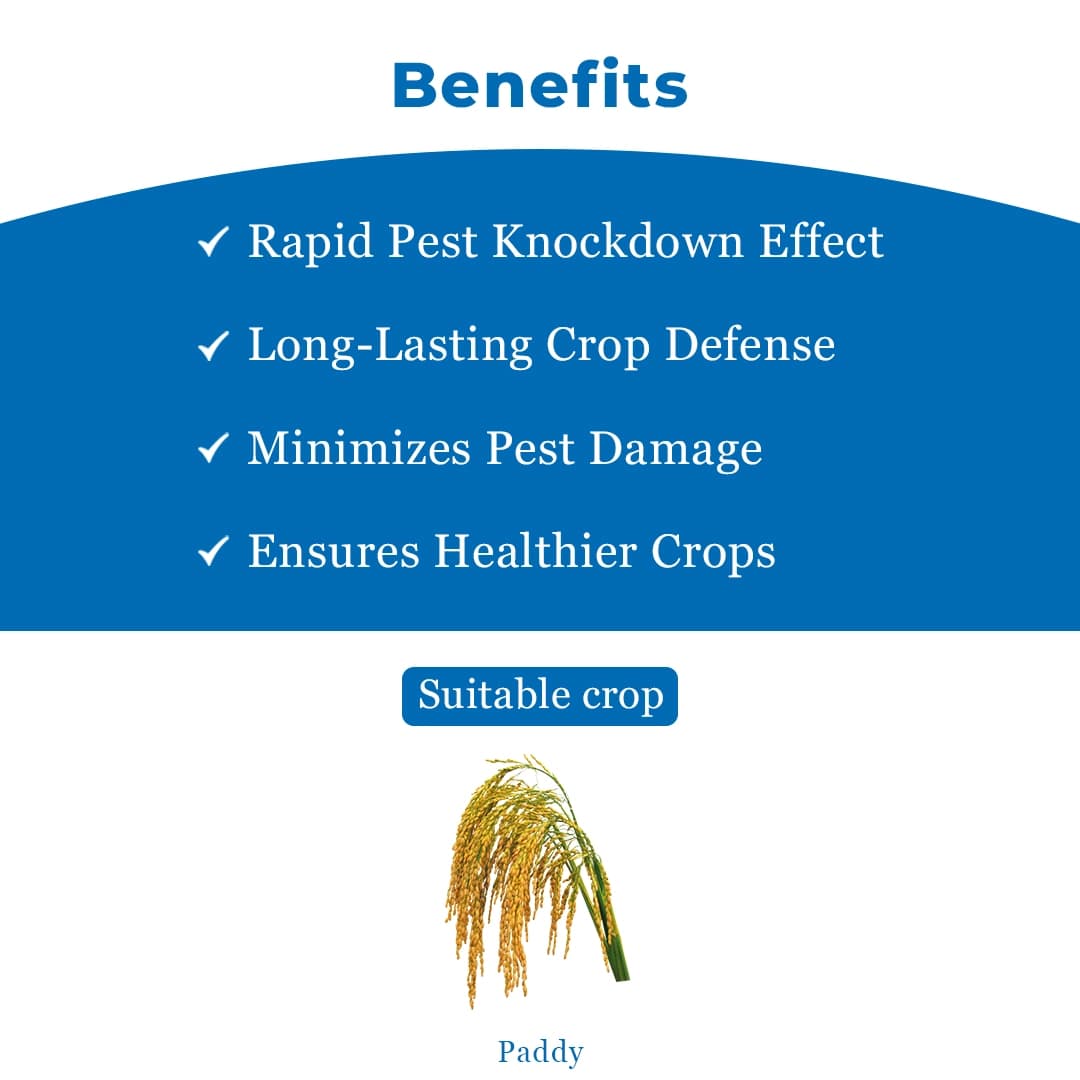
Dual Action: Willowood Inovexia insecticide offers systemic and contact modes of action, ensuring strong crop protection.
Fast Knockdown: After a Willowood Inovexia insecticide spray, pests on the leaf drop quickly, so visible damage stops the same day.
Long Lasting: The systemic mode of action allows Willowood Inovexia insecticide to keep protecting new growth for days after the spray dries.
Covers Borers And Suckers: Stem borer, hispa, planthopper, and gundhi bug are all handled by Inovexia insecticide in a single round.
Rotation Value: Two IRAC groups act together, making Willowood Inovexia insecticide an effective product for rotating applications.
Inovexia Insecticide Uses:
Willowood Inovexia insecticide is registered against these paddy pests:
Stem Borer: The cause of dead hearts in young crop and white ears at panicle stage.
Hispa: Rice blue beetle, which scrapes long white streaks along the leaf.
Planthoppers: Brown and white-backed planthoppers that crowd the base of the clump and cause hopper burn.
Gundhi Bug: The rice earhead bug that sucks milk from developing grain and leaves chaffy, discoloured rice.
Other Sucking Pests: Leafhoppers and similar sap feeders that appear alongside the main pests.
Recommended Dose:
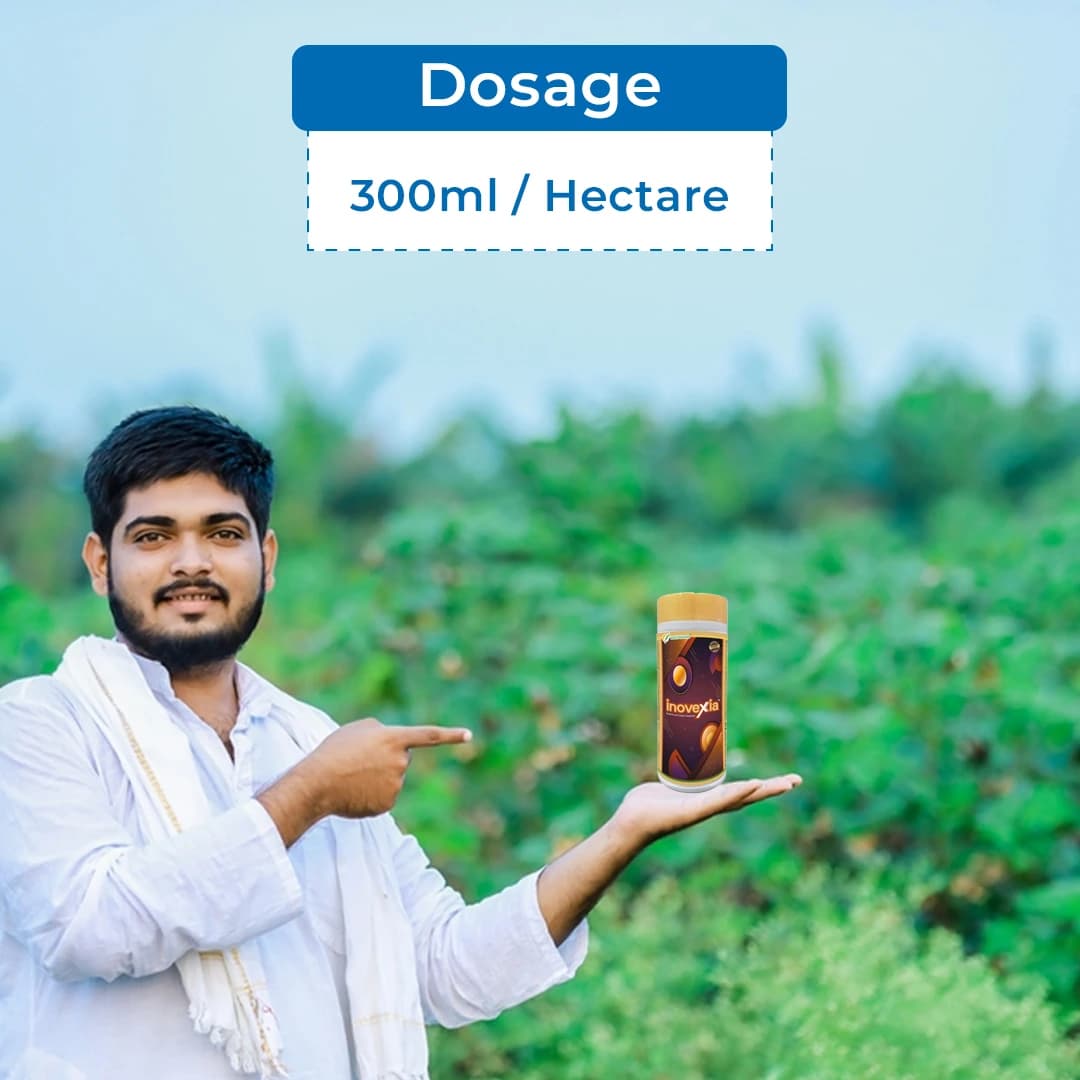
The Inovexia insecticide dosage per litre of water is roughly 0.6 ml, since the label rate is 300 ml in 500 litres of water per hectare. In field terms, Inovexia insecticide works out to about 9 ml in a 15-litre pump and around 120 ml per acre in 200 litres of spray water.
Crop | Target Pest | Dose per Acre | Dose per Litre | Spray Volume | Waiting Period |
|---|
Paddy | Stem borer | 120 ml | 0.6 ml | 200 litres | 10 days |
Paddy | Hispa | 120 ml | 0.6 ml | 200 litres | 10 days |
Paddy | Planthopper | 120 ml | 0.6 ml | 200 litres | 10 days |
Paddy | Gundhi bug | 120 ml | 0.6 ml | 200 litres | 10 days |
How to Use Willowood Inovexia Insecticide:
Measure the quantity needed for the tank size using the dose table.
Stir the measured Inovexia insecticide into a mug of clean water to make a pre-mix.
Add the pre-mix to a part-filled spray tank and top up with the balance water.
Keep the tank agitated so the strength stays even through the round.
Spray in a steady walking pattern and cover the crop uniformly.
For planthoppers, drop the nozzle low and direct it at the base of the clumps.
For gundhi bug, spray at earhead stage in the morning while the bugs are still active.
Rinse the sprayer thoroughly with clean water once the round is finished.
Best Time to Apply:
Spray Willowood Inovexia insecticide at the first sign of pest incidence or when counts reach the economic threshold. For stem borer, the egg-hatching stage is the target, since freshly hatched larvae are far easier to reach than ones already inside the tiller. Early morning or late evening is the right window, as wind is low and the crop is not hot.
Frequency of Application and Re-Entry Period:
Frequency: One or two Willowood Inovexia insecticide rounds a season are usually enough, spaced 12 to 15 days apart if pressure continues.
Waiting Period: Keep a gap of 10 days between the last Willowood Inovexia spray and harvest.
Re-Entry: After a Willowood Inovexia spray, keep workers and livestock out of the field for 24 hours, and re-enter with full protective gear.
Rotation: Follow Willowood Inovexia insecticide with an unrelated IRAC group so hoppers do not adapt to this chemistry.
Safety Precautions and Handling:
Go through the Willowood Inovexia insecticide label and leaflet properly before the bottle is opened.
Wear gloves, goggles, a mask, and full-sleeved clothing while mixing and spraying.
Do not spray against the wind, and stop work if the breeze picks up.
Nothing goes in the mouth during the spray job — no food, no water, no tobacco.
Toxic to honeybees, so avoid spraying when bees are active in nearby flowering crops.
Toxic to fish, so keep Inovexia insecticide out of ponds, canals and fish-bearing paddy plots.
Wash hands, face and exposed skin with soap, and change into clean clothes afterwards.
Headache, giddiness, nausea or blurred vision after exposure needs immediate medical help — carry the label along.
Triple-rinse empty containers, puncture them, and discard as per local waste rules.
Storage Instructions:
Keep the Willowood Inovexia bottle sealed and upright in a cool, dry, shaded place.
Store away from sunlight, heat, food grain, seed, feed and drinking water.
Keep it locked away from children, pets and cattle at all times.
Never shift Willowood Inovexia insecticide into a food or drink container.
Product Specifications:
Specifications | Details |
|---|
Product Name | Willowood Inovexia insecticide |
Brand Name | Willowood Crop Science Pvt. Ltd. |
Inovexia insecticide Technical Name | Imidacloprid 6% + Lambda Cyhalothrin 4% SL |
Formulation Type | Soluble Liquid (SL) |
Chemical Group | Neonicotinoid combined with synthetic pyrethroid |
Mode of Action | Systemic action with contact and stomach action; nerve receptor and sodium channel disruption |
IRAC Group | Group 4A and Group 3A |
Recommended For | Paddy |
Pack Sizes Available | 250 ml, 500 ml, 1 litre |
Country of Origin | India |
Shelf Life | As printed on the pack |
Pre-Harvest Interval | 10 days |
Application Method | Foliar spray |
Recommended Dose | 300 ml per hectare, about 120 ml per acre |
Target Pests | Stem borer, hispa, planthopper, and gundhi bug |
Product Category | Combination systemic and contact insecticide |