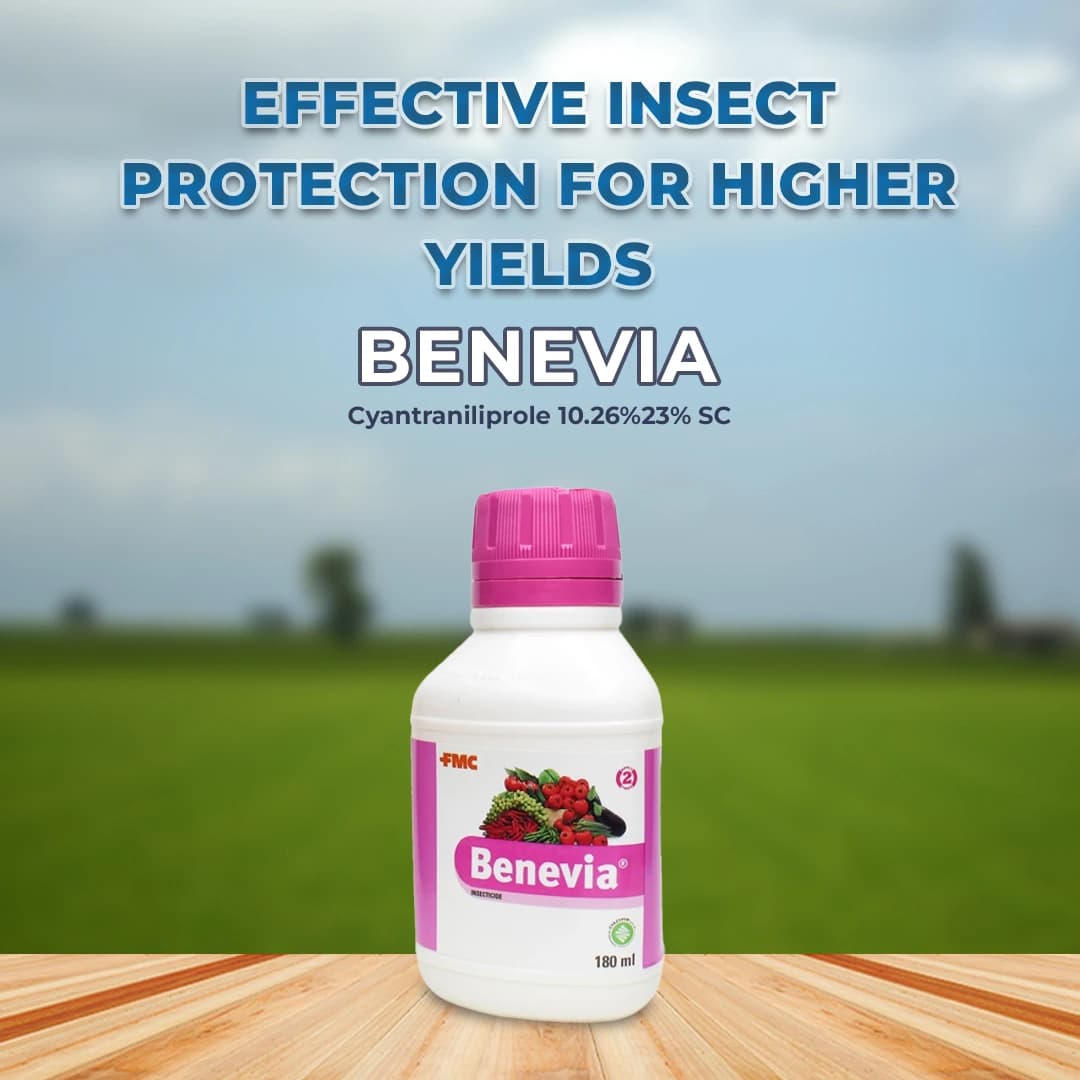
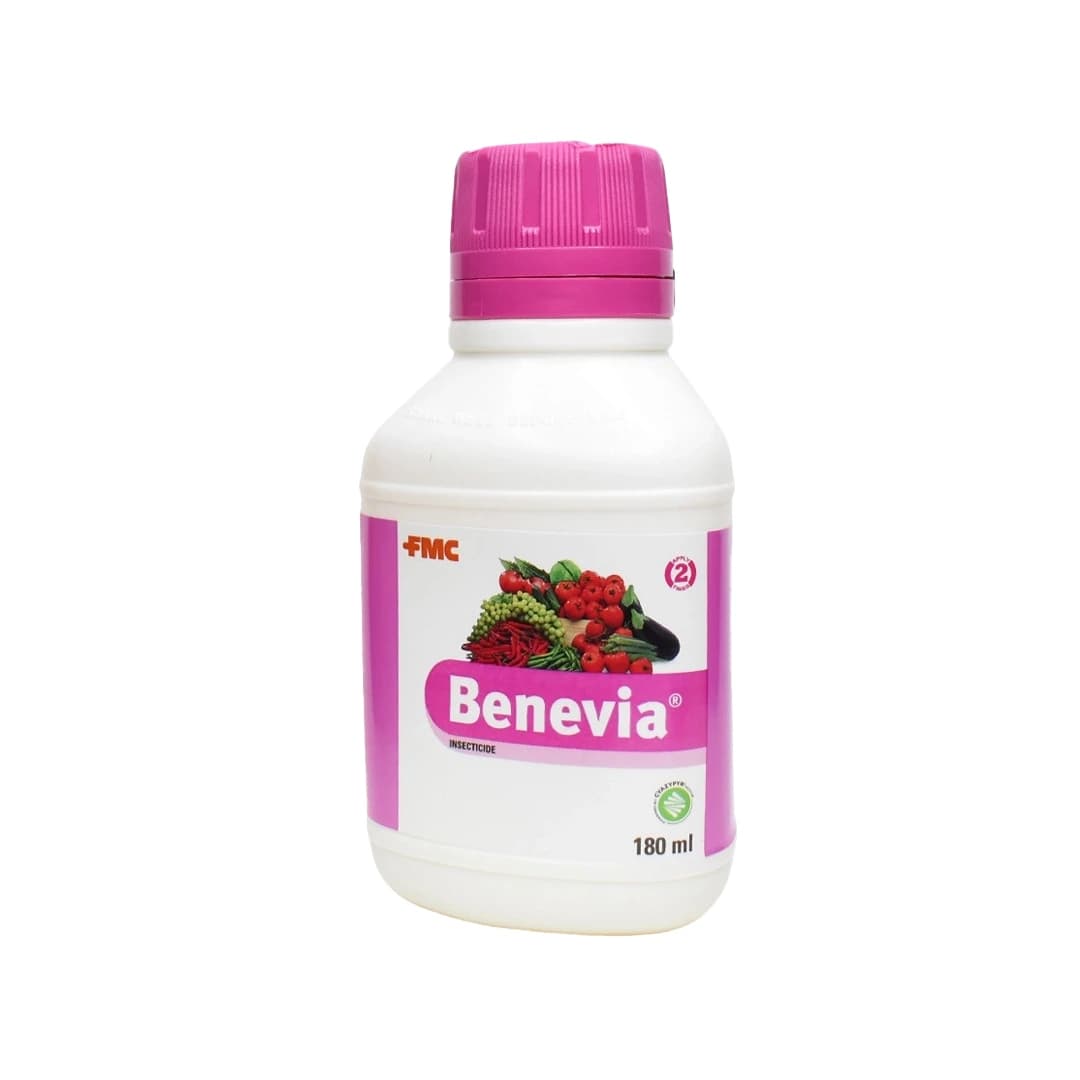
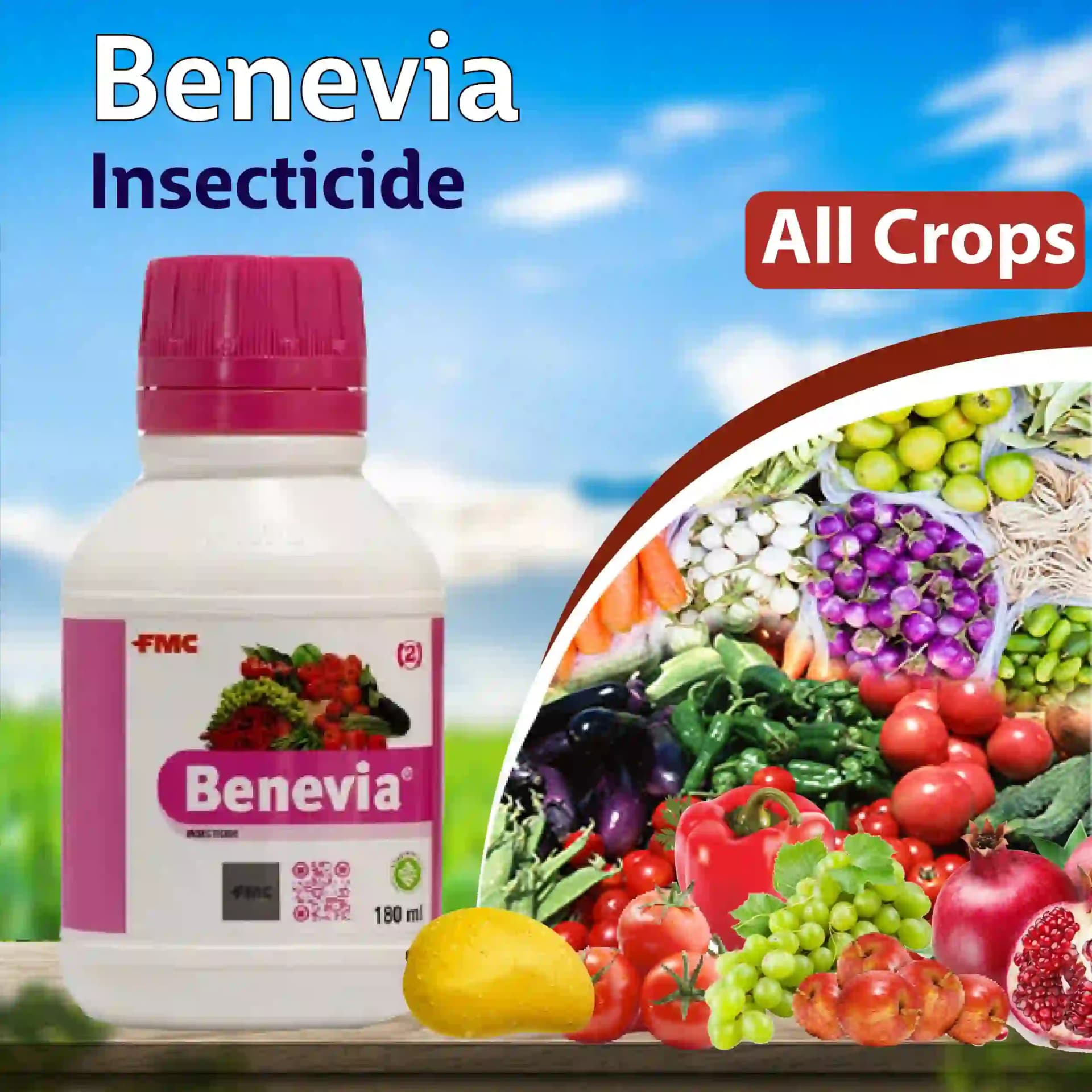
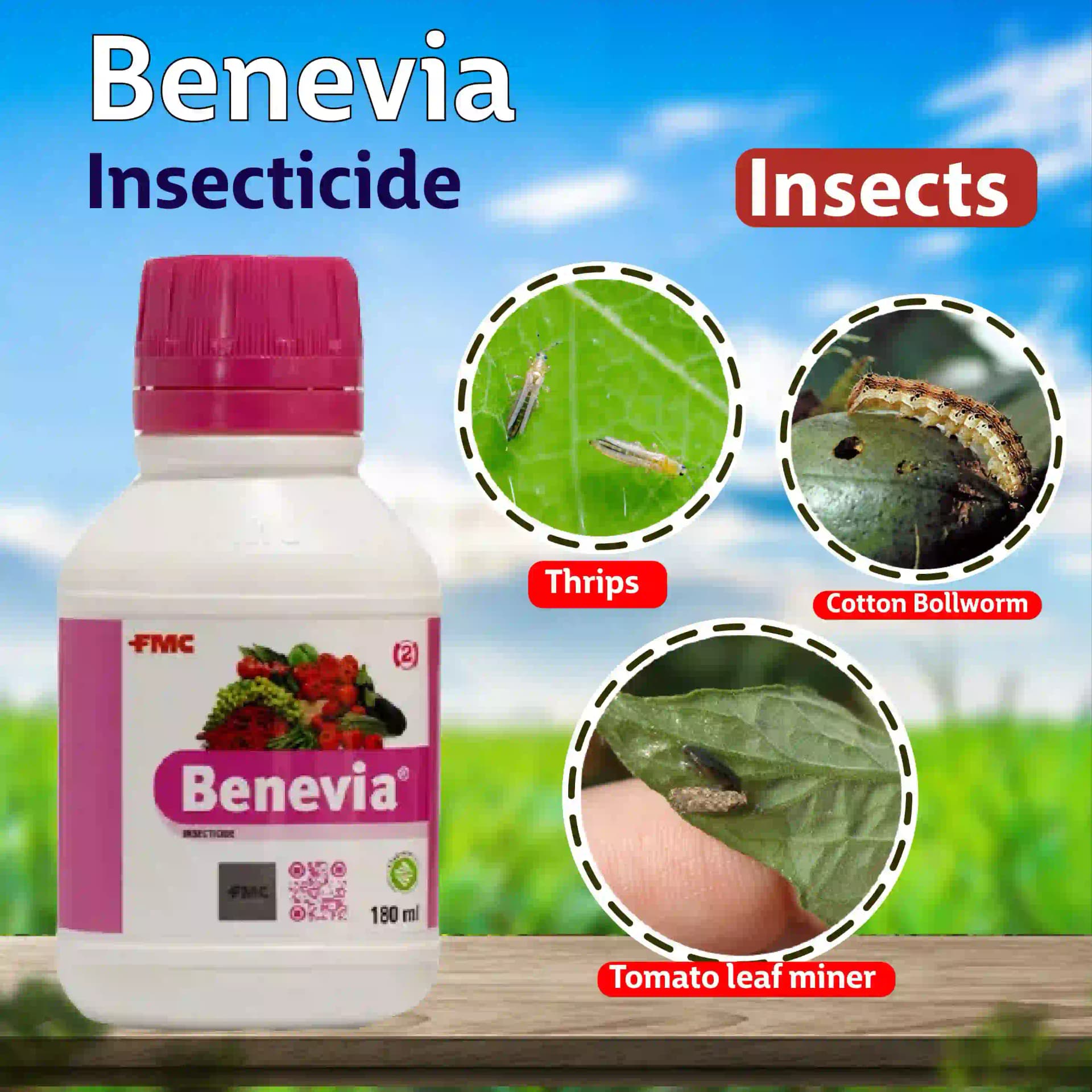
FMC Benevia insecticide is a broad-spectrum insecticide that contains Cyantraniliprole 10.26% OD, which offers a contact and systemic mode of action and controls pests like Thrips, Whiteflies, Fruit Borer, Leaf Miner, and other pests. It works by rapidly impairing pest muscle function and causing immediate feeding cessation, causing paralysis. The FMC Benevia insecticide is effective against a wide range of pests, and its unique mode of action also provides good resistance management. The Benevia insecticide also has a very low chemical impact that makes it suitable for Integrated Pest Management (IPM) processes.
Key Features and Benefits of Benevia Insecticide:
Cross-Spectrum Control: The FMC Benevia insecticide helps control sucking and chewing pests in a single application.
Quick Action: This Cyantraniliprole 10.26% OD formula offers quick action that immediately stops the pest from feeding, providing better results.
Unique Formula: Unlike other insecticides, the FMC Benevia targets the muscle system instead of the nerve system for better results.
Complete Coverage: This Cyantraniliprole 10.26% OD formula ensures great crop coverage with systemic action and translaminar movement.
IPM Compatible: The FMC Benevia insecticide can be used for various IPM practices, providing economical and environmental benefits.
Benevia Insecticide Uses — What Does It Control?
Cyantraniliprole 10.26% OD helps control both sucking and chewing pests across all registered crops:
Sucking Pests: Whiteflies (Bemisia tabaci), Aphids, Thrips (Scirtothrips dorsalis, Thrips parvispinus — Black Thrips), Leafhoppers
Chewing and Boring Pests: Fruit and Shoot Borer, Fruit Borer (Helicoverpa armigera), Diamondback Moth (DBM), Leaf Miner, Caterpillars, Pomegranate Butterfly
Other Pests: Flea Beetle, Red Pumpkin Beetle, Pumpkin Caterpillar, Fruit Fly
Registered Crops: Cotton, Tomato, Chilli, Brinjal, Okra, Cabbage, Grapes, Pomegranate
FMC Benevia Dose — Recommended Dose:
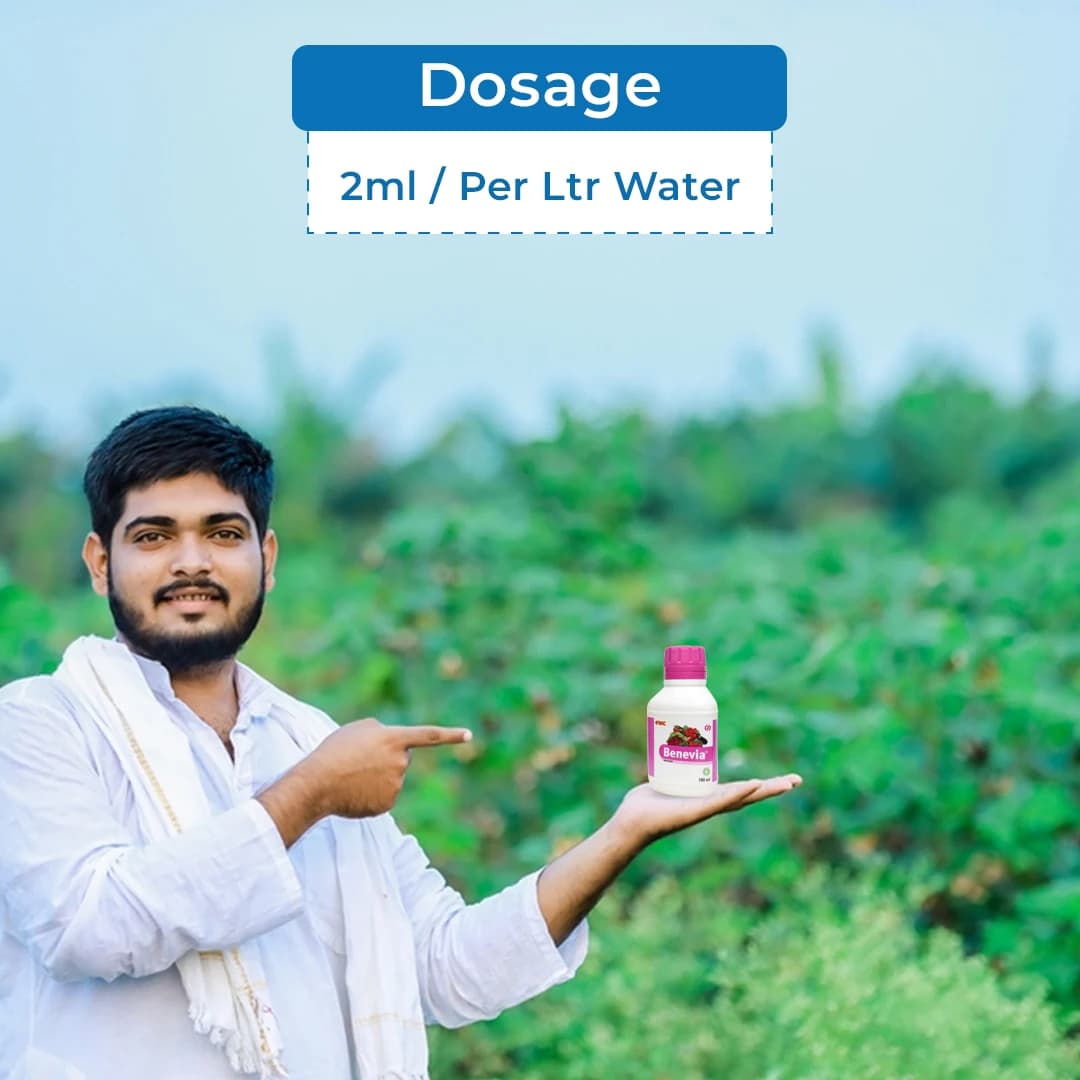
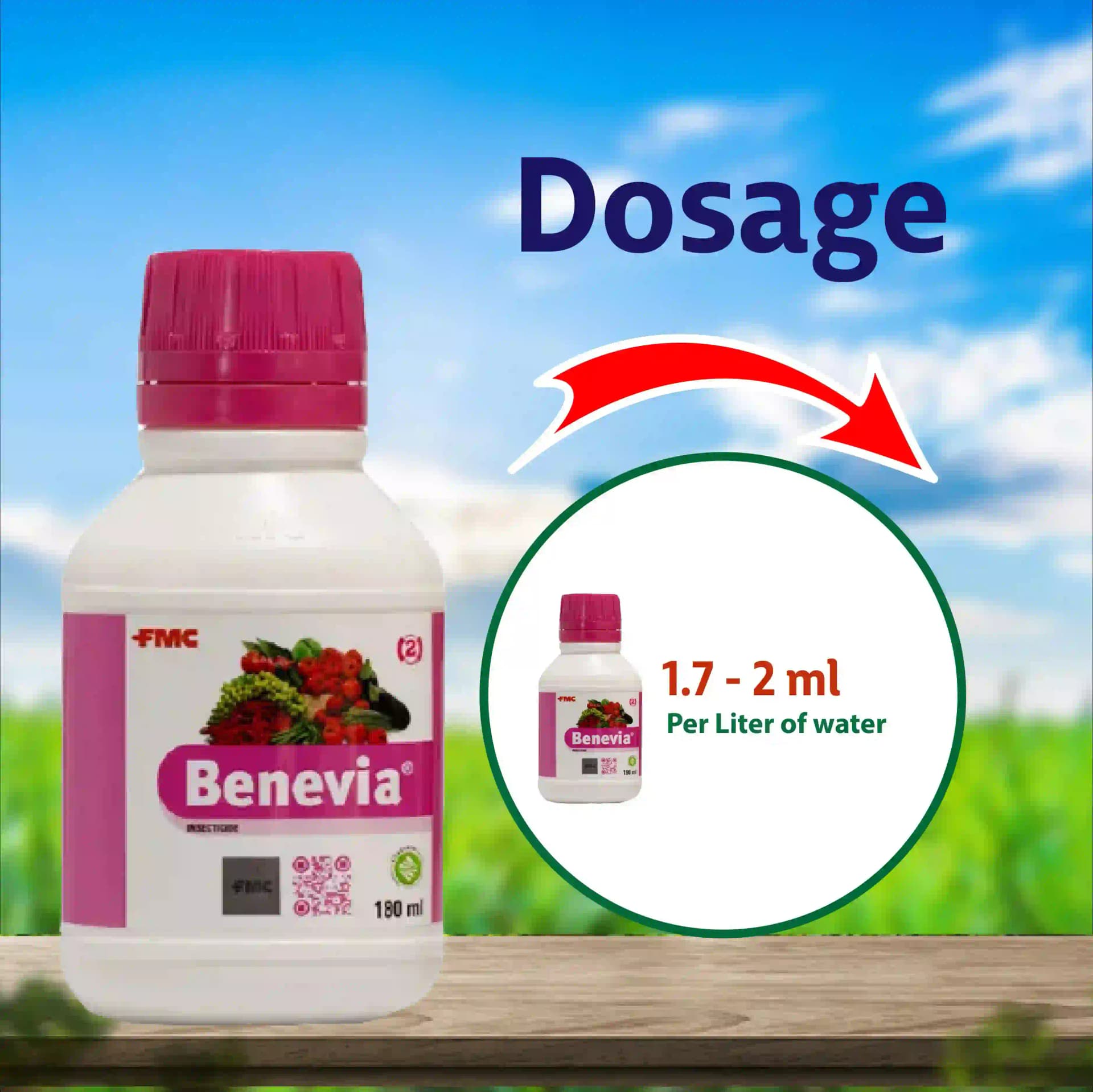
The Benevia insecticide Dosage per litre of water is 0.7–1.8 ml per litre of water — equivalent to 240–360 ml per acre in 200 litres of water.
Crop | Target Pest | Dose Per Acre | Per 15L Pump | PHI |
|---|
Cotton | Whiteflies, Aphids, Thrips, Bollworm | 240–360 ml | 18–27 ml | 21 days |
Tomato | Thrips, Whiteflies, Fruit Borer, Leaf Miner | 240–360 ml | 18–27 ml | 3 days |
Chilli | Thrips (incl. Black Thrips), Fruit Borer, Aphids | 360 ml | 27 ml | 3 days |
Brinjal | Shoot and Fruit Borer, Thrips | 240–360 ml | 18–27 ml | 3 days |
Okra | Shoot and Fruit Borer, Whiteflies | 240–360 ml | 18–27 ml | 3 days |
Cabbage | Diamondback Moth, Aphids | 240–360 ml | 18–27 ml | 3 days |
Grapes | Thrips, Flea Beetle, Leaf Miner | 240–360 ml | 18–27 ml | 7 days |
Pomegranate | Pomegranate Butterfly, Thrips, Aphids | 240–360 ml | 18–27 ml | 7 days |
How to Use FMC Benevia Insecticide:
Measure the required dose of Benevia insecticide as per the crop-wise dose table above.
Add the measured quantity of Cyantraniliprole 10.26% OD to a sprayer tank half-filled with clean water and mix well before topping up.
The OD formulation of Cyantraniliprole 10.26% OD already contains oil spreaders — do not add additional sticker or extra spreader to avoid formulation interference.
Fill with the remaining clean water and agitate well to form a uniform solution.
Use a high-volume knapsack sprayer — spray uniformly on both upper and lower leaf surfaces, shoots, and fruit zones for complete coverage.
Apply at the first sign of pest infestation — early application at the first pest appearance gives the best crop establishment and yield protection.
Two successive sprays are recommended — the first immediately at pest incidence and the second 14 days later if pest pressure continues.
Spray during early morning or late evening — avoid peak bee foraging hours and do not apply on windy or rainy days.
Best Time to Apply:
Apply FMC Benevia insecticide in the early morning or late evening. For Black Thrips in Chilli, apply at the very first sign of leaf curling or silvering. For Whitefly in Cotton and Tomato, apply when adults first appear in the crop canopy for the best early-season crop establishment protection.
Frequency of Application and Re-Entry Period:
Frequency of Application: Apply at the first sign of pest infestation. Two successive sprays are recommended — the first at initial pest incidence and the second 14 days later. Do not exceed 2–3 applications per season — rotate with insecticides from different IRAC groups after 2 consecutive Benevia insecticide applications.
Re-Entry Period: Do not enter treated fields for at least 12 hours after spraying without proper protective gear.
Tank-Mix Compatibility: Cyantraniliprole 10.26% OD is compatible with most fungicides. Avoid mixing with strongly alkaline products like Bordeaux mixture. The OD formulation already contains oil spreaders — do not add extra stickers. Always perform a jar test before mixing.
Safety Precautions and Handling:
Wear gloves, goggles, and a face mask before handling or spraying Benevia insecticide.
Do not eat, drink, or smoke during mixing or application.
Avoid direct contact with skin and eyes — rinse immediately with clean water for 15 minutes if contact occurs.
FMC Benevia insecticide may affect pollinators if sprayed during active foraging — always spray in the early morning or late evening.
Keep children, pets, and livestock away from treated fields for at least 12 hours.
Wash all exposed skin thoroughly with soap and water after every spray session.
Seek medical help immediately in case of any accidental exposure or suspected poisoning.
Triple rinse empty containers, puncture, and dispose of per local waste guidelines.
Storage Instructions:
Store Cyantraniliprole 10.26% OD in its original sealed container in a cool, dry place away from direct sunlight.
Keep away from food, animal feed, and seeds.
Store out of reach of children and farm animals.
Storage Temperature: Below 35°C.
Shelf Life: 2 years from the date of manufacture.
Product Specifications:
Specification | Details |
|---|
Product Name | FMC Benevia insecticide |
Brand | FMC India Pvt Ltd |
Benevia insecticide Technical Name | Cyantraniliprole 10.26% w/w OD (Oil Dispersion) — Powered by Cyazypyr® Active |
Chemical Class | Anthranilic Diamide |
IRAC Group | 28 — Ryanodine Receptor Modulator |
Mode of Action | Contact + Systemic + Translaminar — Cyazypyr® binds ryanodine receptors in insect muscle cells → uncontrolled Ca²âº release → muscle paralysis → feeding cessation → death within 1–3 days |
Cross-Spectrum Activity | Controls both sucking AND chewing pests — unique among diamides |
Rain-Fast Period | 2–4 hours after application |
Toxicity Label | Green Label — Low Mammalian Toxicity |
Formulation Type | OD — Oil Dispersion |
Application Method | Foliar Spray — High-Volume Knapsack Sprayer |
Dose | 0.7–1.8 ml per litre (240–360 ml per acre, crop specific) |
Pack Sizes Available | 90 ml, 180 ml, 240 ml, 360 ml |
Country of Origin | India |
Shelf Life | 2 years from date of manufacture |
Pre-Harvest Interval (PHI) | 3–21 days (crop specific) |