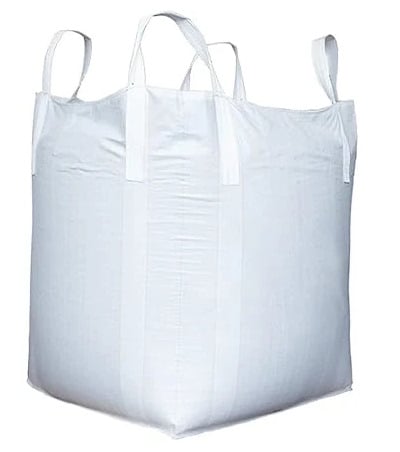
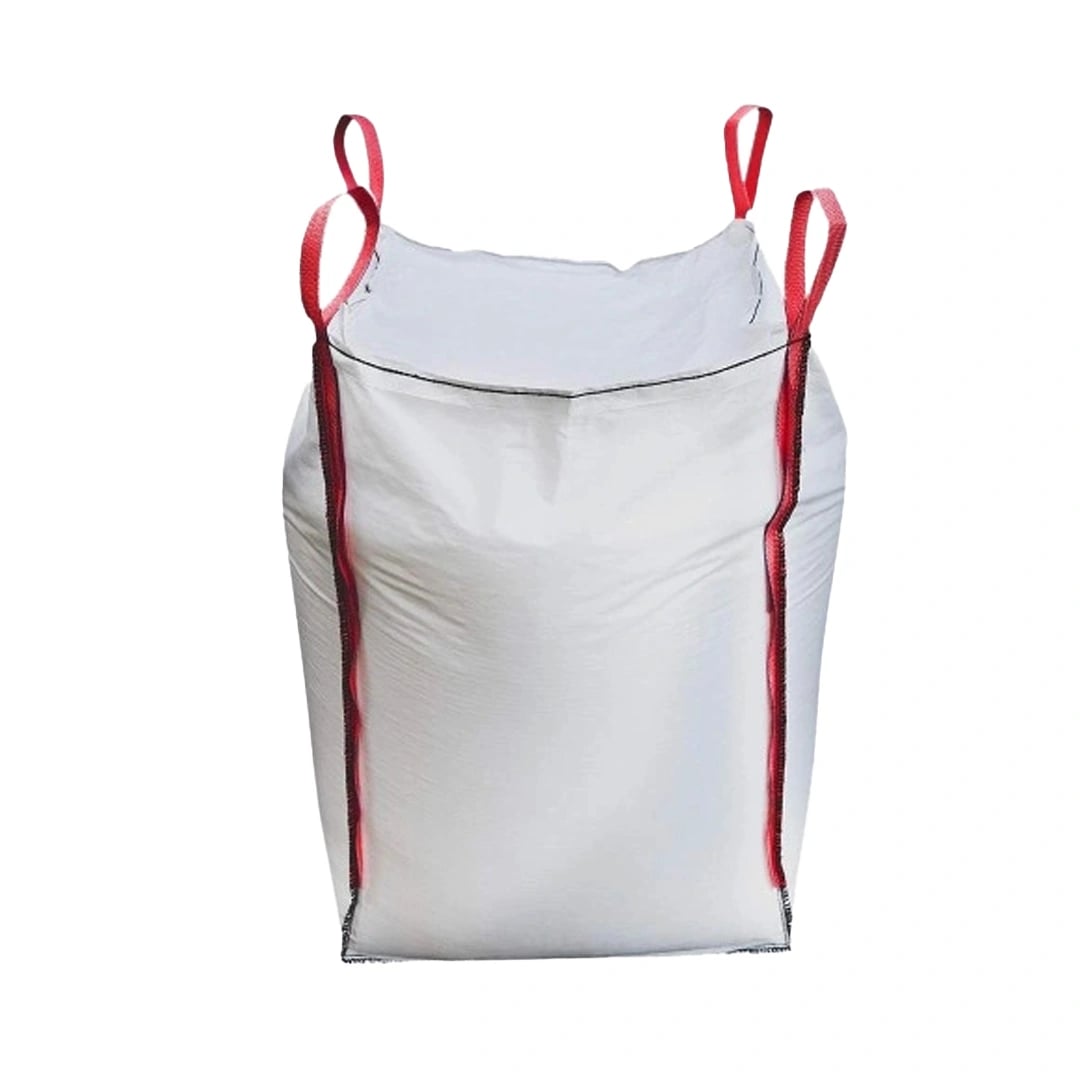
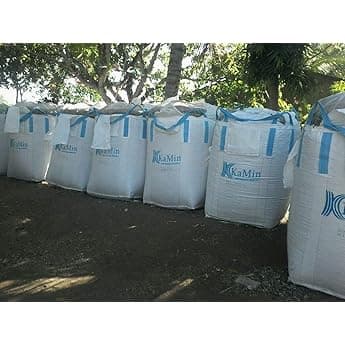
Global Plast Silage Bag (Murghas Bag) Size 90x90x150 cm, Capacity 1000kg, Designed To Preserve The Nutritional Value Of Livestock Feed.
₹3387₹4000
Save ₹61316% Off

🎉 You Save ₹106 (11% OFF)
Buying In Bulk?
Get Special Pricing for large orders, contact us now!

| Brand: | SIddhi Vinayak Enterprises |
| Product Code: | 10907 |
| Country of Origin: | India |
| Category: | Cattle & Bird Care |
| Sub Category: | Silage Bag (Murghas Bag) |




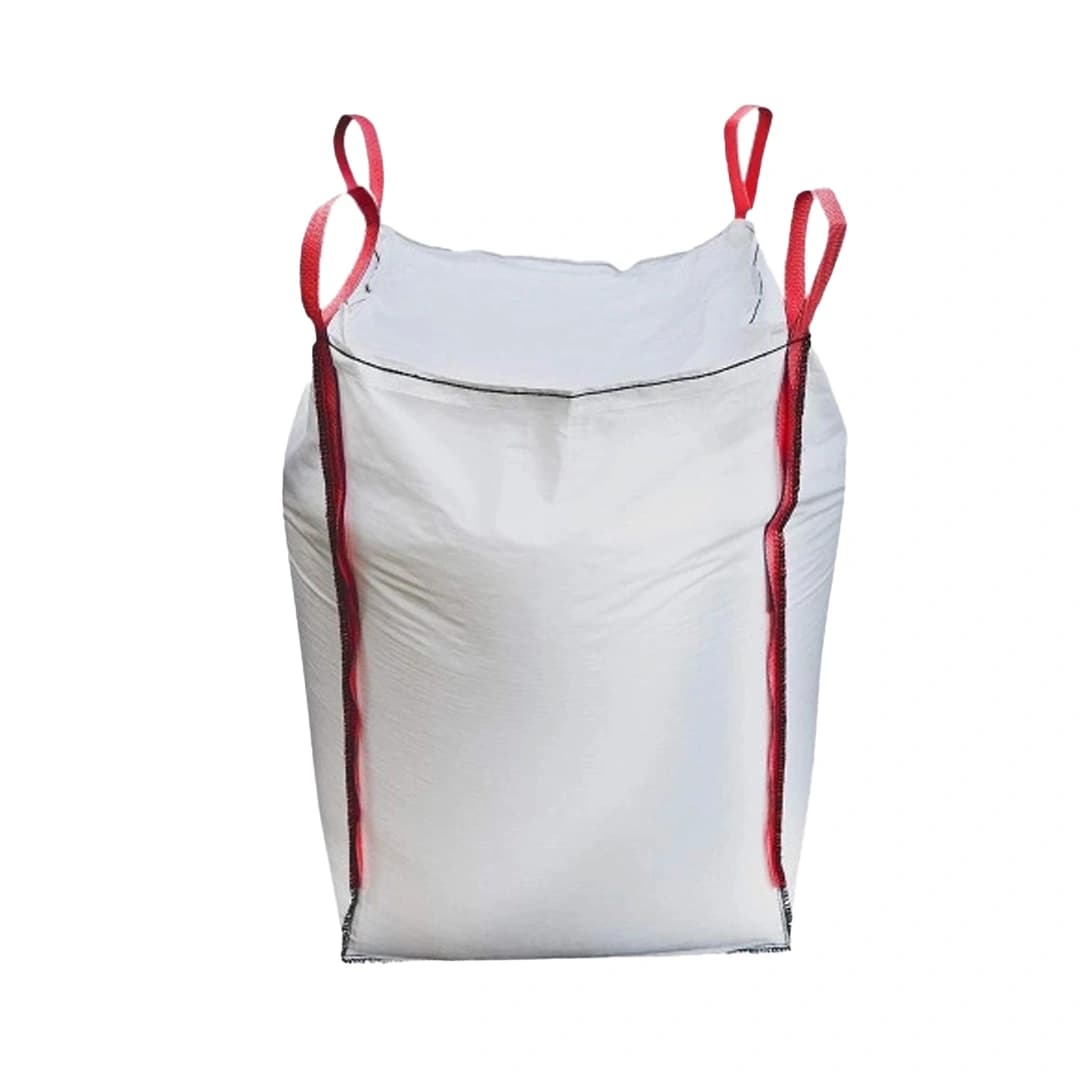
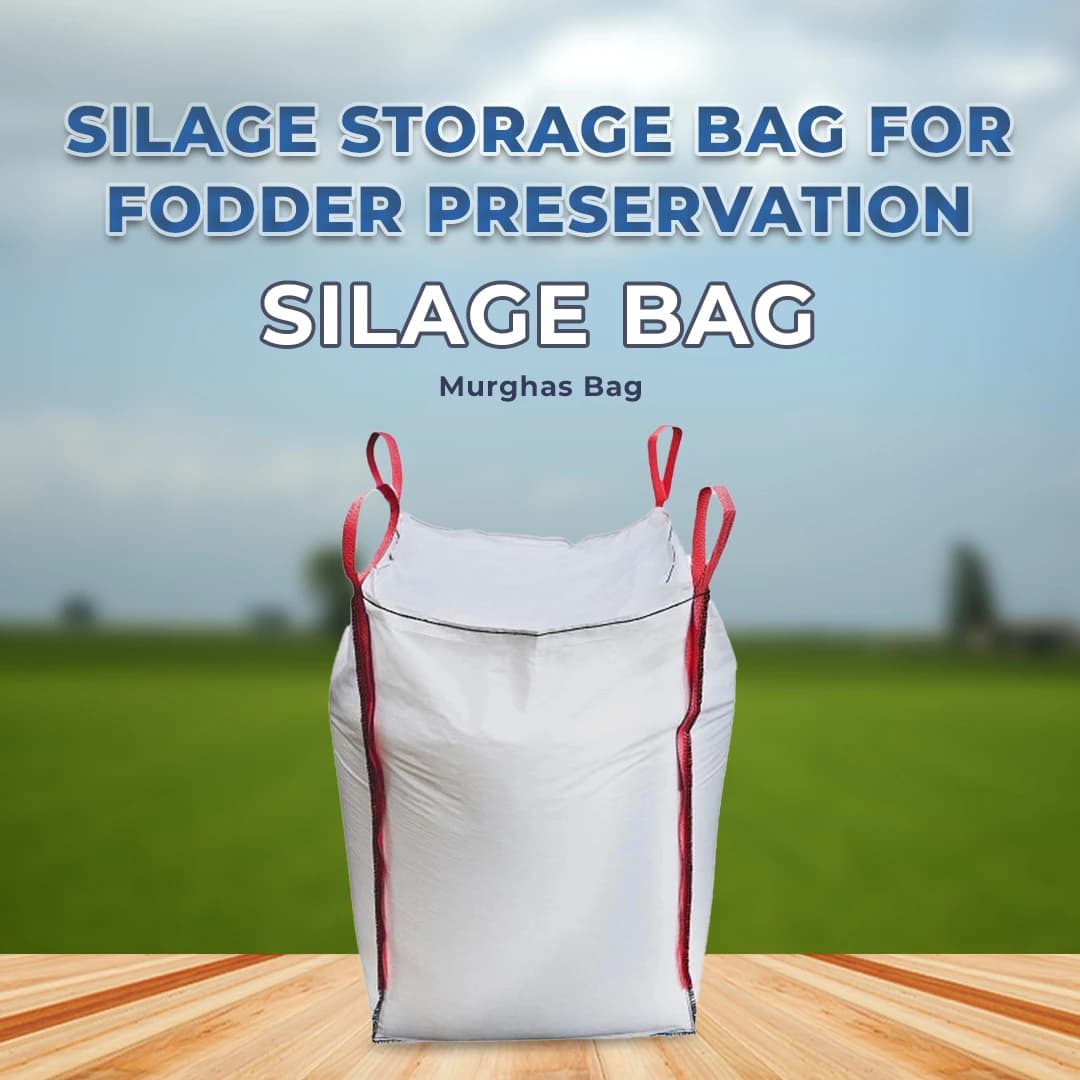
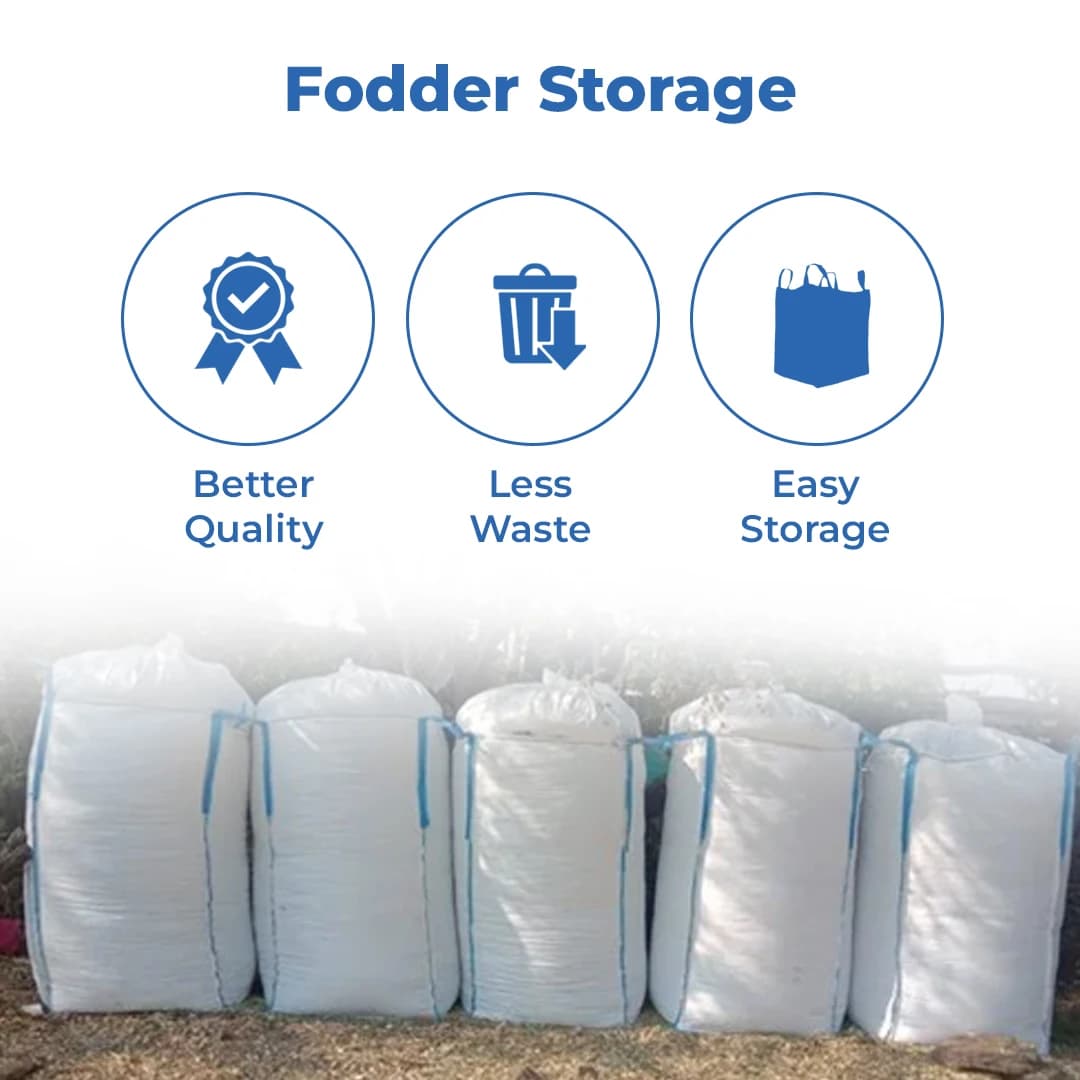
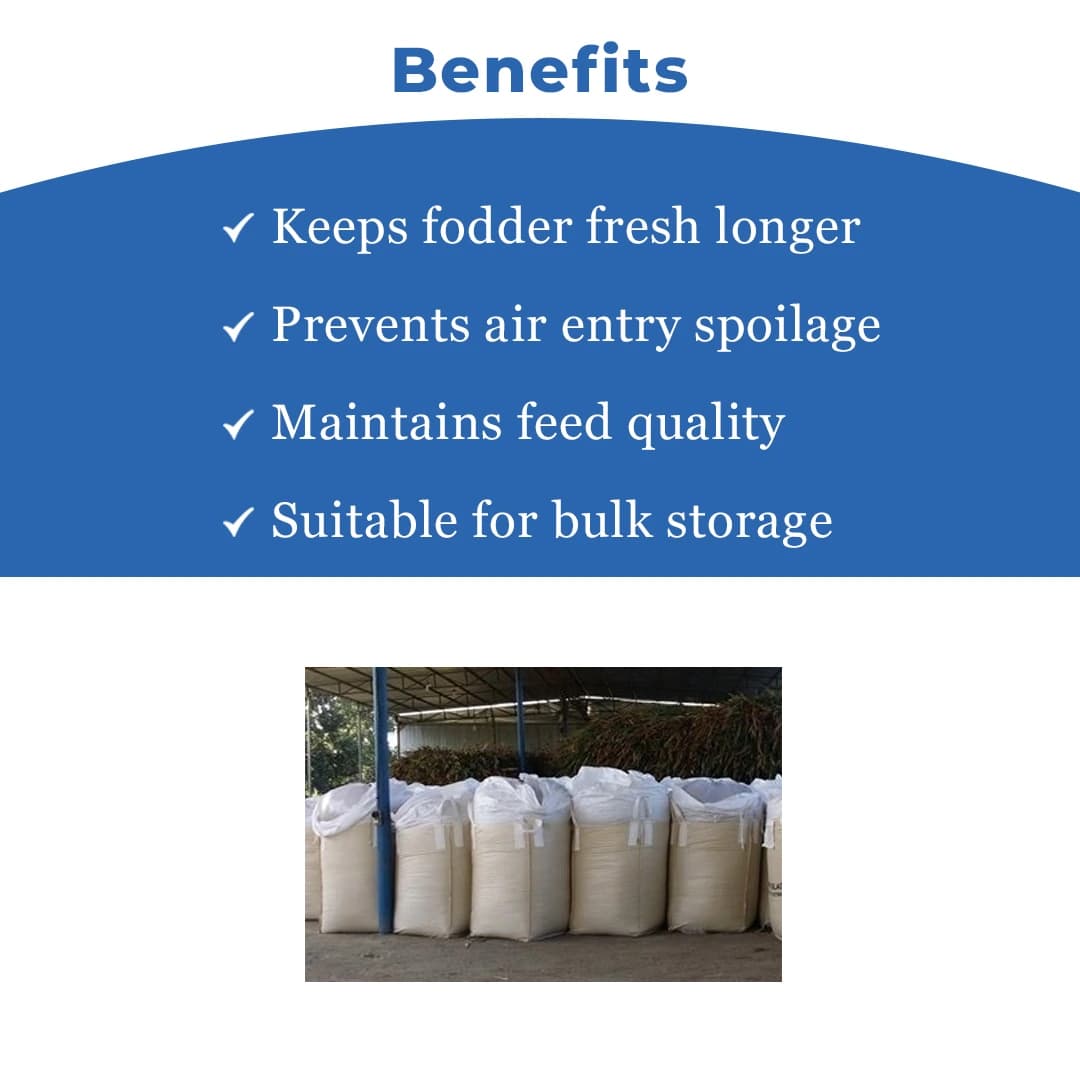
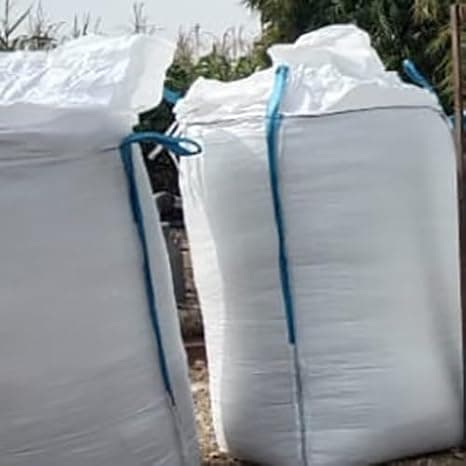
The Siddhi Silage Bag, also called a Murghas Bag, is a heavy-duty 1000 kg polypropylene FIBC silage bag designed for safe, airtight storage of green fodder silage on dairy farms and cattle sheds. Silage bags like this one help dairy farmers preserve harvested fodder for months without losing nutritional value. The 90 x 90 x 140 cm silage bag is built from premium woven UV-protected polypropylene with a flat bottom and 80 cm coated top skirt for easy loading and sealing. Siddhi silage bags reduce fodder wastage by 30 to 50% compared to open-pile storage, making them ideal for both small and large livestock operations.
Heavy-Duty Build: The Siddhi Murghas Bag is woven from premium polypropylene (PP) for high tear and puncture resistance, even under heavy fodder load.
Large Capacity: This 90 x 90 x 140 cm silage bag holds up to 1000 kg of compacted green fodder, ideal for medium dairy operations.
Airtight Inner Liner: A virgin polyethylene inner liner inside the bag keeps oxygen out, creating the anaerobic conditions needed for silage fermentation.
UV-Protected: Silage bags built with UV-stabilised polypropylene resist sun damage, allowing safe outdoor storage for months without breakdown.
Skirted Top Design: The 80 cm coated top skirt makes loading easy and creates a tight seal once tied off after filling the silage bag.
Heavy-Duty Stitching: Special pattern stitching on handles and top corners gives the bag a 5:1 safety factor for safe lifting and transport.
Reduces Fodder Wastage: Using silage bags cuts dairy feed wastage by 30 to 50% compared to open pit silage, saving farmers' costs over time.
Specifications | Details |
|---|---|
Product Name | Siddhi Silage Bag (Murghas Bag) |
Type | Polypropylene FIBC Silage Bag |
Brand | Siddhi Agritech |
Size | 90 x 90 x 140 cm |
Capacity | 1000 kg |
Material | Woven Polypropylene (PP) — UV Protected |
Inner Liner | Virgin Polyethylene (200 x 320 cm) |
Top Design | 80 cm Coated Skirt |
Bottom Design | Flat with Liner |
Colour | White |
Safety Factor | 5:1 |
Stitching | Full Handle Stitching + Special Corner Pattern |
Suitable For | Dairy Farms, Cattle Sheds, Livestock Operations |
Country of Origin | India |
Choose a clean, dry, level area near the dairy shed for placing the silage bags, with easy access for loading equipment.
Prepare green fodder like maize, sorghum, oats, or grass at the right harvest stage (around 30-35% dry matter) and chop into 2-3 cm pieces.
Open the Siddhi Murghas Bag carefully, unfold the 80 cm top skirt, and arrange the inner polyethylene liner so it lies flat against the inner walls.
Begin filling the silage bag in layers of 15 to 20 cm of chopped fodder at a time, compacting each layer firmly with feet, a wooden plank, or a small tractor wheel.
Add fodder until the silage bag is filled to about 90% of its capacity, leaving room for the top to be sealed properly.
Once full, fold the inner liner tightly over the top of the compacted fodder to eliminate trapped air pockets that cause spoilage.
Tie the skirt of the silage bag securely with strong twine or rope to create an airtight seal that allows the fermentation process to begin.
Store the sealed silage bags in a shaded area or under a tarpaulin cover, and allow 30 to 45 days for the silage to fully ferment before opening for daily feeding.
Lift the loaded silage bag using proper equipment like a tractor loader or chain hoist; the 1000 kg load is too heavy for manual lifting.
Keep all silage bags out of reach of livestock and rodents, which may chew or tear the polypropylene material and break the airtight seal.
Inspect the silage bag weekly for any tears, holes, or loose stitching during the fermentation period, and patch immediately with waterproof tape if found.
Do not store the Murghas Bag near sharp objects, open flames, or hot surfaces, as polypropylene can melt or burn at high temperatures.
Wear gloves while handling and tying off the bag to avoid hand injuries from rough fabric edges or staples in the stitching.
Dispose of damaged or expired silage bags through proper plastic recycling channels — do not burn or bury in open farmland.
Properly sealed silage bags can preserve green fodder for 6 to 12 months without significant loss of nutritional value. The airtight environment created by the inner liner prevents mould, spoilage, and oxidation throughout the storage period.
The Siddhi silage bag works with all common silage crops — maize, sorghum (jowar), oats, pearl millet, hybrid napier grass, and legume mixes. Always chop the fodder into 2-3 cm pieces and aim for 30-35% dry matter content for best fermentation results.
The Siddhi silage bag can be reused 2 to 3 times if the inner liner is intact and the polypropylene outer shows no major tears. Always inspect the bag carefully for damage before refilling with fresh fodder for the next storage cycle.
Yes, the Murghas Bag prevents the spoilage and wastage common in open-pit silage. Farmers using silage bags typically report 30 to 50% lower wastage compared to traditional pit silage methods.