In India, diverse crops are cultivated based on the soil type and weather conditions. The adoption of fertilizers has considerably increased over the years, driven by diverse cropping patterns and rising nutrient demand. Each crop needs fertilizer for its healthy growth, as it feeds it all the essential nutrients.
India used 601 lakh metric tonnes of fertilizers in 2023–24 (FAI), highlighting how essential they are for sustaining crop productivity. Fertilizers help restore soil nutrients that are lost due to continuous cropping and unpredictable weather.
Throughout the entire season, crops like paddy, wheat, sugarcane, cotton, and pulses need fertilizers for their healthy growth. As a growth booster, they improve root strength, plant growth, and grain quality. So that every farmer can get a better harvest even in challenging weather.
In this blog, we discuss different types of fertilizers commonly used in Indian agriculture, how they work, their benefits, and how to choose the right one.
What Are Fertilizers?
Fertilizers are organic or inorganic substances that supply essential nutrients to crops. They usually come in granular or liquid form and help replenish nutrients that soils lose after continuous cropping.
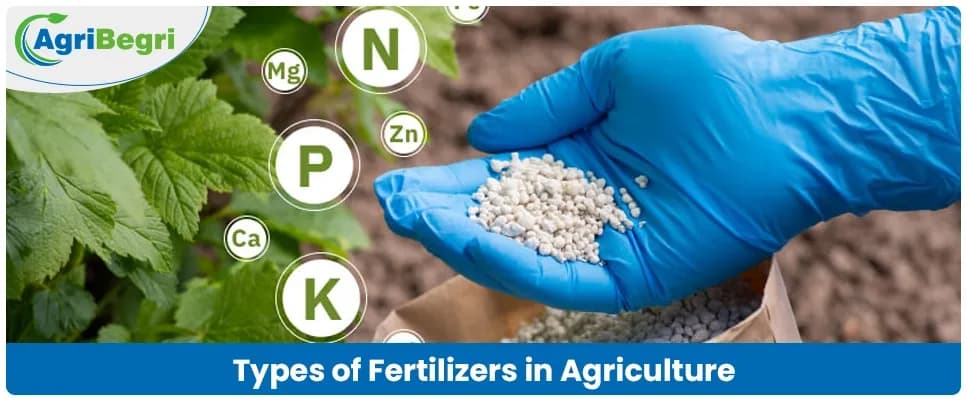
Most fertilizers contain three primary macronutrients: Nitrogen (N), Phosphorus (P), and Potassium (K). These are commonly known as NPK fertilizers, and they play a major role in plant growth and development.
When crops grow, they remove nutrients from the soil. Over time, this leads to nutrient deficiency and reduced soil fertility. Fertilizers help restore these nutrients, so plants receive nutrients that the soil alone cannot provide.
How Do Fertilizers Work?
In Indian crops, fertilizers act as growth boosters. After application, fertilizers release nutrients into the soil. Roots absorb these nutrients based on soil moisture and fertilizer type.
Then it supplies the nutrients to all the parts of the plant. Nitrogen, phosphorus, and potassium are the three primary macronutrients in fertilizers (NPK). Each plays a specific role in crop growth.
For Example:
- Potassium strengthens the stem and improves grain quality.
- Nitrogen keeps the leaves greener and more alive.
- Phosphorus enhances strong root development.
Generally, they work together to improve the metabolic functions and boost faster growth.
To gain a healthy yield, the soil and the crops need a fair balance. That’s why choosing the right types of fertilizer for plants is essential for every Indian farm.

Importance of Fertilizers in Agriculture
For Indian farmers, horticulturists, gardeners, and all growers, understanding the importance of fertilizers in plant growth is vital. Supplying fertilizers to the crops makes a big difference in our diverse soils and climates.
They supply nutrients to plants that the soil alone cannot provide. The right types of fertilizer promote yield and replenish soil fertility, as fertilizers without organic matter deplete the soil. Here are some key importance of supplying fertilizers to crops.
- They replenish the soil with all essential nutrients after continuous cropping. So that the soil regains its health and yields better.
- Fertilizers support vigorous roots, stronger stems, and healthy fruit.
- Protect the soil, keep the land productive for future cultivation, and maximize the return.
Types of Fertilizers Used in Agriculture
Indian farmers harvest numerous crops ideal for their regions in the diverse farming landscape. To achieve healthy yields, farmers depend on various types of fertilizers to meet specific crop and soil needs.
Based on their ingredient type, fertilizers can be divided into organic and inorganic. They may also supply macronutrients (NPK) or essential micronutrients such as zinc, iron, and boron.
Organic and Bio-based Fertilizers
Organic and bio-based fertilizers are derived from natural substances. The types include compost, farmyard manure, crop residues, green manure, and animal waste. They are slow feeders but strong helpers. Such fertilizers are ideal for crops that benefit from slow nutrient availability.
- They improve soil structure over time.
- Release nutrients slowly, keeping the soil alive, soft, and full of microbes.
- Help the soil hold more water, great for dry and rain-fed farming areas.
- Safe for the environment and reduces the need for chemical fertilizers.
- Keep soil fertile and crops healthy year after year.
Inorganic or Synthetic Fertilizers
These are chemically synthesized fertilizers made using minerals and gases. They provide instant results and are ideal for crops that require quick nutrient availability. They give crops a quick boost in a ready form directly.
- Inorganic fertilizers supply exact nutrients, thus each bag of urea, DAP or potash provides a fixed dose of nutrients.
- Farmers can understand how many nutrients they feed their plants.
- Due to its high concentration, it can give better results even in small quantities.
- They can support large-scale farming and keep the crops active and steady.
Micronutrient and Specialty Fertilizers
Crops require micronutrients and specialty fertilizers in small quantities, but they are essential for supporting healthy plant growth. Without micronutrients, crops seem to be weak, look pale, or produce fewer grains and fruits.
- Zinc: Helps in more grain formation, which is crucial for staple crops.
- Iron: Boosts photosynthesis and keeps leaves greener and younger.
- Boron: In vegetables and fruits, it supports flowering and fruit setting.
- Manganese and Copper: They act as an immune builder against disease and stress.
Specialty fertilizers are advanced forms of plant nutrition. They are designed to release nutrients slowly, reduce wastage, and feed crops more efficiently.
Easily dissolved in water and made for specific crops. Speciality fertilizers feed plants gradually over weeks or months and are available in nano or coated particles for better absorption.
How to Choose the Right Type of Fertilizer
Imagine two farmers using the same fertilizer, but one yields well, and the other has a poor response. The reason behind the results is not supplying the ideal nutrients that the crops need.
Choosing the right one that fits your soil and crops leads to effective results. Here’s how farmers can decide the right type of fertilizer for better growth and yield.
- The initial step is to know what the soil really needs. Soil test shows the exact needs of the crops .
- Supply fertilizer based on the plant's growth stage. Nitrogen-rich fertilizer is preferred during early growth, while phosphorus and potassium are ideal for the flowering and fruiting stages.
- Slow-release fertilizer is preferable for loose soils, and lighter doses of inorganic fertilizers yield better results for clay soils.
- Combining both organic and inorganic methods yields healthy and rapid results.
- Follow the recommended dosage and application time.
Conclusion:
Fertilizers play a critical role in sustaining India’s diverse farming system, where every crop depends on timely and balanced nutrition. Choosing the right fertilizer is not only about boosting yield but also about maintaining long-term soil health. The most reliable way for farmers to make the right decision is through regular soil testing, understanding crop-specific nutrient needs, and selecting products that match the growth stage and soil type.
A balanced approach, combining organic matter with NPK and essential micronutrients, helps build healthier crops and resilient soils. With the right fertilizer strategy, every Indian farm can achieve consistent growth, improved quality, and sustainable productivity year after year.