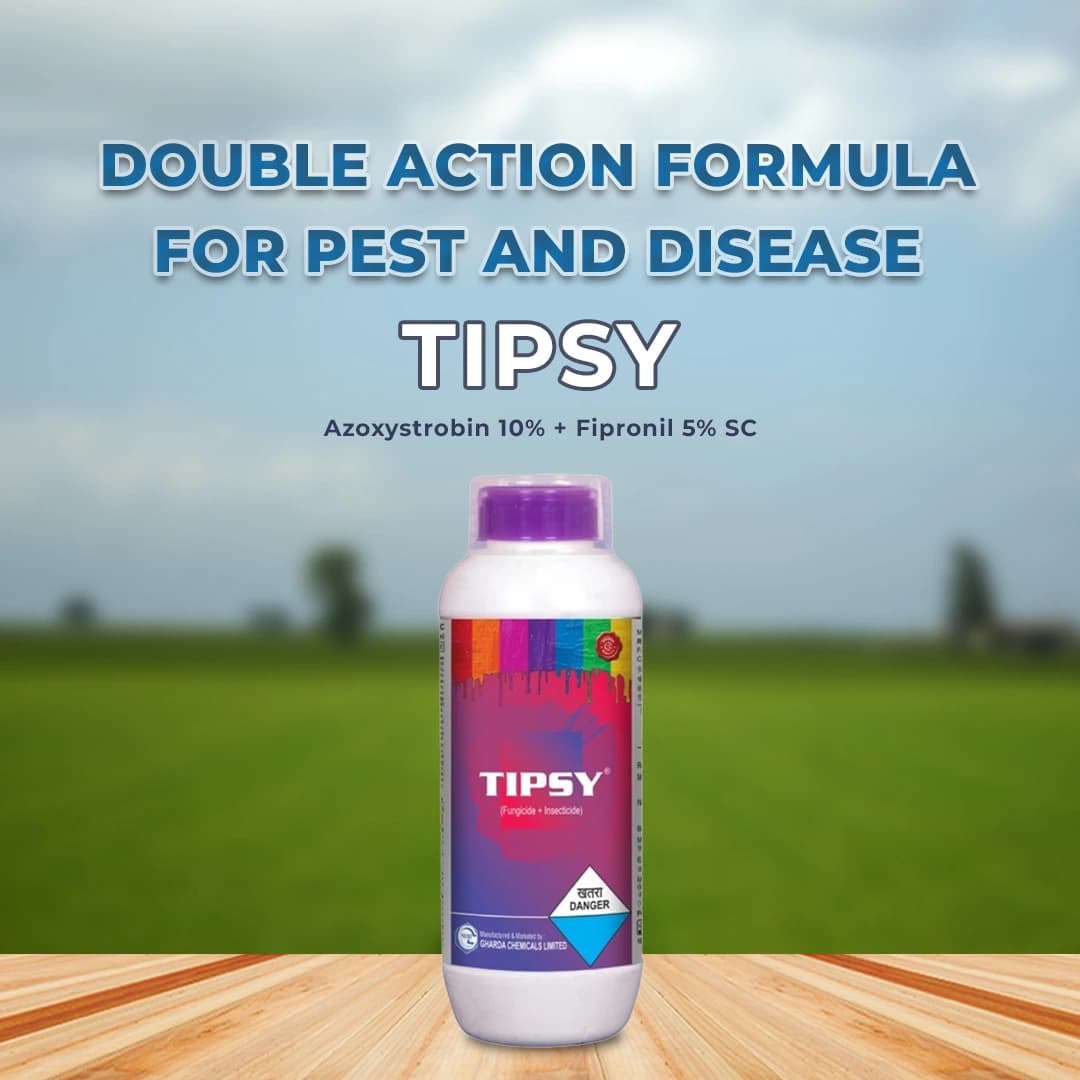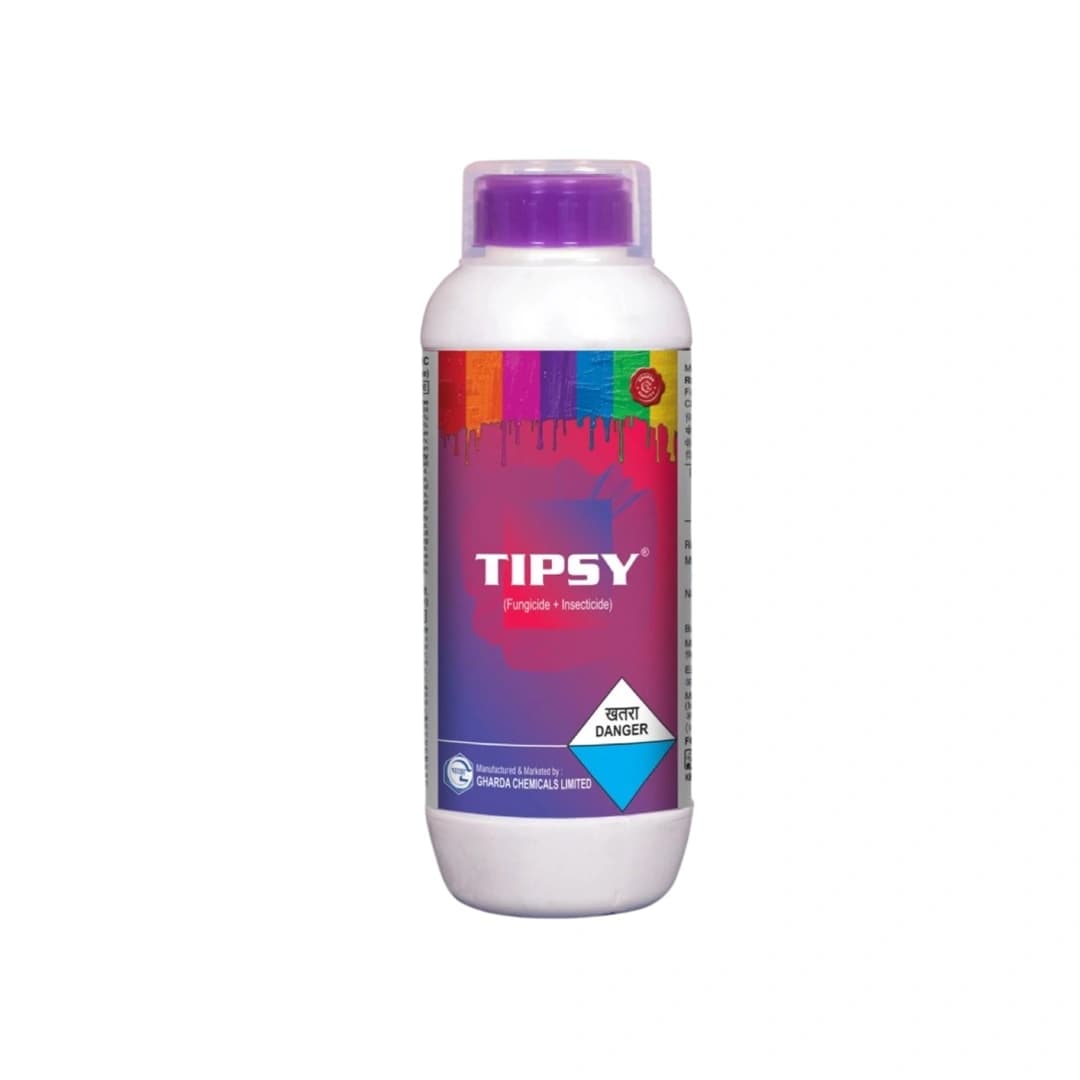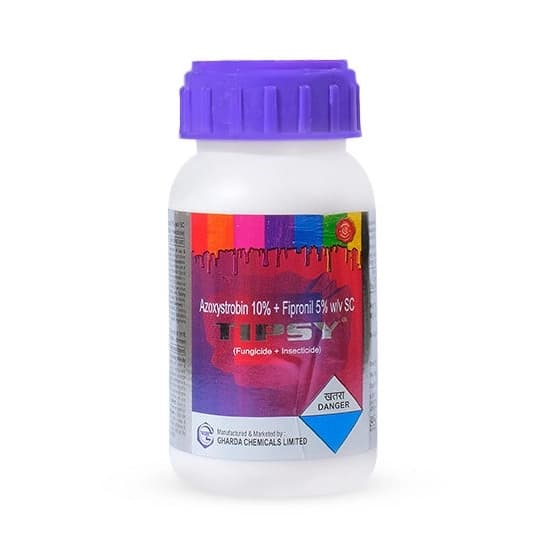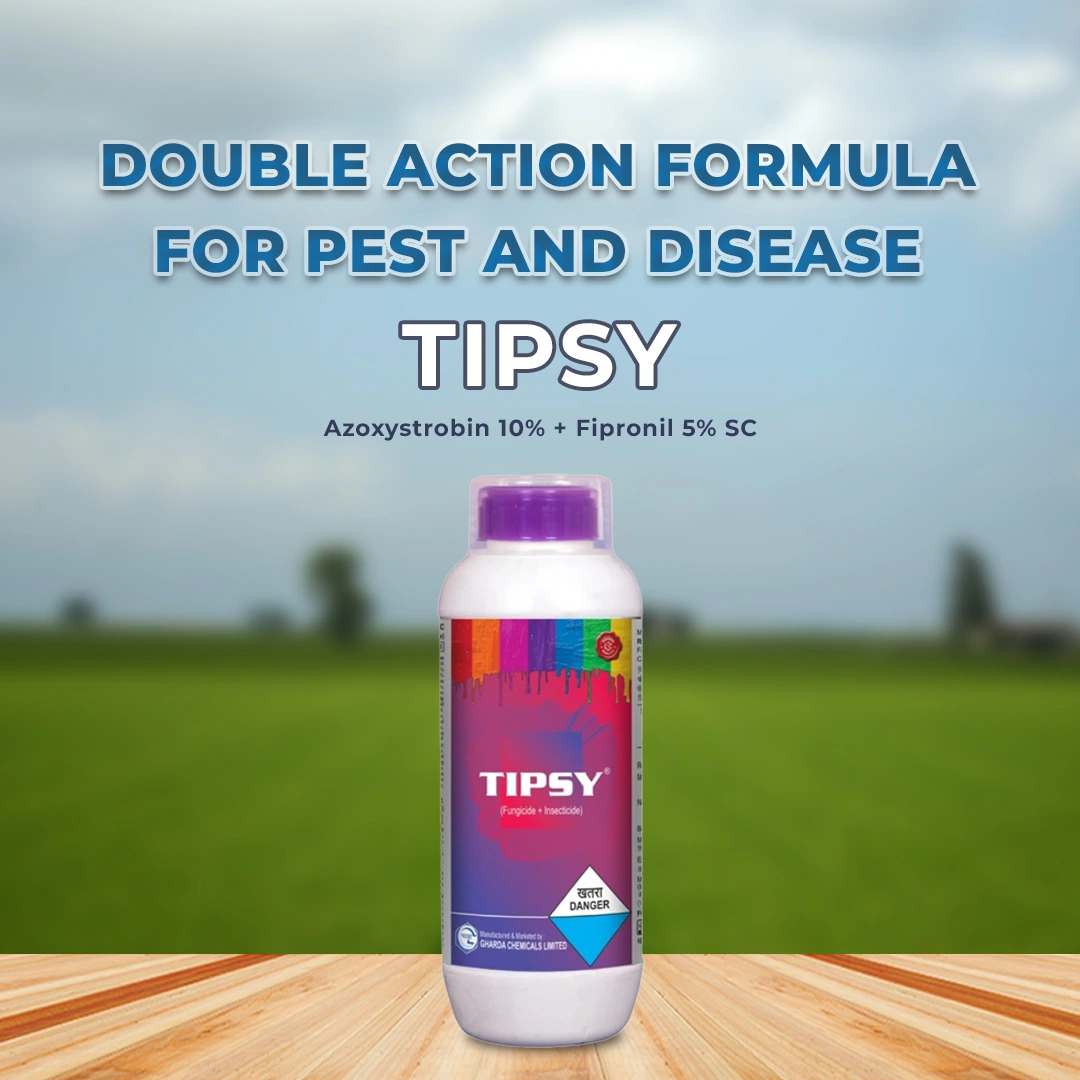
Gharda Tipsy is a versatile crop remedy that can be used as a fungicide and as an insecticide for rice and chilli crops. It works by inhibiting mitochondrial respiration in fungi and acting as a contact and stomach poison with moderate systemic activity. Gharda Tipsy is useful when pest and disease pressure are seen together in the field. Tipsy fungicide should be applied early with proper spray coverage for better crop protection.
Key Features and Benefits of Gharda Tipsy:
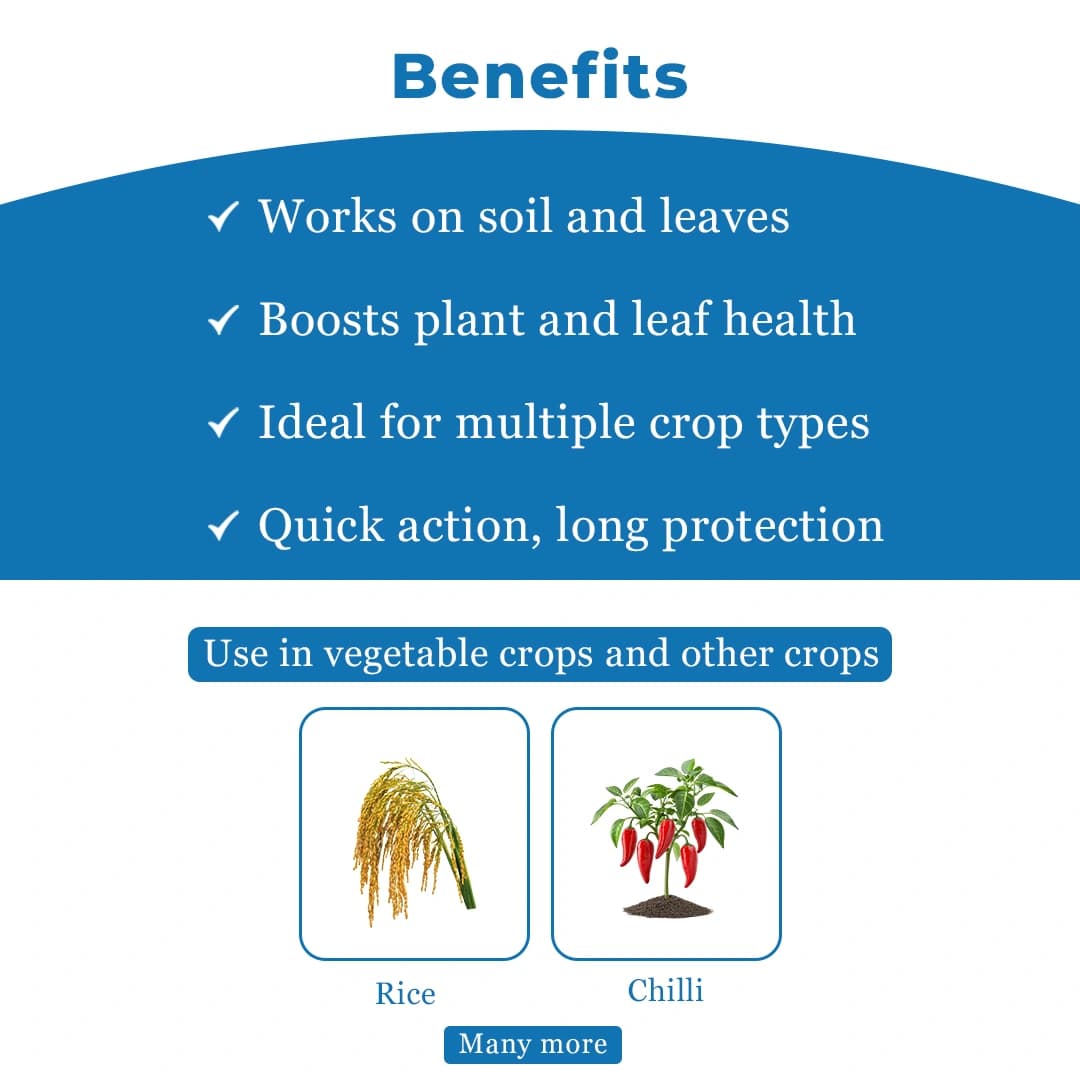
Dual Crop Protection: Gharda Tipsy insecticide works as a fungicide as well, helping manage both pests and fungal diseases in one product.
Complete Coverage: Tipsy fungicide moves inside treated plant parts and protects leaves from disease spread through translaminar activity.
Strong Protection: Tipsy fungicide affects pests when they touch treated surfaces or feed on sprayed crop parts.
SC Formulation: Tipsy fungicide comes in suspension concentrate form, which mixes well in water when stirred properly.
Tipsy Fungicide Uses:
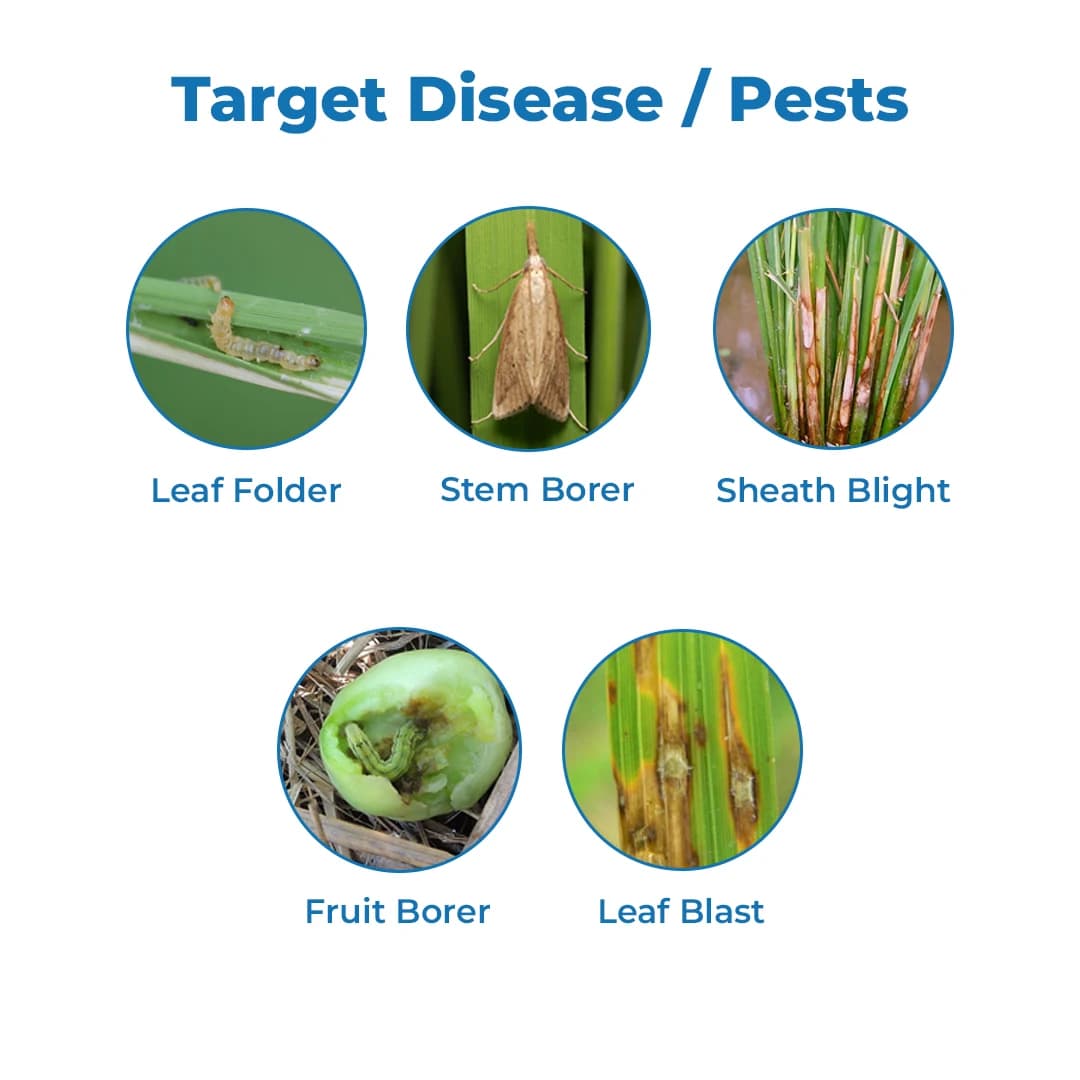
Rice Insect Pests: Gharda Tipsy insecticide helps manage yellow stem borer, leaf folder, and brown plant hopper in rice.
Rice Diseases: Tipsy fungicide helps control sheath blight and leaf blast that reduce leaf health and crop vigour.
Chilli Insect Pests: Tipsy fungicide helps manage thrips and chilli fruit borer that damage leaves, flowers, and fruits.
Chilli Diseases: Gharda Tipsy insecticide helps manage powdery mildew, anthracnose, and fruit rot in chilli crops.
Mixed Crop Protection: Tipsy fungicide is useful when farmers need both disease and pest support in one spray.
Gharda Tipsy Dose:
Use Gharda Tipsy insecticide as a foliar spray with clean water and uniform crop coverage. Tipsy fungicide Dose is 500 ml per acre in rice and 400 ml per acre in chilli, based on 1250 ml/ha for rice and 1000 ml/ha for chilli. Tipsy fungicide should be sprayed in about 200 litres of water per acre for good coverage.
Crop | Target Pest or Disease | Dose per acre | Application Method | PHI |
Rice | Yellow stem borer, leaf folder, brown plant hopper | 500 ml | Foliar spray with uniform crop coverage | 53 days |
Rice | Sheath blight and leaf blast | 500 ml | Foliar spray on crop canopy | 53 days |
Chilli | Thrips and chilli fruit borer | 400 ml | Foliar spray on leaves, flowers, and fruits | 5 days |
Chilli | Powdery mildew, anthracnose, fruit rot | 400 ml | Foliar spray with full canopy coverage | 5 days |
How to Use Gharda Tipsy:
Measure the required quantity of Gharda Tipsy as per crop and pest or disease pressure.
Shake the bottle well before mixing.
Fill the spray tank halfway with clean water.
Mix the measured quantity in a small amount of water first.
Add this prepared Tipsy fungicide mixture into the main spray tank.
Add the remaining water and stir the solution properly.
Spray Gharda Tipsy uniformly on the crop canopy.
Cover both upper and lower leaf surfaces for better action.
In rice, apply Gharda Tipsy when stem borer, hopper, leaf folder, sheath blight, or leaf blast symptoms begin.
In chilli, apply Tipsy fungicide when thrips, fruit borer, powdery mildew, anthracnose, or fruit rot pressure starts.
Avoid spraying during strong wind, rainfall, or very hot afternoon weather.
Use the prepared Gharda Tipsy solution on the same day.
Best Time to Apply:
Apply Gharda Tipsy when pests or disease symptoms are first noticed in rice or chilli. Tipsy fungicide performs better when pests are active and spray reaches feeding areas. Tipsy insecticide gives better protection when applied before disease spreads heavily. Morning or evening spraying is better because crop stress and spray loss are lower.
Frequency of Application and Re-entry Period:
Frequency of Application: Apply Gharda Tipsy insecticide at the first appearance of pests or diseases. One to two sprays may be used at 10 to 15 day intervals as per field pressure and label guidance.
Re-Entry Period: Do not enter the treated field for at least 24 hours after spraying without protective gear.
Compatibility: Do not mix Tipsy fungicide with unknown pesticides, fertilizers, micronutrients, or alkaline products without a jar test.
Application Care: Gharda Tipsy works better when spray coverage is even across leaves, stems, flowers, and fruiting parts.
Resistance Care: Rotate Tipsy fungicide with other suitable insecticide and fungicide groups to avoid repeated use of the same chemistry.
Safety Precautions and Handling:
Read the product label carefully before mixing and spraying Gharda Tipsy.
Wear gloves, mask, goggles, long sleeves, and protective footwear while using Tipsy insecticide.
Do not eat, drink, smoke, or chew anything during Tipsy fungicide application.
Avoid direct contact with skin, eyes, and mouth.
Do not inhale spray mist while applying Gharda Tipsy.
Keep Tipsy insecticide away from ponds, canals, wells, drinking water, and fish farms.
Avoid spraying Tipsy insecticide when bees and beneficial insects are actively moving in the crop.
Wash hands, face, and exposed skin properly after spraying.
Keep children, animals, and unprotected workers away from the field until the spray dries.
Storage Instructions:
Store Gharda Tipsy in its original sealed container.
Keep Tipsy fungicide in a cool, dry, shaded, and well-ventilated place.
Keep Tipsy insecticide away from direct sunlight, moisture, heat, and open flame.
Store Gharda Tipsy away from food, animal feed, drinking water, seeds, and household items.
Keep Tipsy fungicide out of reach of children and farm animals.
Do not store leftover mixed Tipsy insecticide spray solution for later use.
Do not reuse empty Gharda Tipsy containers for household or farm storage.
Storage Temperature: Follow the storage instructions printed on the product pack.
Shelf Life: Check the pack label before use.
Product Specification:
Specifications | Details |
Product Name | Gharda Tipsy fungicide + insecticide |
Brand Name | Gharda Chemicals Limited |
Gharda Tipsy Technical Name | Azoxystrobin 10% + Fipronil 5% w/v SC |
Formulation Type | Oil-based SC, Suspension Concentrate |
Chemical Group | Strobilurin fungicide + phenylpyrazole insecticide combination |
Mode of Action | Systemic and translaminar disease action with contact and ingestion pest action |
IRAC Group | Group 2B for Fipronil |
FRAC Group | Group 11 for Azoxystrobin |
Recommended For | Rice and chilli |
Pack Sizes Available | 100 ml, 250 ml, 1 L |
Country of Origin | India |
Shelf Life | Check pack label |
Pre-Harvest Interval | Rice: 53 days; Chilli: 5 days |
Re-Entry Period | 24 hours |
Application Method | Foliar spray |
Recommended Dose | Rice: 500 ml/acre; Chilli: 400 ml/acre |
Target Pests | Yellow stem borer, leaf folder, brown plant hopper, thrips, chilli fruit borer |
Target Diseases | Sheath blight, leaf blast, powdery mildew, anthracnose, fruit rot |
Product Category | Fungicide + Insecticide |