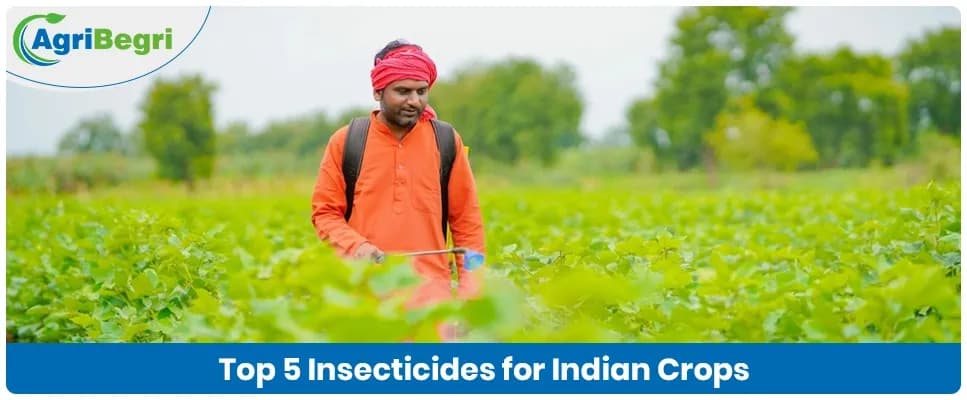
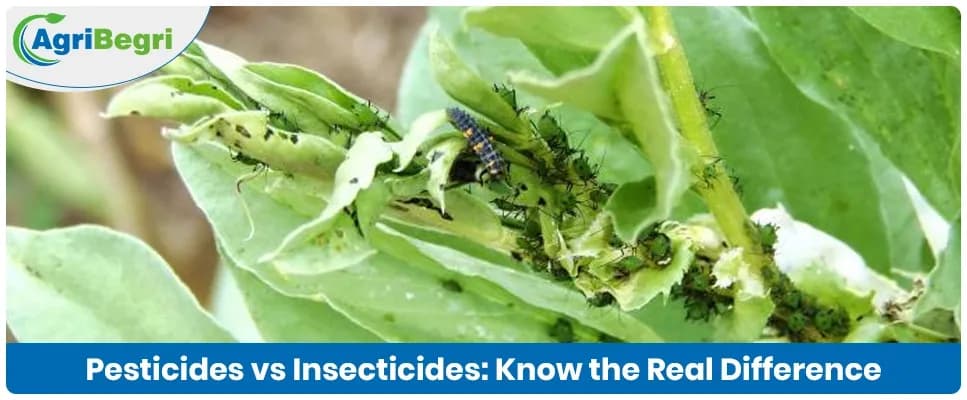
Insects remain among the greatest threats to Indian agriculture in recent years, as temperatures and climate patterns have changed, resulting in increased frequency and severity of pest outbreaks. Whether it is stem borers in paddy, bollworms in cotton, or fruit borers in vegetables, farmers in the country are increasingly finding it difficult to safeguard their crops.
To assist farmers in coping with these problems, there is an increasing use of modern insecticides with a specific action, a longer residual effect, and improved safety. But there are numerous products in the market, and it is confusing to make the right choice.
This blog outlines the top 5 insecticides for crops in 2025, considering their performance, pest control spectrum, suitability for crops, and benefits to farmers.
What Are Insecticides and Why Are They Used in Indian Farming?
Insecticides refer to the chemical, biological, or natural substances used to eliminate or control destructive insects that harm crops. Such pests are capable of chewing on the leaves, sucking plant sap, boring into stems or fruits, and even transmitting plant diseases. Common pests, such as the brown planthopper in rice, the American bollworm in cotton, fruit borers in tomatoes and brinjal, aphids in mustard, and pod borers in pulses, can cause significant harm if not controlled.
Farming in India, which is highly reliant on seasonal rains and continuous crop growth, is crucial for protecting crops against predators like insects. Unless checked, pest attacks would destroy a considerable percentage of a farm's harvest. It causes significant financial losses, food insecurity, and low-quality harvests.
Farmers can use pest controllers to:
- Avoid damage to crops at the premature stages
- Increase production and revenue
- Ensure high-quality crop production for the market
- Protect the food security and farming economy of India
Pest controllers are particularly important in successful cultivation where there is high pest pressure, especially in paddy, cotton, vegetables, pulses, etc.

Key Challenges Faced by Indian Farmers Due to Insects in 2026
Indian farmers are still struggling with a broad spectrum of insect enemies that endanger the quality and yield of crops. Climate variations, long periods of dry weather, and unreliable rain have also generated ideal circumstances that make pest attacks possible in various locations. Whether it is the small-scale farmer or the large-scale farmer, insects such as whiteflies, stem borers, aphids, and fruit borers are becoming increasingly prevalent, not only damaging the crops but also making the production more costly. A lack of access to timely advice, access to cheap insecticides, and optimal ways of applying them has meant that, even today, pest management is one of the critical issues facing Indian agriculture.
Increased Temperature:
Climate change has resulted in increased temperatures, enabling certain pests to reproduce at a faster rate and for longer durations. This has led to the occurrence of pest outbreaks in many places.
Resistance to Old Insecticides:
Several insects have developed resistance to older chemicals. This implies that farmers must apply more of them or combine products, which is costly and probably damaging to the environment.
Heavy Crop Losses:
Crops such as cotton (affected by the pink bollworm), paddy (stem borers and leaf folders), and pulses (pod borers) are experiencing heavy infestations, resulting in yield losses of 20–40% in some cases.
Limited Access, Higher Risk
When it comes to pest management, small and marginal farmers usually have the heaviest burden. They do not have enough financing, so they do not always have access to good or new-generation insecticides. Most of them also have no access to agricultural experts or knowledge about how to apply the agricultural products properly, which contributes to their crops being destroyed and their income being even lower.
Criteria to Identify a Good Insecticide for Crops
The selection of insecticides for crops is highly essential in pest control. The ideal insecticide to use in Indian crops must fulfill the following requirements:
- Broad-Spectrum or Target-Specific: It must either kill a broad range of pests (broad-spectrum), or it must be highly effective against one or a few major pests without harming other beneficial microorganisms and crops.
- Cost-Effective: It should produce good results at a fair cost so that you can get value for your money.
- Non-Toxic to Humans and Beneficial Insects: The pest control solution must not be harmful to beneficial insects such as bees or cause health effects to the individual applying it.
- Compatible with IPM and Organic Farming (as required): It should be compatible with other pest management practices such as traps, neem oil, or biological controls. Some farmers would want options that are compatible with organic systems.
Top 5 Insecticides for Crops
Appropriate selection of the insecticide is essential in safeguarding the crops against destructive pests and ensuring a successful harvest. There are many alternatives to use, but farmers tend to utilize time-tested forms of insect control that have wide-range coverage and are predictable. This chapter defines five popular insecticides in Indian agriculture and their main advantages.
Chlorantraniliprole is a new-generation pest control solution that has a powerful effect on chewing pests such as stem borers and leaf folders. Its mode of action is by influencing muscle activity in the insect, paralyzing it, and causing it to die. It is extensively utilized in rice, maize, and sugarcane and provides long-term control with little toxicity towards beneficial insects.
Ideal Crops
Paddy, sugarcane, maize, cotton, pulses, vegetables
Target Pests
Stem borers, leaf folders, fall armyworms, and fruit borers
Mode of Action
Acts on the ryanodine receptors in insect muscles, causing paralysis and death.
Benefits for Farmers
- Long residual effect
- Excellent control of chewing pests
- Safe for beneficial insects
- Rainfast and easy to apply
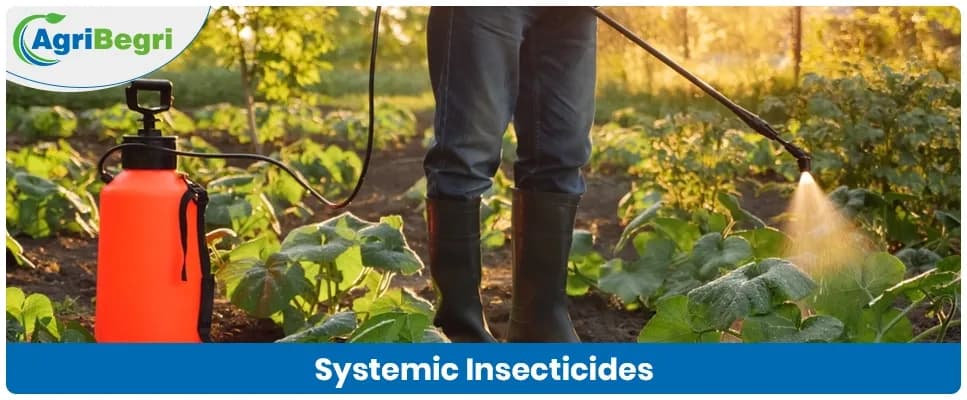
Imidacloprid is a systemic insecticide that has great efficacy against sucking pests, e.g., aphids, jassids, and whiteflies. It disrupts the insect nervous system when consumed by insects that have fed on a treated plant. It is applied in cotton, vegetables, and pulses and is very popular due to its rapid activity and holdover.
Ideal Crops
Cotton, rice, vegetables, fruits, pulses, and oilseeds
Target Pests
Aphids, Jassids, Whiteflies, Thrips, Termites
Mode of Action
Systemic insecticide that interferes with the nervous system by binding to nicotinic acetylcholine receptors.
Benefits for Farmers
- Controls sucking pests effectively
- Quick knockdown with lasting effect
- Requires a low dose per acre
- Cost-effective
Emamectin benzoate is used against the larvae of lepidopteran insects such as fruit borers and pod borers. It interferes with nerve impulses, which leads to paralysis and death within a short time after consumption. It has very high efficacy with a short pre-harvest interval, and hence it is commonly used in crops such as chili, brinjal, and pulses.
Ideal Crops
Cotton, chilli, cabbage, okra, tomato, red gram
Target Pests
Bollworms, Fruit borers, Pod borers, Leaf eaters
Mode of Action
Affects chloride channels in the insect nervous system, causing feeding cessation and death.
Benefits for Farmers
- Strong anti-feeding action
- Works on larvae before damage is visible
- Less harmful to non-target insects
- Helps in resistance management
Fipronil is used against a wide variety of insect pests such as termites, thrips, and root borers. It targets the central nervous system of insects, causing their death. It has applications in rice, sugarcane, and vegetables, and it is useful in the soil and on leaves.
Ideal Crops
Paddy, Sugarcane, Cotton, Groundnut, Chilli
Target Pests
Stem borers, Root grubs, White grubs, Termites, Thrips
Mode of Action
Disrupts GABA-gated chloride channels, leading to overexcitation of the insect’s nervous system.
Benefits for Farmers
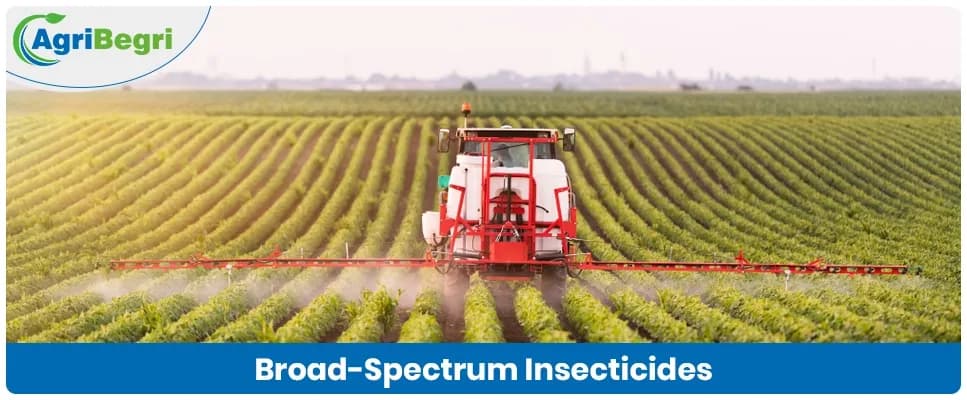
- Broad-spectrum control
- Long soil persistence
- Effective against both soil and foliar pests
- Improves crop stand and yield
Acephate is also a contact or systemic insecticide that kills sucking insects and some chewing insects. This is systemically absorbed by the plant tissue and kills, by contact or ingestion, pests such as aphids, thrips, and caterpillars. It is applied in all cotton, groundnut, and vegetable crops due to its stability and cost-effective management.
Ideal Crops
Cotton, Soybean, Rice, Vegetables, Groundnut
Target Pests
Aphids, Thrips, Jassids, Bollworms, Leaf miners
Mode of Action
Organophosphate that inhibits acetylcholinesterase, leading to nervous system failure in insects.
Benefits for Farmers
- Quick action on sucking and chewing pests
- Systemic and contact action
- Economical for large-acreage farms
- Works well in IPM programs
When applied appropriately, depending on the crops and the intensity of the pests, the right pest control solution can increase the yield and even crop quality. Chlorantraniliprole, Imidacloprid, Emamectin Benzoate, Fipronil, and Acephate can be seen among the most reliable and effective tools that Indian farmers have today. Each has certain benefits such as long residual control, systemic activity, and efficacy across a broad spectrum to help farmers more efficiently control pests, minimize crop losses, and increase profitability.
Tips for Safe and Effective Insecticide Use
Insecticides for crops are an important tool for protecting crops from harmful pests. But using them carelessly can damage crops, harm the soil, affect health, and pollute the environment. To get the best results and stay safe, follow these important tips:
1. Read the Label Thoroughly:
Always read the label instructions and usage guide on the insecticide’s bottle or package. These details will minimize the chances of overuse and prevent infections or irritation caused by toxic components of the product.
- The correct dosage per litre or acre
- Which pests it controls
- The crops it is recommended for
- The waiting period before harvest
- Safety precautions during mixing and spraying
Why it matters: Applying the incorrect product or dose can damage the crop and result in financial loss.
2. Wear Safety Equipment:
When working with pest control solutions, always use safety gear. These include gloves, a face mask, goggles, full-sleeve clothes, and footwear. Do not get the chemical into contact with your skin.
Why it matters: Pest control solutions are toxic. Wearing protection for your skin, eyes, and lungs reduces the risk to your health.
3. Mix Properly
Follow exactly the amount stated on the label. Measure with a cap or using a scale. Do not use a higher dose of pest control solution in the hope that it is effective.
Why it matters: When applied too frequently, it burns the crop and kills helpful insects; it will also create pesticide resistance.
4. Spray in Suitable Weather:
The pest control solutions should be applied in the early mornings or evenings, when the wind is calm and the temperature is low. Spraying should not be done when it's windy, rainy, or very hot.
Why it matters: By spraying when the weather is calm, the chemical remains on the field.
Final Thoughts on Choosing the Right Insecticide for Crops:
Crop insecticides are still crucial to modern Indian agriculture, particularly as pest pressures rise due to climate change and resistance issues. The selection of an appropriate pest controller, based on the type of pest, crop requirements, and safety profile, is crucial in safeguarding yields and the overall health of the farm in the long run.
It can be used to minimize losses, enhance crop quality, and ensure sustainable farming practices when used responsibly. The aim is not merely to control pests but to make farming smarter, safer, and more effective.